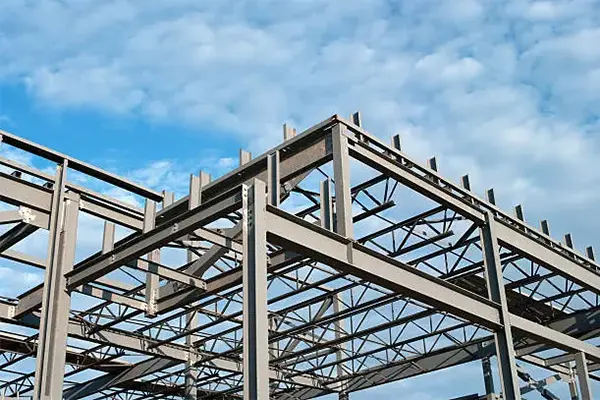
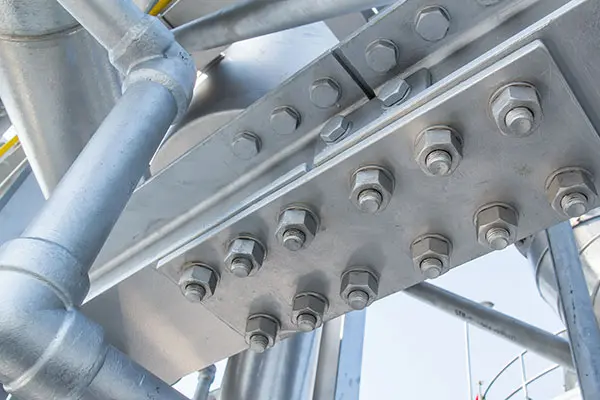
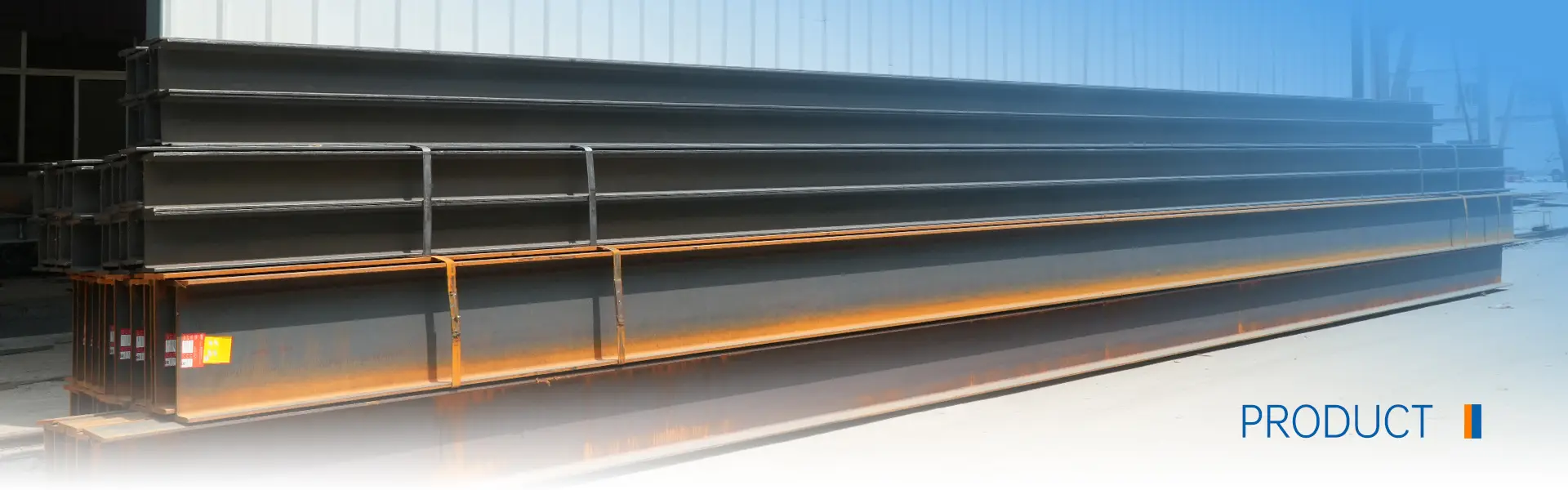
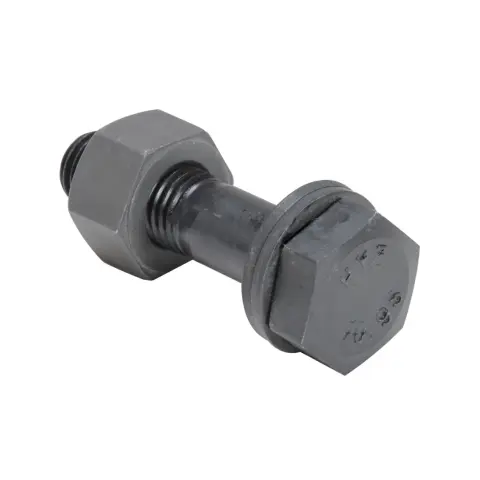
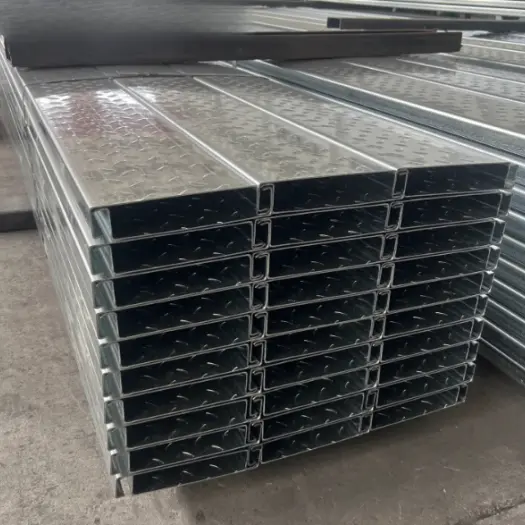
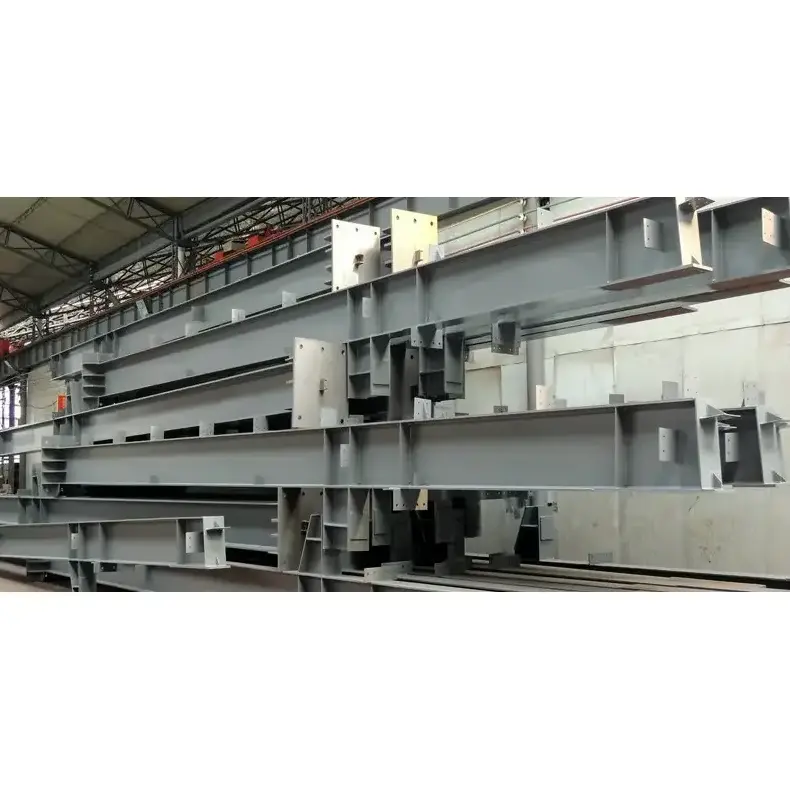
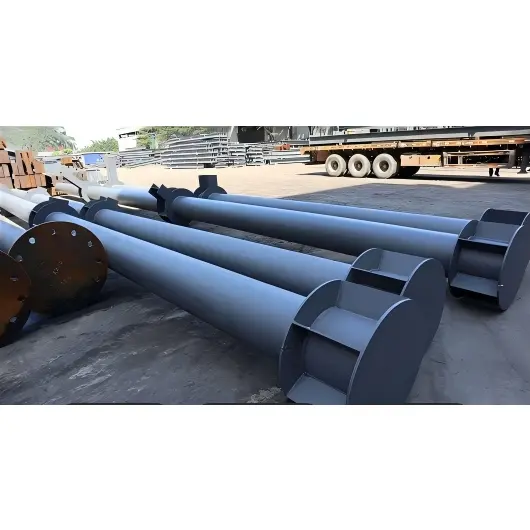
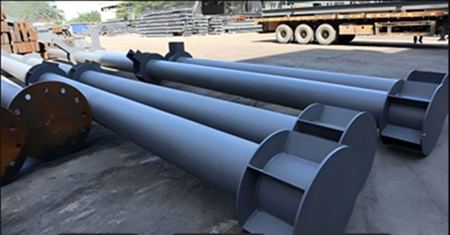
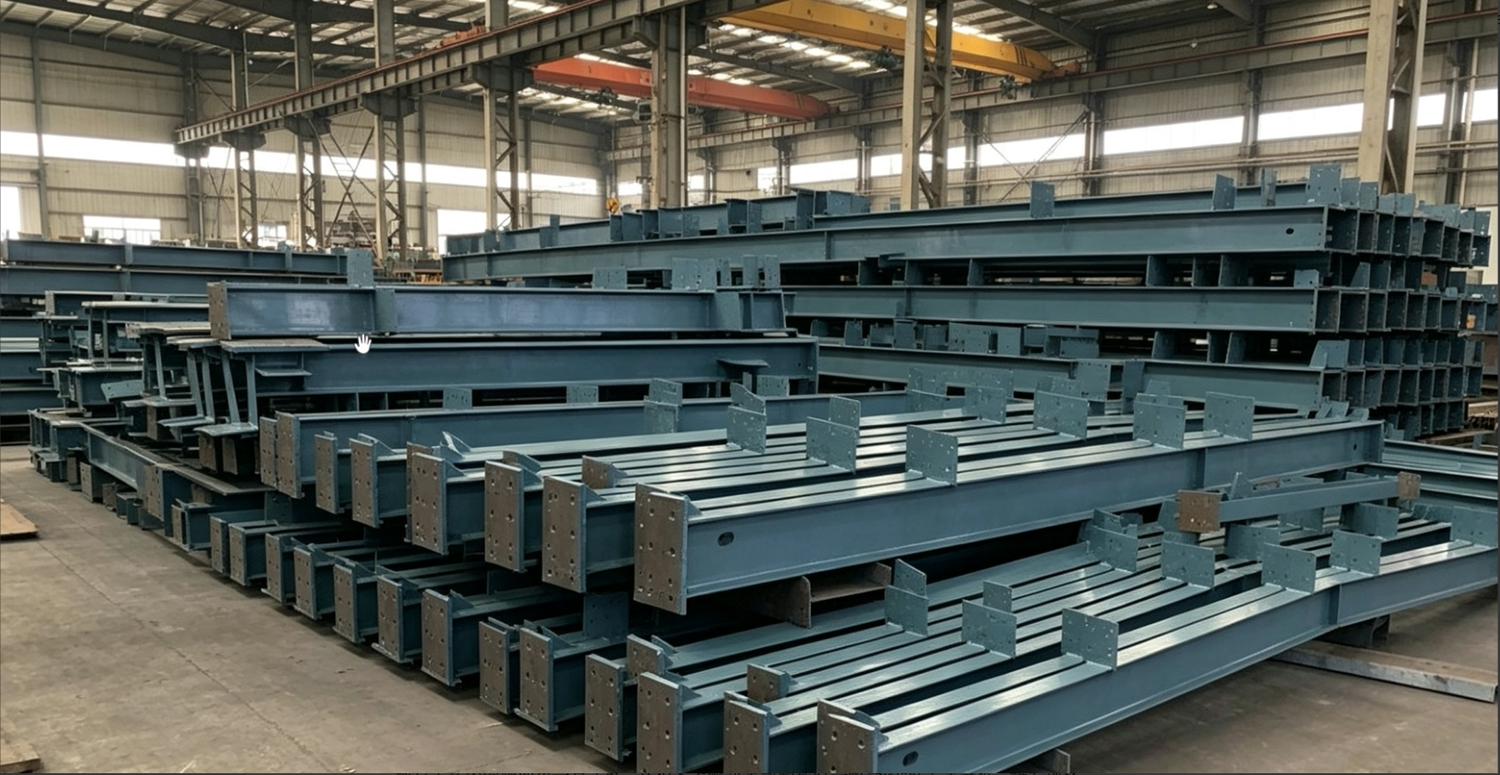
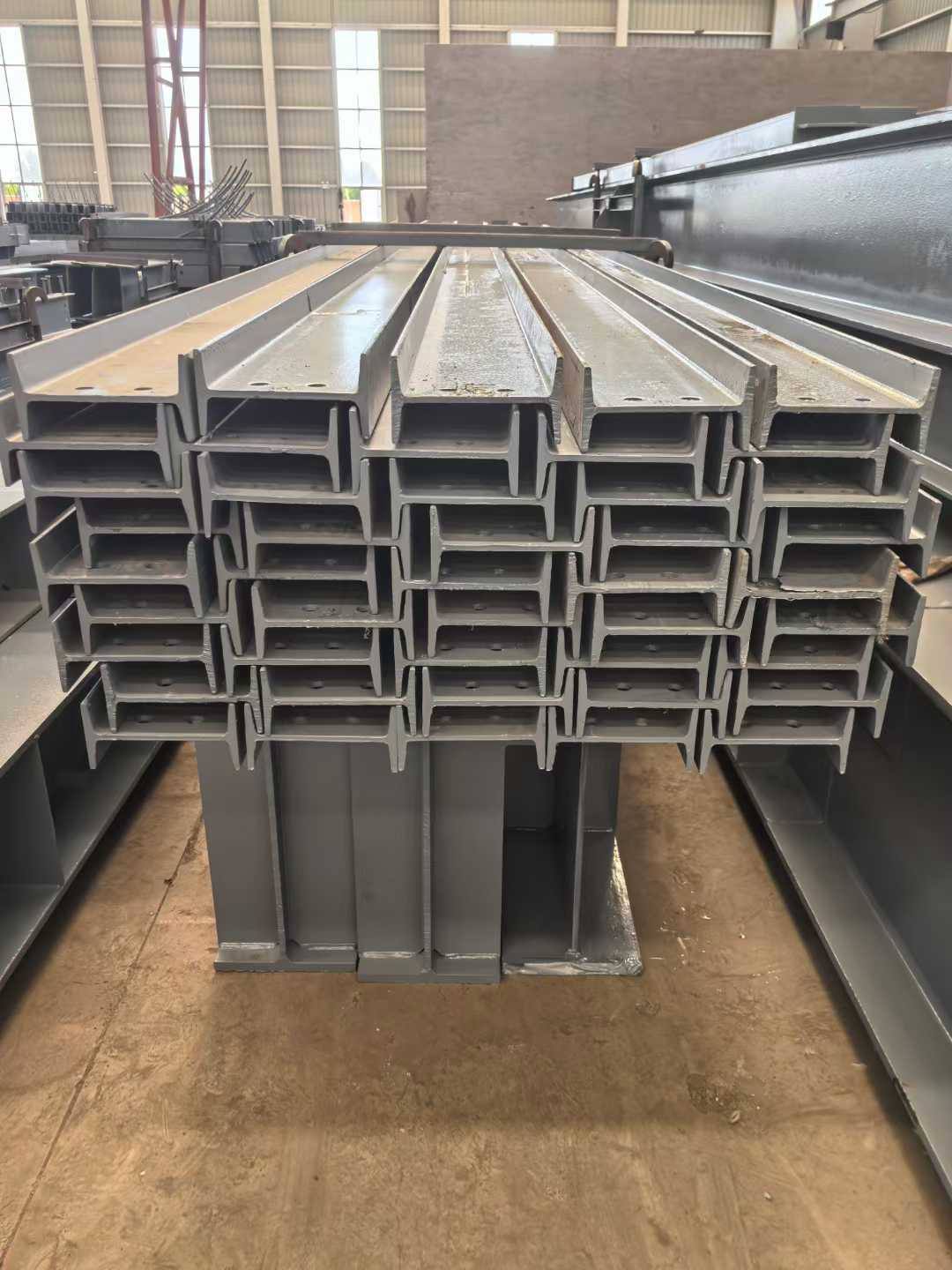
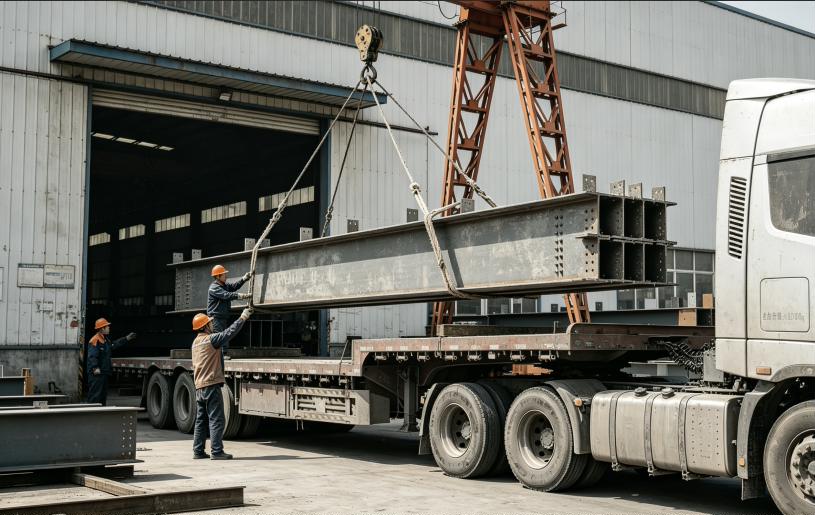
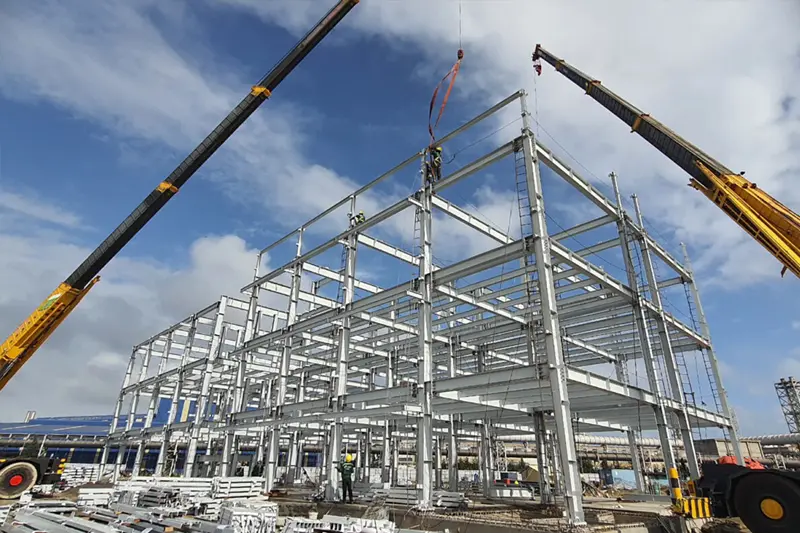
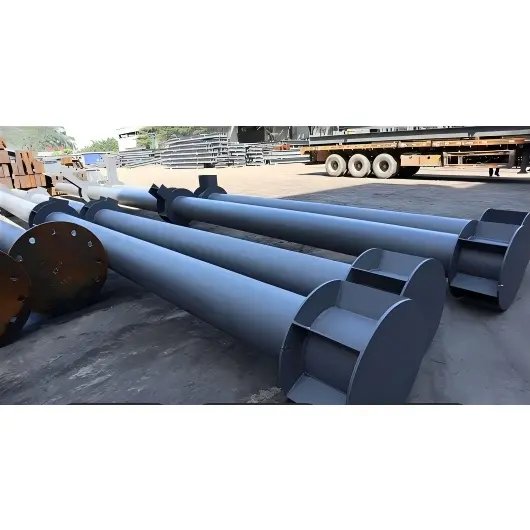
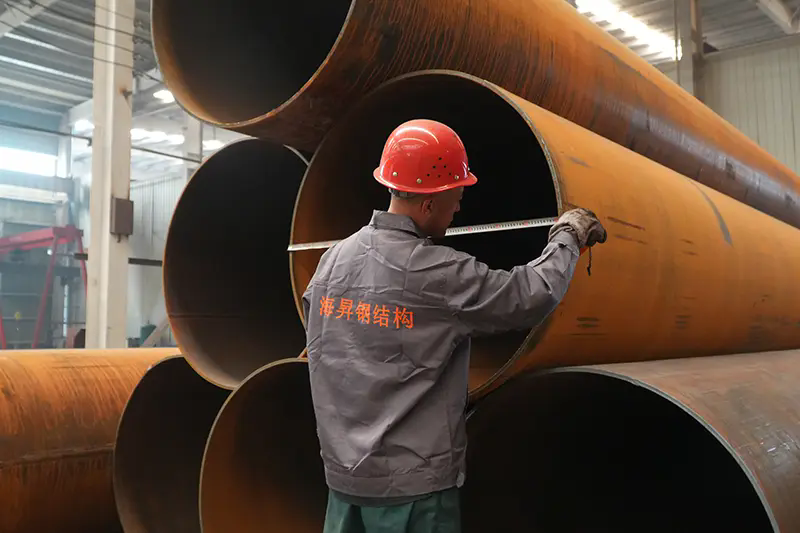
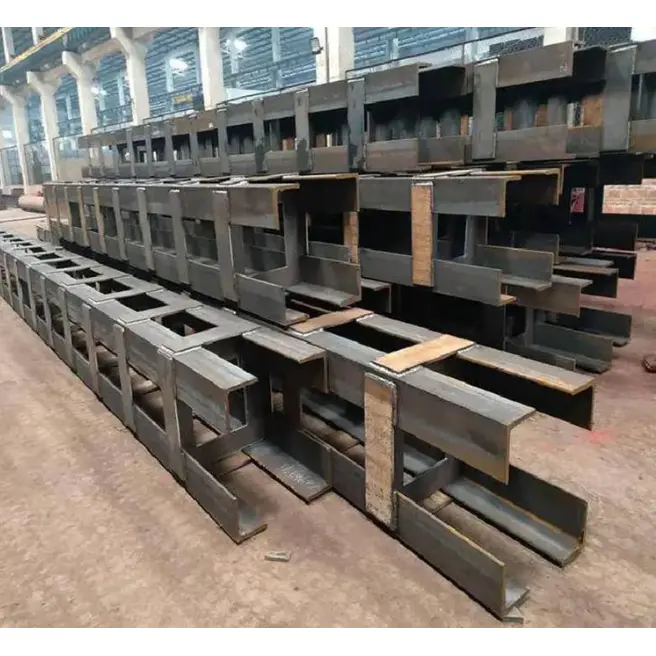
As a reliable manufacturer and one-stop supplier of steel structures in China, HAISHENG provides structural steel components—the core load-bearing units of steel structural systems. These include steel columns, beams, bracing, trusses, and custom-shaped components, primarily fabricated from Q235B and Q355B carbon structural steel. Processed via hot rolling, cutting, welding, and anti-corrosion coating, these components offer high strength, low self-weight, long-span capabilities, short construction cycles, and excellent seismic performance. I-beams and standard steel columns are commonly used in the frameworks of conventional factories and venues; channel steel often serves as secondary load-bearing elements such as purlins, framing members, and supports; while custom-shaped columns and curved/twisted members are suited for long-span and architecturally complex structures. Assembled into a unified framework via welding and bolting, these components are widely used in industrial plants, public venues, curtain wall projects, and municipal facilities. With appropriate anti-corrosion and fire-resistant treatments, they meet long-term durability requirements across diverse environments, including indoor, outdoor, and coastal settings.
What are the characteristics of structural steel components?
I. Excellent Mechanical Properties
1. High strength and load-bearing capacity: Smaller cross-sections are required for the same load, enabling designs for long-span, expansive spaces.
2. Good toughness and ductility: Outstanding seismic and impact resistance, effectively withstanding external forces such as earthquakes and strong winds.
3. Material uniformity and stable load-bearing: Low variability in mechanical properties ensures high precision in engineering calculations and structural design.
II. Advantages in Self-Weight and Spatial Efficiency
The overall self-weight is far lower than that of concrete components, significantly reducing foundation costs and loads on the substructure. The components feature regular profiles, maximizing interior space utilization without obstruction from bulky walls or columns.
III. Construction and Assembly Characteristics
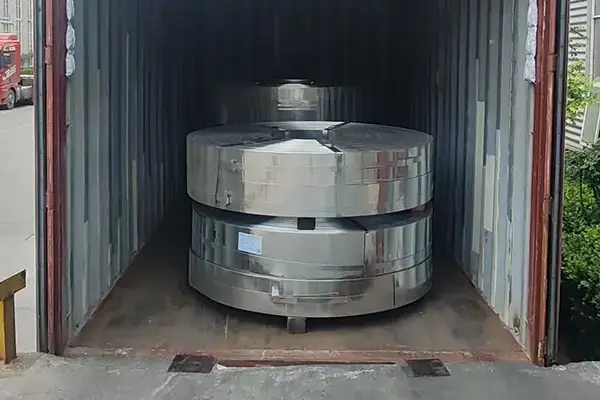
1. Standardized factory prefabrication: On-site work is limited to bolting and welding assembly, resulting in reduced labor and shorter construction cycles.
2. Flexible assembly: Components can be cut and welded as needed to suit various shapes and connection details, facilitating easy modification and dismantling. 3. Convenient for transport and hoisting; adaptable to various site conditions; suitable for remote projects and fast-track construction.
IV. Durability and Protective Adaptability
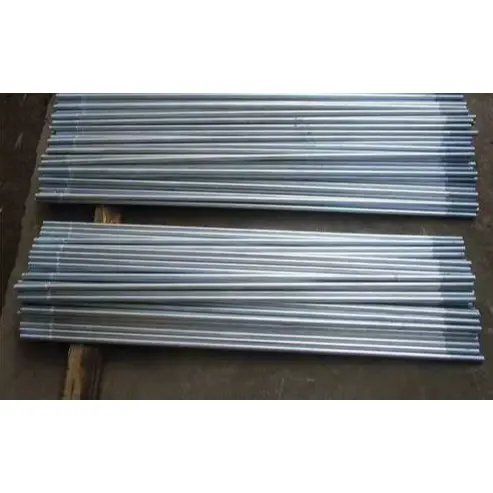
Base materials can be treated with anti-corrosion processes such as painting or hot-dip galvanizing, and supplemented with fire-resistant coatings. This ensures suitability for diverse environments—including indoor, outdoor, and coastal areas with high humidity and salt spray—thereby extending service life.
V. Economic and Environmental Attributes
1. Reasonable total cost, simple maintenance, and low life-cycle cost; a comprehensive range of specifications makes procurement and selection convenient.
2. Steel is recyclable; construction generates minimal dust and waste, meeting green building and low-carbon construction standards.
VI. High Versatility and Variety
The product range covers I-beams, various steel columns, and specially shaped components. These can be combined into different structural systems to meet the needs of standard factories and venues, or to realize complex architectural forms and curved/twisted spatial designs.
Main Uses and Scope of Application
I. Main Uses
1. Vertical Load-Bearing: Acting as core vertical load-bearing elements, these components transfer floor and roof loads to the foundation, ensuring the building's overall vertical stability.
2. Horizontal Load Transfer: I-beams and frame beams support floor, roof, and ceiling loads, transferring forces to steel columns to form an integrated structural system.
3. Spatial Form and Load-Bearing: Specially shaped steel columns and curved/twisted components combine structural load-bearing with architectural aesthetics, enabling designs featuring long spans, streamlined forms, and irregular spatial geometries.
4. Overall Frame Bracing: Components are assembled to create a rigid steel frame that resists horizontal forces—such as wind loads and seismic activity—thereby enhancing the building's overall stiffness.
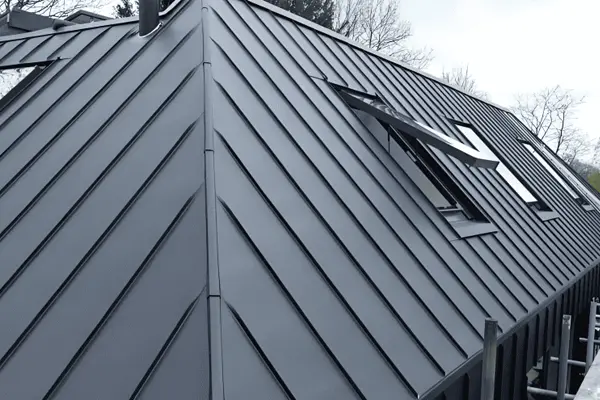
5. Functional Support: Frameworks for floors, platforms, and mezzanines support auxiliary structures such as equipment, curtain walls, and roof envelopes.
II. Specific Applications by Component Type
I-Beams: Primarily used for floor beams, roof beams, and platform main girders to support vertical loads.
Standard Straight Steel Columns: Standard vertical frame columns widely used in regular-shaped factory buildings, office buildings, and venues.
Non-standard steel columns (L-shaped, T-shaped, cruciform, curved/twisted, V-shaped): Suitable for architectural corners, partition wall integration, long-span venues, landscape features, airport terminals, and other areas with unique geometries.
III. Scope of Application
1. Industrial Buildings
Standard factory buildings, warehouses, workshops, logistics depots, equipment platforms, and industrial operating stations; these represent the primary application scenarios for industrial steel structures.
2. Public Buildings
Long-span, large-volume structures such as stadiums, exhibition centers, airport terminals, high-speed railway stations, cinemas, and shopping malls.
3. Municipal and Transportation Engineering
Municipal pedestrian overpasses, bus stations, toll stations, landscape pergolas, and iconic urban structures.
4. Commercial and Civil Buildings
Main frameworks and mezzanine structures for high-rise office buildings, steel-structure residences, hotels, and commercial complexes.
5. Specialized Architectural Structures
Tensile membrane structures, cultural tourism landscape buildings, and unique landmark structures; creative forms are realized through the use of non-standard steel columns and curved/twisted components.
6. Buildings in Coastal and Corrosive Environments
With anti-corrosion coating or galvanizing treatment, they are suitable for use in coastal industrial zones, port facilities, and other areas exposed to salt spray and high humidity.
Differentiated Highlights
I. Compared to Concrete Structural Components
1. Light Self-weight and Reduced Loads
For the same load-bearing capacity, the self-weight is only one-third to one-fifth that of concrete components, significantly reducing foundation costs; ideal for soft soil foundations, long-span structures, and high-rise projects.
2. Greater Spans and Flexible Spaces
Excellent flexural performance enables ultra-wide bays and column-free open spaces, meeting the requirements for large-volume facilities such as factories, stadiums, and exhibition halls.
3. High Construction Efficiency
Factory prefabrication and on-site assembly eliminate the need for curing periods; construction cycles are shortened by over 50%, with minimal weather-related delays.
4. Outstanding Seismic Performance
Steel offers high toughness and deformation capacity, resisting brittle collapse during earthquakes; seismic performance ratings surpass those of traditional concrete components. 5. Flexible Assembly and Modification
Allows for secondary cutting, reinforcement, relocation, and dismantling; offers low costs for renovation, expansion, and relocation, along with high material utilization rates.
6. Eco-friendly Steel
Structural steel components are 100% recyclable and reusable; construction generates minimal waste, meeting low-carbon building standards.
II. Comparison with Standard Small-scale Sections and Simple Components
1. Higher Load-bearing Capacity
Serving as the primary load-bearing core, these components feature superior cross-sections, materials, and manufacturing standards; they offer far greater load-bearing capacity and overall rigidity than purlins, brackets, or small-scale framing, supporting the building's main loads.
2. Strong Overall Stability
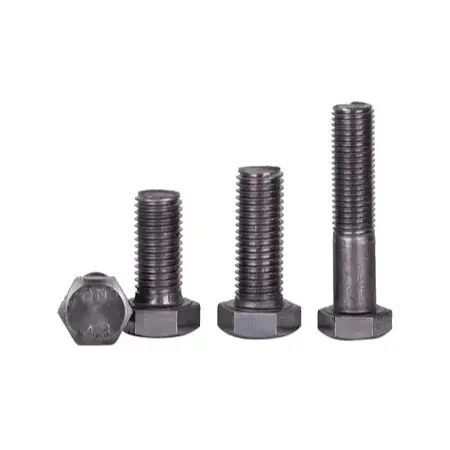
Connections utilize welding and high-strength bolts to form a rigid frame, providing superior resistance to lateral drift, wind loads, and seismic activity.
3. Rigorous Manufacturing Standards
Subjected to flaw detection, straightening, and advanced anti-corrosion and fireproofing treatments, ensuring a longer service life and greater safety margins.
4. Broad System Adaptability
Components such as straight columns, I-beams, and custom-shaped elements can be combined to suit diverse applications, ranging from standard buildings to complex architectural forms and large-span landmarks.
III. Summary of Key Differentiators
1. High Overall Cost-Effectiveness: Fast initial construction and low labor costs, combined with simple maintenance, result in a lower total lifecycle cost.
2. High Design Flexibility: Capable of producing complex shapes—such as curved, twisted, inclined, or bifurcated elements—enabling architectural forms impossible to achieve with traditional structures.
3. Significant Schedule Advantages: Fully industrialized production and assembly make this the preferred structural system for fast-track projects and key infrastructure developments.
4. Comprehensive Environmental Adaptability: Through upgrades in coating, galvanizing, and fireproofing, the system is suitable for diverse environments, including indoor settings, open-air sites, and coastal areas exposed to salt spray.