Tianjin Haisheng Steel Structure Co., Ltd.
Products
High Strength Bolts for Structural Steel Connections
  • High Strength Bolts for Structural Steel ConnectionsHigh Strength Bolts for Structural Steel Connections
  • High Strength Bolts for Structural Steel ConnectionsHigh Strength Bolts for Structural Steel Connections

High Strength Bolts for Structural Steel Connections

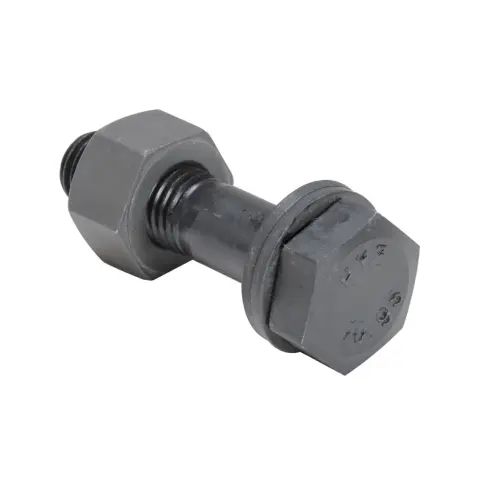
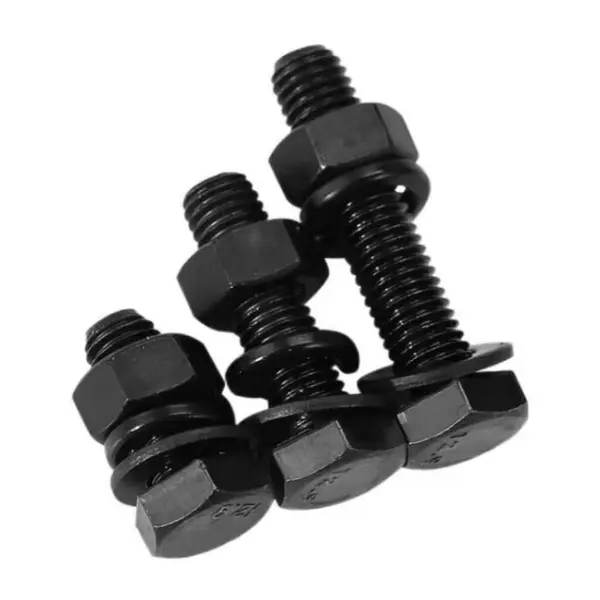
HAISHENG is a professional and reliable manufacturer of steel structures and a one-stop supply provider. It offers spot-on and bulk supply of High Strength Bolts for Structural Steel Connections (large hexagon high-strength bolts). It supports customization of specifications, bulk purchasing, and engineering supply. It is suitable for the construction of various main and secondary load-bearing nodes of steel structures and complies with national construction acceptance standards.

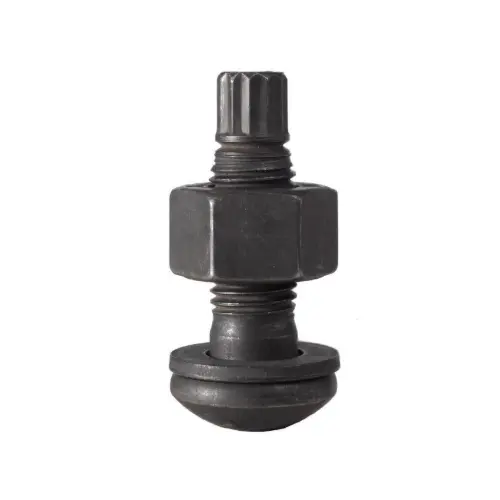
High Strength Bolts for Structural Steel Connections are the most widely used prestressed fastening components in modern steel structure engineering. Different from the twist-shear type high-strength bolts, they have no necking groove. The pre-tension force is precisely applied through torque method or rotation angle method. The products are divided into two mainstream strength grades: 8.8 and 10.9. They can achieve two connection methods: friction type and compression type, and are suitable for various construction conditions such as indoor, outdoor, coastal, and corrosive environments.

HAISHENG's full range of high-strength bolts strictly follow national standards for production and testing. They are in ample stock and have complete specifications. They can directly meet the batch purchase and customization requirements of various steel structure factories, bridges, trusses, and high-rise buildings. They are equipped with complete test data to ensure the compliance of project acceptance.

High Strength Bolts For Structural Steel ConnectionsHigh Strength Bolts For Structural Steel Connections

I. Execution Standards

This section, High Strength Bolts for Structural Steel Connections, strictly complies with the current national standards for steel structure construction and product manufacturing. The entire process of production, testing, and acceptance is carried out in accordance with the regulations. The core execution standards are as follows:

1. Product manufacturing standards: GB/T 1228 - 1231

2. Engineering construction acceptance standards: GB 50205 - 2020


II. Product Basic Definitions and Application Scenarios

2.1 Core Definition of the Product

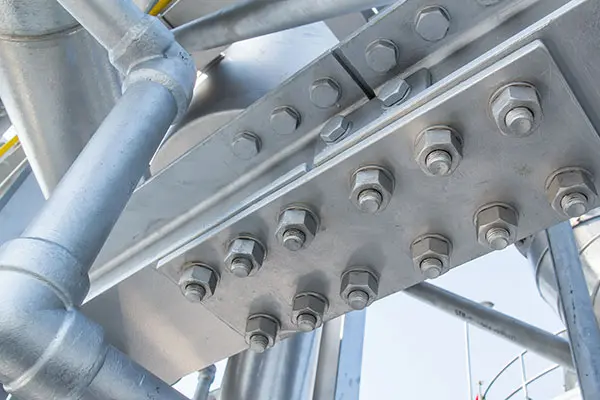
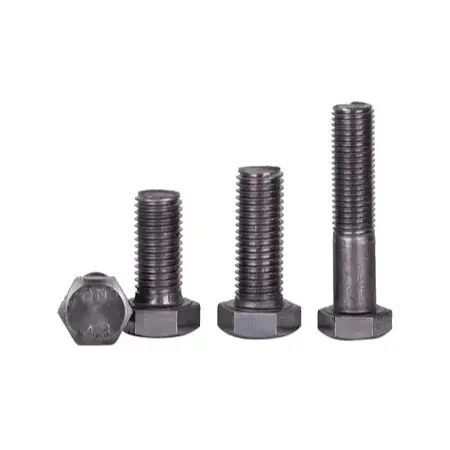
The large hexagon high-strength bolt connection set is a pre-stressed fastener specifically for steel structures. It adopts a standard hexagonal head structure without the necking groove of torsion and shear bolts head structure. During construction, the standard pre-tension force is applied through the torque method or the turning angle method. The load is transmitted through the friction force between the sheet metal contact surfaces, the bearing pressure of the screw, and the shear of the screw. It is divided into two connection modes: friction type and pressure type, and is suitable for most steel structure load-bearing nodes.

2.2 Strength Grades and Applicable Conditions

According to the differences in engineering load-bearing conditions, High Strength Bolts for Structural Steel Connections are divided into two mainstream grades, precisely matching different construction scenarios to avoid performance excess or insufficient bearing capacity issues:

1. 10.9 grade: Suitable for core key load-bearing nodes of steel structures such as beams and columns, columns and beams, steel trusses, and bridges, with strong bearing capacity and excellent fatigue resistance

2. 8.8 grade: Suitable for secondary load-bearing nodes of light steel structures, equipment supports, and building enclosure structures, with high cost performance and compatibility with conventional light-load projects

2.3 Common Materials and Product Identification

All products are processed by high-quality alloy steel quenching and tempering. The material is stable, and the mechanical properties meet the standards. There is no shortage of materials or inferior mixed steel. It meets the long-term engineering service requirements:

1. 10.9 grade bolts: Main material is 20MnTiB, 35VB; the matching nuts and washers are made of 35CrMo, 45# steel

2. 8.8 grade bolts: Main material is 45# steel, 40Cr; the matching nuts and washers are made of 45# steel

3. Product Identification: The bolt body is engraved with 10.9S/8.8S, and the corresponding nuts are engraved with 10H/8H. The identification is clear and wear-resistant, facilitating on-site specification sorting and quality verification

2.4 Common Specifications and Custom Services

Standard specifications are covered in stock for mainstream engineering projects. Customization is also supported for non-standard projects to meet special construction needs:

1. Nominal diameter: M16, M20, M22, M24, M27, M30

2. Nominal length: 40mm to 240mm

3. Custom services: Ultra-long specifications, non-standard special lengths, and special tolerance compatible bolts can be processed to connect various special-shaped steel structure projects


III. Standard Complete Set Configuration

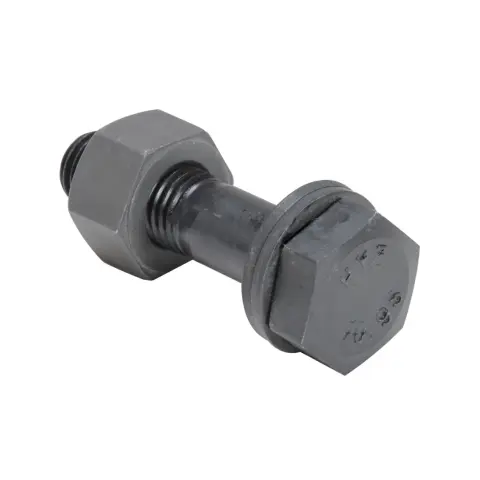
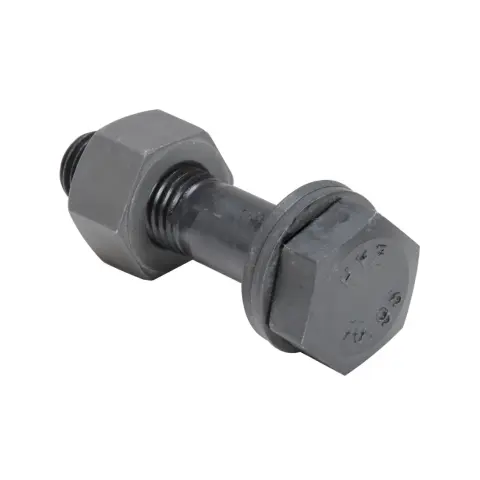
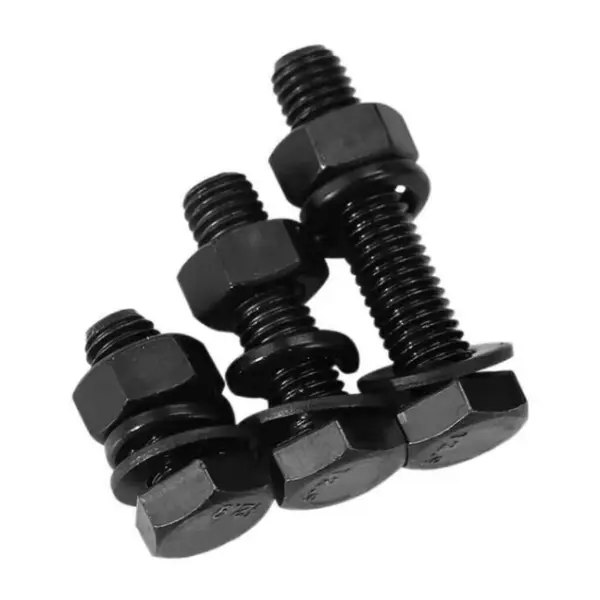
All of HAISHENG's High Strength Bolts for Structural Steel Connections are factory-assembled complete sets. The fixed combination is not disassembled or mixed, avoiding construction quality issues caused by incorrect installation or omission of components at the construction site. A complete connection set includes: 1 bolt + 1 nut + 2 high-strength flat washers.

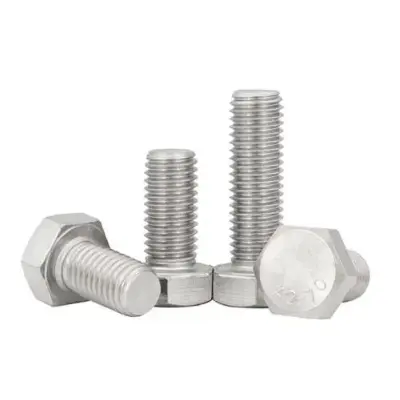
1. Large hexagon high-strength bolts: Standard hexagonal head design, full-threaded body, universally applicable for structures, compatible with conventional construction tools, with extremely strong versatility

2. High-strength nuts: Thickened hexagonal structure, with precise thread matching the bolt, locking firmly and not prone to slippage

3. High-strength flat washers: Installed separately under the bolt head and on both sides of the nut during construction, effectively distributing the pressure, preventing damage to the steel structure base during tightening


IV. Surface Treatment Process

To meet the requirements of different construction environments for anti-corrosion, wear resistance, and anti-slip, we offer three mature surface treatment solutions. The purchasing department can directly select the type based on the project conditions:

1. Phosphating and blackening treatment: Suitable for indoor dry workshops and indoor steel structure projects. It has a stable friction coefficient, high cost performance, and is the mainstream choice for civil and industrial steel structures.

2. Hot-dip galvanizing treatment: Suitable for outdoor, outdoor, coastal humid, and mild corrosion environments. It has excellent anti-corrosion performance. After galvanizing, the surface is uniformly deburred to ensure smooth and unobstructed screw engagement.

3. Dacromet treatment: Suitable for severe corrosion, high humidity, and chemical plant areas, etc. It combines superior anti-corrosion performance with stable anti-slip performance, extending the service life of the joints.


V. Construction Supporting Tools and Material Configuration

5.1 Special Construction Tools

This section: High Strength Bolts for Structural Steel Connections are compatible with conventional standardized construction machinery, requiring no special customized equipment, thereby reducing construction costs at the construction site: Torque Wrench (for both initial and final tightening), Angle Gauge, Thickness Gauge, Marker Pen, Contact Surface Grinding Tools

5.2 Packaging and Factory Documents

1. Packaging Specifications: Each batch is packaged as a complete set independently, and it is strictly prohibited to sell in pieces or mix batches and models. This facilitates warehouse storage, requisition, and inventory checking at the construction site.

2. Supporting Documents: Each batch of products comes with complete and compliant documents that can be directly used for project inspection and acceptance, including Product Certificate of Conformity, Mechanical Performance Test Report, Pre-Tension Test Report, Torque Coefficient Test Report, Anti-Slip Coefficient Test Report


VI. Core Product Advantages

Compared to ordinary bolts, High Strength Bolts for Structural Steel Connections have significant advantages in terms of structural stability, service life, and engineering safety, effectively addressing common engineering problems such as loosening, deformation, and sliding at steel structure joints:

1. Stable mechanical properties: High strength and good toughness, resistant to stretching deformation and fracture under long-term loading, suitable for heavy load and alternating load conditions

2. Excellent anti-slip performance: Adequate and uniform pre-tightening force, tight contact between the plates, effectively eliminating the risk of joint sliding

3. Strong seismic and fatigue resistance: Resistant to equipment vibration, wind vibration, and alternating loads, suitable for high-rise and large-span steel structures

4. High overall safety: Uniform force distribution at the joint, significantly improving the overall stability of the steel structure, reducing engineering risks, and enhancing safety coefficient

5. Strong construction compatibility: Standardized structure, convenient installation, suitable for large-scale batch steel structure construction, shortening construction period and reducing labor costs


VII. Product Differentiation Highlights

7.1 Comparison with 10.9 Grade Torque-Shear High-Strength Bolts Core Strengths

1. The construction space adaptability is extensive: No need to clamp the tail-shaped head, single-side operation, closed cavity, narrow and concealed nodes, and the internal structure of box-type columns can all be constructed normally, solving the construction problems of complex nodes, and its versatility far exceeds that of torsion-shear type bolts.

2. Repairable and reusable: Without destructive neck-breaking structure, it can be normally disassembled during engineering maintenance, renovation, rework, or temporary assembly; connection pairs with qualified appearance, threads, and mechanical properties can be reused, reducing the cost of engineering consumables.

3. Larger specification selection range: Customizable for ultra-large diameters, ultra-long, and non-standard specifications, suitable for ultra-thick laminated plates, extremely large loads, and special nodes, compensating for the limitations of torsion-shear type bolts.

4. Dual force mode compatibility: Supports both frictional and bearing types of connection methods, heavy-load static load nodes can choose the bearing type to enhance the bearing capacity, suitable for more engineering design schemes.

Relative disadvantages

1. Pre-tension force relies on torque and angle control, affected by machine tool accuracy, manual operation, and environmental factors, the pre-tension force accuracy is slightly lower than that of torsion-shear type bolts, and the discrete deviation is slightly larger.

2. Construction requires torque inspection for each bolt, more processes, and a more cumbersome acceptance procedure, overall construction and acceptance efficiency is lower than that of torsion-shear type bolts.

3. The standard configuration is one bolt, one nut, two washers, more accessories, and detailed site sorting and control are required, prone to sorting errors.


VIII. Standardized Construction Techniques

Adapted to the GB 50205-2020 acceptance standard, the mainstream method is torque application for construction, and the high-precision joints can choose the turning angle method. The entire process is standardized, traceable, and verifiable.

8.1 Pre-construction Preparation

1. Technical Material Verification: Verify the construction drawings, bolt specifications, strength grades, design pre-tension force, torque coefficient, and anti-slip coefficient; strictly use the same batch of complete connection sets and prohibit mixed batches and mixtures; reserve 3%-5% spare parts according to the total usage. Bolts are stored in a dry warehouse, with protective sleeves installed on the threads, to prevent rust and oil contamination.

2. Friction Surface Treatment: Through sandblasting, shot blasting, sand wheel grinding, rusting, etc., completely remove the paint, oxide scale, floating rust, and debris from the contact surfaces of the plates; conduct sampling tests for the anti-slip coefficient according to the specifications, and only proceed with construction after meeting the standards; stop work in rainy weather and when the plate surface is dewy.

3. Equipment Calibration: The initial tightening and final tightening torque wrenches must be calibrated before construction and used within the valid period; prepare calipers, marker pens, expansion tools, and turning angle instruments.

4. Specification Selection: Select the appropriate specifications based on the total thickness of the stacked plates, and control the exposed threads of the nut to be 2-3 teeth after tightening, to avoid excessive length or short threads that do not meet the standards.

8.2 Component Assembly and Bolt Insertion

1. Hoisting and positioning of steel components, correcting the axis, elevation, and verticality; when the gap between the plates is greater than 1mm, add corresponding thickness pads according to the specifications.

2. Use temporary bolts and rivets for positioning, with the number of temporary fixings not less than 1/3 of the total number of holes in the joint, and at least 2 sets.

3. Free bolt insertion,prohibition gas cutting expansion, hammering to forcefully insert; if the deviation of the hole position exceeds the standard, it must be rectified according to the special technical plan.

4. Standardized placement of washers: Place one flat washer under the bolt head and one on the side of the nut, ensuring they are placed evenly without any skew; the direction of bolt insertion throughout the site should be unified to ensure standardized construction.

8.3 Initial Tightening Work Flow

1. Function: Eliminate gap and misalignment issues, reduce the final tightening torque deviation, and ensure uniform overall tightening.

2. Torque Value: Generally, take 50% of the final tightening torque.

3. Tightening Sequence: For group bolt joints, symmetrically tighten from the center to the periphery; for long joint seams, advance from the middle to both ends.

4. Identification Control: Mark uniformly after initial tightening, distinguishing between tightened and un-tightened areas; for assembled nodes on the same day, complete initial and final tightening operations on the same day.

8.4 Final Tightening Core Work

Method One: Torque Method

1. Calculate the final tightening torque according to the formula T = K⋅P⋅d (K = torque coefficient, P = standard pre-tension force, d = nominal diameter of the bolt).

2. Use calibrated torque wrenches, tighten each bolt according to the calculated value, strictly controlling the torque deviation within the allowable range.

3. The tightening sequence remains the same as the initial tightening, and after the operation, mark it for identification, to facilitate quality inspection and verification.

Method Two: Turning Angle Method

1. After initial tightening, use the nut as the reference, rotate the nut according to the design and specification requirements, and precisely control the pre-tension force through the twisting angle.

2. Monitor the entire process with a turning angle instrument to ensure the accuracy of the turning angle value and meet the requirements of high-precision construction.

Exception Handling Specifications

If problems such as bolt rotation, thread slippage, or component deformation occur during tightening, immediately stop the operation, replace the entire group with brand-new connection sets, and prohibit repeated tightening or repairing and reusing old bolts.

8.5 Special Torque Re-inspection

After final tightening, randomly sample and re-inspect the torque according to the specified proportion, and the measured torque is considered qualified if within the allowable deviation range; if the re-inspection fails, expand the inspection range and if still unqualified, return and replace all for rework to eliminate quality risks.

8.6 Product Protection and Special Construction in Special Circumstances

1. Do not collide, subject to high-temperature baking from electric welding, or flame cutting of the already tightened nodes to avoid pre-tension force attenuation; for subsequent welding operations, take thermal insulation protection measures.

2. For low-temperature construction, preheat the machinery in advance to avoid torque accuracy issues; after rain, wait until the friction surfaces are completely dry before resuming work.

3. For narrow and concealed joints, use short-handled torque wrenches first to ensure proper construction and inspection.

8.7 Key points for quality acceptance and construction prohibitions

1. Comprehensive visual inspection: The installation position of the gasket is accurate, without missing or skewed; the nut is exposed by 2-3 teeth of the thread; there are no loose or loose problems.

2. Data verification: The calibration records of the wrench, the friction coefficient report, the torque inspection records, and the concealed project acceptance records are complete and intact, allowing for smooth inspection and acceptance.

3. Mandatory construction prohibitions: It is strictly prohibited to mix connection pairs from different manufacturers and batches; it is strictly prohibited to apply paint or mortar on the friction surface; it is strictly prohibited to re-tighten or repair the unqualified bolts on the spot.

8.8 Simple construction process flow

Construction preparation → Friction surface treatment → Component correction + temporary fixation → Bolt insertion → Initial tightening + marking → Final tightening + marking → Torque sampling re-inspection → Finished product protection → Completion acceptance


IX.Core performance parameters

9.1 Raw Material & Hardness

1. Grade 10.9 Bolt: 20MnTiB, 35VB, 42CrMo

2. Grade 8.8 Bolt: 45# steel, 40Cr

3. Nut & Washer: 45# steel, 35CrMo

4. Heat treatment: Integral quenching + high temperature tempering

5. Rockwell Hardness (HRC): Grade 10.9 bolt: 32~38; Grade 8.8 bolt: 24~31; Nuts & Washers: 35~45

9.2 Mechanical Properties (Minimum Value)

Strength Grade

Tensile Strength Rm (MPa)

Yield Strength Re0.2 (MPa)

Elongation After Fracture

Grade 10.9

1040~1240

≥940

≥10%

Grade 8.8

830~1030

≥660

≥12%

9.3 Standard Pre-tension Force (Grade 10.9, Unit: kN)

Size

M16

M20

M22

M24

M27

M30

Standard Pre-tension

80

125

150

175

225

275

Allowable Deviation

±10%

±10%

±10%

±10%

±10%

±10%

Note: Grade 8.8 high strength bolts have no mandatory unified pre-tension force, constructed according to design torque.

9.4 Torque Coefficient

1. Standard range: 0.110~0.150

2. Variation coefficient: ≤3%

3. Calculation formula: T=K⋅P⋅d (T=Final tightening torque, K=Torque coefficient, P=Pre-tension force, d=Nominal bolt diameter)

9.5 Thread & Dimensional Tolerance

1. Thread precision: Bolt Class 6g, Nut Class 6H

2. Total bolt length tolerance: ±2 mm

3. Shank straightness: ≤1‰

4. Nut bearing surface verticality: ≤1°

9.6 Connection & Anti-slip Performance

1. Anti-slip coefficient (sandblasting/shot blasting treatment): μ≥0.45

2. Pre-tension dispersion of torque method: ≤±10%

3. Force mode: Support friction-type and bearing-type connections

9.7 Surface Anti-corrosion Parameters

1. Phosphating & blackening: Film thickness 5~15 μm, stable friction coefficient for indoor projects

2. Hot-dip galvanizing: Zinc layer ≥85 μm, suitable for outdoor & coastal corrosive environments, thread re-tapping required

3. Dacromet coating: Film thickness 6~10 μm, applied for heavy corrosion working conditions

9.8 On-site Installation Acceptance Index

1. Washer configuration: 1 washer under bolt head + 1 washer on nut side, no missing or reverse installation

2. Qualified standard: 2~3 exposed complete threads outside the nut

3. Tightening rule: Symmetrical tightening from center to surrounding for bolt groups

4. Initial tightening torque: About 50% of final tightening torque


X. Factory Supply Advantages

1. Direct supply from the source factory: HAISHENG has been deeply engaged in the production of steel structure fasteners for many years. It has its own production lines and quality inspection teams, eliminating the need for middlemen, and bulk purchases offer better cost-effectiveness.

2. Stable delivery of goods in stock: All mainstream specifications are regularly stocked in stock, enabling quick responses to urgent replenishments and delivery of large-scale orders, ensuring the progress of the project schedule.

3. Full-process quality inspection and traceability: From raw material entry, heat treatment processing to finished product delivery, multiple inspections are conducted throughout the process. Each batch can provide complete inspection materials, supporting the traceability for project acceptance.

4. Customized supporting services: It supports non-standard specifications customization, surface treatment customization, and one-stop supply of engineering bulk orders, solving the procurement needs for steel structure fasteners in a comprehensive manner.


Hot Tags: High Strength Bolts for Structural Steel Connections, Supplier, China
Send Inquiry
Contact Info
Contact HAISHENG China supplier of Structural Steel Components, Steel Structure Cladding Components and Structural Steel Fasteners. Our professional sales team will reply with detailed quotation, product parameters and delivery plan within 24 hours to meet your bulk procurement demand.
X
We use cookies to offer you a better browsing experience, analyze site traffic and personalize content. By using this site, you agree to our use of cookies.Privacy Policy
RejectAccept