Tianjin Haisheng Steel Structure Co., Ltd.
Products
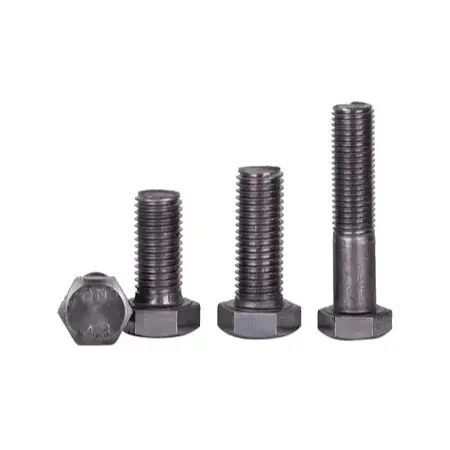
Hot Dip Galvanized Bolts for Steel Structures
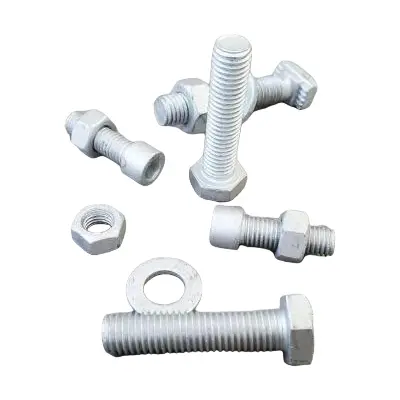
  • Hot Dip Galvanized Bolts for Steel StructuresHot Dip Galvanized Bolts for Steel Structures
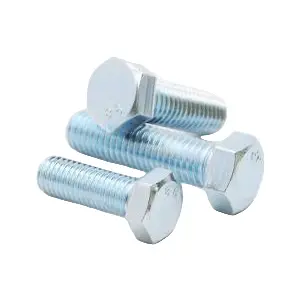
  • Hot Dip Galvanized Bolts for Steel StructuresHot Dip Galvanized Bolts for Steel Structures
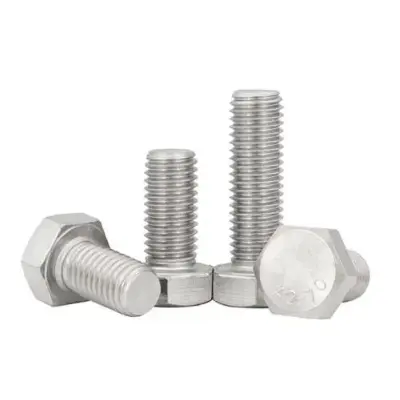
  • Hot Dip Galvanized Bolts for Steel StructuresHot Dip Galvanized Bolts for Steel Structures
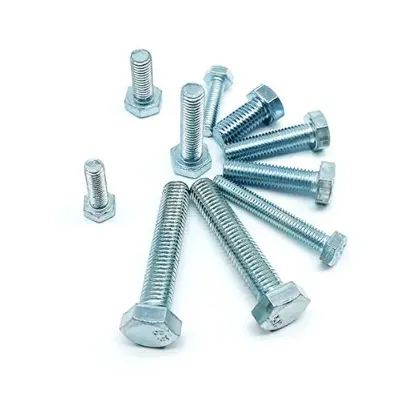
  • Hot Dip Galvanized Bolts for Steel StructuresHot Dip Galvanized Bolts for Steel Structures

Hot Dip Galvanized Bolts for Steel Structures

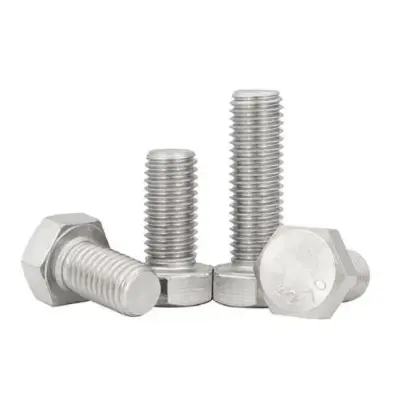
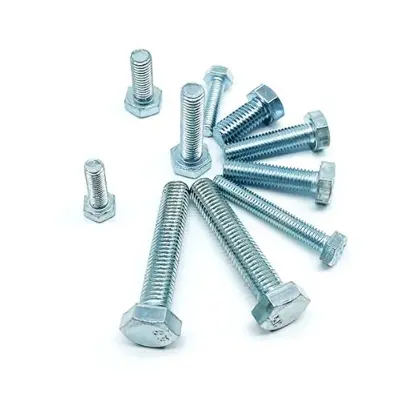
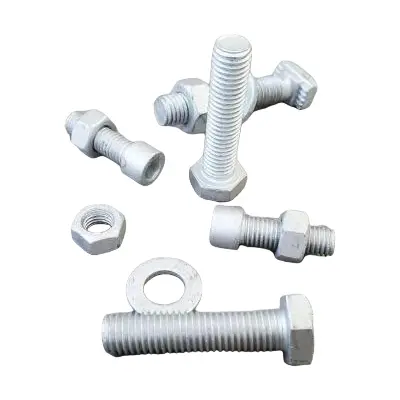
HAISHENG is a specialized manufacturer and one-stop supplier of steel structure fasteners, offering readily available Hot Dip Galvanized Bolts for Steel Structures. We support bulk purchasing, customization of non-standard specifications, and the supply of complete connection assemblies. Our products feature two anti-corrosion finishes—electro-galvanizing and hot-dip galvanizing—and span strength grades from 4.6 to 10.9, making them suitable for steel structures in coastal, outdoor, and chemically corrosive environments.

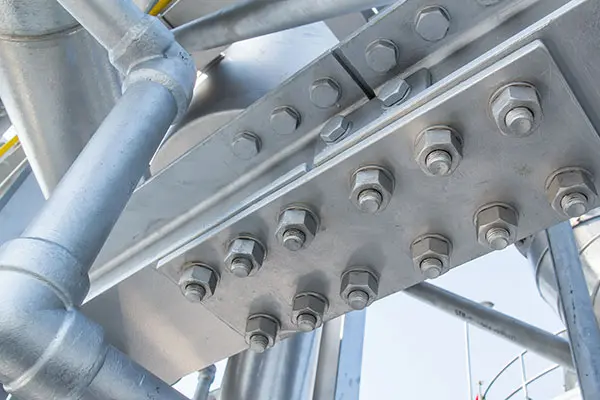
Hot Dip Galvanized Bolts for Steel Structures are manufactured using standard bolts and high-strength pre-tensioned bolts as base materials. Through electro-galvanizing or hot-dip galvanizing processes, a protective zinc layer is applied to the surface, specifically designed for structural connections exposed to corrosive conditions such as high humidity, outdoor exposure, coastal salt spray, and chemical environments.

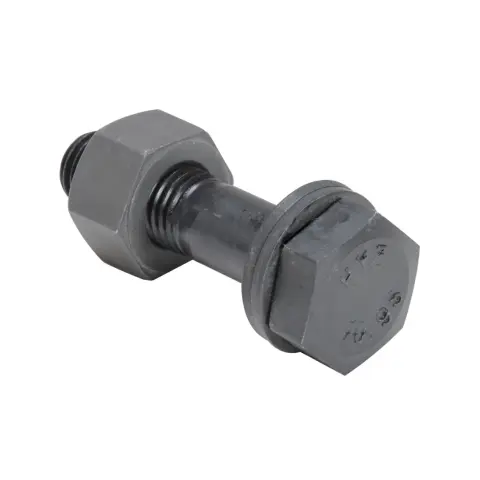
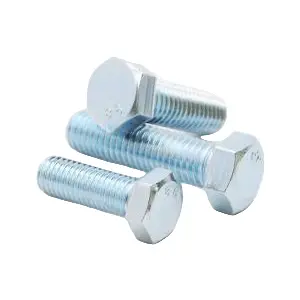
The product range comprises three main categories: galvanized standard bolts, galvanized large-hex high-strength bolts, and galvanized tension-control (TC) high-strength bolts. Strength grades cover standard structural classes (4.6, 4.8, 5.6) and primary load-bearing classes (8.8, 10.9).

HAISHENG’s entire line of galvanized bolts is manufactured in strict accordance with national standards for both the zinc coating and the bolt body. Each shipment includes complete connection assemblies and comprehensive inspection documentation, ensuring corrosion resistance, ease of installation, and compliance with project acceptance standards. We provide a one-stop solution for all fastener procurement needs across new construction and renovation steel structure projects.

Hot Dip Galvanized Bolts For Steel StructuresHot Dip Galvanized Bolts For Steel StructuresHot Dip Galvanized Bolts For Steel StructuresHot Dip Galvanized Bolts For Steel Structures

I. Product Standards

1. Galvanizing Process Standards

1. Hot-dip galvanizing: GB/T 13912

2. Electro-galvanizing (cold galvanizing): GB/T 10125

2. Bolt Manufacturing Standards

1. Standard galvanized bolts: GB/T 5780, GB/T 5782

2. Galvanized large-hexagon high-strength bolts: GB/T 1228

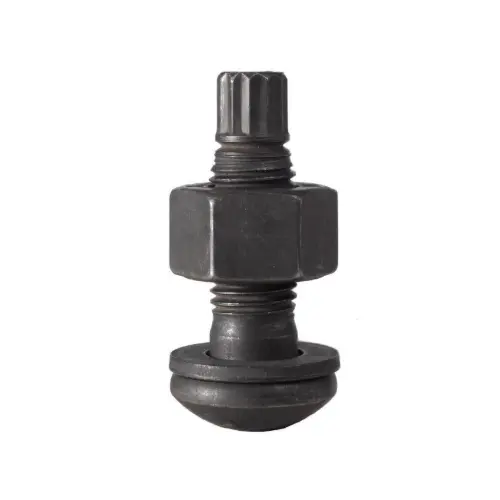
3. Galvanized torsion-shear high-strength bolts: GB/T 3632


II. Product Definitions and Classification

2.1 Basic Concepts

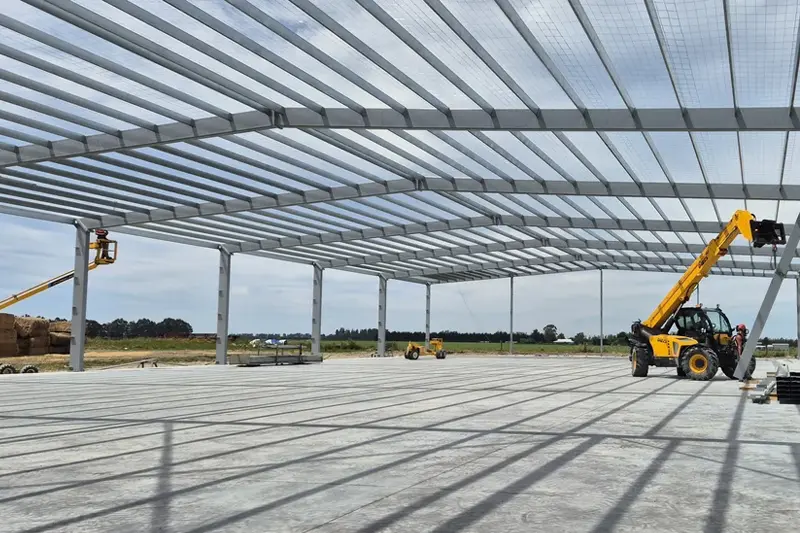
Hot Dip Galvanized Bolts for Steel Structures utilize standard or high-strength steel bolts as the base material. A protective zinc barrier is formed on the workpiece surface via electrochemical or high-temperature molten-bath methods. This barrier isolates the bolt from air, moisture, salt, and corrosive agents, preventing rust and thread seizure at the source. They are widely used in steel structure connections exposed to corrosive conditions, such as humid indoor factories, outdoor venues, coastal wind power installations, and chemical industry pipe racks.

2.2 Classification by Galvanizing/Anti-corrosion Process

1. Hot-dip galvanizing

The workpiece is fully immersed in molten zinc at 450–480°C. A metallurgical bond occurs between the zinc and the steel, forming a zinc-iron alloy layer. This process yields a thick coating with strong adhesion and long-lasting salt-spray resistance; it is a heavy-duty anti-corrosion solution suitable for long-term outdoor use and high-salinity environments.

2. Electro-galvanizing (cold galvanizing)

A thin zinc layer is deposited via electrolysis at room temperature. There is virtually no change to the workpiece's dimensions, and no need for oversized nut threading. This method focuses on light anti-corrosion and aesthetic appearance, making it suitable for humid indoor environments and short-term outdoor projects. 

2.3 Classification by Bolt Base Material Strength and Loading Type

1. Galvanized Ordinary Bolts

Mainstream strength grades include 4.6, 4.8, and 5.6; categorized into Class C (coarse/black bolts) and Class A/B (precision/machined bolts). These bolts are designed without preload and transfer loads through shank bearing and shear; they are used solely for secondary envelope structures, railings, and temporary connection nodes.

2. Galvanized High-Strength Bolts

Categorized into galvanized large-hex high-strength bolts (Grades 8.8 and 10.9) and galvanized torsion-shear high-strength bolts (Grade 10.9). These are pre-tensioned fastener assemblies that transfer loads via standard preload combined with friction between plates; they are specialized components for primary structural connections such as steel columns, crane beams, and trusses.

2.4 Standard Supply Specifications

Nominal diameter: M16, M20, M22, M24, M27, M30

Nominal length: 40mm–240mm

Customization available for non-standard specifications (extra-long, variable-diameter, or special threads) to suit irregular, thickened, or multi-layered plate connections.


III. General Requirements for Complete Connection Assemblies

1. The complete set—comprising the bolt, nut, and washer—must utilize the same galvanizing process, originate from the same manufacturer, and be packaged as a single batch. Mixing galvanized components with black-oxide or phosphated parts is prohibited to prevent torque coefficient deviations or assembly jamming.

2. Due to the increased thread outer diameter caused by the hot-dip galvanizing coating, all mating nuts undergo thread enlargement (re-tapping) and are matched as a complete set at the factory; standard ordinary nuts must not be used interchangeably.

3. All mating nuts and flat washers undergo the same galvanizing process to ensure uniform corrosion resistance across the entire assembly. IV. Standard Assembly Configurations for Three Types of Galvanized Bolts

4.1 Galvanized Standard Bolts

Standard assembly: 1 galvanized bolt + 1 galvanized nut + 1 galvanized flat washer.

Optional configuration: For components subject to vibration or frequent movement, a galvanized spring washer may be added to assist in preventing loosening.

Installation specifications: The flat washer must sit flush against the steel plate contact surface; the spring washer opening must face the compression side.

4.2 Galvanized High-Strength Large Hex Bolts

Standard assembly: 1 galvanized large hex bolt + 1 galvanized nut + 2 galvanized flat washers.

Installation specifications: Place one flat washer under the bolt head and one on the inner side of the nut; ensure neither washer is omitted or installed in reverse.

4.3 Galvanized High-Strength Torsional Shear Bolts

Standard assembly: 1 galvanized torsional shear bolt + 1 galvanized nut + 1 galvanized flat washer.

Installation specifications: Place the flat washer only on the nut side (do not install a washer under the bolt head) to ensure proper clearance for the torsional shear wrench.


V. Hot Dip Galvanized Bolts for Steel Structures Key Product Advantages

1. Long-lasting rust resistance far exceeds that of standard black-oxide bolts; they resist overall rusting and thread seizure during long-term use in outdoor or coastal environments.

2. Uniform, bright silver zinc coating ensures a neat, consistent appearance after installation, facilitating better visual inspection results on-site.

3. The zinc coating provides inherent lubrication, ensuring smooth assembly and disassembly; they allow for repeated removal and maintenance without easily stripping threads or snapping shanks.

4. Ample stock is available for a full range of specifications, ensuring high versatility; bulk procurement costs are controllable, offering excellent value for money.

5. The hot-dip galvanized coating offers cathodic protection; even if the surface sustains minor impact damage, it continues to protect the steel substrate against corrosion from rain, salt spray, and harsh construction site conditions.


VI. Key Product Differentiation Highlights

6.1 Unified Advantages of Galvanized Bolts (vs. Black-oxide or Phosphated Bolts)

1. Significantly Enhanced Corrosion Resistance: The zinc layer acts as a barrier against corrosive agents, preventing thread rust and seizure; service life in humid or outdoor conditions is increased several-fold.

2. Smoother Disassembly and Maintenance: The zinc layer provides inherent lubrication, ensuring no thread binding or seizure after long-term service, thereby reducing costs for future modifications and inspections.

3. High Visual Distinctiveness: The uniform silvery-white coating makes it easy to distinguish specifications and batches on-site, minimizing errors from material mixing and simplifying visual inspection and acceptance.

4. Impact-Resistant Coating: The dense zinc layer resists large-scale peeling during handling and installation, ensuring more stable and reliable corrosion protection.

6.2 Unique Advantages of Hot-Dip Galvanizing

1. Industry-Leading Heavy-Duty Corrosion Protection: Coating thickness ranges from 45 to 100 μm; the zinc-iron alloy metallurgical bond offers exceptional adhesion, wear resistance, and salt-spray resistance, ensuring stable performance for 20–30 years in coastal or outdoor chemical environments.

2. Active Cathodic Protection: If the coating is locally damaged, the zinc corrodes preferentially, automatically protecting the underlying steel and preventing the spread of rust.

3. Comprehensive, All-Around Protection: Threads, crevices, corners, and internal surfaces are fully coated, leaving no unprotected areas.

6.3 Unique Advantages of Electro-Galvanizing (Cold Galvanizing)

1. Negligible Change in Dimensional Accuracy: With a coating thickness of only 3–5 μm, the increase in thread outer diameter is minimal; standard nuts can be used for direct assembly without the need for re-threading or thread modification.

2. Moderate Procurement Costs and Simple Process: Offers superior cost-effectiveness for indoor projects requiring light-duty corrosion protection.

3. Fine, Smooth Surface Finish: Provides a superior aesthetic appearance for exposed structural components, making it the preferred choice for projects where visual quality is a priority. 

6.4 Comparison of Limitations for Three Surface Treatments (Selection Pitfalls)

1. Hot-dip galvanizing: High unit cost for individual purchases; increased coating thickness alters the torque coefficient, requiring separate torque wrench calibration for high-strength bolts; unsuitable for temperatures above 300°C or prolonged exposure to strong acids/alkalis.

2. Electro-galvanizing: Thin coating with weak adhesion; insufficient wear resistance and long-term corrosion protection; unsuitable for year-round outdoor use or areas with heavy salt spray.

3. Blackening/Phosphating: Lowest purchase price but extremely poor rust resistance; suitable only for enclosed, dry, temperature-controlled indoor environments; rusts quickly outdoors.

6.5 Quick Selection Guide

1. Dry indoor factory buildings, strict cost control → Blackened/Phosphated bolts

2. Humid indoor environments, short-term outdoor use, emphasis on dimensional accuracy and appearance → Electro-galvanized bolts

3. Long-term outdoor exposure, coastal salt spray, chemical corrosion, requirement for long-lasting, maintenance-free connections → Hot-dip galvanized bolts


Standardized On-site Construction Procedures

Applicable standard: GB 50205-2020 (Hot Dip Galvanized Bolts for Steel Structures); covers galvanized ordinary bolts, galvanized large-hex high-strength bolts, and galvanized torsion-shear high-strength bolts, including specific requirements for hot-dip galvanized components.

7.1 Pre-construction Preparation

1. Material Verification

Verify bolt specifications, strength grades, and galvanizing processes; ensure strict use of matched sets from the same batch; do not mix galvanized components with blackened accessories. Nuts for hot-dip galvanized high-strength bolts feature enlarged threads; do not mix with standard nuts. Inspect coating integrity upon arrival; remove zinc nodules and burrs beforehand using a fine file.

2. Construction Equipment

Ordinary galvanized bolts: Manual or electric general-purpose wrenches;

Galvanized high-strength bolts: Torque wrenches calibrated for specific torque values, angle meters, and specialized torsion-shear wrenches;

Auxiliary tools: Wire brushes, fine files, and zinc-rich anti-rust repair paint. 3. Pre-treatment of connecting surfaces

Clean the contact surfaces of the plates to remove dust, oil, loose rust, and galvanizing residue; install matching backing plates of the same thickness if the joint gap exceeds 1 mm; suspend construction during rainy weather or when plate surfaces are damp due to condensation.

4. Pre-calculation of torque parameters

The standard torque coefficient range for hot-dip galvanized high-strength bolts is 0.18–0.22; for electro-galvanized high-strength bolts, the conventional range of 0.110–0.150 applies. Calculate the final tightening torque using the formula and calibrate the wrenches prior to installation.

7.2 Component positioning and bolt insertion

1. Hoist steel components into place and adjust the axis, elevation, and verticality; secure firmly with temporary supports.

2. Align bolt holes using drift pins or a few temporary bolts; avoid forcing the holes into alignment by pulling or tugging the components.

3. Insert bolts freely; hammering or enlarging holes via gas cutting is strictly prohibited. Minor hole deviations may only be corrected by slight filing.

4. Position washers strictly according to specifications:

Standard galvanized bolts: Steel plate surface → Flat washer → (Spring washer) → Nut

Galvanized large-hex high-strength bolts: One flat washer under the bolt head and one on the nut side

Galvanized tension-control (TC) high-strength bolts: One flat washer on the nut side only

5. Standardize the bolt insertion direction across the site to facilitate uniform tightening and quality inspection.

7.3 Tightening procedures by bolt type

(1) Standard galvanized bolts

1. For bolt groups, tighten symmetrically from the center outwards; for long splice joints, proceed sequentially from the middle toward both ends.

2. The tightening criterion is the close contact of the two steel plates; there are no mandatory requirements for specific initial or final tightening torque values.

3. Install spring washers for applications subject to vibration; ensure the washer gap does not press directly against the bearing surface to maintain the anti-loosening function. 

(2) Galvanized Large Hexagon Head High-Strength Bolts

1. Initial tightening: Apply 50% of the calculated final tightening torque; tighten symmetrically to eliminate gaps between spliced plates.

2. Final tightening: Tighten all bolts to the calibrated torque value, maintaining the same tightening sequence as the initial tightening; hot-dip galvanized bolts must use their specific calibrated torque parameters.

3. For construction sites with significant diurnal temperature variations, adjust the final tightening torque appropriately based on the ambient temperature.

(3) Galvanized Torsion-Shear High-Strength Bolts

1. Complete the initial tightening first, then perform final tightening using a specialized electric torsion-shear wrench until the splined end (spline tip) shears off completely at the break-neck groove.

2. No torque instrument re-inspection is required; the complete shearing off of the spline tip serves as the indicator of successful installation.

7.4 Appearance Touch-up and Finished Product Protection

1. Clear away iron filings, zinc dross, and debris from around the connection joints; apply zinc-rich touch-up paint to areas with coating nicks, scratches, or cut edges to restore the anti-corrosion layer.

2. Check the length of exposed threads beyond the nut; the standard is 2–3 threads. If the length is excessive or insufficient, replace the bolt with one of the correct specifications.

3. Protect completed joints from heavy impacts, high-temperature exposure from electric welding, and external disturbances to prevent damage to the zinc layer or loss of pre-tension.

7.5 Quality Inspection and Project Acceptance

1. Comprehensive visual inspection: Ensure washers are correctly installed and positioned; verify no bolts are missed or improperly tightened; check that the zinc layer is intact without large-scale peeling and that exposed thread lengths meet specifications.

2. Targeted sampling inspection of high-strength bolts: Re-test torque on a sample basis according to specified ratios; torque deviations for hot-dip galvanized components must meet standards. If a sample fails, expand the inspection scope and rework the entire batch by replacing the connection assemblies.

3. Documentation and archiving: Retain wrench calibration records, torque test reports, quality certificates for the galvanized coating, and acceptance records for concealed works for project submission and verification.

7.6 Mandatory Construction Prohibitions

1. It is strictly prohibited to use torque parameters intended for black-oxide (untreated) bolts when installing hot-dip galvanized high-strength bolts. 2. Gas-cutting to enlarge holes, flame heating, and heavy hammering of workpieces are strictly prohibited to prevent extensive damage to the zinc coating or the steel substrate.

3. Mixing connection assemblies (bolt sets) from different galvanizing processes or production batches is prohibited.

4. Twist-off type high-strength bolts must be discarded immediately after the spline (spline end) shears off and cannot be reused; galvanized high-strength hex bolts must undergo re-inspection of mechanical properties after disassembly, and reuse is prohibited if they fail to meet requirements.


VIII. Key Performance Parameters

8.1 Coating Performance Parameters

Parameter Item

Electro-galvanized (Cold Galvanized)

Hot-dip Galvanized

Coating Thickness

3~5 μm

45~100 μm

Combination Form

Physical adhesion

Metallurgical bonding (Zn-Fe alloy layer + pure zinc layer)

Salt Spray Test Duration

≤200 h

≥1000 h

Conventional Outdoor Service Life

3~5 years

20~30 years

Surface Appearance

Fine and smooth coating

Natural zinc spangle, slightly rough surface

8.2 Mechanical Properties of Galvanized Ordinary Bolts (Minimum Value)

Strength Grade

Tensile Strength (MPa)

Yield Strength (MPa)

Rockwell Hardness (HRC)

Grade 4.6

400

240

≤28

Grade 4.8

400

320

≤28

Grade 5.6

500

300

22~32

8.3 Mechanical Properties of Galvanized High Strength Bolts (Minimum Value)

Strength Grade

Tensile Strength (MPa)

Yield Strength (MPa)

Rockwell Hardness (HRC)

Grade 8.8

830~1030

≥660

24~31

Grade 10.9

1040~1240

≥940

32~38

8.4 Thread & Dimensional Tolerance

Thread Precision

Electro-galvanized: Class 6g / 8g, nearly unchanged thread dimension

Hot-dip galvanized: Thread outer diameter increased by coating, matched nuts are tapped for smooth assembly

Nominal Length Tolerance: ±2 mm

Shank Straightness: Ordinary bolts ≤1.5‰; High strength bolts ≤1‰

8.5 Torque Coefficient (Only for High Strength Bolts)

Electro-galvanized high strength bolts: 0.110~0.150 (same as black phosphated bolts)

Hot-dip galvanized high strength bolts: 0.18~0.22, torque wrench must be calibrated separately, general torque parameters cannot be reused

8.6 Installation Acceptance Indicators

Standard exposed thread: 2~3 complete threads outside nut after tightening

Washer Matching Rules

Ordinary galvanized bolt: 1 flat washer as standard, spring washer optional for vibration positions

Large hexagon high strength bolt: 1 flat washer under bolt head + 1 flat washer on nut side

Torque shear high strength bolt: Only 1 flat washer on nut side

Service temperature limit: Working temperature below 300℃, avoid long-term contact with strong acid and alkali

8.7 Additional Service Characteristics

Lubrication performance: Zinc coating provides self-lubrication, prevents thread seizure and jamming for convenient later disassembly

Cathodic protection: Hot-dip galvanized layer delivers cathodic protection to slow substrate rust when coating is damaged; electro-galvanized coating has no obvious cathodic protection effect

Reusability: Ordinary galvanized bolts can be disassembled repeatedly; hot-dip galvanized torque shear bolts are scrapped after tail cutting, large hexagon galvanized bolts can be reused only after performance re-inspection


IX. HAISHENG Factory Supply Advantages

Direct Manufacturer: We operate our own full-process production lines for hot-dip galvanized bolts for steel structures, complete with in-house heat treatment and galvanizing workshops. Eliminating middlemen ensures significant cost advantages for large-scale overseas project procurement.

Reliable Stock & Delivery: We maintain year-round inventory of galvanized standard and high-strength bolts (sizes M16–M30), enabling rapid response to urgent orders and phased shipment requests to ensure overseas project schedules are met.

Comprehensive Quality Control: Procedures include raw material re-inspection, heat treatment hardness checks, salt spray testing for coating thickness, and torque sampling on finished products. Complete third-party inspection reports are available for every batch to meet overseas project acceptance standards.

One-Stop Supporting Services: We support customization for non-standard lengths and special coating thicknesses. We can also supply matching embedded plates, steel structure edge forms, and high-strength bolts as a complete package for export.

Compliant Export Packaging: Moisture-proof and rust-resistant export-grade cartons or wooden pallets are used. Packages include certificates of conformity, material specifications, and coating test data in both Chinese and English to ensure smooth customs clearance and on-site acceptance.


X. FAQ

Q: Should I choose electro-galvanized or hot-dip galvanized bolts for coastal projects?

A: For long-term outdoor use in coastal environments with salt spray, hot-dip galvanized bolts are mandatory. They feature a thick coating, withstand over 1, 000 hours of salt spray testing, and offer a service life exceeding 20 years. Electro-galvanized bolts have a thin coating and are suitable only for short-term indoor use in humid conditions.


Q: Why can't the torque values for black-oxide (phosphated) bolts be used directly for Hot Dip Galvanized Bolts for Steel Structures?

A: The hot-dip galvanized zinc layer increases the thread friction coefficient (standard range 0.18–0.22) compared to black-oxide bolts (0.11–0.15). Directly applying the same torque values would result in insufficient preload and a risk of joint slippage; therefore, torque wrenches must be calibrated specifically for these bolts.


Q: How should I handle galvanized bolts if the coating chips or peels off?

A: For minor scratches or areas where the coating has peeled, a compatible zinc-rich repair paint may be applied on-site; however, if a large area of the zinc layer has detached, it is recommended to replace the entire fastener assembly to prevent accelerated localized corrosion.


Q: Can galvanized tension-control (TC) bolts be disassembled and reused after the spline has been sheared off?

A: No. Once the spline (splined end) is sheared off, the internal neck-break groove structure is compromised, making it impossible to apply the required standard preload. These are single-use, permanent fastener assemblies that must be discarded after removal.


Q: Can galvanized standard bolts and high-strength bolts be used together at the same connection point?

A: Mixing them is not recommended. Their design load capacities and tightening standards differ significantly; a single load-bearing connection point requires the use of bolts with identical strength grades and manufacturing specifications.


Hot Tags: Hot Dip Galvanized Bolts for Steel Structures, Manufacturer, Supplier, Wholesale
Send Inquiry
Contact Info
Contact HAISHENG China supplier of Structural Steel Components, Steel Structure Cladding Components and Structural Steel Fasteners. Our professional sales team will reply with detailed quotation, product parameters and delivery plan within 24 hours to meet your bulk procurement demand.
X
We use cookies to offer you a better browsing experience, analyze site traffic and personalize content. By using this site, you agree to our use of cookies.Privacy Policy
RejectAccept