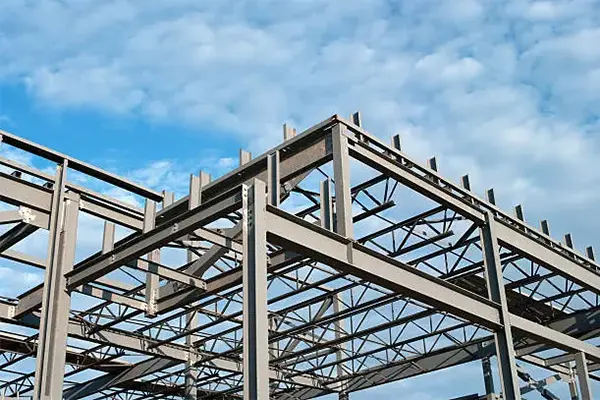
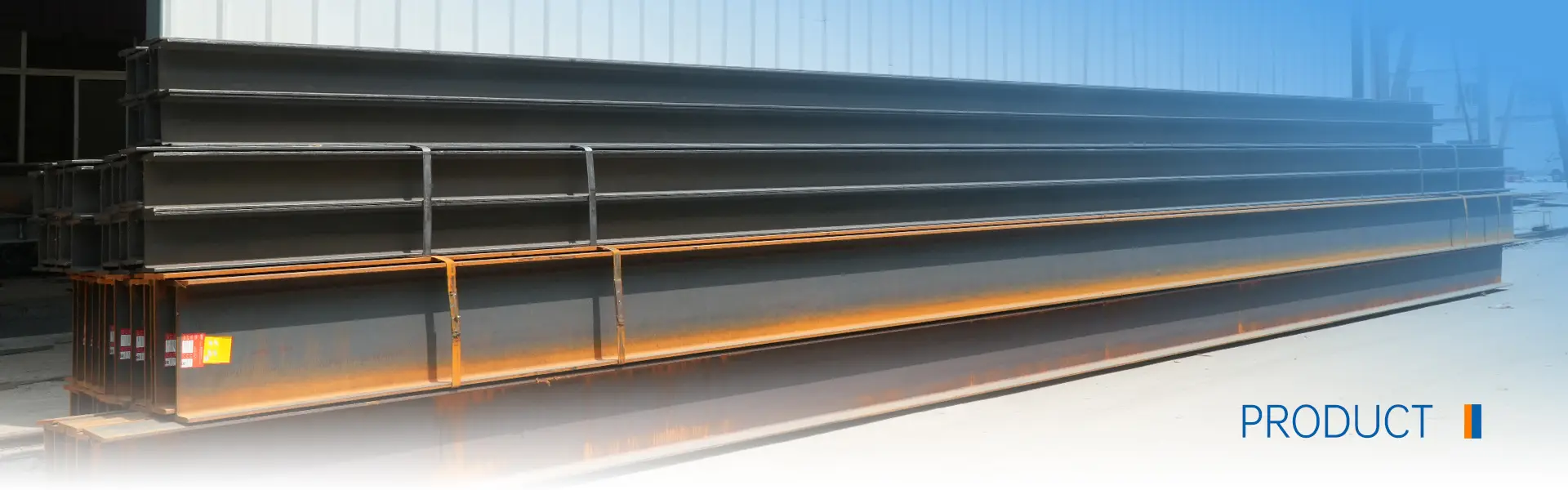
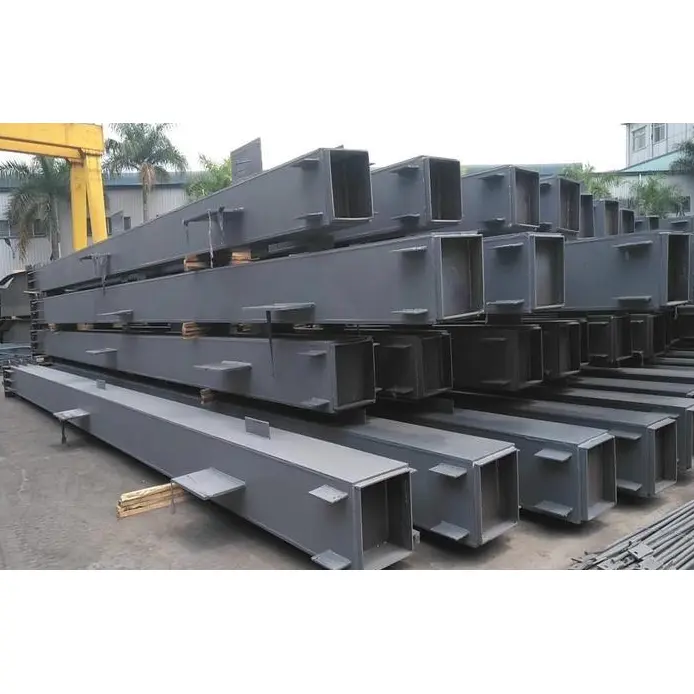
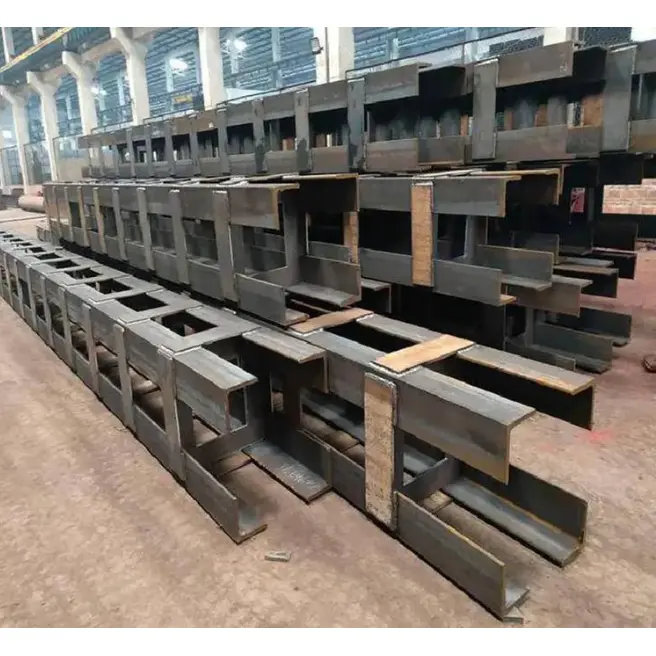
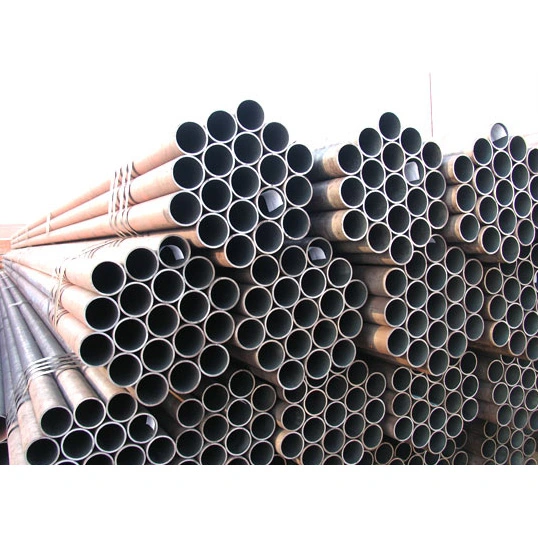
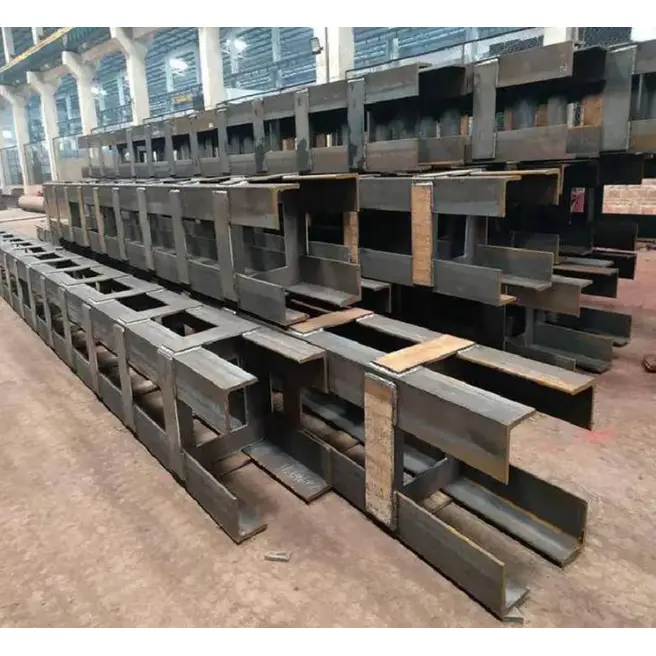
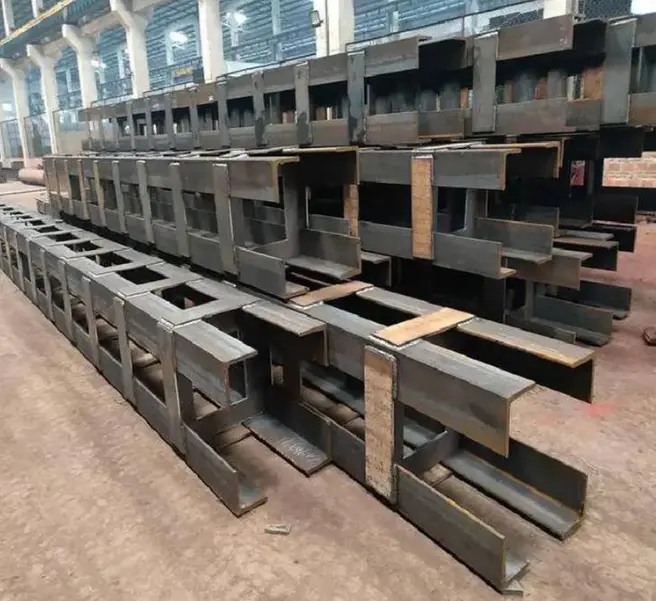
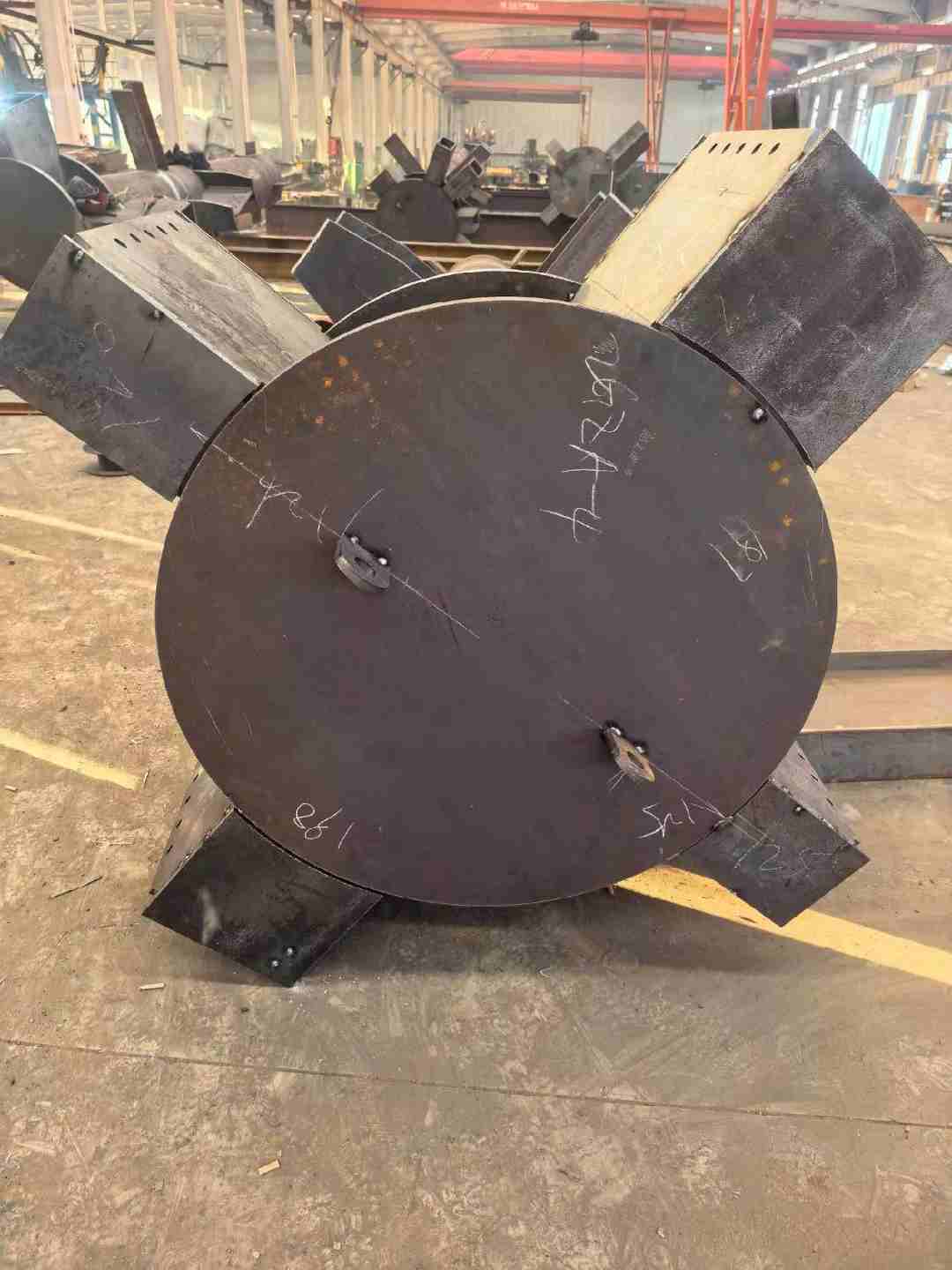
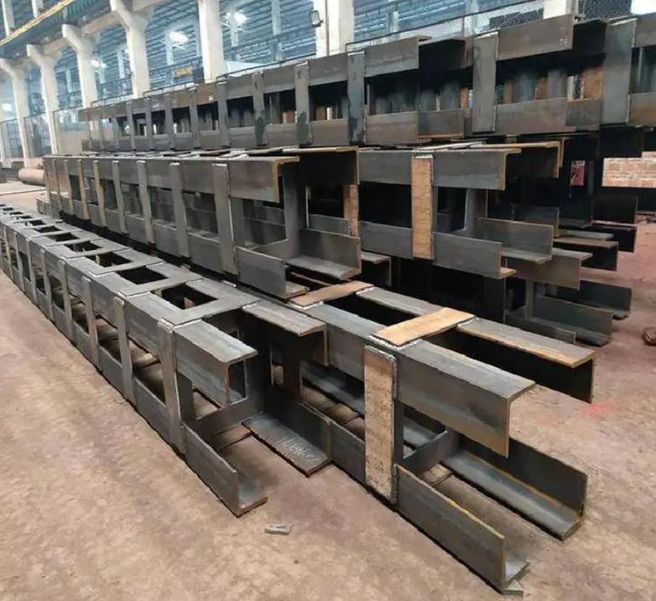
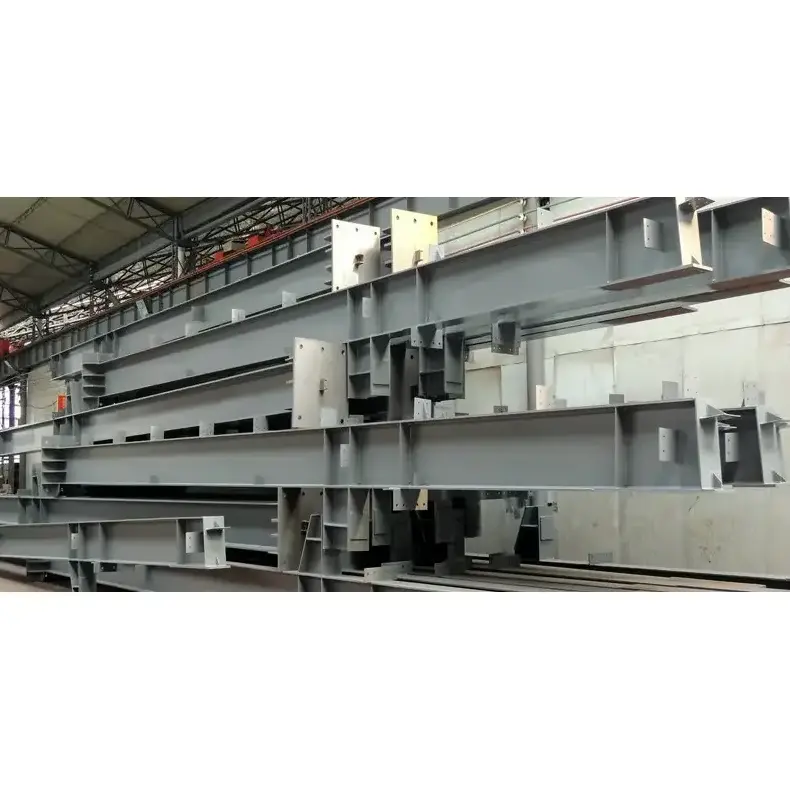
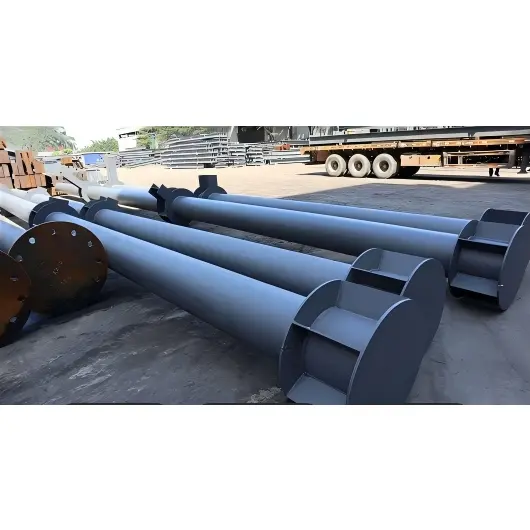
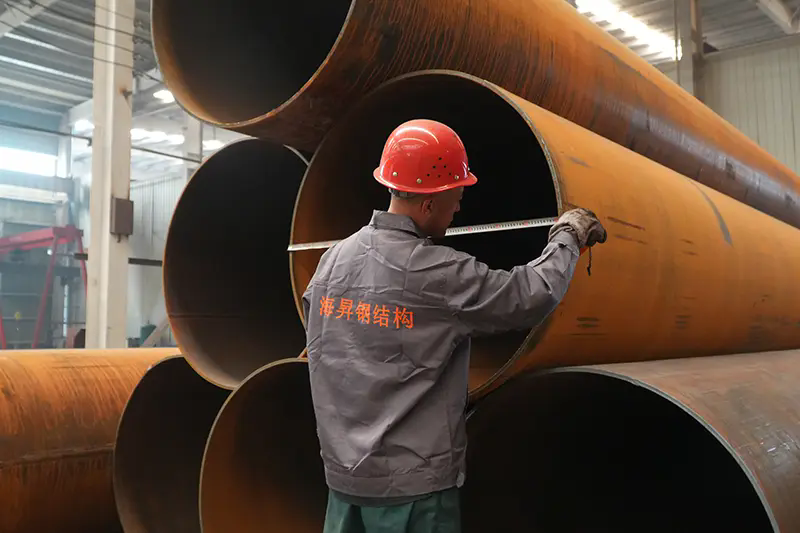
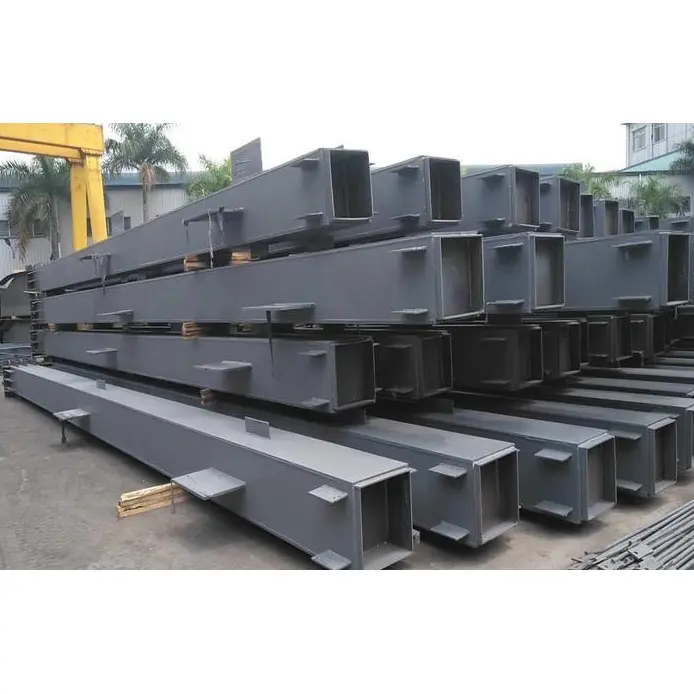
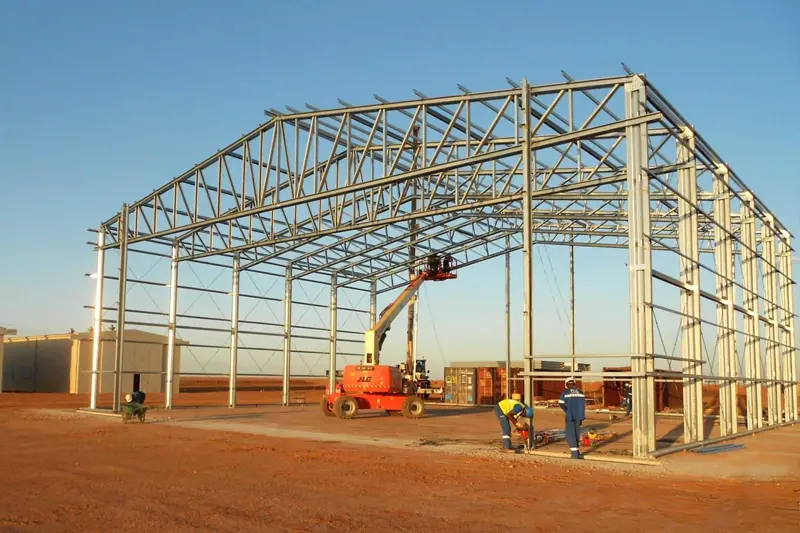
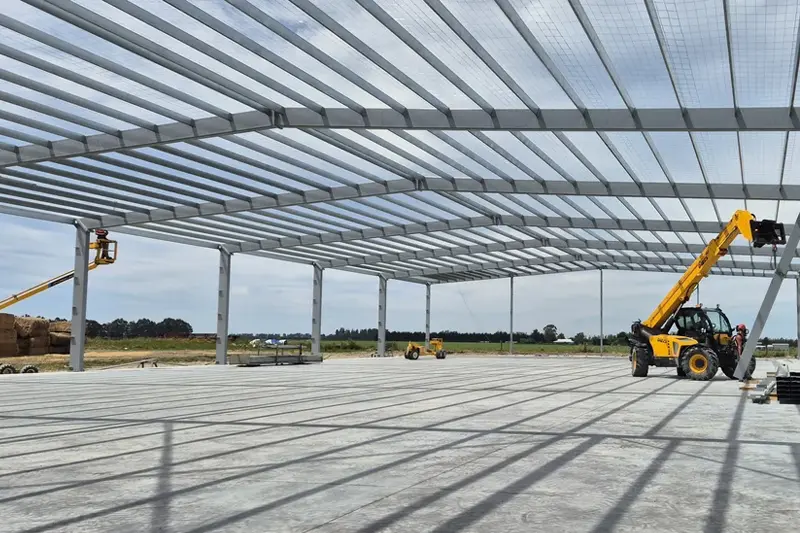
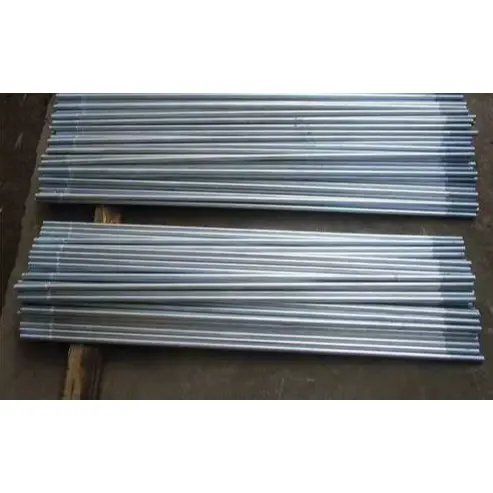
As a professional Chinese manufacturer and one-stop supplier of steel structures, HAISHENG offers shaped structural steel columns available from stock. Moving beyond conventional square, round, or H-beam profiles, these columns can be fabricated into polygonal, L-shaped, T-shaped, cruciform, variable-section, or bent configurations. They are precision-engineered to meet the vertical support and load-transfer requirements of irregular architectural spaces, special connection points, corner locations, eccentric loading conditions, and complex structural frameworks, serving as custom load-bearing columns for non-standard steel construction projects.
These shaped structural steel columns are fabricated based on construction blueprints, actual site layouts, and specific load-bearing requirements. Using national standard structural steel sections and steel plates as raw materials, they undergo a series of customized processes—including cutting, bending, splicing and welding, straightening, attachment of base plates and gusset plates, hole machining, and anti-corrosion surface treatment—to create non-standard, uniquely shaped load-bearing columns.
Product Definition and Configuration
I. Product Definition
1. Core Definition
Shaped Structural Steel Column refers to a vertical load-bearing steel member with a cross-section that falls outside the standard rectangular, circular, or conventional H-beam categories. These columns are fabricated by welding together multiple steel plate elements, structural sections, and/or steel pipes. They are primarily used in applications such as building corners, concealed wall columns, architectural features, large-span venues, and residential or public building frameworks, balancing structural load-bearing requirements with architectural spatial and aesthetic needs.
2. Common Cross-Section Classifications
L-shaped (Corner Column): Designed for building corners; composed of two elements; fits flush against walls without protruding into the interior space.
T-shaped (Edge Column): Used in the middle of walls or along corridors; composed of three elements; offers balanced load distribution.
Cruciform (Central Column): Used as a core column within the building; features four symmetrical elements; offers high lateral load resistance and seismic performance.
Z-shaped, Diamond-shaped, and Multi-element Latticed Columns: Designed for complex floor plans, large spans, and cantilevered structures.
Composite Shaped Columns: Formed by splicing square or round tubes with T-sections or H-beams; a mainstream choice for high-rise and heavy-load applications. ·Variable-section / Curved non-standard columns: Designed for architectural facade styling and curved curtain walls; column diameter or width varies along the length.
·Key features: Slender column legs, concealed within walls, high space utilization, high joint rigidity, and flexible styling.
II. Standard Configuration Package
(I) Column Body
1.Main leg profiles: Square/circular hollow sections, T-sections, H-sections, or thick steel plates, assembled and welded based on the cross-sectional design; standard leg thickness of 8–50 mm; leg height-to-thickness ratio ≤ 4 (code limit).
2.Internal stiffening system
oTransverse stiffening rings/plates: Prevent local buckling; spacing determined by load design.
oVertical stiffening ribs: Concentrated at multi-leg junctions and beam-column joint zones to distribute stress.
3.Segmental splicing structure: Extra-long columns fabricated in segments; circumferential butt welds (Grade I welds with 100% ultrasonic testing); factory pre-assembly followed by on-site splicing.
(II) End Connection Accessories
1.Column base plate (bottom end): Square or custom-shaped steel plate, 16–60 mm thick; includes anchor bolts (M20–M64), stiffening ribs, and anchor plates for fixing to the concrete foundation.
2.Column top plate / End plate (top end): Flat end plate, beveled end plate, or custom flange plate; features pre-drilled bolt holes or weld bevels for connection to upper-level columns or steel beams.
3.End cap plate: Seals the top and bottom of the column to prevent water and debris ingress; fully welded for a complete seal.
(III) Joint Accessories
1.Corbels / Gusset plates: Cantilevered corbels or connection plates welded to the sides of the non-standard column to support steel beams, trusses, or bracing members. 2. Annular or lateral connection plates are arranged along the outer edges of the column legs, accommodating multi-directional steel beam connections and curtain wall framing attachments.
3. Shear studs are designed for concrete-encased or concrete-filled special-shaped steel-tube columns, enhancing the composite action between steel and concrete.
(IV) Corrosion Protection, Coating, and Protective Measures
1. Rust removal: Full-surface shot blasting or sandblasting to Sa2.5 grade.
2. Coating system
o Standard corrosion protection: Epoxy zinc-rich primer + intermediate coat + topcoat; total dry film thickness: 80–160 μm.
3. Fire protection: Application of fire-resistant coatings (thin-film or thick-film types) in areas with fire safety requirements.
(V) Installation Consumables
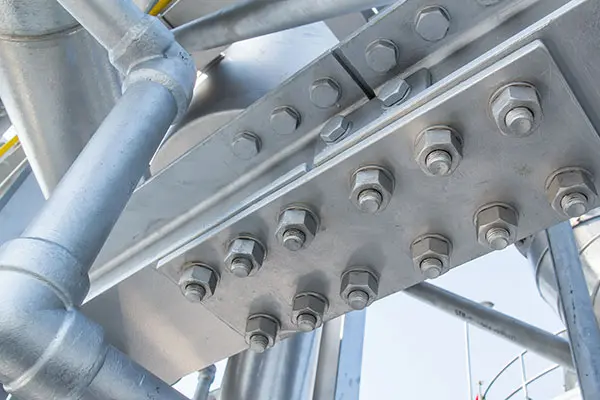
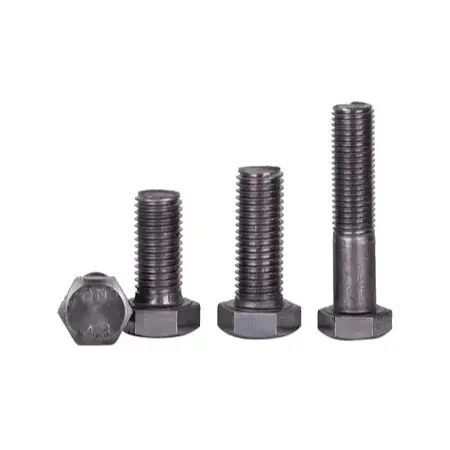
· Connection bolts: Standard bolts and Grade 8.8/10.9 high-strength bolts (for beam-column joints).
· Welding consumables: Welding wire and electrodes compatible with the base metal.
· Positioning components, temporary connection plates, and lifting lugs (pre-installed at the factory).
(VI) Composite and Derivative Configurations
1. Concrete-filled special-shaped steel-tube column: Column body features pre-formed grouting and air-venting holes; on-site casting of C30/C40/C50 concrete significantly enhances load-bearing capacity.
2. Concrete-encased special-shaped column: Longitudinal reinforcement and stirrups are arranged on the exterior of the column legs, followed by formwork and concrete casting; provides fire resistance, impermeability, and enhanced stiffness.
3. Latticed special-shaped column: Assembly of multiple steel sections with batten plates or lacing bars; designed for lightweight and long-span applications.
III. Complete Delivery List
1. Main body of the specially shaped steel column (including stiffeners, end plates, and lifting lugs);
2. Base plates, top plates, flange plates, and associated stiffeners;
3. Anchor bolts, structural bolts, and shim plates;
4. Corbels, connection plates, and lug plates;
5. Finished components with complete coating or galvanization;
6. Product certificates of conformity, material specifications, weld inspection reports, and dimensional inspection records.
IV. Key Differences from Conventional Circular/Square Columns
· Cross-section: Non-standard multi-limb composite section; fits flush against walls without protruding corners; circular/square columns feature standard, solid cross-sections.
· Configuration: Multi-directional connection plates and multiple sets of stiffeners come standard on specially shaped columns; circular columns typically utilize simple end plates and base plates.
1. Flexible Geometry: Shaped structural steel columns can be customized into any non-standard shape, fitting perfectly with complex architectural structures and corner locations.
2. Precise Load-Bearing: Structures are optimized to meet specific requirements for eccentric loading, lateral forces, and load-bearing at special connection points.
3. Spatial Adaptability: Suitable for scenarios where conventional columns cannot be installed, such as tight spaces, awkward corners, and staggered floor levels.
4. Monolithic Construction: Prefabricated as a single unit in the factory, ensuring structural integrity, high rigidity, and superior stability.
5. On-Demand Customization: Materials, dimensions, heights, and connection accessories can all be tailored to specific blueprints.
6. Versatile Applications: Ideal for non-standard factory frameworks, municipal steel structures, mezzanine construction, equipment supports, and specialized columns for architectural features.
Differentiating Highlights
I. Architectural Space Advantages
1. Aligns with wall layouts; no protruding interior columns. L-shaped, T-shaped, and cruciform columns sit flush against shear walls or infill wall corners, eliminating protrusions that consume usable floor area. In contrast, round tubes, H-beams, and square tubes protrude from the wall surface, interfering with floor plans and furniture placement; shaped columns are the preferred choice for residential and prefabricated public buildings.
2. Accommodates irregular architectural forms. Capable of forming curved, angled, variable-section, and polygonal composite columns, easily facilitating curved curtain walls, unique facades, and cantilevered corner structures. Standard round, square, and H-beam sections are fixed, making the cost of modifying them into custom shapes prohibitively high.
3. Optimized space utilization. Embedded within the wall while maintaining equivalent load-bearing capacity, these columns save usable floor area—offering a distinct advantage for real estate developers in reducing "common area" allocation (shared space ratios).
II. Structural Performance Advantages
1. Multi-directional load sharing. Compatible with cruciform layouts where multiple beams converge and with multi-limb composite cross-sections; primary beams, secondary beams, and diagonal braces can connect to all four sides. The load-bearing performance at beam-column joints is superior to that of simple round or square columns. While round tubes allow 360° beam connections, they are difficult to embed within interior walls; H-beams are limited to two orthogonal connection directions (strong and weak axes).
2. Strong seismic integrity: Features a multi-limb composite steel plate design with dense internal stiffeners. When combined with cast-in-place or precast concrete, it forms an integrated steel-concrete structure offering high lateral stiffness and excellent shear resistance—providing distinct advantages in high-seismic-intensity zones.
3. Flexible cross-section and wall thickness: Allows for localized adjustments to plate thickness or limb width to optimize structural performance based on varying vertical loads along the column height; in contrast, circular or square hollow sections require replacing the entire member to change the diameter, resulting in higher modification costs.
III. Construction and Integration Differences
1. Seamless integration with prefabricated and cast-in-place systems: The column limbs can be embedded within walls, with rebar or shear studs pre-installed, allowing for direct concrete pouring to form a composite column. This offers far greater versatility than conventional steel column systems (such as concrete-filled steel tubes or steel-reinforced concrete).
2. On-demand connection detailing: Lug plates and corbels can be welded exactly where the beams connect, without being constrained by the column's cross-sectional shape; circular or square sections require more complex processing, such as installing clamping collars or cutting holes.
3. Flexible segmentation: Facilitates easy diameter transitions between high and low levels to accommodate varying floor loads; cross-sectional dimensions can be adjusted floor-by-floor without needing to change the primary material specifications for the entire column.
IV. Aesthetic and Application-Specific Advantages
1. Concealed structure: The column is hidden within the wall, resulting in a clean exterior facade with no exposed steelwork; circular and square columns are typically exposed—often used in landscape features or stadiums—and cannot be concealed.
2. Unmatched for corners and unique geometries: Ideal for building corners, light-well edges, and irregular stairwell locations where only L-shaped columns fit the layout; conventional column types are often unsuitable for these configurations.
V. Cost and Lifecycle Comparison
Strengths
Residential and prefabricated shear wall projects: Saves labor and materials on civil works (plastering and secondary structural elements), resulting in lower overall costs; eliminates the need for expensive custom cladding or decorative casing for complex shapes.
Weaknesses
Standalone outdoor columns or large-span open venues: Material and fabrication costs are higher than those of circular hollow sections, making them less economical in these specific applications.
VI. Precise Positioning and Differentiation of Competing Products
· H-section steel columns: Standard frameworks, open-plan industrial plants;
Shaped Structural Steel Column Fabrication Process
I. Material Cutting
1. Verify material quality upon plate delivery; flatten and level Q235B/Q355B steel plates.
2. Cut components (main/secondary flange plates, stiffeners, base plates, connection plates) to developed dimensions using CNC flame or plasma cutting machines; perform edge beveling simultaneously.
3. Allow for weld shrinkage; use templates for layout and cutting of irregular or non-standard parts.
II. Component Pre-treatment
Grind edges and corners of small parts (stiffeners, connection plates) to remove burrs; mark layout lines on parts requiring embedded shear studs.
III. Jig Assembly and Forming (Core Process)
1. Set up specialized assembly jigs/fixtures; establish positioning datums based on cross-section type (L, T, cruciform, or polygonal).
2. Position main flange plates and secure with clamps; control flange spacing, verticality, and cross-sectional dimensions.
3. Install internal transverse stiffeners and vertical ribs into the cavity in layers; secure temporarily with tack welds.
1. Perform full-penetration multi-pass welding on main seams using submerged arc welding (SAW) or CO2 gas-shielded welding.
2. Prioritize electroslag welding for internal enclosed ribs.
3. Classify welds in beam-column connection zones as Grade I; mark completed welds for subsequent non-destructive testing (NDT).
V. Post-weld Correction
Correct welding-induced twisting and lateral bowing using a combination of flame heating and mechanical tooling; control column straightness and cross-sectional geometric tolerances; eliminate deformation caused by welding stresses.
VI. End Machining
Machine both ends of the column using face milling or floor-type boring-milling to ensure flatness and perpendicularity; for flange-connected columns, machine bolt holes and spigot joints (rabbets). VII. Attachment Assembly and Welding
1. Assemble and weld custom-shaped base plates and top plates to the column shaft; fully weld matching stiffeners to the base plates.
2. Position and weld external corbels, lug plates, and connection plates for primary and secondary beams according to drawing coordinates.
3. Shop-weld lifting lugs.
VIII. Drilling Operations
Use CNC drilling machines to drill holes for high-strength bolts and anchor bolts, ensuring hole precision meets standards.
IX. Non-Destructive Testing (NDT)
Perform 100% Ultrasonic Testing (UT) on Grade I welds; conduct sampling inspections on Grade II welds according to specifications; rework and re-inspect any non-compliant welds.
X. Rust Removal and Corrosion Protection
Perform overall shot blasting to Sa2.5 grade; apply standard epoxy zinc-rich primer, intermediate coat, and topcoat; apply fire-retardant coating in designated fire-protection zones; apply hot-dip galvanizing where environmental conditions require it.
XI. Marking, Inspection, and Warehousing
Mark components with axis numbers, floor levels, and installation orientation; conduct comprehensive inspections of dimensions, welds, and corrosion protection; issue quality assurance documentation and package for shipment.
XII. Specialized Processes for Unique/Shaped Columns
1. Curved variable-section shaped columns: Form curved plates using bending jigs; perform trial assembly in segments before final closure welding.
2. Steel-reinforced concrete shaped columns: Pre-install shear studs on the column exterior; reserve holes for grouting and air venting.
3. Multi-member latticed shaped columns: Assemble main members with batten plates or lacing bars in segments; ship in segments for on-site assembly.
XIII. Brief Comparison: Shaped Structural Steel Columns vs. Circular Hollow Section (CHS) Columns
1. CHS columns: Plate rolling followed by circumferential seam welding; Shaped columns: Assembly of multiple plates, jig-based shaping, and numerous stiffening ribs.
Note: Q355NL is recommended for low-temperature projects with qualified low-temperature impact performance.
III. Key Structural Performance Characteristics
1. Stiffness characteristics: Multi-limb composite section; moments of inertia in X and Y directions can be flexibly adjusted by varying limb width and plate thickness; superior lateral and shear resistance compared to standard square hollow sections (SHS) or H-beams; suitable for integration with shear walls.
2. Seismic performance: Features internal longitudinal and transverse stiffening ribs; high joint stiffness; highly suitable for high-seismic-intensity zones; can be encased in concrete to form steel-reinforced concrete columns, more than doubling load-bearing capacity.
3. Adaptability: Allows for localized variation in wall thickness and limb width; cross-section can be adjusted along the column height as needed; offers significant economic advantages for structures with heavier loads on upper floors and lighter loads on lower floors.
4. Wind resistance: No exposure when embedded in walls (wind load negligible); for exposed non-standard columns, wind resistance is higher than that of circular tubes but lower than that of H-beams.
IV. Weld Quality Parameters
1. Beam-column joints and primary splice welds: Grade I welds; 100% ultrasonic testing (UT).
2. Secondary rib welds: Grade II welds; 20% random inspection via UT; weld mechanical properties match or exceed those of the base metal.
V. Anti-corrosion and Fireproofing Specifications
1. Rust removal grade: Overall shot blasting to Sa2.5;
2. Standard coating: Epoxy zinc-rich primer + epoxy micaceous iron oxide intermediate coat + topcoat; total dry film thickness: 80–160 μm;
Contact HAISHENG China supplier of Structural Steel Components, Steel Structure Cladding Components and Structural Steel Fasteners. Our professional sales team will reply with detailed quotation, product parameters and delivery plan within 24 hours to meet your bulk procurement demand.
We use cookies to offer you a better browsing experience, analyze site traffic and personalize content. By using this site, you agree to our use of cookies.Privacy Policy