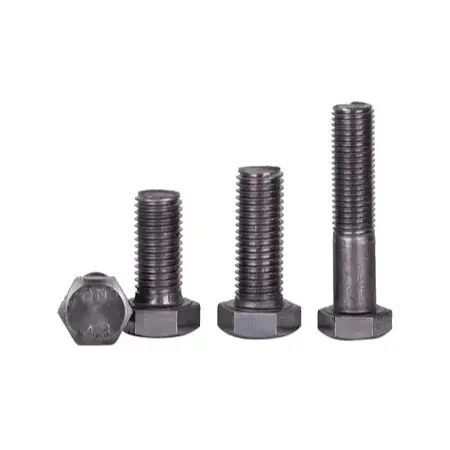
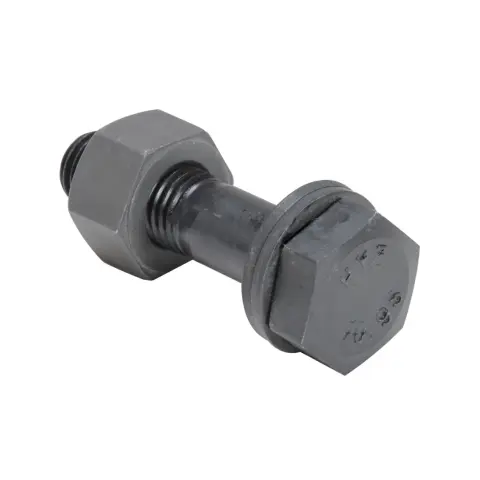
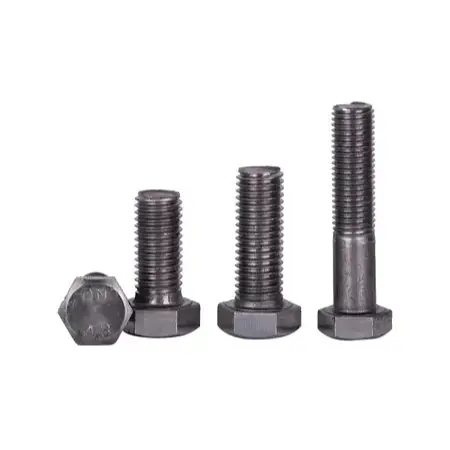
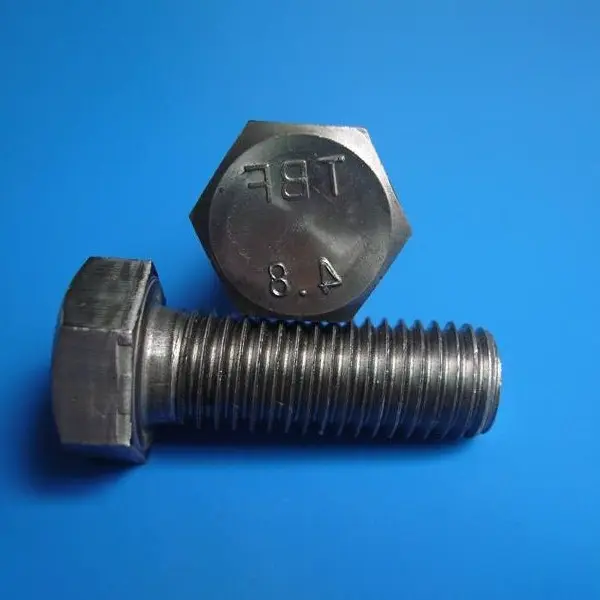
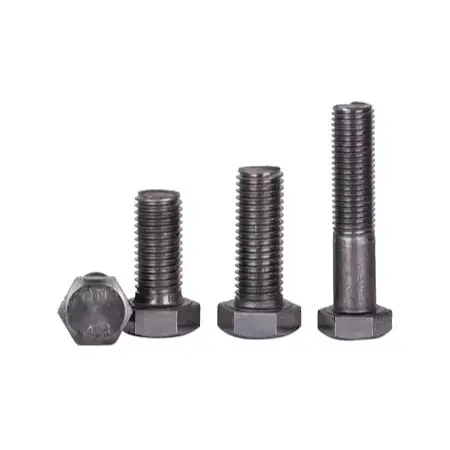
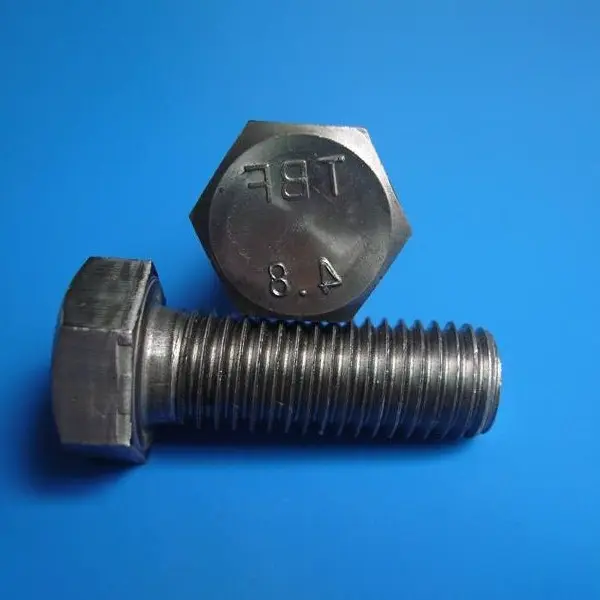
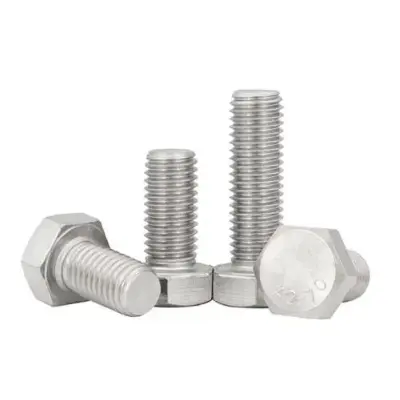
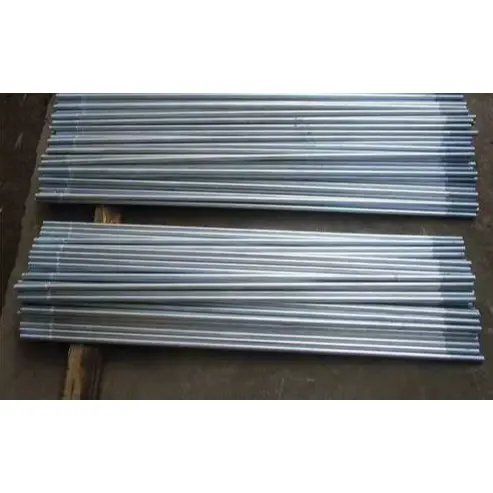
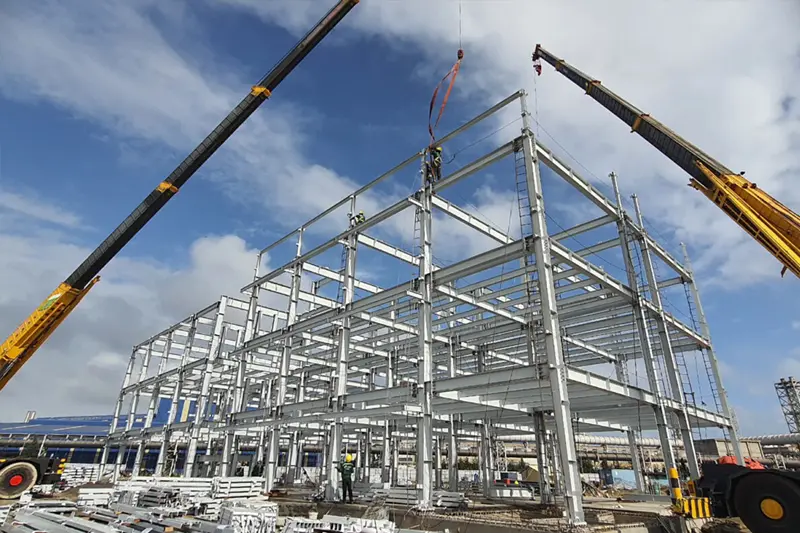
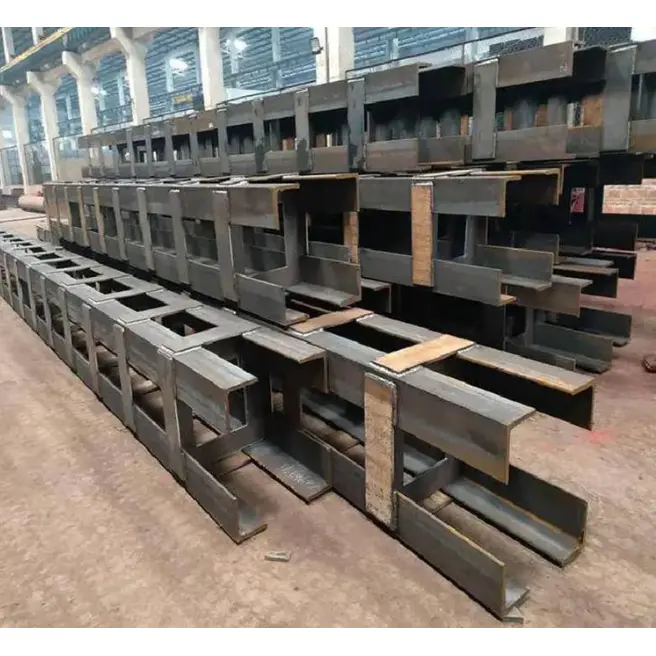
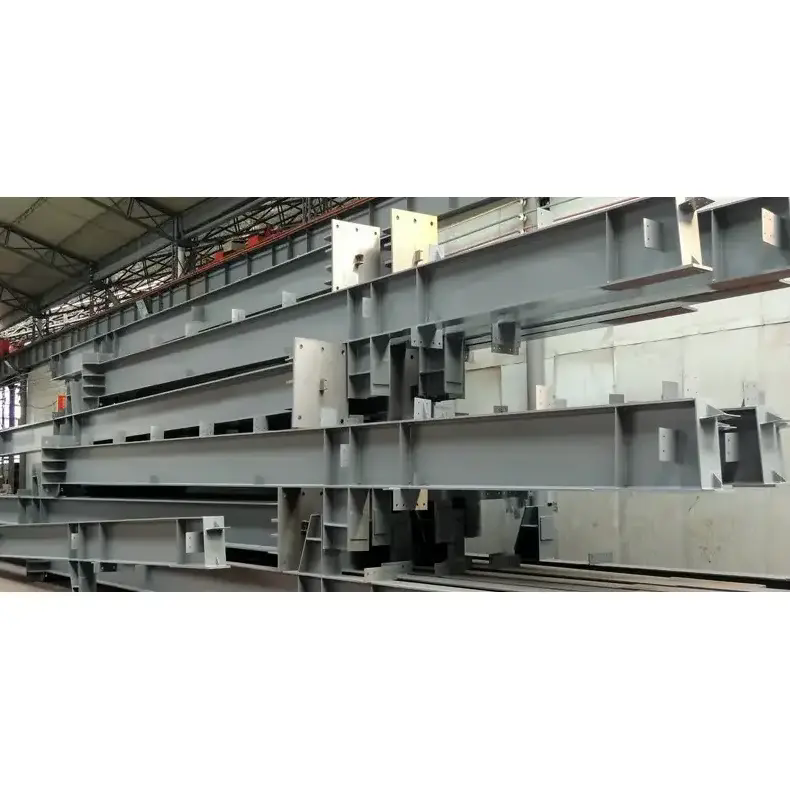
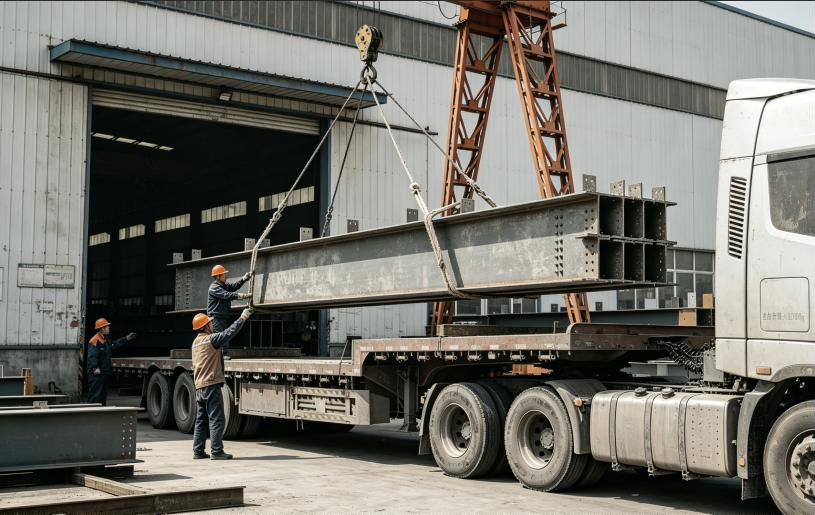
As a reliable manufacturer and one-stop supplier of steel structures in China, HAISHENG offers readily available standard steel connection bolts for construction. Manufactured from ordinary carbon steel without high-strength quenching and tempering, these bolts transfer loads through the tension and shear resistance of the bolt shank itself. They serve as general-purpose fasteners primarily used for secondary joints, temporary fixation, simple splicing, and non-load-bearing connections in steel structures.
Standard steel connection bolts for construction are general-purpose fasteners used for secondary connections and temporary fixation. They do not require a design preload; instead, they transfer loads through the shear resistance of the bolt shank and bearing pressure at the contact surfaces of the connected components. They are categorized by manufacturing precision into two main types: Class C (coarse/commercial grade) and Class A/B (precision/refined grade).
2. Strength Grades
Common grades: 4.6, 4.8, and 5.6. Their strength is significantly lower than that of high-strength bolts; they must not be used in primary load-bearing joints or connections subject to alternating dynamic loads.
3. Common Materials
The main body is made of low-carbon steel or Q235, offering high cost-effectiveness and ease of processing.
4. Specification Range
Nominal diameters: M10, M12, M16, M20, M22, M24; nominal lengths: 30–200 mm (customizable upon request).
Classification Details
Class C (Coarse/Commercial Grade) Bolts: Characterized by lower manufacturing precision, larger shank tolerances, and larger clearances in bolt holes; they allow for convenient on-site installation and are the most widely used type in engineering projects.
Class A/B (Precision/Refined Grade) Bolts: Characterized by high precision and tight fit clearances, ensuring uniform load distribution; typically used for equipment bases and precision splicing joints.
II. Standard Assembly Configuration
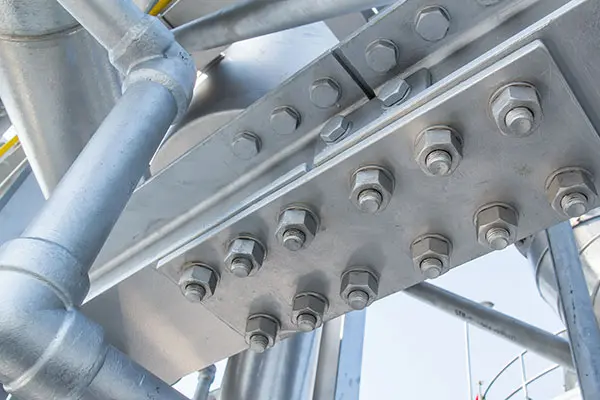
Standard assembly for construction connection bolts: 1 bolt + 1 hex nut + 1 flat washer; spring washers may be added depending on specific operating conditions. 1. Standard bolt body with a hexagonal head; features standard coarse threads and a solid shank without reduced-diameter sections.
2. Standard matching hex nut; threads align for secure fastening.
3. Flat washer (standard): Placed beneath the nut or bolt head to increase the bearing area and prevent surface damage during tightening.
4. Spring washer (optional): Installed in areas subject to vibration to provide elastic locking; serves only to prevent loosening and does not increase structural load-bearing capacity.
1. Plain / Black oxide: For dry indoor environments; lowest cost.
2. Hot-dip galvanizing: For outdoor, exposed, humid, or corrosive environments; rust-resistant and durable.
3. Electrophoresis / Painting: Decorative finish with basic corrosion protection; commonly used for enclosures and railings.
IV. Application Scenarios
1. Temporary assembly and fixing of components.
2. Connections for secondary structures such as railings, ladders, maintenance platforms, roof/wall cladding, and pipe supports.
3. Lightweight auxiliary structures and non-load-bearing decorative elements.
V. Additional Points
1. Installation: Can be tightened using standard manual or electric wrenches; no specific requirements for initial tightening, final tightening, or torque control.
2. Characteristics: Allows for installation in slightly oversized holes; easy to assemble/disassemble and reusable; prone to loosening in high-vibration environments.
3. Restrictions: Strictly prohibited as a substitute for high-strength bolts in critical load-bearing connections, such as those for steel beams, columns, or crane girders.
What are the key advantages of Standard Steel Connection Bolts for Construction?
1. Low cost, easy to procure, and highly versatile.
2. No specialized tools required; installation can be performed with a standard manual wrench.
3. Low strength and low preload; weak resistance to vibration and slip.
4. Can be repeatedly disassembled and reassembled; installation and removal are convenient.
5. Prone to deformation under load; unsuitable for primary load-bearing joints in steel structures.
Differentiating Highlights
I. Core Advantages
1. Low cost and high cost-efficiency
The raw materials and manufacturing processes for these standard construction connection bolts are simple, resulting in a unit price far lower than that of high-strength bolts; they significantly reduce costs when used for extensive secondary connections or temporary fixings.
2. Simple installation with minimal equipment requirements
No need for calibrated torque wrenches or specialized final-tightening equipment; standard manual or electric wrenches suffice. The process avoids complex steps like initial tightening, final tightening, or torque re-inspection, making it easy to learn and execute.
3. High adaptability and installation tolerance
The large clearance between the bolt and the hole (typical of Grade C coarse bolts) allows for minor on-site hole enlargement and alignment adjustments, simplifying component assembly. Installation is possible in any spatial orientation without restricted access zones.
4. Flexible assembly/disassembly and reusability
Designed to avoid structural damage, these bolts are easy to remove and reinstall, offering high turnover rates; they are particularly suitable for temporary fixings, areas requiring frequent maintenance, or components subject to future modification and replacement.
5. Simple configuration and easy on-site management
The standard assembly consists simply of a bolt, a nut, and a flat washer. With fewer components, there is a lower risk of mismatching or loss, simplifying inventory storage and on-site requisition management.
II. Relative Drawbacks
1. No design preload; weak resistance to slip and vibration
Load transfer relies solely on thread locking; they loosen easily under dynamic loads or repeated vibration and are strictly prohibited for use in primary load-bearing or fatigue-critical joints.
2. Low strength grade
Predominantly Grade 4.6 or 4.8; their tensile and shear load-bearing capacities are far inferior to those of Grade 8.8 or 10.9 high-strength bolts, making them unsuitable for heavy loads or significant bending moments. 3. Poor Connection Stiffness
Under load, components experience greater slippage and deformation, failing to meet the rigidity requirements for primary steel structure joints.
III. Summary of Selection Criteria
1. Prioritize Ordinary Bolts for: Temporary fixing, secondary structures (railings, brackets, cladding, etc.), static load applications, and locations without high slip-resistance requirements.
2. Select High-Strength Bolts for: Permanent connection joints involving primary load-bearing elements (beams, columns, crane beams, trusses, etc.), dynamic loads, high stiffness requirements, and high slip-resistance requirements.
On-Site Construction Process
Applicable Standard: GB 50205-2020. Applies to Class C (coarse) and Class A/B (precision) ordinary bolts; covers two scenarios: temporary fixing and permanent structural connections.
I. Construction Preparation
1. Material Verification: Check bolt specifications, length, strength grade, and surface treatment. Requisition matching nuts, flat washers, and spring washers as needed; store them in an organized manner and protect threads from damage.
2. Tool Preparation: Standard manual wrenches, electric wrenches, angle grinders, files, and markers; no torque calibration equipment required.
3. Component Inspection: Clean connection surfaces to remove dust, oil, and loose rust. Inspect plate splicing gaps; if gaps are excessive, install shim plates in accordance with specifications.
4. Hole Alignment Check: Verify bolt hole alignment. Minor reaming is permitted for Class C bolts, but gas-cutting to enlarge holes is strictly prohibited; excessive deviations require remedial action (e.g., filling and re-drilling).
II. Component Positioning and Temporary Fixing
1. Hoist and align steel components; adjust axes, elevation, and flatness; secure with temporary supports.
2. Temporarily secure the position using a small number of bolts or drift pins to prevent overall displacement.
III. Bolt Insertion
1. Insert bolts freely; maintain a consistent orientation; do not force them in by hammering.
2. Assembly sequence: Bolt head → Component plate surface → Flat washer → (Spring washer, if required) → Other component plate surface → Nut. 3. The split end of the spring washer must not lie flat against the bearing surface; this ensures the anti-loosening function.
IV. Fastening Operations
1. Fastening sequence: For bolt groups at joints, tighten symmetrically from the center outwards; for long splice joints, proceed from the middle towards both ends to prevent plate warping or uneven stress distribution.
2. Fastening requirements: Tighten until the plate surfaces are in close contact; moderate tightening is sufficient. There are no specific requirements for initial tightening, final tightening, or torque limits, nor is strict control of preload necessary.
3. For multi-row bolt arrangements, tighten each bolt individually and sequentially; ensure no bolts are missed or insufficiently tightened.
V. Appearance Finishing and Protection of Finished Work
1. After fastening, clear away debris and excess metal filings from the vicinity of the joint.
2. Check the length of exposed threads; the standard is 2–3 threads. Replace with a bolt of the appropriate length if the exposed portion is too long or too short.
3. Apply touch-up anti-rust paint to exposed threads and areas affected by cutting or impact.
4. Protect completed joints from heavy impacts or external disturbances.
VI. Quality Inspection and Acceptance
1. Comprehensive visual inspection
· Bolts, nuts, and washers are all present and correctly installed, with no missing or misaligned parts;
· Connection surfaces fit tightly with no visible gaps;
Conduct targeted spot checks in areas subject to vibration to ensure no loosening occurs.
VII. Construction Prohibitions
1. Strictly prohibit enlarging or creating holes via gas cutting or burning;
2. Strictly prohibit substituting high-strength bolts with ordinary bolts at primary load-bearing joints;
3. Spring washers must not be installed backwards or omitted;
4. In areas subject to frequent vibration, ordinary bolts must not be used as the sole means of load-bearing connection. Simplified Process
Construction preparation → Component alignment and temporary fixing → Bolt insertion + assembly of washers and nuts → Symmetrical tightening → Inspection of thread protrusion + anti-corrosion touch-up → Acceptance inspection
Key Performance Parameters
Standards: GB/T 5780, GB/T 5782, GB/T 3098.1; classified into Class C (coarse) bolts and Class A/B (precision) bolts; common strength grades: 4.6, 4.8, 5.6.
I. Base Material and Hardness
1. Common materials: Low-carbon steel, Q235
2. Surface treatment: Plain finish, black oxide, hot-dip galvanizing, electrophoresis
3. Rockwell Hardness (HRC)
1. Grades 4.6/4.8: ≤28 HRC
2. Grade 5.6: 22–32 HRC
II. Mechanical Properties (Minimum Values)
Strength Grade
Tensile Strength Rm (MPa)
Yield Strength ReL (MPa)
Elongation After Fracture
Grade 4.6
400
240
≥22%
Grade 4.8
400
320
≥20%
Grade 5.6
500
300
≥20%
Note: Ordinary bolts are not subjected to a design preload; load transfer relies on shear and bearing action.
III. Dimensional and Thread Tolerances
1. Thread Precision
1. Class C (Coarse) Bolts: 8g (large tolerance, significant clearance between bolt and hole wall; most commonly used on-site)
2. Class A/B (Precision) Bolts: 6g (high precision, minimal fit clearance)
2. Length Tolerance: Nominal length ±2 mm
3. Shank Straightness: ‰ (per mille)
IV. Construction and Installation Parameters
1. Thread Projection: 2–3 threads projecting beyond the nut after tightening is considered acceptable
2. Assembly Accessories
1. Standard: Flat washer; spring washer added for vibrating components (serves only to prevent loosening; does not increase load-bearing capacity)
3. Hole Requirements
1. Class C (Coarse) Bolts: Minor on-site hole enlargement using a file is permitted; enlargement via gas cutting is strictly prohibited
2. Class A/B (Precision) Bolts: Hole enlargement is strictly prohibited to ensure fit precision
V. Performance Characteristics
1. Slip Resistance: No preload; weak slip resistance at contact surfaces; unsuitable for joints subject to alternating dynamic loads or intense vibration
2. Reusability: Can be disassembled and reused multiple times
3. Connection Stiffness: Relatively low stiffness; prone to slip deformation under load
VI. Scope of Application
1. Standard Steel Connection Bolts for Construction: Intended only for temporary fixing, secondary structures, and static-load auxiliary components
2. Prohibited Use: Must not be used for primary load-bearing joints such as steel frame beam-to-column connections, crane beams, or long-span trusses; cannot substitute for high-strength bolts
FAQ
Q1: What is the difference between Class C and Class A/B bolts?
A: Class C bolts are coarse/commercial grade with larger shank tolerances and larger clearance between the bolt and hole wall. They are the most widely used type for temporary fixing and secondary structures because they allow for minor on-site hole alignment adjustments. Class A/B bolts are precision/refined grade with tight fit clearances and uniform load distribution, used for equipment bases and precision splicing joints.
Q2: Can ordinary bolts be used instead of high-strength bolts?
A: No. Ordinary bolts (Grade 4.6/4.8/5.6) have no design preload, low strength, and poor resistance to slip and vibration. They are strictly prohibited for use in primary load-bearing joints such as steel beam-to-column connections, crane girders, and long-span trusses. High-strength bolts (Grade 8.8/10.9) must be used for all critical structural connections.
Q3: What is the purpose of the spring washer?
A: The spring washer provides elastic locking to prevent loosening under vibration. It is installed between the flat washer and the nut. For standard static load applications, a flat washer alone is sufficient. For vibrating equipment, crane-adjacent structures, or dynamic load conditions, a spring washer is recommended but still does not provide the same anti-loosening performance as high-strength bolt pre-tension.
Q4: Can ordinary bolts be reused?
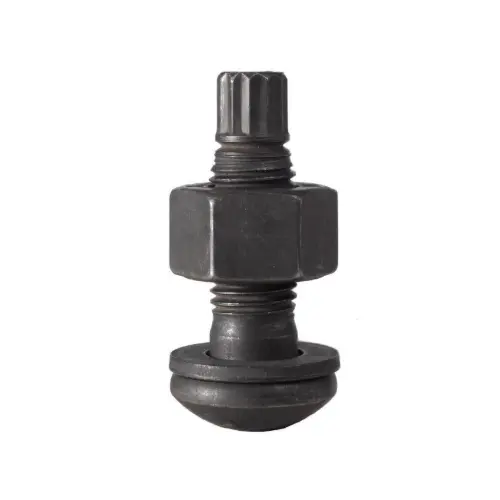
A: Yes. Unlike torque shear high strength bolts, ordinary bolts can be disassembled and reused multiple times without compromising their load-bearing capacity, provided the threads and shank are not damaged. This makes them ideal for temporary fixings, maintenance access points, and components subject to future modification.
Q5: How to choose between plain finish, black oxide and hot-dip galvanizing?
A: Plain finish / black oxide is suitable only for dry indoor environments. Hot-dip galvanizing is required for outdoor exposure, humid conditions, or corrosive environments; it provides 8-10 years of corrosion resistance. For decorative applications with basic corrosion protection, electrophoresis coating is available.
Hot Tags: Standard Steel Connection Bolts for Construction, Factory
Contact HAISHENG China supplier of Structural Steel Components, Steel Structure Cladding Components and Structural Steel Fasteners. Our professional sales team will reply with detailed quotation, product parameters and delivery plan within 24 hours to meet your bulk procurement demand.
We use cookies to offer you a better browsing experience, analyze site traffic and personalize content. By using this site, you agree to our use of cookies.Privacy Policy