As a specialized domestic manufacturer and one-stop supplier of steel structure cladding components, HAISHENG offers steel floor decks available for mass customization, immediate stock supply, and project integration. Developed to address common challenges in modern steel floor construction, these decks replace cumbersome traditional formwork processes, enabling rapid concrete pouring, monolithic forming, and permanent composite structural action. They are ideally suited for the bulk procurement and general contracting needs of high-rise, commercial, and industrial prefabricated steel structure projects.
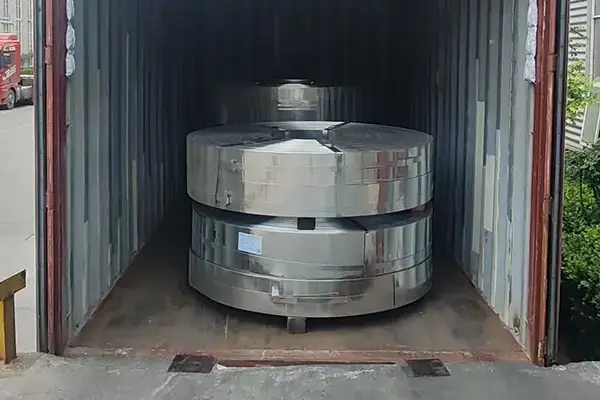
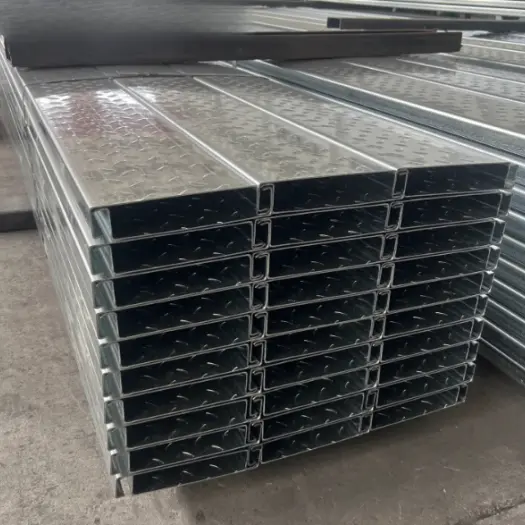
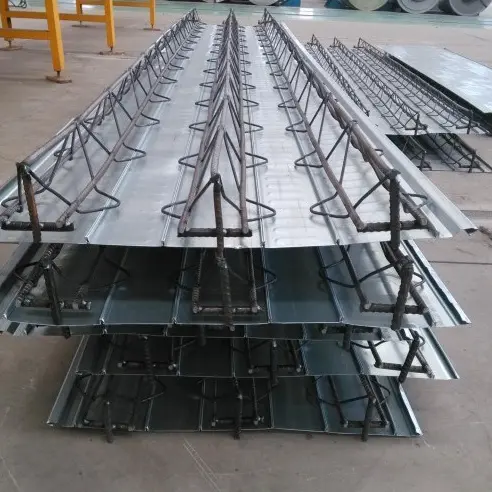
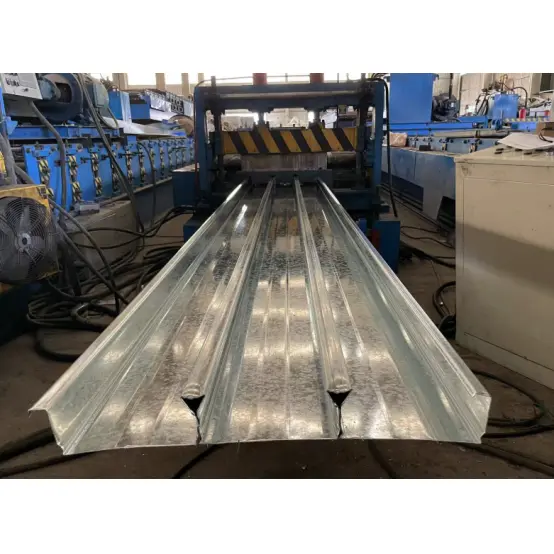
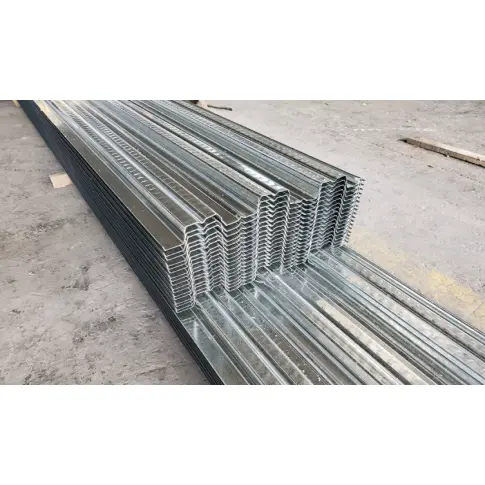
Steel floor decks are permanent, load-bearing components designed specifically for steel structure flooring systems. Unlike traditional temporary formwork, they are manufactured from high-quality hot-dip galvanized steel strips using cold-rolling and precision bending techniques. Mainstream market offerings include four categories—open-rib, closed-rib, non-pour (permanent formwork), and truss-reinforced decks—all of which comply with national standards for steel structure construction.
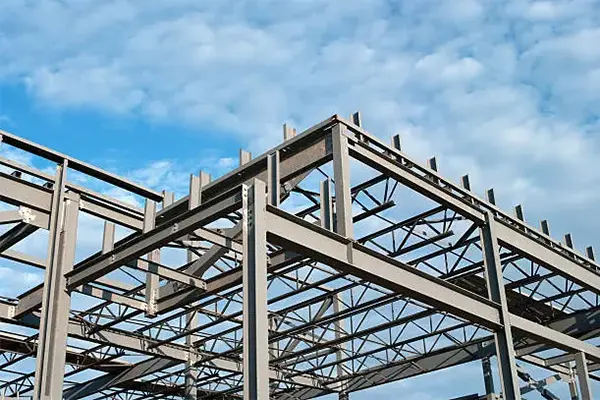
Installed across the top flanges of primary and secondary steel beams, these decks serve as permanent formwork that does not require removal after concrete pouring. During construction, they independently support the weight of wet concrete and temporary loads from personnel and equipment. Once the concrete cures, the deck bonds tightly with the slab to form a composite steel-concrete structure. This enhances overall floor stiffness, flatness, and structural integrity, making them an indispensable core component in prefabricated steel floor construction.
Key Features
1. Scientifically optimized cross-section for stable load-bearing. Featuring an optimized profile design, these decks offer excellent flexural rigidity and uniform load distribution. They resist sagging, deformation, and formwork blowout during concrete pouring. Once cured, they work compositely with the concrete to minimize slab deflection and reduce common quality issues such as surface cracking and leakage, resulting in superior structural stability.
2. Integrated construction eliminating formwork support and removal; streamlined workflow. They completely replace the entire traditional process of erecting, reinforcing, stripping, and clearing away timber or steel formwork. On-site installation requires only laying and fastening—eliminating complex wet-process formwork operations—thereby significantly simplifying construction steps and aligning with the rapid pace of prefabricated building projects.
3. Lightweight design to reduce overall structural load. The components are lightweight and impose minimal additional loads, avoiding excess pressure on primary and secondary steel beams, columns, and building foundations. This allows for the optimization of the main structural load-bearing system, reduces the volume of steel required for beams and columns, and effectively controls overall project costs.
4. Tight integration between steel and concrete ensures outstanding seismic integrity. The high degree of mechanical interlock between the floor decking and the concrete effectively enhances horizontal load transfer and structural synergy, thereby increasing the overall rigidity of the floor system. Under dynamic loads such as earthquakes or wind pressure, the decking resists loosening, delamination, and detachment, ensuring ample structural safety margins.
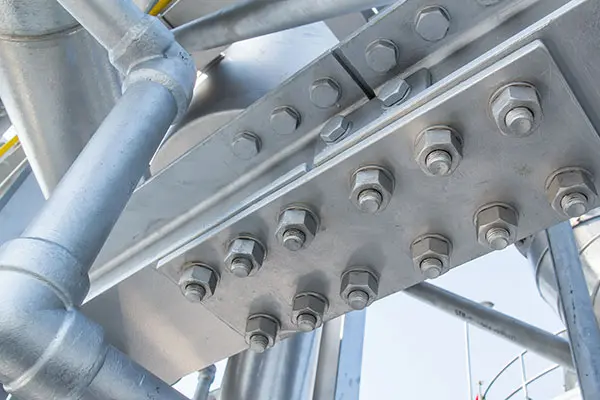
5. Hot-dip galvanized for inherent corrosion resistance and a long service life. The base material consists of high-quality hot-dip galvanized steel strip featuring a uniform, strongly adherent coating. The enclosed internal structure resists moisture and oxidation; when embedded in concrete, it provides long-term protection against rust, corrosion, and aging, significantly extending the floor slab's overall durability.
6. High dimensional precision and versatility for irregular configurations. Manufactured using standardized, modular factory processes, the product features uniform profiles and precise dimensions. It adapts seamlessly to complex conditions—such as standard rectangular floors, irregular cutouts, and equipment openings—and integrates perfectly with various primary and secondary steel beam layouts.
7. Convenient utility routing and compatibility with subsequent interior finishing. The profiled grooves in the decking allow for the direct routing and embedding of plumbing and electrical lines, eliminating the need for extensive chiseling or slotting. This maximizes structural integrity and ensures a level floor surface, facilitating subsequent flooring installation and ceiling finishing work.
What are the advantages compared to similar products?
1. Construction efficiency far exceeds that of traditional formwork systems. Unlike traditional timber or standard steel formwork—which require repetitive installation, dismantling, maintenance, and debris removal—these steel floor decks are installed once and remain as a permanent part of the structure. Eliminating the need for formwork removal and rework more than doubles the overall floor construction speed, making them ideal for priority projects requiring tight schedules and rapid delivery.
2. Upgraded from a temporary consumable to a permanent load-bearing structural component. Standard formwork serves merely as an auxiliary consumable during construction; it must be removed after concrete pouring and does not contribute to the structure's load-bearing capacity. In contrast, steel floor decking bonds permanently with the concrete to become an integral part of the load-bearing floor structure. It fundamentally enhances floor rigidity, crack resistance, and overall stability, offering irreplaceable structural performance advantages.
3. Superior corrosion resistance and durability compared to standard thin steel sheet formwork. Traditional thin steel formwork is highly susceptible to moisture, rust, and corrosion-induced damage, while timber formwork is prone to rotting, warping, and moisture-related failure. This product is made of hot-dip galvanized steel, offering excellent corrosion and aging resistance; it remains stable and functional over the long term when embedded in concrete, requiring virtually no subsequent structural maintenance.
4. More advantageous total lifecycle costs. It eliminates the need for repeated procurement of reusable formwork and extensive labor for installation and stripping, significantly saving on material and labor costs. Additionally, its lightweight nature reduces the load on the main structure and lowers investment in civil works and primary materials, resulting in long-term economic efficiency that far surpasses traditional construction systems.
5. Higher quality floor formation with fewer common defects. The standardized profile offers uniform rigidity and high flatness. After concrete pouring, it avoids common issues such as formwork bulging, slurry leakage, and surface unevenness. The resulting floors are uniform and dimensionally precise, achieving high first-pass quality rates and minimizing the need for remedial work or rework.
6. Compliant with green construction standards and aligned with the trend toward prefabricated buildings. It utilizes dry installation methods on-site, generates no construction waste, and minimizes material loss. The site remains clean and organized, fully meeting green, low-carbon, and acceptance standards for prefabricated buildings, while satisfying the requirements of modern, high-standard engineering projects.
Wide Range of Applications
1. High-rise commercial steel structures: Steel-frame office buildings, prefabricated apartments, high-rise residential buildings, commercial complexes, and multi-story floor systems for large shopping malls and supermarkets.
2. Industrial prefabricated buildings: Multi-story industrial plants, production workshops, warehouse complexes, equipment mezzanines, and prefabricated industrial floor structures.
3. Public and municipal buildings: Multi-story floor systems for exhibition centers, cultural and sports centers, and municipal steel structures. 4. Mezzanine Renovation Projects: Construction of mezzanines for new and existing steel structures, floor extensions, and structural reinforcement, including all associated flooring installation.
Why Choose HAISHENG?
1. Comprehensive Product Range & One-Stop Sourcing. HAISHENG offers a full series of steel floor decks—including open-rib, closed-rib, truss, and non-concrete-pour types. We provide precise product selection based on building height, load requirements, and site conditions, eliminating the need for multi-vendor sourcing and meeting all project flooring needs in one stop.
2. Standardized, Precision Factory Production. All products utilize high-quality hot-dip galvanized base materials meeting national standards. Manufactured via CNC cold-rolling, they feature precise dimensions and uniform profiles. Consistent performance across batches is guaranteed, and complete material reports and test documentation are provided to ensure hassle-free project inspection and approval.
3. Customized Processing for Project Compatibility. We support irregular cutting, opening creation, and fixed-length processing. Components for complex floor layouts and special structural nodes are prefabricated, minimizing on-site secondary processing and significantly boosting installation efficiency.
4. Ample Stock & Reliable Delivery. Standard specifications are kept in stock year-round. Urgent orders can be fast-tracked for production and shipment, while large-scale project orders can be delivered in stable, scheduled batches to ensure project timelines remain on track.
5. Professional Technical Support. Our experienced engineering team offers free services, including product selection guidance, layout planning, and technical consultation. We help clients avoid common installation pitfalls, reduce rework costs, and ensure flooring projects meet quality standards on the first attempt.