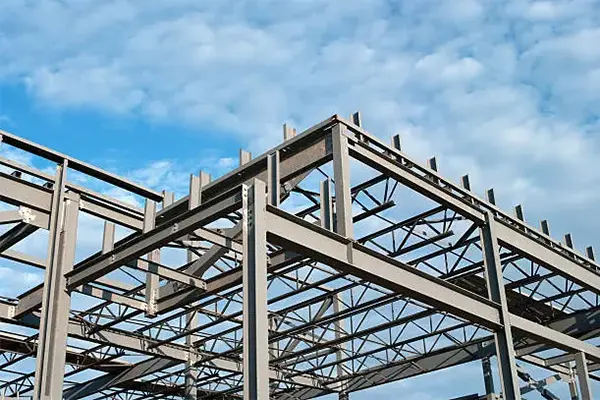
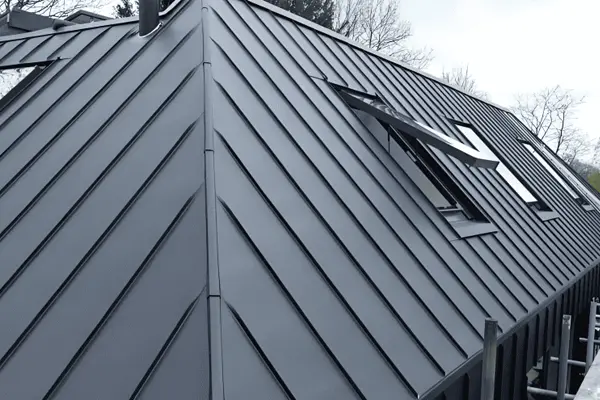
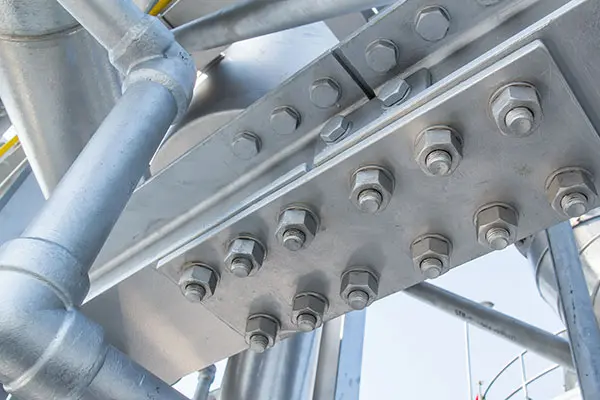
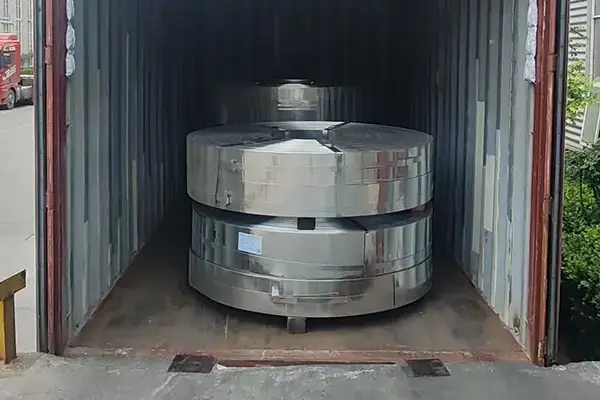
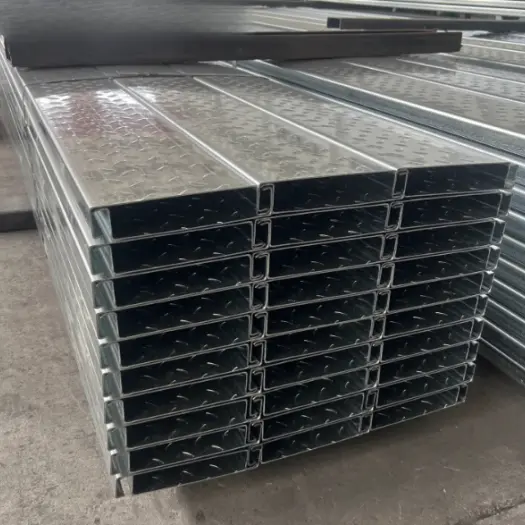
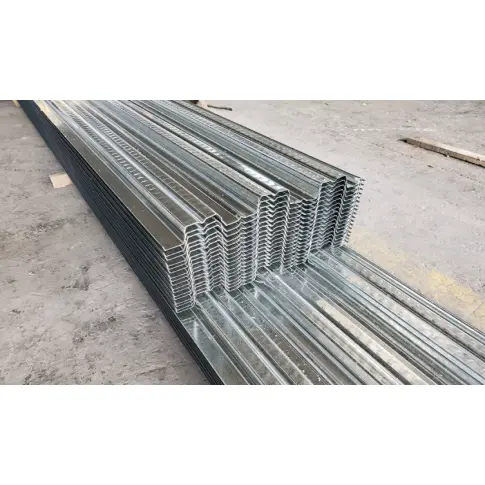
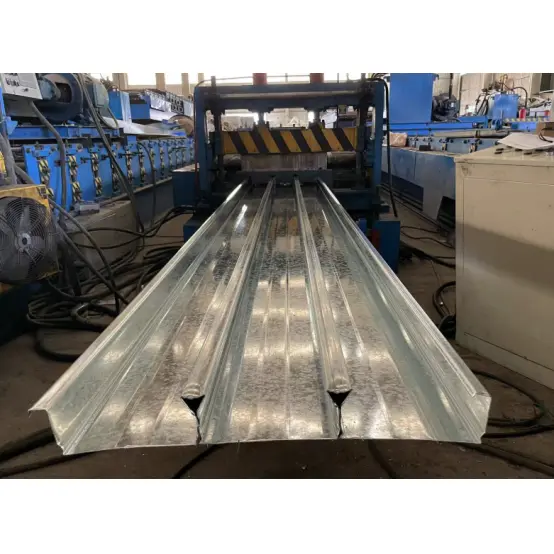
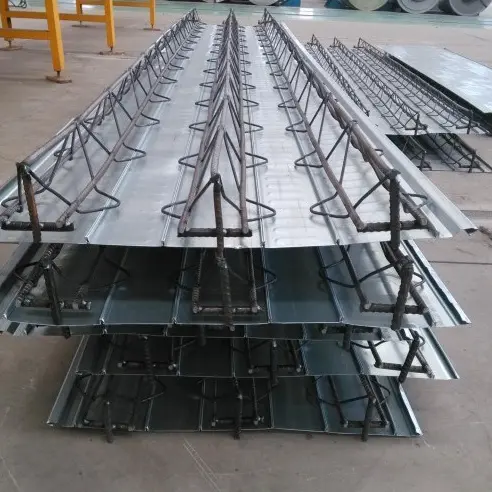
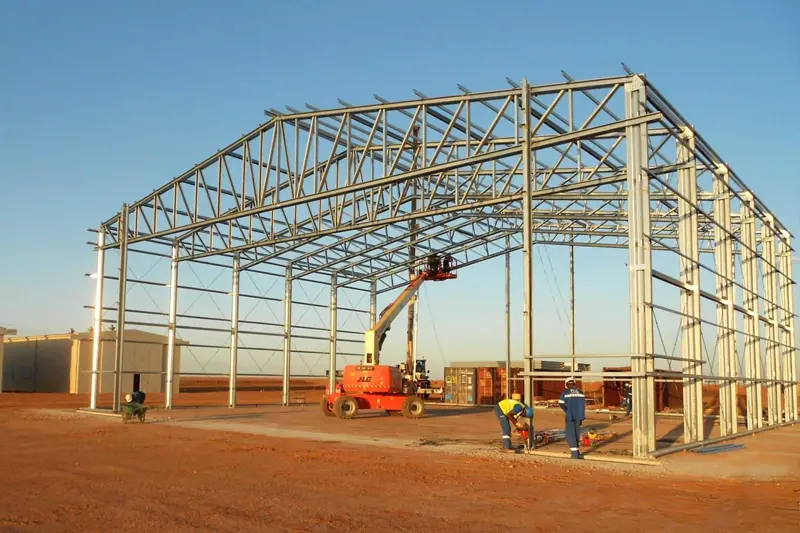
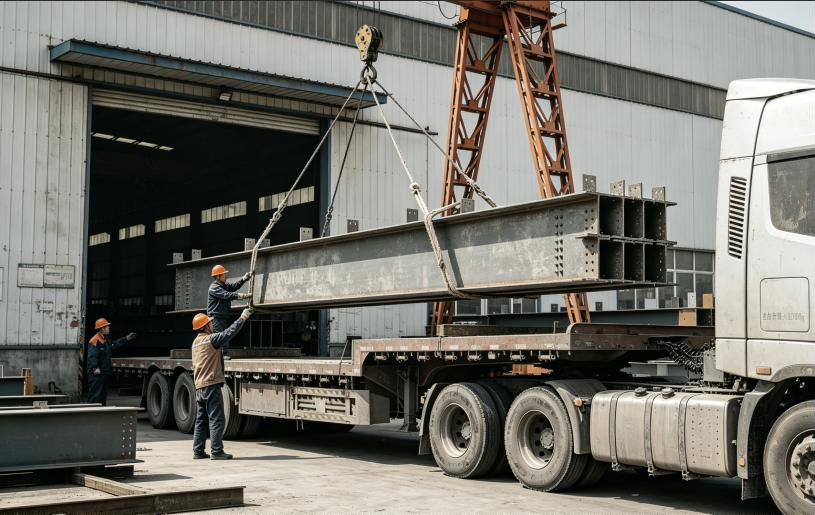
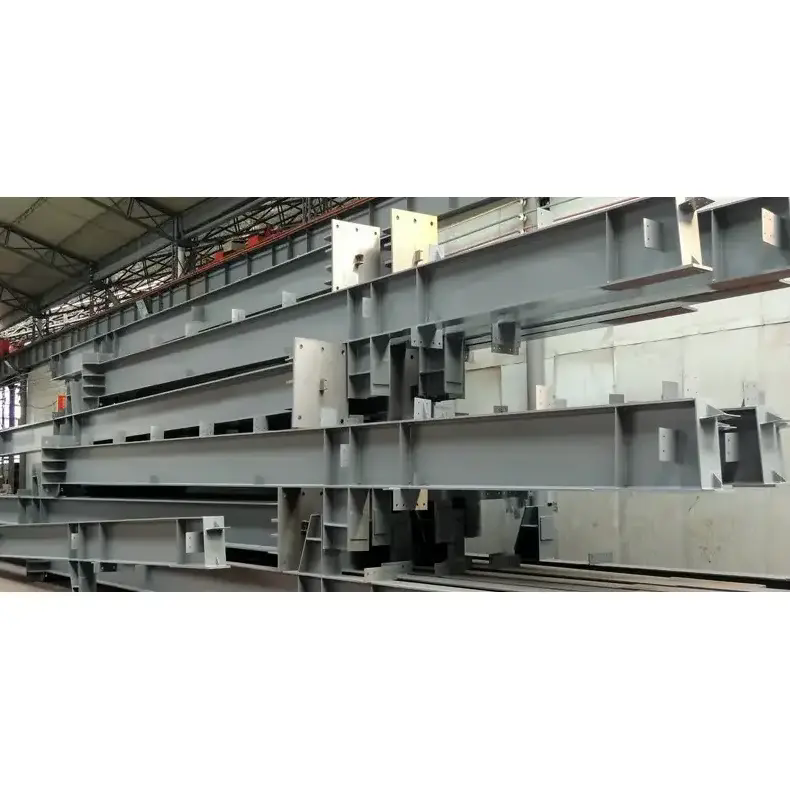
Prefabricated Non-Poured Steel Floor Deck Panels are manufactured from high-strength hot-dip galvanized or Al-Zn coated steel sheets via multi-roller cold-roll forming. They feature continuous ribbed or box-type cross-sections and rely on their own structural rigidity and material strength to support loads during both construction and service phases, eliminating the need for a concrete topping layer. They require no pouring, formwork, rebar tying, or curing, and are ready for immediate use upon installation.
Prefabricated Non-Poured Steel Floor Deck Panels: These are composite load-bearing floor panels that are integrally prefabricated in the factory and assembled on-site using a completely dry method. They eliminate the need for on-site formwork, rebar tying, concrete pouring, and curing. The system functions as a self-supporting floor structure, relying on high-strength profiled steel sheets and built-in reinforcing elements. They are laid directly onto and fixed to the top flanges of primary and secondary steel beams; once installed, the finish flooring can be applied and the floor put into service immediately, without any wet construction work.
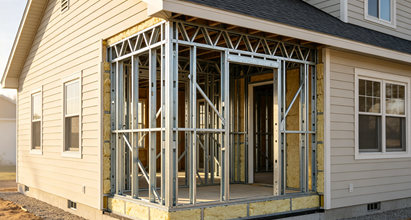
Distinction: Conventional open-profile or closed-profile floor decks require cast-in-place concrete; in contrast, this type of steel floor deck requires no concrete at all. It is widely used for loft mezzanines, factory mezzanines, storage platforms, building renovations, and light steel structure flooring.
Mainstream Standard Models: YX40-200, YX50-250, YX70-300 (profile heights of 40/50/70mm; effective widths of 200/250/300mm). Base material: Q355GD+Z hot-dip galvanized steel; sheet thickness: 1.8–4.0mm.
1. All-steel hollow-core stay-in-place floor decking: Formed from a single profiled steel sheet with a hollow cavity and internal vertical stiffening ribs; load-bearing is provided entirely by the metal structure.
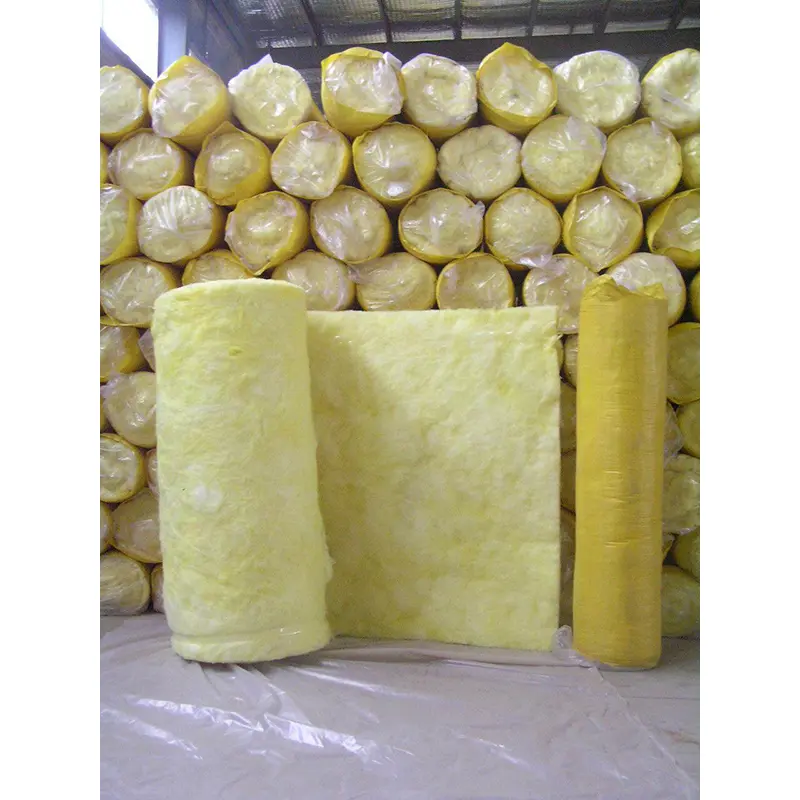
2. Steel-sandwich composite stay-in-place floor decking: Factory-bonded assembly featuring top and bottom galvanized steel sheets with a lightweight core (foamed cement or rock wool) in between; offers enhanced sound insulation and fire resistance, as well as reduced dead weight.
Module 1: Primary Load-Bearing Deck
1. Load-bearing panel: Roll-formed from hot-dip galvanized S355GD steel; surface options include anti-slip knurled textures; edges feature integrated interlocking joints for easy assembly and connection between panels.
· Rib height: 40/50/70mm (greater rib height allows for longer unsupported spans).
· Panel thickness: Standard 1.8/2.0/2.5/3.0mm; 3.5/4.0mm for heavy-duty platforms.
· Galvanization: Z120g/m² for inland areas; Z275g/m² for coastal areas (corrosion protection standards).
2. Internal stiffening ribs (standard on hollow-core models): Formed from galvanized steel of the same material; factory-welded (intermittent spot welds) inside the panel cavity to increase the moment of inertia, reduce floor deflection, and replace the compressive function of concrete.
Module 2: Specialized Edge and Finishing Accessories
1. Edge closure panels (L-shaped edge trim): Used to seal the perimeter of the floor against walls or steel beams and to close off the open ends of the cavities, preventing debris from falling through.
2. Inside and outside corner pieces: For finishing floor corners and edges around openings.
3. Reinforcement rings for openings: Reinforcement plates for utility penetrations (pipe/conduit holes) to prevent stress cracking at the cutouts.
Module 3: Installation and Fixing Accessories
1. Main Beam Connection Accessories
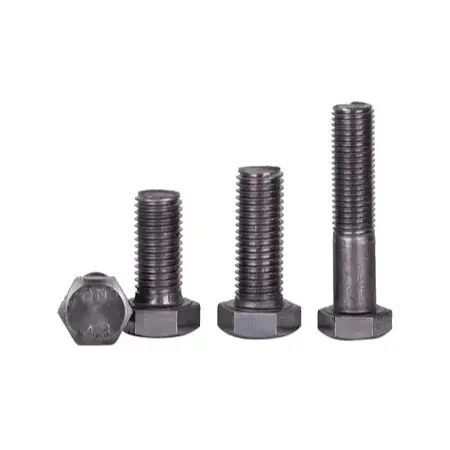
· Self-drilling/self-tapping screws: Φ5.5×25/32mm galvanized screws for fixing the floor panel to H-beam/I-beam main girders;
· Studs/Spot-weld connectors: For heavy-load conditions, arc spot welding combined with headed studs is used to rigidly anchor the panel to the steel beam;
2. Panel Joint Accessories
· Lap joint sealant: Butyl weather-resistant sealant applied at panel tongue-and-groove joints for dustproofing and noise reduction;
· Joint reinforcement strips: Long galvanized strips used to reinforce joints in extra-long span floor panels;
3. Specialized suspension clips (drill-free): Snap-fit into the rib grooves on the underside of the floor deck; used for suspending ceilings, air ducts, and utility lines.
Module 4: Floor Surface Options
Selected based on application scenario: Fiber cement board, OSB (Oriented Strand Board), anti-slip patterned steel plate, composite wood flooring, or wear-resistant floor coating.
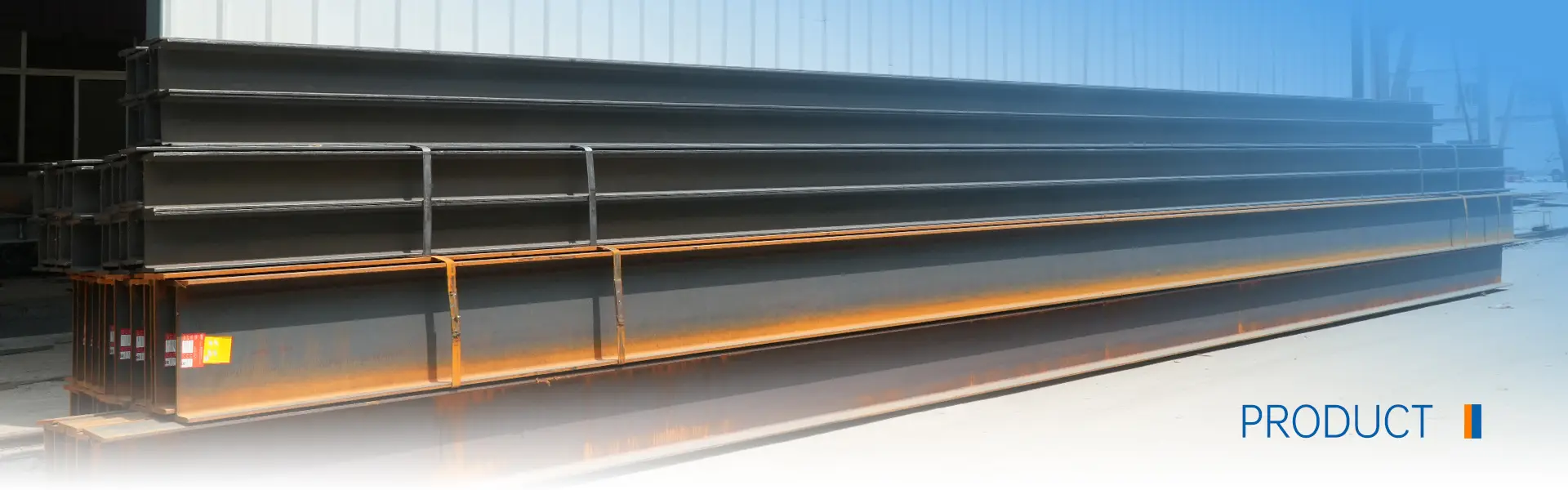
1. Main beams: H-beams/I-beams; Secondary beams: C-sections, H-beams;
2. Anti-rust treatment: Rust removal followed by epoxy zinc-rich primer to ensure consistent corrosion protection across the entire system.
No wet work on-site; 1,000 m² can be completed in just 1–3 days; dust-free and quiet.
Approx. 15–25 kg/m² (one-fifth the weight of cast-in-place slabs), significantly reducing loads on beams and columns.
Uniformly distributed load of 2.0–10.0 kN/m², meeting requirements for offices, warehousing, and equipment platforms.
Hot-dip galvanized or Al-Zn coated; service life of 50+ years; suitable for both indoor and outdoor use.
Bolted connections allow for disassembly and relocation; 100% recyclable. 6. Fire and Sound Insulation: The panels are non-combustible and feature sound-insulating cavities; fire-resistant coatings can be applied to further enhance the fire resistance rating.
1. No pouring, no curing, and ready for immediate use.
Closed-profile or truss-style composite decks require on-site rebar tying, concrete pouring, and a 28-day curing period to reach full strength. In contrast, these factory-prefabricated hollow-core reinforced panels require only on-site laying, edge locking, and self-drilling screw fixation. Workers can walk on the deck and install surface flooring on the same day installation is completed. The construction period for a single floor is reduced by 40%–60%, and work can proceed normally during rainy seasons or cold winter temperatures when cast-in-place concrete is not feasible. A 1,000 m² floor typically takes 3 days to complete, whereas traditional cast-in-place methods require at least 7–15 days.
2. No formwork or temporary scaffolding supports required.
For the same panel thickness, the unsupported span capability exceeds that of thin-gauge closed-profile decks. These prefabricated, non-poured steel floor panels eliminate the need for full-area scaffolding and temporary shoring materials and labor. They allow for the installation of mezzanines or additional floors in existing buildings without erecting ground-based scaffolding, offering significant advantages for building renovations.
3. Zero on-site construction waste, wastewater, or dust.
Fully dry assembly eliminates concrete waste, slurry residue, and aggregate debris. This system is ideal for adding floors to completed factory buildings or renovating lofts with high-end finishes, as it does not damage or contaminate existing flooring.
1. Drastic reduction in floor dead load.
Cast-in-place closed-profile composite slabs typically weigh ≥3.2–3.8 kN/m² (steel deck + 110–130 mm concrete), whereas these prefabricated all-steel hollow-core panels weigh only 1.4–2.2 kN/m². This reduces the floor dead load by over 40%, allowing for smaller cross-sections for primary and secondary H-beams and C-beams. Consequently, steel consumption for columns and foundations is reduced by 8%–15%, leading to a significant decrease in the overall cost of the steel structure. 2. Superior long-span capability reduces the need for secondary beams. The YX50/70 series non-cast-in-place (dry-assembly) slabs support simple spans of 3.2–4.0m without shoring. Under identical load conditions, their span capacity exceeds that of 0.8–1.2mm gauge closed-profile cast-in-place composite slabs by 15%–25%. For large-grid industrial facilities, this allows for the elimination of intermediate secondary beams, optimizing the steel structure layout and reducing costs.
1. Perfectly flat underside eliminates the need for ceiling leveling layers. Unlike closed-profile cast-in-place slabs—which feature exposed ribs requiring additional leveling furring channels for ceilings—these slabs offer a completely flat underside. Air ducts, cable trays, and fire-suppression piping can be directly clipped on without drilling or damaging the galvanized anti-corrosion coating, saving 30% on ceiling auxiliary materials.
2. Integrated internal channels eliminate the need for on-site slotting during wiring. The hollow, sealed cavity (available in 40/50/70mm rib heights) allows for concealed routing of power and data lines. This avoids the structural risks associated with cutting slots into the slab and damaging main reinforcement bars. The fully sealed interlocking joints prevent concrete leakage and water seepage, eliminating the need for end caps to stop grout loss.
3. Optional factory-rolled anti-slip embossing on the top surface allows the slab to serve immediately as a safe working platform during construction, eliminating the need for temporary scaffolding planks and saving on auxiliary material costs.
1. Significant reduction in on-site labor costs. The system eliminates the need for rebar workers, concrete crews, vibration teams, and curing teams; only installers are required, cutting labor costs by over 50%. It also removes expenses related to ready-mix concrete procurement, pumping, and moisture curing.
2. Fully recyclable steel components facilitate future modifications and dismantling. If the facility's function changes or a mezzanine is removed, the steel can be 100% dismantled and recycled, offering high residual value. In contrast, closed-profile cast-in-place slabs are integrated with the concrete, meaning demolition results in waste rubble with no recycling value. 3. Shortened capital turnover cycle: Rapid transition from floor completion to MEP (mechanical, electrical, and plumbing) and fit-out stages accelerates overall project completion, shortens the developer's capital recovery cycle, and reduces implicit financial costs.
1. Comprehensive hot-dip galvanizing (S355GD+Z120/Z275): No concrete encasement is required; the entire steel cross-section is protected by the zinc layer. For coastal high-humidity areas or chemical processing facilities, AZ150 (Alu-Zinc) coated sheets are selected, offering a service life far exceeding that of cast-in-place floor decking, which—while encased in concrete—is prone to edge corrosion.
2. Flexible, controllable fire resistance: While "closed-profile" decking relies on concrete encasement for fire resistance, these non-poured panels allow for rock wool or fire-resistant insulation to be filled into the hollow cavities as needed. This easily achieves a fire resistance rating of 1.0–1.5 hours, ensuring compliance through lightweight design without the need to increase the weight of the structure via thicker concrete slabs.
1. Retrofitting existing buildings with load limitations: An ideal choice for adding mezzanine levels to old factories or commercial spaces where the original foundations, beams, and columns lack the load-bearing capacity for cast-in-place concrete slabs. The lightweight, non-poured nature of these panels perfectly accommodates load limits—a solution that cast-in-place alternatives cannot match.
2. Temporary platforms and demountable structures: Suitable for storage platforms or temporary work floors intended for phased use and eventual removal. These panels allow for repeated disassembly and reuse, whereas cast-in-place floor decking cannot be repurposed.
Summary
Closed-profile cast-in-place decking excels in heavy-duty, permanent industrial flooring applications. In contrast, prefabricated non-poured steel floor deck panels specialize in lightweight construction, rapid installation, and projects involving building retrofits, temporary mezzanines, high-end loft fit-outs, and load-restricted renovations; their fully dry-construction method is their core, irreplaceable advantage.
Prefabricated steel floor deck panels (requiring no concrete pouring; fully dry-assembly steel construction) undergo eight standard processing steps: base material pretreatment → uncoiling and leveling → surface embossing/strengthening → continuous roll forming → stiffener fabrication → internal spot-welding assembly → precision cutting to length → finished product inspection and packaging.
1. Raw Material Acceptance: For hot-dip galvanized coils (Q355GD; thickness 1.8–4.0mm; coating weight Z120/Z275g/m²), verify material specifications, zinc coating weight, and coating adhesion; classify and store narrow steel strips (same material grade) intended for stiffeners.
2. Uncoiling and Cleaning: Uncoil the steel strip; use brushes and dust-removal rollers to clean the surface of zinc dross, oil, and curled edges; reject sheets with coating voids or scratches.
3. Initial Leveling: Use a multi-roll leveling unit to eliminate internal coil stress, ensuring surface flatness within 2mm/2m to prevent buckling or profile misalignment during subsequent roll forming.
1. Surface Knurling / Transverse Rib Pressing: Pass through the embossing station as required to roll anti-slip patterns onto the surface; for heavy-duty models, press closely spaced, intermittent transverse concave-convex stiffening ribs to enhance local compressive strength and minimize subsequent deflection.
2. Edge Pre-folding for Interlocking Joints: Pre-fold the interlocking edges (male-female connectors) prior to forming; this eliminates the need for additional sealing during panel assembly, ensuring integrated sealing performance.
1. Galvanized steel strip enters a multi-stage progressive roll-forming line, undergoing step-by-step bending according to profile parameters: flat base section → vertical side walls → top load-bearing panel → enclosed hollow cavity (40/50/70mm rib height). The panel is formed as a single integral unit without side seams, featuring a completely flat base (unlike the uneven bottom surface of closed-profile decking).
2. Real-time online alignment correction: A photoelectric system controls the steel strip feed; cavity cross-section dimensional tolerance is ±0.5mm, and the interlocking joint gap is uniform.
3. Formed semi-finished product: U-shaped enclosed hollow shell; effective coverage width per unit is 200/250/300mm.
1. Narrow galvanized steel strip (same material) is uncoiled and leveled, then cut to fixed length via CNC shearing;
2. CNC bending machines batch-process U-shaped or flat reinforcing ribs, with spacing and specifications determined by design drawings (standard intervals of 250/300mm);
3. Rib edges are deburred, areas with damaged galvanizing are touched up with zinc-rich paint, and ribs are sorted and stacked for use.
1. Formed hollow panels are conveyed to an automatic spot-welding jig station; the jig secures the panel body to ensure consistent cavity opening width;
2. A robotic arm positions and inserts the prefabricated reinforcing ribs into the cavity; intermittent resistance spot welding is performed (standard weld spacing of 300–400mm), fusing the ribs to the inner surfaces of both the top and bottom plates to form a load-bearing hollow truss structure, replacing the compression zone of cast-in-place concrete;
3. Spot checks of welds are conducted cavity by cavity to ensure no cold welds, missed welds, or burn-through of the galvanized layer; weld locations receive localized anti-corrosion touch-up coating.
1. Servo-controlled flying saw performs dynamic cutting while the sheet moves, cutting to project-specific lengths (standard single lengths: 2–9m);
2. Deburring of cut edges and touch-up of any impact damage to the galvanized coating on end faces;
3. CNC bending and cutting of specialized trim accessories (L-shaped edge trims, internal/external corner covers) using the same material.
1. Visual Inspection
Panel surfaces free from scratches, bare spots (missing zinc), or warping; interlocking joints intact and fitting smoothly;
2. Dimensional Verification
Full-scale sampling of panel width, rib height, length, and joint dimensions; tolerances compliant with internal corporate standards;
3. Mechanical Testing (Sampling)
Random sampling from the same batch for flexural deflection and ultimate load testing; test records retained;
4. Accessory Verification: Inventory check of edge trims, reinforcement rings, and installation consumables.
1. Panels of the same specification stacked in the same orientation; rubber corner protectors placed between panels to safeguard interlocking joints and galvanized surfaces;
2. Bundled with steel strapping + identification label (model, thickness, rib height, quantity, production date);
3. Wrapped in rainproof stretch film; segregated storage for inland (Z120 coating) and coastal (Z275 coating) products.
Mainstream Profiles: YX40, YX50, YX70 (rib heights of 40/50/70mm); evaluated across eight core indicators: base material specifications, geometric dimensions, self-weight, mechanical load-bearing capacity, deflection limits, corrosion resistance, fire/sound insulation, and installation accessories.
1. Steel Grade: Primary Q355GD (S355GD); alternative Q235GD. Yield Strength: Q235 ≥ 235 MPa; Q355 ≥ 355 MPa.
2. Base Sheet Thickness: 1.8 mm, 2.0 mm, 2.5 mm, 3.0 mm, 3.5 mm, 4.0 mm (use ≥ 3.0 mm for heavy-load applications).
3. Hot-Dip Galvanizing Standard (Double-sided)
1). Standard Indoor: Z120 (120 g/m²); coating thickness ≥ 42 μm; salt spray resistance ≥ 1000 h (no red rust).
2). Humid / Coastal / Chemical Environments: Z275 (275 g/m²); coating thickness ≥ 85 μm; salt spray resistance ≥ 2000 h (no red rust); AZ150 (Alu-Zinc) available for high-corrosion environments.
4. Internal Stiffening Ribs: Made of the same galvanized steel strip; rib height matches the profile cavity height; secured via spot welding.
|
Panel Model |
Rib Height H |
Single Rib Spacing |
Effective Deck Width |
Raw Material Width Per Panel |
Custom Length Range |
Manufacturing Tolerance |
|
YX40 |
40mm |
200mm |
800mm |
1000mm |
2~9m |
Rib height ±0.4mm, width ±1mm |
|
YX50 |
50mm |
200mm |
600/800mm |
1000mm |
2~9m |
Same as above |
|
YX70 |
70mm |
200mm |
600mm |
1000mm |
2~9m |
Same as above |
· YX40 (2.0 mm base sheet): 14–16 kg/m² (1.4–1.6 kN/m²)
· YX50 (2.5 mm base sheet): 17–19 kg/m² (1.7–1.9 kN/m²)
· YX70 (3.0 mm base sheet): 20–22 kg/m² (2.0–2.2 kN/m²)
Compared to cast-in-place closed-profile composite decking (steel sheet + concrete)—which has a dead weight of 3.3–3.8 kN/m²—this system offers a weight reduction of over 40%. IV. Span + Uniformly Distributed Load
Serviceability limit state: L/250 deflection control (GB50017)
1. YX40 (2.0mm, Q355) maximum unshored span: 2.6–3.0m; live load standard: 2.5kN/m² (office); ultimate load capacity: ≥5.0kN/m²
2. YX50 (2.5mm, Q355) maximum unshored span: 3.2–3.6m; live load standard: 3.0kN/m² (retail/storage); ultimate load capacity: ≥6.5kN/m²
3. YX70 (3.0mm, Q355) maximum unshored span: 3.8–4.2m; live load standard: 3.5–4.0kN/m² (light industrial plant); ultimate load capacity: ≥8.0kN/m²
For continuous installation (multi-span support), the span can be increased by 15%–20%, reaching up to 4.5–5.0m.
Serviceability deflection limit: L/250 (where L is the calculated span)
Temporary construction access (1.0kN concentrated load): instantaneous deflection ≤L/200; no permanent deformation after load removal
Factory spot checks: load testing on samples from the same batch; measured deflection must not exceed the design limit by more than 5%.
1. Bare panel (hollow cavity): fire resistance rating 0.25h (Class B1 flame-retardant)
2. Cavity filled with rock wool / fire-resistant cotton: ratings of 1.0h, 1.5h, and 2.0h available; meets standards for industrial plants and fire compartments
3. Foamed-cement core type: fire resistance rating exceeds 2.0h.
1. Hollow panel (unfilled): Airborne sound insulation ≥ 32 dB;
2. Rock wool-filled panel: Sound insulation ≥ 42 dB; thermal conductivity ≤ 0.04 W/(m·K); meets sound insulation requirements for lofts and office buildings.
1. Fastening: Self-drilling screws spaced at 300 mm; spacing reduced to 200 mm at supports;
2. Joints: Tongue-and-groove interlocking fit (no sealant required); bottom panel allows direct suspension of utilities and cable trays (single-point suspension load capacity ≥ 0.8 kN);
3. Recyclability: Fully steel components are demountable; steel recovery rate exceeds 95%.
Lofts / Offices: YX40/YX50; live load 2.5 kN/m²; span ≤ 3.2 m
Warehousing / Small Factories: YX50/YX70; live load 3.0–3.5 kN/m²; span ≤ 4.0 m
Retrofitting Existing Buildings (limited structural load capacity): Prioritize YX40 lightweight profiles
Q1: Will the Prefabricated Non-Poured Steel Floor Deck Panels experience sagging or deformation over long-term use?
A: No permanent deformation occurs when the panel is selected according to specifications. We conduct mid-span deflection load tests before shipment, strictly controlling the deflection limit at L/250 in accordance with GB50017; on-site installation requires self-tapping screws at specified intervals, with additional fasteners at supports. If the unsupported span is exceeded or concentrated loads are applied eccentrically, elastic deflection may occur, but the panel will automatically recover after the load is removed, without irreversible deformation.
Q2: Can these panels be used for adding a mezzanine level in an old residential complex where the original floor slabs, beams, and columns cannot be reinforced?
A: Cast-in-place floor slabs add a dead load of over 300 kg/m², likely exceeding the original structural design capacity. In contrast, the Q355 non-cast slab has a dead load of only 19 kg/m²—just 1/18th of the cast-in-place load—eliminating the need to reinforce existing beams, columns, or foundations and allowing for direct approval by housing and construction authorities.
Q3: Will water accumulate or rust occur inside the slab cavities over time?
A: Not if installed according to specifications. The slab features an integrated, enclosed hollow cavity with no vertical gaps, leaving no pathways for water seepage. For outdoor use, a top-surface waterproofing membrane is required, and a 20mm drainage gap is left at the slab ends. Coastal projects utilize AZ150 Al-Zn coated substrates; the zinc-aluminum composite coating offers self-healing properties, so cut edges do not require frequent touch-up painting.
Q4: What is the difference in span capability between multi-span continuous installation and single-span installation?
A: Multi-span continuous support significantly enhances overall structural rigidity, allowing the span to increase by 15%–20% for the same slab thickness. For example, the maximum span for a single-span YX70-3.0mm slab is 4.2m, whereas a three-span continuous installation can reach 4.9m. This directly reduces the number of intermediate secondary beams and further lowers the cost of the main steel structure; continuous installation is the preferred choice for factory buildings with large column grids.
Q5: Can tiles or floor coatings be applied over the non-cast slabs later?
A: Yes, but a leveling transition layer is required. Direct application is prone to hollow spots and cracking; therefore, it is recommended to lay 12mm fiber-cement board on the slab surface as a leveling base before installing tiles or epoxy flooring. However, slabs with anti-slip patterned surfaces can be coated directly with wear-resistant floor paint without additional leveling.
Address
Tianjin International Metal Logistics Park, Jinan Economic Development Zone (East Zone), Jinan District, Tianjin, China
Tel