Tianjin Haisheng Steel Structure Co., Ltd.
Products
Torque Shear High Strength Structural Bolts
  • Torque Shear High Strength Structural BoltsTorque Shear High Strength Structural Bolts
  • Torque Shear High Strength Structural BoltsTorque Shear High Strength Structural Bolts

Torque Shear High Strength Structural Bolts

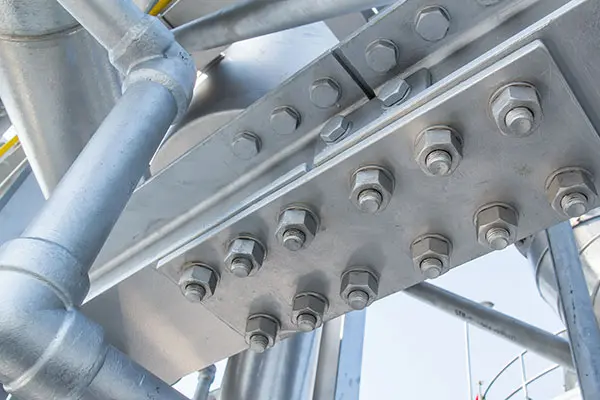
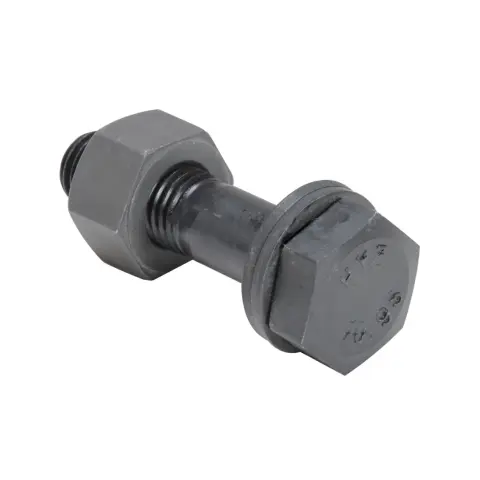
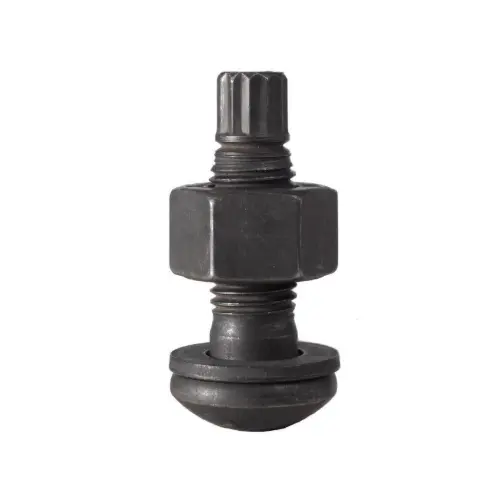
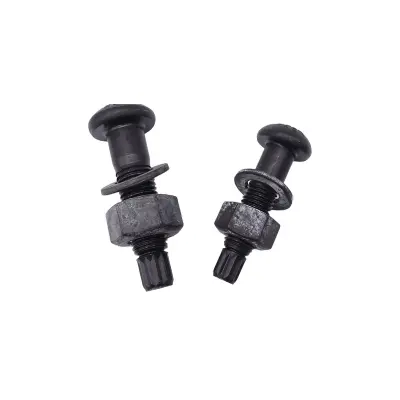
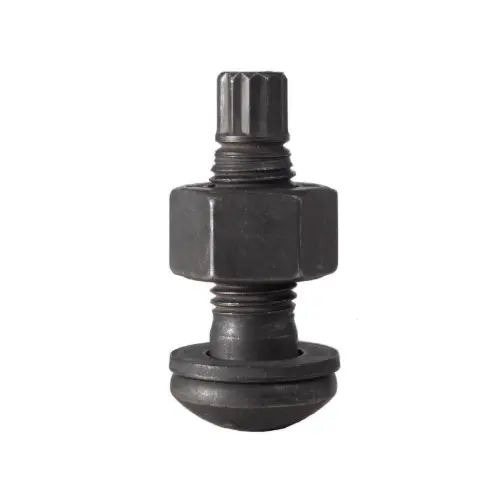
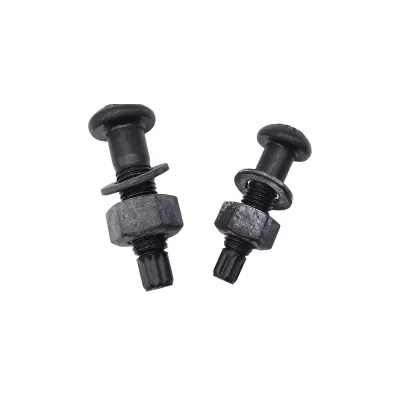
HAISHENG is a reliable China structural steel Manufacturer and one-stop Supplier, supplying Torque Shear High Strength Structural Bolts in stock. The full standard name is Torque Shear High Strength Bolt Assemblies for Steel Structures, complying with GB/T 3632. Each complete set consists of 1 bolt with round head and tail spline, 1 nut and 1 washer only fitted on the nut side. A thin shear neck (twist-off groove) is set between the spline tail and bolt shank as a pre-set weak section. When fully tightened by a special electric wrench, the thin neck will be cut off, which means the required pre-tension force is achieved. The spline tail at the bolt end will be automatically twisted off once the pre-set pre-tension force is reached, providing a direct visual signal to confirm full tightening.

HAISHENG supplies Torque Shear High Strength Structural Bolts in stock, complying with GB/T 3632-2008. Each complete assembly includes 1 bolt (10.9S), 1 nut (10H) and 1 washer. The bolt features a shear groove and spline tail that automatically breaks off when design pre-tension is reached, providing visual qualification. Ideal for high-rise buildings, crane girders, steel bridges and dynamic-load joints. Surface treatments: phosphating, hot-dip galvanizing, or Dacromet coating.

Torque Shear High Strength Structural BoltsTorque Shear High Strength Structural Bolts

Basic Definition & Complete Supporting Configurations

Applicable Standard: GB/T 3632-2008 Torque Shear High Strength Bolt Assemblies for Steel Structures. This friction-type connecting fastener is widely used on critical load-bearing joints including steel beam-column connections, crane girders, steel trusses and steel bridges.

1. Basic Product Definition

1. Explanation Torque Shear High Strength Structural Bolts are complete pre-stressed fastening assemblies with unified 10.9 strength grade. A special twist-off groove and spline tail are machined at the bolt end. When torque is applied via dedicated electric wrench, the spline tail will break off along the shear groove once the design pre-tension is reached, serving as a clear qualification indicator. Load is transferred by friction between connected component contact surfaces, featuring high connection rigidity, anti-slip performance, anti-loosening property and outstanding fatigue resistance.

2. Core Characteristics

· Pre-tension force is precisely controlled with minimal human error; acceptance inspection can be completed by visual check.

· Only applicable to friction-type connections, not bearing-type connections.

· Bolts cannot be disassembled or reused after spline tail breakage, designed for permanent connections.

· All matching components must be produced by the same manufacturer, same batch and same specification; mixing different batches is prohibited.

1. Common Raw Materials

· Bolt: ML20MnTiB for sizes ≤ M24; 35VB for sizes ≥ M27

· Nut & washer: 45# steel, 35CrMo alloy steel

· Strength Marking: Bolt shank marked with 10.9S, nut marked with 10H

1. Regular Specifications Nominal diameters: M16, M20, M22, M24, M27, M30. Bolt lengths are selected according to total thickness of connected plates, standard range 40mm~220mm.

2. Standard Complete Assembly Configurations

(1) Standard Bolt Assembly (Factory Pre-matched, 3 pieces per set)

Torque Shear High Strength Structural Bolts adopt one bolt, one nut and one washer, different from large hexagon high strength bolts equipped with two washers.

1. Torque shear high strength bolt (10.9S): Composed of hexagon head, threaded shank, weakened twist-off shear groove and spline clamping tail. The shear groove acts as a weak cross-section to control tightening torque accurately.

2. High strength nut (10H): Thickened hexagon nut with precisely matched thread for locking and force transmission.

3. High strength flat washer: Only installed on the nut side to expand bearing area, prevent substrate scratch and local crushing during tightening.

(2) Surface Treatment Options Selected by Service Environment

1. Phosphating & blackening (mainstream): For indoor dry factory buildings and structural steelworks, stable friction coefficient and low cost.

2. Hot-dip galvanizing: For open-air, coastal humid and corrosive environments with superior anti-corrosion performance.

3. Dacromet coating: For heavy corrosion working conditions, balancing anti-corrosion capacity and friction performance.

(3) Construction Tools & Auxiliary Materials

1. Special final tightening electric wrench: Double inner & outer sleeve design; outer sleeve fixes nut while inner sleeve clamps spline tail to complete tightening and tail cutting automatically.

2. Pre-tightening wrench: Adjustable torque electric or manual wrench for initial tightening to eliminate gaps between connected plates.

3. Spline tail extractor: Removes residual spline fragments after final tightening.

4. Torque testing equipment: For sampling inspection of tightening torque and pre-tension force.

5. Protective supplies & marking pens: Mark joints after tightening to avoid missed or repeated construction.

(4) Packaging & Technical Documents

1. Packed by specification and length with complete matched sets, sold as full assemblies instead of separate parts.

2. Each batch is attached with product certificate, material test report, torque & axial force test report and friction coefficient inspection report.

3. Auxiliary Structural & Installation Requirements

1. Connected plate contact surfaces: Conduct sandblasting, shot blasting, grinding or controlled rusting treatment before installation to meet specified anti-slip coefficient.

2. Tightening sequence: Complete initial tightening first then final tightening; fasten from center to surrounding areas for large-area joints.

3. Spare parts: Prepare 3%~5% spare bolt assemblies of identical specification based on total project consumption.

4. Classification Supplement

1. By service scenario

· Standard type: Main structural joints of industrial plants and multi-storey steel structures

· Anti-corrosion type: Outdoor steel structures, pipe racks and coastal buildings

1. By length series

· Short-length series: For thin plate splicing

· Long-length series: For multi-layer stacked thick connected plate joints

5. Simple Distinction: Torque Shear Bolts vs Large Hexagon High Strength Bolts

Item

Torque Shear High Strength Structural Bolts

Large Hexagon High Strength Bolts

Assembly Composition

1 bolt + 1 nut + 1 washer

1 bolt + 1 nut + 2 washers

Tension Control Method

Cut spline tail for visual qualification

Torque method / Rotation angle method with instrument testing

Construction Efficiency

High, simple acceptance

Low, requires torque testing for each point

Reusability

Cannot be reused after tail cutting

Dismantable and reusable after evaluation


Core Advantages

1. Precise and controllable tightening force: Completion of spline tail cutting indicates standard pre-tension force, eliminating under-tightening or over-tightening issues for uniform stress and stable connection performance.

2. Simple construction with high efficiency: Special electric torque shear wrench completes tightening and tail cutting in one operation for single-person fast construction, doubling construction speed compared with large hexagon bolts.

3. Built-in anti-cutting corners for easy acceptance: Cut spline tail serves as an obvious qualified mark. Inspectors can judge full tightening visually to avoid missed or fake tightening, simplifying project acceptance greatly.

4. Superior sealing and seismic performance: Closely fitted friction surfaces deliver excellent anti-slip, anti-vibration and anti-fatigue capacity, resisting loosening under long-term dynamic loads for high-rise steel structures, heavy plants and steel bridges.

5. High durability and safety factor: Entire component adopts quenched & tempered 10.9 high strength material with far higher tensile, shear and compressive strength than ordinary bolts, suitable for primary load-bearing structural joints.

Differentiated Highlights of Torque Shear High Strength Structural Bolts

Compared with large hexagon high strength bolts, ordinary rough bolts and precision bolts, advantages and applicable limits are sorted from six dimensions including construction, load bearing, precision, acceptance, full-cycle cost and working condition adaptability for direct engineering application.

1. Tightening Control: Ultra-high pre-tension precision with negligible human error (core highlight)

1. Fixed torque self-locking with visual judgment: Final tightening is mechanically limited by shear groove and spline tail. Pre-tension force is defined by component structure without influence from operator proficiency; cutting completion equals qualified installation, visible to naked eyes on site. Large hexagon bolts rely on torque wrench or rotation angle construction, with large discrete pre-tension affected by wrench calibration, surface friction and manual operation, requiring instrument sampling inspection for every joint.

2. Stable pre-tension performance: Pre-tension deviation of identical specification is controlled within ±5%, much better than ±10% of large hexagon bolts. Uniform stress distribution on connected groups prevents single bolt overload or insufficient tightening.

3. Eliminate over-tightening & under-tightening faults: No risk of thread damage from excessive torque or connection failure caused by insufficient tightening, ideal for large-batch massive steel structure joints.

2. Construction Efficiency: Simplified procedures, faster progress and lower labor cost

1. Streamlined standard workflow: Initial tightening followed by final tightening completed in one step without repeated torque calibration or on-site torque record filling. Large hexagon bolts require frequent wrench calibration, point-by-point testing and form recording with complicated procedures.

2. High single-person working capacity: Matched dedicated electric wrench supports continuous operation, shortening construction period by 20%~35% for equivalent engineering volume, with prominent advantages on large factories and high-rise steel structures.

3. Simple on-site component management: Standard configuration of one bolt, one nut and one washer, less prone to mixing or loss compared with two-washer large hexagon bolts.

3. Connection Performance: Enhanced anti-slip, anti-vibration and anti-fatigue capacity

1. Reliable friction connection: Sufficient and uniform pre-tension closely fits plate surfaces with stable anti-slip coefficient. Resist loosening under dynamic loads such as crane start-stop, wind vibration and equipment operation, with better fatigue resistance than large hexagon and ordinary bolts.

2. High overall joint rigidity: Minimal joint deformation under load with controllable overall displacement and deflection of steel structures, applicable to critical load-bearing positions including high-rise steel frames, crane girders and steel bridges.

3. Not applicable to bearing-type force transfer: Both products are 10.9 grade high strength bolts, while Torque Shear High Strength Structural Bolts are only designed for friction-type connections with clear design division; ordinary bolts mainly transfer load via bearing with poor anti-slip and anti-vibration performance.

4. Acceptance & Quality Control: Easy inspection and convenient quality traceability

1. Visual acceptance standard: Cut spline tail acts as qualification mark; missed or incomplete tightening can be identified at a glance without professional testing instruments for point-by-point inspection, greatly improving efficiency of supervision and site acceptance. Large hexagon bolts must be rechecked by torque wrench with heavy workload and frequent disputes.

2. Anti-tampering & anti-rework property: Spline tail cannot be restored after cutting, prohibiting secondary tightening, disassembly or reuse to effectively prevent unauthorized bolt loosening and illegal reuse, realizing controllable project quality.

5. Comprehensive Cost & On-site Management Advantages

1. Less auxiliary materials and equipment input: Only initial tightening wrench and dedicated final shear wrench are required without large quantities of precision torque testers; large hexagon bolts need multiple calibrated testing tools.

2. Clear spare parts management: Factory pre-matched full assemblies with fixed three-piece combination to avoid specification mixing risks; ordinary bolts and large hexagon bolts feature scattered components with high mixing probability.

3. Optimized full-cycle comprehensive cost: Unit purchase price is slightly higher than ordinary bolts and close to large hexagon bolts, but overall project cost is reduced for large-scale projects due to saved labor, testing work, construction duration and rework.

6. Working Condition Adaptability: Targeted design with irreplaceable value in special scenarios

1. Preferred application scenarios: High-rise steel beam-column joints, industrial plant crane girders, long-span trusses, steel venues and permanent connection joints subjected to alternating dynamic loads.

2. Environmental compatibility: Multiple surface treatments including phosphating, hot-dip galvanizing and Dacromet available for indoor, open-air and coastal corrosive environments.

7. Disadvantages & Application Limits

1. Unilateral working space required for final tightening: Outer space is needed to clamp spline tails; fully enclosed narrow blind zones cannot adopt this product, where large hexagon bolts are the only alternative.

2. Non-detachable & non-reusable: Bolts become waste after tail cutting, unsuitable for maintenance, reconstruction or temporary installation; large hexagon bolts can be disassembled and reused after evaluation.

3. Limited specification coverage: Main mainstream sizes M16~M30, fewer oversized and non-standard length options than large hexagon bolts.

4. Dedicated tool mandatory: Special torque shear wrench is compulsory; general torque wrenches cannot complete construction.

8. Comparison Table of Similar Fastener Products

Comparison Item

Torque Shear High Strength Structural Bolts

Large Hexagon High Strength Bolts

Ordinary Rough / Precision Bolts

Standard Assembly

1 bolt + 1 nut + 1 washer

1 bolt + 1 nut + 2 washers

1 bolt + 1 nut + optional washers

Tension Control

Mechanical fixed torque via spline cutting

Torque / Rotation angle method with instrument testing

No pre-tension, simple fastening only

Pre-tension Precision

High (±5%)

Medium (±10%)

No pre-tension

Vibration & Fatigue Resistance

Excellent

Good

Poor

Construction Efficiency

High

Average

High (poor load performance)

Acceptance Method

Visual inspection

Instrument sampling test

Visual inspection

Reusability

Forbidden after cutting

Dismantable & reusable after evaluation

Repeatedly detachable

Typical Application

High-rise buildings, crane girders, dynamic load critical joints

General steel structures, concealed narrow spaces, oversized bolts

Temporary fixing, secondary non-slip components


9. Selection Guidelines

1. Choose Torque Shear High Strength Structural Bolts: Open working surface, mass joints, dynamic load & high fatigue requirements, permanent friction connections prioritizing construction and acceptance efficiency.

2. Choose large hexagon bolts: Narrow enclosed space, joints requiring later maintenance & disassembly, oversized bolt specifications.

3. Choose ordinary bolts: Only temporary fixing, secondary components without slip or dynamic load requirements.

On-site Construction Process

Applicable Standards: GB 50205-2020 Acceptance Standard for Construction Quality of Steel Structures, JGJ 82. For 10.9 grade friction-type Torque Shear High Strength Structural Bolts. Overall procedure: Construction Preparation → Contact Surface Treatment → Bolt Selection & Matching → Initial Tightening → Final Tightening → Residual Tail Cleaning → Quality Acceptance

1. Pre-construction Preparation

(1) Technical & Material Preparation

1. Check construction drawings, joint forms, bolt specifications (diameter + length), design pre-tension force and anti-slip coefficient requirements.

2. Adopt full matched bolt assemblies of identical batch; mixing different batches, specifications or separate use of single components are prohibited. Inspect product certificates, axial force and friction coefficient test reports.

3. Prepare 3%~5% spare bolt assemblies of identical specification based on total consumption.

4. Store bolts in dry warehouse with thread protective sleeves to avoid oil contamination, rust and collision damage.

(2) Contact Surface Treatment

1. Remove oxide scale, paint, oil and floating rust via sandblasting, shot blasting, grinding or controlled rusting.

2. Conduct batch sampling re-inspection to ensure anti-slip coefficient meets design requirements.

3. Keep friction surfaces clean and dry before component assembly; suspend construction under rainy or dew conditions.

(3) Tools & Operators

1. Tools: Adjustable initial torque wrench, dedicated electric torque shear final tightening wrench, spline tail extractor, marking pen and feeler gauge.

2. Calibrate and test final tightening wrench before construction; operators must hold valid certificates and receive pre-job technical disclosure.

(4) Bolt Length Selection Principle

After full tightening, 2~3 complete threads shall be exposed outside the nut. Select precise length according to total thickness of connected plates; excessively long or short bolts are forbidden.

2. Component Assembly & Bolt Insertion

1. Hoist and temporarily fix steel components, calibrate axis, elevation and verticality. Inspect plate gaps with feeler gauge; add backing plates per specification if gap exceeds 1.0mm.

2. Maintain uniform bolt insertion direction (generally from inner side to outer side); forced hammering, hole reaming by gas cutting are prohibited. Rectify over-standard hole deviation per technical scheme.

3. Place washer flatly only on the nut side without skew.

4. Temporary fixing via temporary bolts / drift pins: Temporary bolts shall account for no less than 1/3 of total holes at each joint, minimum 2 sets.

3. Initial Tightening (Mandatory Procedure)

1. Function: Eliminate plate gaps and misalignment to reduce discrete final tightening torque values.

2. Initial tightening torque: Specified by design or standard, generally 50% of final tightening torque.

3. Tightening sequence

· Single joint bolt group: Fasten symmetrically from center to surrounding areas

· Long splicing seams: Fasten from middle to both ends

1. Mark nuts and bolt positions uniformly with marking pens after full initial tightening to distinguish tightened and untightened bolts.

2. Complete initial and final tightening for assembled joints on the same day as principle.

4. Final Tightening (Core Procedure)

1. Adopt dedicated electric torque shear wrench: Outer sleeve clamps nut tightly while inner sleeve grips spline tail, start wrench steadily.

2. Keep applying torque until spline tail automatically breaks off along shear groove, marking qualified final tightening.

3. Abnormal handling

· Unbroken spline tail & idle wrench: Inspect wrench, bolt hole position and plate gaps, rectify then re-construct.

· Rotating bolt shank: Stop operation immediately, replace with new complete bolt assembly for reinstallation.

1. Follow identical tightening sequence as initial tightening; reverse or jump fastening is prohibited.

2. Re-mark joints after final tightening to distinguish initial and fully tightened status.

5. Special Working Condition Treatment

1. Space-limited positions: If torque shear wrench cannot be applied, adopt torque method per large hexagon bolt standards with design & supervisor confirmation and complete construction records.

2. Night & low-temperature construction: Sufficient lighting and thermal preservation required; preheat wrench to avoid unstable torque output.

3. Post-rain construction: Resume work only after friction surfaces are fully dried and recheck surface condition.

6. Post-construction Cleaning & Finished Product Protection

1. Remove residual spline tails with dedicated extractors and collect fragments uniformly without random disposal.

2. Clean surrounding debris and dust; apply touch-up anti-rust paint on threads and minor scratch areas.

3. Avoid random knocking, impact, flame cutting and electric welding on completed bolt joints to prevent pre-tension loss.

4. Take heat insulation protection for subsequent welding operations near bolt areas to avoid high temperature deterioration of bolt performance.

7. Quality Inspection & Acceptance

(1) Full Visual Inspection

1. All spline tails cut off after final tightening; no missed, incomplete or fake tightening.

2. Bolts and nuts free of loosening or skew; 2~3 exposed threads outside nuts with intact appearance.

3. Closely fitted friction surfaces without obvious gaps.

(2) Sampling Re-inspection

1. Conduct torque re-inspection on sampled bolts per specified proportion; qualified if torque value stays within allowable deviation range.

2. Verify matched assembly usage without mixed batches or specifications.

3. Check construction records, test reports and concealed acceptance documents.

(3) Disposal of Unqualified Products

1. Missed / under-tightened bolts: Supplement tightening to qualified standard.

2. Excessive torque, damaged bolts or rotating shanks: Replace full new bolt assemblies completely; re-tightening or repairing damaged bolts are prohibited.

8. Strict Construction Prohibitions

1. Gas cutting hole expansion and forced hammering of bolts are forbidden.

2. Disassembly or reuse of bolts after spline tail cutting is forbidden.

3. Mixing bolt assemblies from different manufacturers or batches is forbidden.

4. Painting, mortar or oil coating on friction surfaces is forbidden.

5. Using uncalibrated or faulty final tightening wrenches is forbidden.

Simplified Construction Flow Summary

Construction Preparation → Contact Surface Treatment → Component Hoisting & Temporary Fixing → Bolt Insertion → Initial Tightening → Marking → Final Tightening (Spline Tail Cutting) → Re-marking → Residual Tail Cleaning → Finished Product Protection → Full Visual Inspection + Sampling Re-inspection → Acceptance & Handover

Core Performance Parameters of Torque Shear High Strength Structural Bolts

Complying with GB/T 3632-2008 for 10.9S grade, mandatory indicators for design and acceptance, applicable to mainstream sizes M16~M30. One complete assembly includes 1 bolt, 1 nut and 1 washer.

1. Raw Material & Heat Treatment

· Bolt material: ML20MnTiB for sizes ≤M24; 35VB / 35CrMo for sizes ≥M27

· Nut & washer material: 10H grade nut (35CrMo / 45# steel); 45# steel washer

· Heat treatment: Quenching + high temperature tempering for full quenching & tempering; Hardness: Bolt 32~38HRC, Nut 35~45HRC, Washer 35~45HRC

2. Mechanical Properties of 10.9S Grade Bolts

Parameter

Standard Value

Remarks

Tensile Strength σb

1040~1240 MPa

Minimum value

Yield Strength σ0.2

≥940 MPa

Minimum value

Elongation after fracture δ5

≥10%

Minimum value

Reduction of area ψ

≥42%

Minimum value

Wedge load test

No fracture or plastic deformation

Physical tensile test

3. Standard Pre-tension Force (P, kN) for 10.9S Grade

Size

M16

M20

M22

M24

M27

M30

Pre-tension P

80

125

150

175

225

275

Allowable Deviation

±5%

±5%

±5%

±5%

±5%

±5%

4. Torque Coefficient (K)

· Standard range: 0.110~0.150 (ambient temperature 10~35℃)

· Variation coefficient: ≤3% (5 groups of specimens, 8 tightening cycles per group)

· Calculation formula: K=T/(P·d) (T = final tightening torque, P = pre-tension force, d = nominal thread diameter)

5. Thread & Dimensional Precision

· Bolt thread: Class 6g (medium diameter tolerance ±0.02 mm)

· Nut thread: Class 6H

· Critical shear groove: Groove depth tolerance ±0.1 mm; diameter 15%~20% smaller than thread root diameter for controllable fracture

· Nut bearing surface verticality: ≤1°

· Bolt length tolerance: ±2 mm; Shank straightness ≤1‰

6. Anti-slip & Connection Performance

· Required anti-slip coefficient μ: ≥0.45 (after sandblasting / shot blasting treatment)

· Pre-tension dispersion: ≤±8% for torque shear method, far better than ±15% of pure torque method

· Fatigue performance: High pre-tightening force suppresses relative slip, lifting fatigue service life by over 30%

7. Surface Treatment & Anti-corrosion Performance

1. Phosphating (mainstream): Film thickness 5~15 μm, stable friction coefficient for indoor environments

2. Hot-dip galvanizing: Zinc layer thickness ≥85 μm for open-air & coastal areas; thread re-tapping after galvanizing to avoid jamming

3. Dacromet coating: Film thickness 6~10 μm for heavy corrosion conditions, anti-corrosion service life increased by 5 times and above

8. Final Tightening Control & Acceptance Standard

· Cutting torque qualification standard: Spline tail breaks off along shear groove, pre-tension force reaches 95%~105% of design value

· Qualified thread exposure: 2~3 complete threads outside nut

· Construction precision: Pre-tension dispersion coefficient of torque shear method ≤0.08, much lower than 0.22 of pure torque method


Hot Tags: Torque Shear High Strength Structural Bolts, China, Manufacturer, Supplier, Factory
Send Inquiry
Contact Info
Contact HAISHENG China supplier of Structural Steel Components, Steel Structure Cladding Components and Structural Steel Fasteners. Our professional sales team will reply with detailed quotation, product parameters and delivery plan within 24 hours to meet your bulk procurement demand.
X
We use cookies to offer you a better browsing experience, analyze site traffic and personalize content. By using this site, you agree to our use of cookies.Privacy Policy
RejectAccept