Tianjin Haisheng Steel Structure Co., Ltd.
Products
Circular Hollow Steel Pipe Column
  • Circular Hollow Steel Pipe ColumnCircular Hollow Steel Pipe Column

Circular Hollow Steel Pipe Column

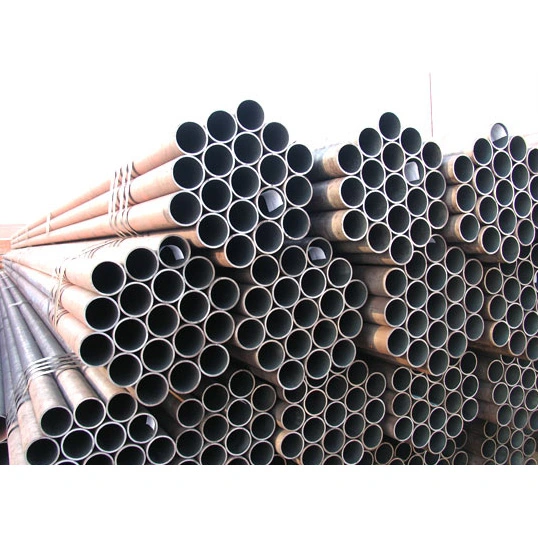
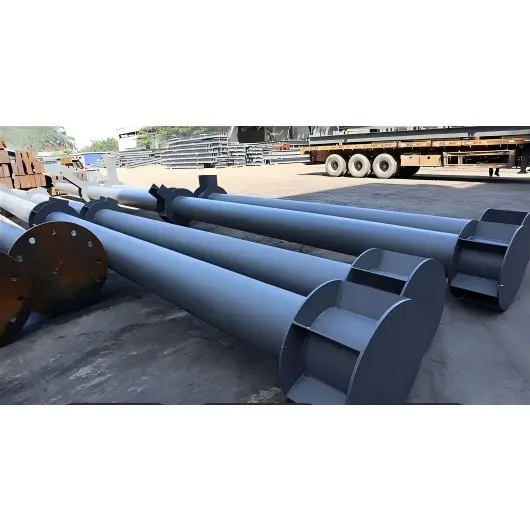
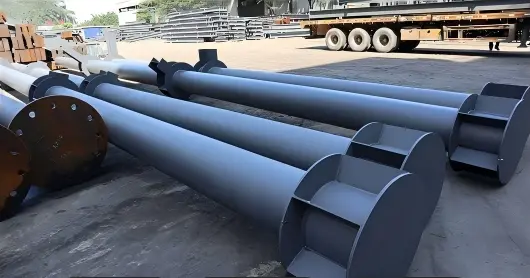
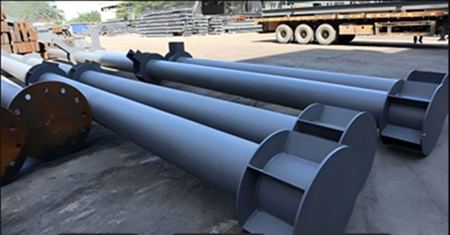
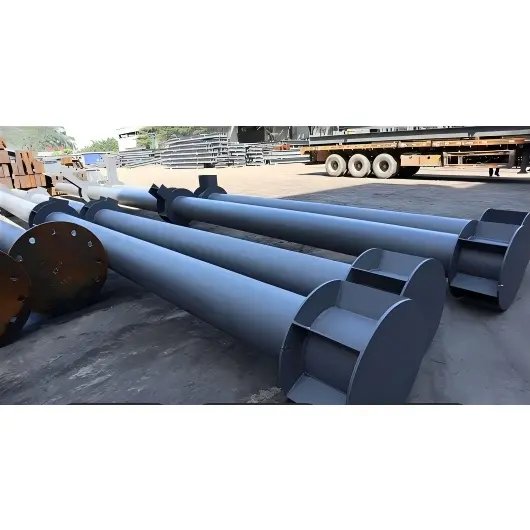
As a reliable Chinese manufacturer and one-stop supplier of steel structures, HAISHENG offers ready-stock Circular Hollow Steel Pipe Columns. These vertical load-bearing components are fabricated from high-quality Q355B/Q235B structural steel—using either straight-seam welded pipes or seamless steel pipes—and undergo precision processing, including cutting, straightening, base plate welding, hole punching/connection, rust removal, anti-corrosion treatment, and protective coating.

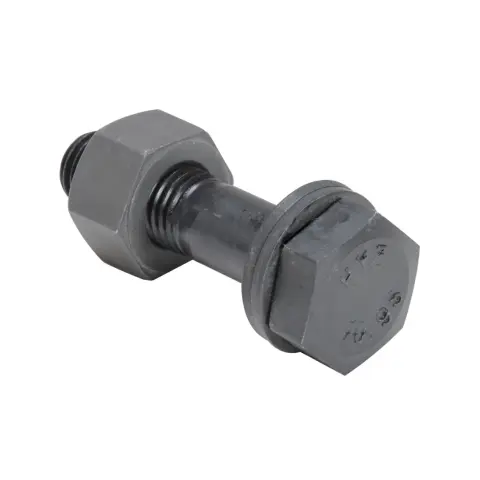
These columns feature a smooth, straight cylindrical profile and an annular cross-section that ensures uniform load distribution and superior axial load-bearing capacity. They effectively transfer loads from the superstructure to the foundation and are suitable for vertical support in various applications, including light and heavy steel structures, landscape architecture, stadiums, walkways, industrial plants, and prefabricated buildings. They come complete with necessary connection components such as base plates, stiffener plates, connection plates, and high-strength bolts.

Circular Hollow Steel Pipe Column

Product Definition and Configuration

I. Basic Definition of Circular Pipe Columns

The Circular Hollow Steel Pipe Column is a vertical load-bearing component with a hollow, circular cross-section. Primarily constructed from seamless or welded circular steel pipes, these columns are widely used in steel structure buildings, municipal projects, bridges, and stadiums, where they primarily withstand axial compression, bending moments, and torsional moments.

1. Core Attributes

Material: Predominantly carbon structural steel and low-alloy steel; galvanized finishes, anti-corrosion coatings, or stainless steel are available for outdoor or corrosive environments.

Cross-sectional Characteristics: Defined by outer diameter (D) and wall thickness (t); the hollow circular shape ensures uniform load distribution in all directions, excellent torsional and compressive strength, and minimal stress concentration.

Manufacturing Process: Available as seamless pipe columns (integrally rolled, offering high load-bearing capacity) or welded pipe columns (formed by rolling and welding steel plates, offering lower costs).

2. Key Application Scenarios

Core tubes for super-high-rise buildings, large-span venues (exhibition centers/stadiums), high-speed railway stations, canopies, industrial plants, bridge piers, municipal guardrail posts, landscape columns, etc. 3. Basic Specification Notation

Standard notation: φ Outer Diameter × Wall Thickness × Length; e.g., φ219×8×6000 (Outer Diameter 219mm, Wall Thickness 8mm, Column Length 6m).

II. Circular Hollow Section (CHS) Column Assembly Configuration

A complete system comprising the main circular hollow steel pipe column body, top and bottom end connections, connecting accessories, and auxiliary components. It is categorized into five major modules based on location: the column body, column base/foundation, column top connection, beam-to-column connection, and auxiliary accessories.

1. Column Body (Core Component)

Main circular pipe: Pipe diameter, wall thickness, and material are selected based on load requirements; extra-long columns may be fabricated in segments, equipped with joints for splicing (flange, welded, or plug-in connections).

Reinforcement structures (mandatory for heavy-load or high-rise applications):

Internal stiffening rings and longitudinal stiffening ribs: To prevent local buckling of the pipe wall.

Waist reduction / Diameter transition section: Transition using variable-diameter circular pipes when loads differ between the upper and lower sections.

2. Column Base Assembly (Connects to the foundation; determines overall stability)

A complete load-bearing assembly for the lower part of the CHS column; two common forms exist:

1) Embedded anchor bolt type (Most common)

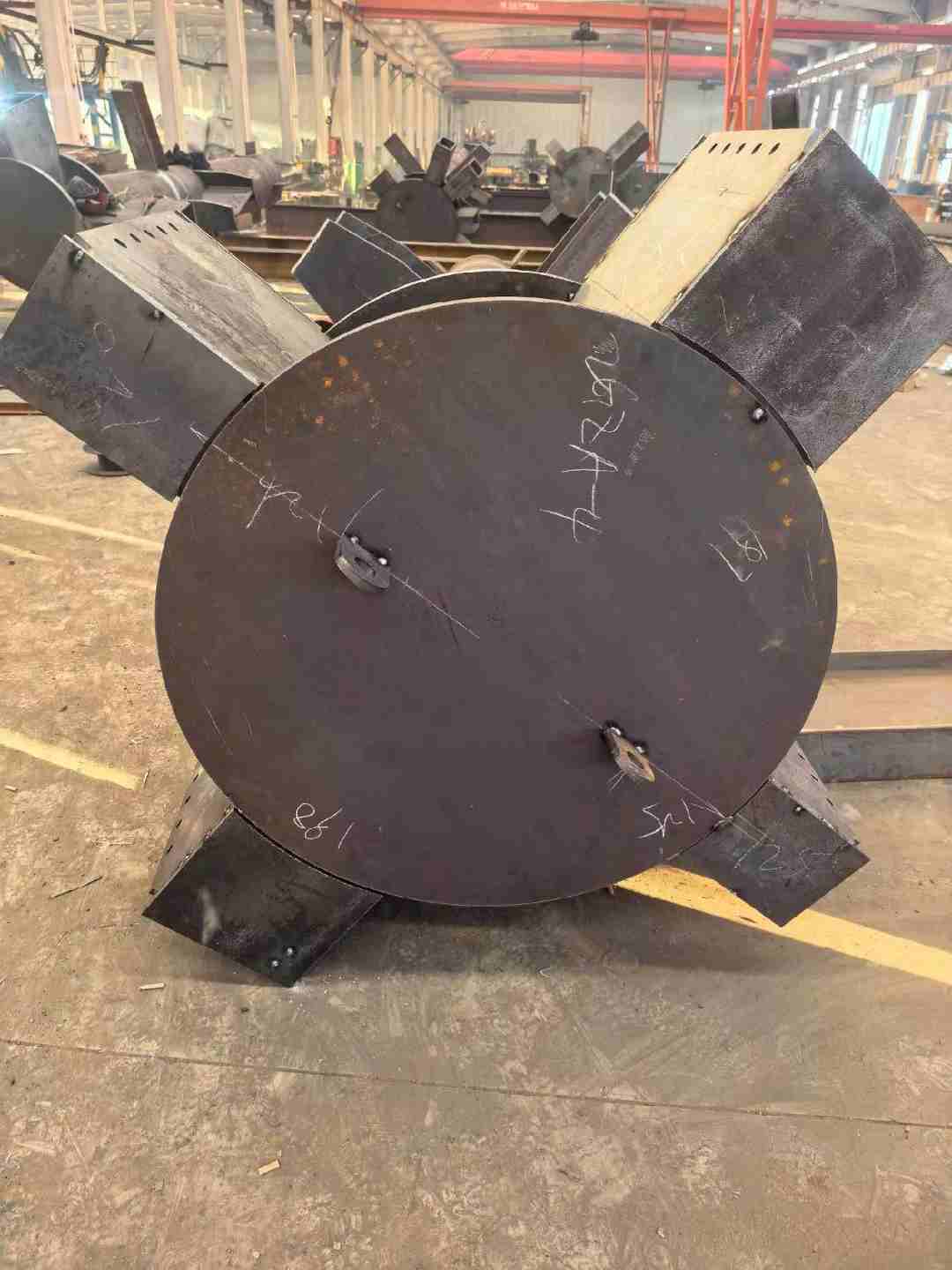
·Base plate: Thick circular or square steel plate, fully welded to the column body.

·Anchor bolts: Multiple high-strength anchor bolts embedded in the concrete foundation.

·Accessories: Nuts, washers, leveling shims, and grouting material (for secondary grouting to level and secure the base).

2) Insert-type socket foundation (Cup foundation)

·Concrete socket (cup) + inserted column section + surrounding compacted concrete or fine-aggregate concrete; commonly used in municipal engineering and bridge construction.

3. Column Top Assembly (Transfers force and supports the superstructure)

Selected based on the type of superstructure components:

·Column top plate: Cap plate that seals the top, protects the interior of the pipe, and transfers loads from above.

·Column top connection seat / Flange: Used to connect to upper circular pipes, trusses, or space frame supports. ·Post caps (for landscaping/guardrails): Decorative and weather-resistant; available in spherical, flat-top, and conical shapes.

4. Beam-column / Pipe-to-pipe connection joints (accessories for lateral load transfer)

Standard accessories for connecting circular pipe columns to steel beams, secondary members, and adjacent pipe columns:

·Circumferential corbels / lug plates: Welded to the pipe body to support steel beams.

·Connection flanges / pipe clamps: For joining pipes of the same diameter or transitioning between different diameters (reducing joints).

·High-strength bolts, welding backing plates, and connection plates: For fastening and reinforcing joints.

5. Auxiliary components (installation, protection, and maintenance)

·Lifting accessories: Lifting lugs, lifting rings (factory-installed to facilitate on-site hoisting).

·Anti-corrosion protection: Primer, intermediate coat, and topcoat / hot-dip galvanized coating; anti-corrosion sealing (end caps to prevent water ingress and rusting).

·Installation auxiliaries: Positioning brackets, temporary supports, adjustable top jacks (for alignment and temporary fixing during installation).

III. Examples of common assembly configurations

1.Standard factory circular pipe column: Main circular pipe + base plate + anchor bolts + leveling shims + top cap + pipe-body corbel + high-strength bolts + anti-corrosion coating + lifting lug.

2.Municipal road guardrail post: Main circular pipe + embedded base flange / concrete pedestal + decorative top cap + guardrail connection clamp / lug plate + galvanized anti-corrosion coating.

3.High-rise steel structure segmented circular pipe column: Segmented circular pipes + splicing flanges / welded joints + internal stiffening rings + embedded anchor bolt assembly + annular beam-column connection plate + comprehensive anti-corrosion system.

IV. Brief summary

·Definition: A vertical load-bearing member made of hollow circular steel pipe; features excellent mechanical properties and wide-ranging applications. ·System Logic: Column body + base connection assembly + top connection assembly + lateral connection accessories + anti-corrosion/lifting accessories; complete configurations are selected based on project loads and application scenarios.


What are the core advantages of Circular Hollow Steel Pipe Columns?

1. The circular cross-section ensures uniform stress distribution, high axial compressive strength, and excellent torsional stability.

2. The streamlined appearance is minimalist yet impressive, enhancing the overall aesthetic appeal of the structure.

3. Low wind resistance offers superior wind performance for outdoor applications.

4. Lightweight nature simplifies lifting and installation, resulting in high construction efficiency.

5. Both internal and external surfaces can be treated for corrosion resistance, ensuring durability against moisture and a long service life.

6. Comprehensive specifications available; height, connection plates, and embedded parts can be customized to suit various architectural scenarios.


Compared to H-section steel columns and square/rectangular hollow section columns, what are the key distinguishing features of circular pipe columns?

I. Structural Mechanics Advantages

1. Balanced omnidirectional load-bearing and superior torsional performance: The moment of inertia is consistent across all directions (no distinction between strong and weak axes), offering far better adaptability to wind loads, seismic torsion, and eccentric loads than H-sections or square tubes. They are the preferred choice for large-span venues, towering structures, and coastal projects subject to high winds. In contrast, square tubes and H-sections have weak axes and significant weaknesses regarding lateral torsion.

2. Higher compressive load capacity and resistance to local buckling for the same amount of steel: Under axial compression, stress is evenly distributed across the circular pipe wall. For a given cross-sectional area, load capacity follows the order: circular pipe > square tube > H-section steel. Heavy-duty columns can be made lighter to reduce costs, saving steel and lowering self-weight.

3. Lowest wind resistance coefficient: The streamlined circular shape results in a wind load shape coefficient of approximately 0.8, compared to 1.3 for square tubes and over 1.5 for H-section steel. This significantly reduces wind loads on towering columns, outdoor walkways, wind power supports, and canopy pillars, thereby lowering foundation anchoring costs. 

II. Distinctive Features in Fabrication and Construction

1. Simplified joint design and flexible beam-to-column connections: Steel beams can connect to circular hollow sections (CHS) at any angle across the full 360° circumference, avoiding the constraints of square tube right angles or H-beam flange alignments; this offers clear advantages for scenarios involving inclined beams, radial trusses, and multi-directional beam intersections. Standardized annular corbels and clamp connectors facilitate assembly.

2. Convenient segmental splicing: Supports both full-circumference butt welding (with internal/external bevels) and flange connections. Circumferential welds on circular tubes distribute stress evenly—unlike square tubes, which are prone to stress concentration at the corners, or H-beams, which require precise alignment of flanges and webs—resulting in higher fabrication tolerances.

3. Balanced lifting weight: Uniform weight distribution eliminates risks of eccentric loading or tipping during hoisting.

III. Distinctive Features in Corrosion Protection and Maintenance

1. Optimized surface area for corrosion protection: For a given cross-sectional area, the external surface area follows the order: Circular Tube < Square/Rectangular Tube < H-Beam. This reduces the volume of paint or hot-dip galvanizing material required, lowering costs. The absence of sharp edges or "dead zones" prevents paint pooling or missed spots, ensuring superior durability in outdoor corrosive environments.

2. No "dead zones" for water or dust accumulation: Unlike the top grooves of square tubes or the flange channels of H-beams—which tend to trap rainwater and dust, leading to corrosion—the curved surface of circular tubes allows rainwater to run off naturally, significantly extending the service life of outdoor municipal columns and landscape pillars.

IV. Distinctive Features in Architectural Aesthetics and Application Scenarios

1. Integrated decorative design: The curved profile suits landscape architecture, curtain wall mullions, and exhibition hall facades. It accommodates spherical column caps and curved decorative elements, combining structural load-bearing with architectural aesthetics—whereas square tubes and H-beams often appear starkly industrial.

2. Suitability for confined spaces: Offers a smaller outer diameter for the same load-bearing capacity, providing distinct advantages for utility routing, interior decorative columns, and compact equipment supports. V. Cost Trade-offs (Leveraging Differentiation: Weaknesses vs. Strengths)

Weaknesses: For ultra-heavy loads and densely spaced frame columns, H-beams offer better cost-performance. Key Application Scenarios: High-rise structures, long spans, multi-directional loading, exposed/wind-prone locations, and integrated structural-decorative functions; circular hollow sections (CHS) offer a lower total lifecycle cost in these areas.

VI. Summary of Differentiated Positioning

H-beams: Focus on multi-story, densely spaced frames. Square tubes: Focus on regular, small-span industrial plants. Circular Hollow Section (CHS) columns: Focus on long-span, high-rise, multi-directional loading, and integrated landscape-structure projects; they establish an irreplaceable market advantage through torsional resistance, low wind resistance, and ease of corrosion protection.


End-to-End Processing Workflow for Circular Hollow Steel Pipe Column

I. Product Classification

1. Seamless CHS Columns: Produced via deep processing of finished seamless steel pipe stock; typically used for small-to-medium diameters and high-precision load-bearing columns (φ60–φ630).

2. Rolled and Welded CHS Columns: Produced by rolling steel plate into a cylinder followed by longitudinal and/or circumferential welding; used for large-diameter, heavy-load columns (the standard method for extra-large columns >φ630).

II. Standard Processing Steps (Shared downstream processes for both types)

Process 1: Raw Material Inspection and Cutting Layout

1. Seamless Pipe: Incoming inspection of material, outer diameter, wall thickness, and flaw detection reports; cut to length using CNC saws or plasma cutters.

2. Rolled/Welded Pipe: Incoming flaw detection and leveling of steel plates; CNC cutting to the developed width and beveling.

Allowances for welding shrinkage and machining are included during cutting.

Process 2: Rolling and Forming (Specific to rolled/welded CHS only)

1. Steel plate rolled into a cylinder using a three-roll plate bending machine; edges aligned and closed.

2. Tack welding for fixation; adjustment of roundness and edge misalignment (misalignment ≤ 10% of wall thickness).

Process 3: Welding of Main Pipe Body Seams

1. Longitudinal seam welding: Automatic submerged arc welding (SAW)—forming both inner and outer beads—for the longitudinal seam of the rolled pipe;

2. Post-welding: Visual inspection of weld seams → Ultrasonic Testing (UT) (100% inspection for Grade I welds);

3. Circumferential butt welding for multi-segment splicing of long columns: Also utilizes double-sided SAW and NDT (non-destructive testing).

Process 4: Rounding and Straightening of Circular Pipes

Rolled and welded pipes experience significant welding deformation; a specialized hydraulic rounding machine is used to correct roundness and straightness, controlling ovality to ≤D/1000; seamless pipes require only minor straightening adjustments.

Process 5: End Beveling and End-Face Machining (Critical Process)

CNC Lathe / End-face Milling:

· Mill both ends of the pipe flat and cut welding bevels, ensuring end-face perpendicularity;

· For columns requiring flange connections, precision-machine a register (spigot) at the pipe end to ensure a flat, flush fit with the flange.

Process 6: Assembly and Welding of Column-End Components

1. Column base plate assembly: Layout and assembly of square/circular base plates and stiffener ribs, followed by tack welding for positioning;

2. Column top plate and end cap: Full-seam welding of the end cap to seal the pipe opening and prevent water ingress;

3. Corbels / Lug plates / Annular connection plates: Layout according to drawings, assembly around the pipe circumference, and fixation via tack welding;

4. Internal stiffening rings (for heavy-load high-rise columns): Segmented hoisting and installation of internal annular stiffener plates, fixed by internal tack welding.

Process 7: All-Position Welding of Components

1. Base plate ribs and corbels: Welded using Gas Shielded Welding or Submerged Arc Welding (SAW);

2. Critical joint welds: Subjected to UT non-destructive testing in accordance with design requirements.

Process 8: Finished Product Correction and Hole Drilling

1. Correction of welding deformation and column straightness using a combination of flame heating and mechanical methods;

2. CNC drilling of holes for bolts and utility lines at required locations. Process 9: Rust Removal and Anti-Corrosion Treatment

1. Shot blasting to Sa2.5 grade to remove mill scale and rust;

2. Coating: Primer + intermediate coat + topcoat; proceed to the hot-dip galvanizing process if required.

Process 10: Finished Product Numbering, Inspection, Packaging, and Shipment

1. Mark component ID, grid lines, and elevation levels;

2. Comprehensive inspection of dimensions, welds, and anti-corrosion coating prior to warehousing.

III. Comparison of the Two Processes

1. Seamless circular hollow steel pipe columns: Short processing time, no longitudinal welds, excellent structural integrity; however, pipe diameter is limited, and procurement costs for large diameters are high.

2. Rolled and welded circular pipe columns: Capable of ultra-large diameters with fully customizable wall thickness; involves additional rolling and longitudinal welding steps, but offers lower costs for large-scale components.

IV. Specialized Customization (Mega Circular Pipe Columns for High-Rise Buildings)

1. For concrete-filled columns: Grouting and air-venting holes are pre-reserved at the pipe ends;

2. Variable-diameter circular pipe columns: Fabricated by rolling and welding a conical transition section (reducer) to connect different diameters.


Key Performance Parameters for Circular Hollow Section (CHS) Columns

I. Geometric Specifications

1. Designation

Format: ϕD × t × L

·D: Outer diameter (mm); common sizes include φ89, 114, 165, 219, 273, 325, 426, 530, 630, 720, 820, 920, 1020...

·t: Wall thickness (mm); 4–50 mm

·L: Standard cut length; typically 6m/9m/12m; extra-long lengths achieved via segmented splicing

2. Dimensional Tolerances

1. Ovality: ≤ D/1000

2. Straightness of column body: Within L/1000

3. End-face perpendicularity: ≤ t/10

II. Material Mechanical Properties (Mainstream grades: Q235B/Q355B)

Material

Yield Strength (ReL)

Tensile Strength (Rm)

Elongation

Application Scenarios

Q235B

≥235MPa

375~500MPa

≥21%

Ordinary workshops, guardrails, landscape columns

Q355B

≥355MPa

470~630MPa

≥21%

High-rise buildings, large-span venues, heavy-load columns

Q355NL is selected for low-temperature applications due to its resistance to low-temperature impact.

III. Key Structural Parameters

1. Cross-sectional characteristics (superior to square tubes/H-beams for the same weight)

· Radius of gyration is uniform in all directions; no distinction between strong and weak axes;

· Wind resistance coefficient: μ ≈ 0.8 (vs. 1.3 for square/rectangular tubes and 1.5 for H-beams); low wind load impact

1. Compression advantage: High axial compression stability coefficient; load-bearing capacity exceeds that of rectangular columns for the same cross-sectional area

2. Torsional resistance: Polar moment of inertia for circular sections is significantly higher than for non-circular sections; excellent seismic performance and resistance to eccentric loads

IV. Weld and NDT (Non-Destructive Testing) Performance

1. Longitudinal/Circumferential welds (Grade I): 100% Ultrasonic Testing (UT); Grade II welds: 20% spot-check UT;

2. Weld tensile strength is not lower than the standard value of the base metal. V. Anti-corrosion Specifications

1. Shot-blasting rust removal grade: Sa2.5 (National Standard);

2. Standard coating system: Primer + Intermediate coat + Topcoat; total dry film thickness: 80–160 μm;

3. Hot-dip galvanizing: Zinc coating thickness ≥85 μm; designed for coastal corrosive environments.

VI. Concrete-Filled Tubular (CFT) Column Specifications

1. Concrete grades typically used for infill: C30, C40, or C50;

2. Synergistic load-bearing action between steel tube and concrete; overall axial load-bearing capacity increased by 2–3 times; commonly used in super-high-rise structures.

VII. Installation and Connection Specifications

1. Flange connection: Uses Grade 8.8 or 10.9 high-strength bolts;

2. Column base plate: Plate thickness 16–60 mm; equipped with embedded anchor bolts (M20–M64).


Hot Tags: Circular Hollow Steel Pipe Column, Manufacturer, Supplier, Factory
Send Inquiry
Contact Info
Contact HAISHENG China supplier of Structural Steel Components, Steel Structure Cladding Components and Structural Steel Fasteners. Our professional sales team will reply with detailed quotation, product parameters and delivery plan within 24 hours to meet your bulk procurement demand.
X
We use cookies to offer you a better browsing experience, analyze site traffic and personalize content. By using this site, you agree to our use of cookies.Privacy Policy
RejectAccept