
HAISHENG provides engineered Circular Hollow Steel Pipe Column solutions for steel buildings, industrial facilities, stadiums, walkways, bridges, canopies, and prefabricated structures. Manufactured from Q235B or Q355B structural steel, these columns combine a circular load-bearing profile with flexible connection and corrosion-protection options for demanding structural applications.
A circular hollow steel pipe column is a vertical structural member designed to transfer loads from a superstructure to its foundation. Its hollow circular section provides balanced load distribution, strong axial compression performance, torsional resistance, and relatively low wind resistance. Depending on project requirements, columns can be produced from seamless or welded steel pipes and customized with base plates, stiffeners, connection plates, flanges, lifting accessories, and protective coatings. This article explains their construction, key specifications, manufacturing process, advantages, applications, and selection considerations.
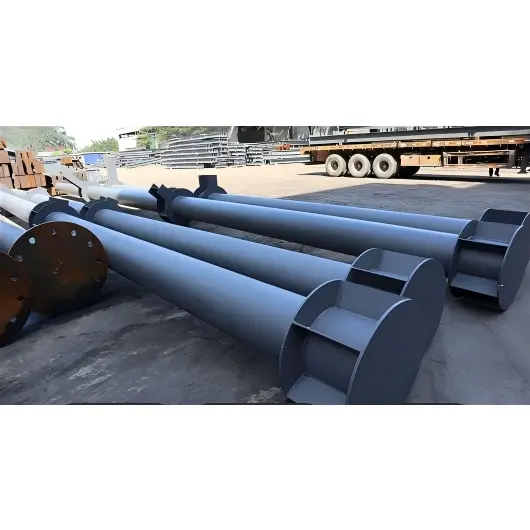
Table of Contents
- What Is a Circular Hollow Steel Pipe Column?
- How Is a Circular Hollow Steel Pipe Column Configured?
- What Are the Main Structural Advantages?
- What Specifications Should Buyers Evaluate?
- How Are Circular Hollow Steel Pipe Columns Manufactured?
- Where Are Circular Hollow Steel Pipe Columns Used?
- How Does It Compare with Other Steel Columns?
- How Should Buyers Select the Right Column?
- Frequently Asked Questions
- Why Work with a Professional Manufacturer?
What Is a Circular Hollow Steel Pipe Column?
A Circular Hollow Steel Pipe Column is a vertical load-bearing structural component featuring a hollow cylindrical cross-section. It is commonly manufactured from carbon structural steel or low-alloy steel and can be produced as either a seamless pipe or a rolled-and-welded pipe.
Unlike a solid steel column, the hollow configuration reduces unnecessary material while maintaining a strong structural profile. The circular geometry distributes stresses around the circumference and provides consistent resistance regardless of loading direction. This makes the design particularly useful where columns may experience combined axial compression, bending, torsion, wind loads, or eccentric forces.
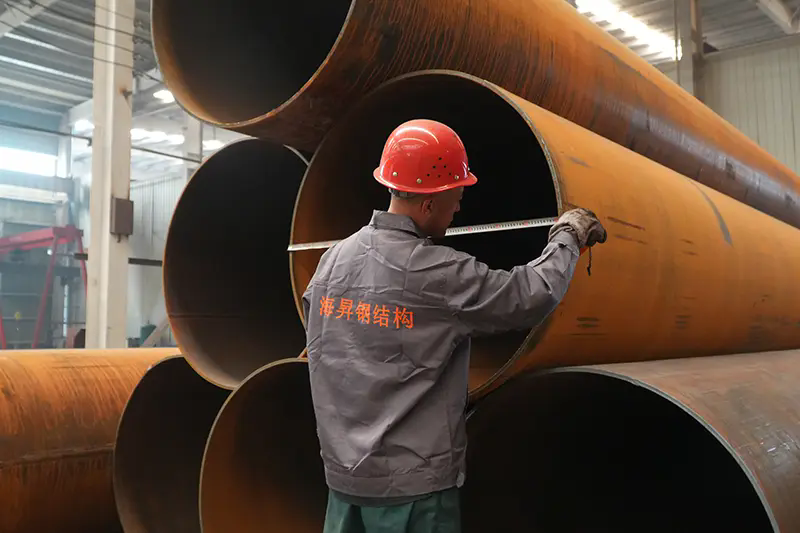
A typical specification is expressed as φD × t × L, where D represents the outside diameter, t represents wall thickness, and L represents column length. For example, φ219 × 8 × 6000 indicates a 219 mm outside diameter, 8 mm wall thickness, and 6 m length.
How Is a Circular Hollow Steel Pipe Column Configured?
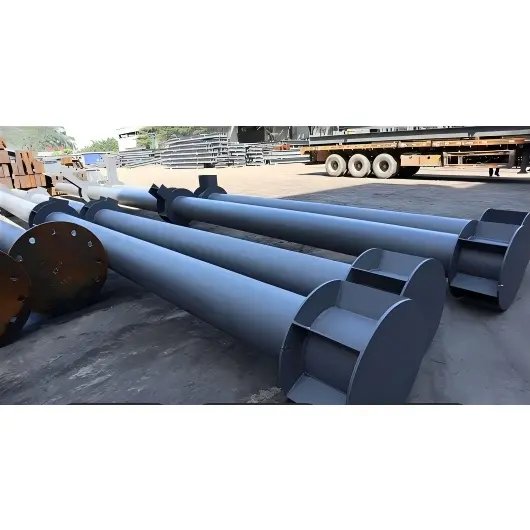
A structural pipe column is more than a steel tube. For many projects, the complete assembly incorporates connection and reinforcement components that allow the column to integrate with foundations, beams, roof systems, and other structural members.
- Column body: The primary circular steel pipe selected according to diameter, wall thickness, length, material grade, and design loads.
- Base plate: A welded steel plate that transfers column loads to the foundation through anchor bolts.
- Stiffener plates or rings: Reinforcement used where higher loads or local buckling resistance is required.
- Top plate or flange: Provides a connection point for beams, trusses, upper columns, or other structural components.
- Connection plates and corbels: Facilitate beam-to-column or pipe-to-pipe connections.
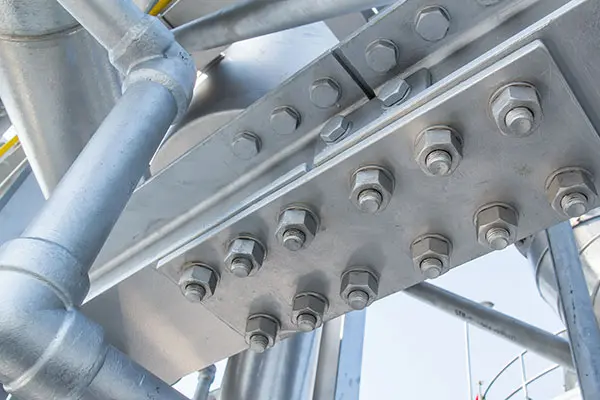
- High-strength bolts: Used for bolted structural connections where specified by the engineering design.
- Protective coating: Primer, intermediate and topcoat systems or galvanizing can be applied according to the environmental conditions.
For extra-long structures, individual sections can also be joined through welded, flange, or other engineered splice configurations.
What Are the Main Structural Advantages?
Balanced Load Distribution
The circular cross-section has no conventional strong and weak axis. Its geometry distributes stress around the tube, making it suitable for structures exposed to loads from different directions.
Strong Compression and Torsional Performance
Pipe columns are frequently selected for applications requiring substantial axial load capacity and resistance to torsional effects. The closed hollow section also provides useful structural efficiency where stability and multi-directional loading are important.
Reduced Wind Exposure
The streamlined cylindrical profile can reduce aerodynamic resistance compared with angular structural profiles. This characteristic can be valuable for exposed columns in canopies, walkways, towers, stadium structures, and other outdoor installations.
Efficient Installation
Compared with some heavier structural alternatives, hollow steel columns can offer an efficient strength-to-weight relationship. Factory fabrication of base plates, connection components, holes, and protective coatings can also reduce the amount of processing required on the construction site.
Architectural Flexibility
The smooth cylindrical appearance works well when structural components are intentionally visible. Circular columns can therefore combine structural and architectural functions in commercial buildings, public facilities, landscape structures, and modern industrial projects.
What Specifications Should Buyers Evaluate?
Choosing a structural column should begin with engineering requirements rather than simply selecting a pipe diameter. Material grade, wall thickness, length, connection configuration, loading conditions, fabrication tolerances, and corrosion environment all influence the final specification.
| Parameter | Typical Information | Why It Matters |
|---|---|---|
| Steel Grade | Q235B / Q355B | Determines basic strength and suitability for structural loading |
| Outside Diameter | Approx. φ89–φ1020 mm and customized sizes | Influences load capacity, stability, connection design, and appearance |
| Wall Thickness | Approx. 4–50 mm | Supports structural strength and local buckling resistance |
| Length | Commonly 6 m / 9 m / 12 m | Determines transportation, erection, and splice requirements |
| Manufacturing Type | Seamless or welded | Selected according to diameter, load, fabrication requirements, and cost |
| Surface Protection | Paint coating or hot-dip galvanizing | Helps protect steel against corrosion in different environments |
| Connection Components | Base plates, flanges, stiffeners, bolts, corbels | Ensures compatibility with the overall structural system |
For example, HAISHENG's product information identifies Q235B and Q355B as mainstream material grades and provides pipe dimensions in the φD × t × L format. Actual structural dimensions should always be determined from project calculations and applicable design standards.
How Are Circular Hollow Steel Pipe Columns Manufactured?
Professional fabrication converts steel pipe or plate into a finished structural assembly ready for transportation and installation. A controlled production process helps maintain dimensional accuracy, weld quality, straightness, and surface protection.
- Raw material inspection: Steel grade, dimensions, surface condition, and relevant material documentation are checked.
- Cutting: Pipes or steel plates are cut according to the required column length and fabrication drawings.
- Forming: Large-diameter welded columns can be produced by rolling steel plate into a cylindrical shape followed by welding.
- End preparation: Column ends may be machined or beveled to achieve the required connection geometry.
- Component assembly: Base plates, top plates, stiffeners, corbels, flanges, and connection plates are positioned according to engineering drawings.
- Welding: Components are welded using appropriate fabrication procedures, with non-destructive testing applied where required.
- Straightening and correction: Welding deformation and column straightness are checked and corrected when necessary.
- Hole processing: Bolt and utility holes are drilled or processed to specified dimensions and locations.
- Surface treatment: Rust and mill scale can be removed through blasting before primer and protective coating are applied.
- Final inspection: Dimensions, connections, welds, coating condition, markings, and packaging are inspected before shipment.
For large-diameter columns, welded construction provides greater flexibility in diameter and wall thickness. Seamless pipe columns, meanwhile, can be useful where seamless construction and specific dimensional requirements are preferred.
Where Are Circular Hollow Steel Pipe Columns Used?
The combination of structural performance and clean cylindrical geometry allows these columns to serve both engineering and architectural purposes.
- Industrial plants: Used as vertical structural supports in factories and production facilities.
- Stadiums and large-span venues: Suitable for structures where multi-directional loading and architectural appearance are important.
- Walkways and canopies: The smooth profile provides a practical solution for exposed outdoor supports.
- Prefabricated buildings: Factory-fabricated components can simplify assembly and improve construction coordination.
- Bridges and municipal structures: Applicable to selected piers, support members, guardrail posts, and related structures.
- Landscape architecture: Cylindrical columns can provide structural support while maintaining a clean visual appearance.
- High-rise structures: Larger CHS members can be engineered for substantial vertical and combined loads.
How Does It Compare with Other Steel Columns?
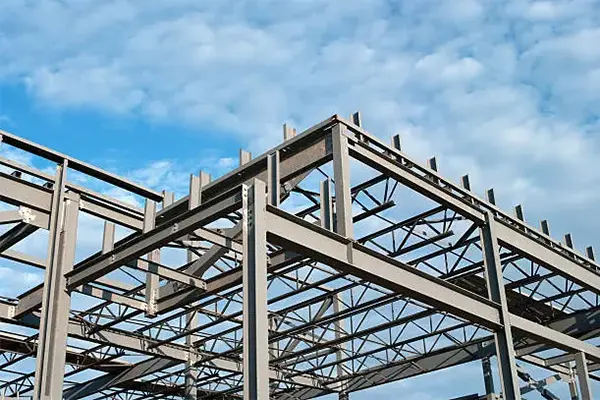
Different structural profiles serve different engineering purposes. A circular hollow section should therefore be evaluated according to project requirements rather than treated as a universal replacement for H-section or square/rectangular hollow sections.
| Feature | Circular Hollow Section | Square/Rectangular Hollow Section | H-Section Steel |
|---|---|---|---|
| Cross-Section | Round and hollow | Square or rectangular and hollow | Open H-shaped profile |
| Multi-Directional Behavior | Balanced around the section | Depends on section geometry | Strong and weak axes are distinct |
| Torsional Resistance | Strong closed-section behavior | Good closed-section behavior | Generally less efficient in torsion |
| Wind Exposure | Streamlined cylindrical profile | More angular profile | Open flange-and-web profile |
| Architectural Appearance | Smooth and cylindrical | Clean geometric appearance | Conventional structural appearance |
| Typical Applications | Large spans, exposed structures, columns, architectural supports | Buildings, frames, equipment supports | Multi-story frames and heavy structural systems |
The appropriate section depends on structural calculations, connection requirements, fabrication conditions, material availability, project budget, and applicable building standards.
How Should Buyers Select the Right Column?
For procurement teams, engineers, contractors, and steel structure fabricators, a clear technical specification can significantly reduce communication problems and quotation delays.
- Define the design loads: Provide axial loads, bending moments, torsional effects, wind loads, seismic conditions, and other relevant design information.
- Confirm dimensions: Specify outside diameter, wall thickness, length, and required dimensional tolerances.
- Select the material grade: Q235B and Q355B are common choices, while the final grade should comply with project design requirements.
- Determine connection details: Provide base plate dimensions, anchor-bolt arrangement, flange requirements, beam connection locations, and stiffener details.
- Consider the environment: Outdoor, humid, coastal, or chemically aggressive environments may require enhanced corrosion protection.
- Confirm inspection requirements: Discuss dimensional inspection, weld inspection, non-destructive testing, coating thickness, and documentation before production.
- Plan logistics: Consider column length, transportation restrictions, lifting points, segmentation, packaging, and installation sequence.
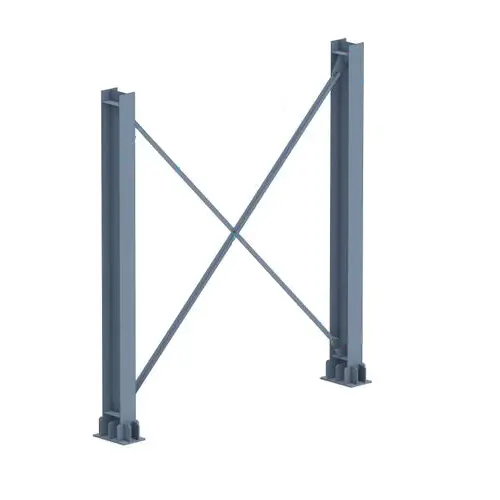
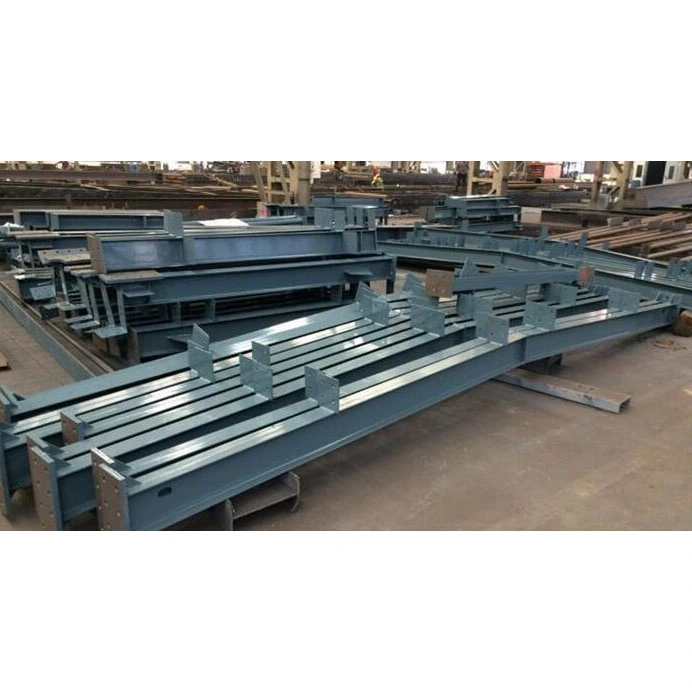
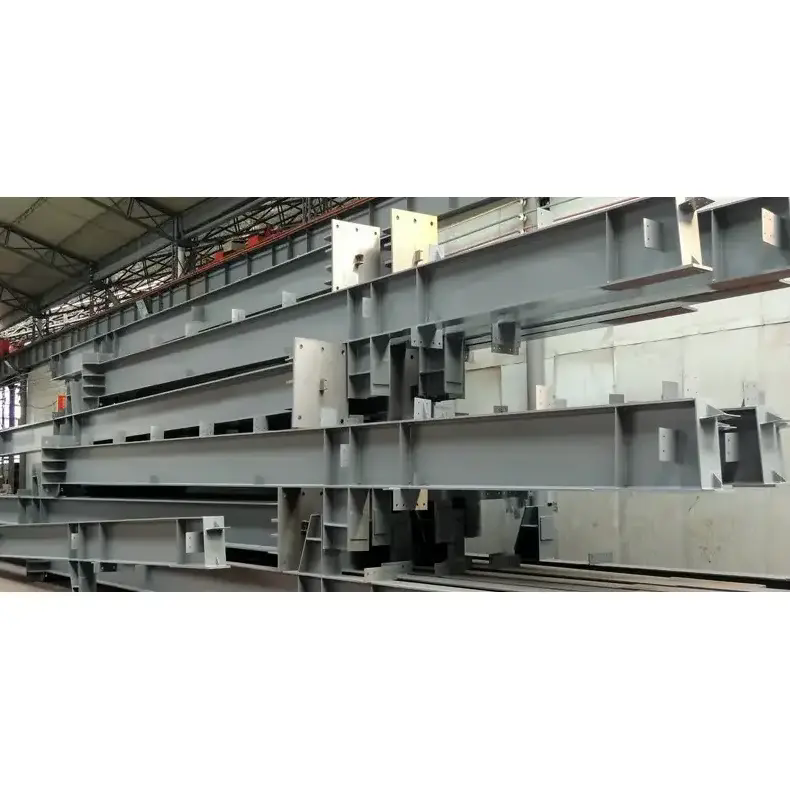
A detailed drawing or specification package allows the manufacturer to determine the most appropriate fabrication route and connection configuration. Buyers can also review structural steel components to understand how columns integrate with other fabricated steel elements.
Frequently Asked Questions
What materials are commonly used for circular hollow steel pipe columns?
Q235B and Q355B structural steels are commonly specified for these columns. The final material should be selected according to structural calculations, applicable standards, environmental conditions, and project requirements.
What is the difference between seamless and welded pipe columns?
Seamless columns are produced from seamless steel pipe and do not have a longitudinal weld. Welded columns are formed from steel plate and joined by welding. Welded construction provides greater flexibility for large diameters and customized wall thicknesses, while seamless pipe can be advantageous for specific diameter and structural requirements.
Can a circular hollow steel pipe column be customized?
Yes. Depending on fabrication capabilities and engineering requirements, diameter, wall thickness, length, base plates, top connections, stiffeners, connection plates, bolt holes, lifting lugs, splice configurations, and surface treatments can be customized.
How is corrosion protection handled?
Common options include shot blasting followed by primer, intermediate and topcoat systems. Hot-dip galvanizing can also be considered for suitable applications, particularly where enhanced corrosion protection is required.
Are circular pipe columns suitable for outdoor structures?
They can be used in outdoor applications such as canopies, walkways, landscape structures, municipal facilities, and other exposed steel systems when the column dimensions, structural design, connections, and corrosion-protection system are appropriately specified.
What information should be provided when requesting a quotation?
Useful information includes quantity, steel grade, outside diameter, wall thickness, length, connection drawings, base-plate details, surface-treatment requirements, inspection standards, destination, and expected delivery schedule. Structural drawings are particularly helpful for customized projects.
Why Work with a Professional Manufacturer?
A structural column must perform as part of a complete load-bearing system, so product selection should involve more than comparing pipe prices. Manufacturing accuracy, welding quality, connection details, surface protection, inspection procedures, packaging, and delivery coordination all affect the final project outcome.
HAISHENG supplies circular hollow steel pipe columns using Q235B or Q355B structural steel and supports fabrication configurations including base plates, stiffeners, connection plates, high-strength bolts, and protective coatings. For project-specific requirements, buyers can provide drawings, dimensions, loading information, quantity, and application conditions so the appropriate column configuration can be evaluated.
Planning a steel structure project or sourcing customized structural columns? Share your drawings and technical requirements with HAISHENG today. For material selection, fabrication details, connection configurations, quotation support, and delivery planning, contact us to discuss your project with the HAISHENG team.