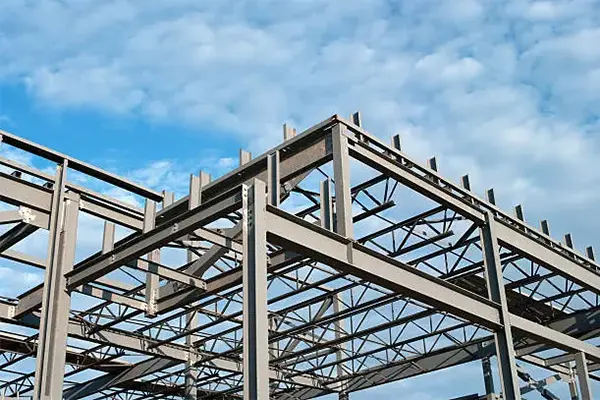
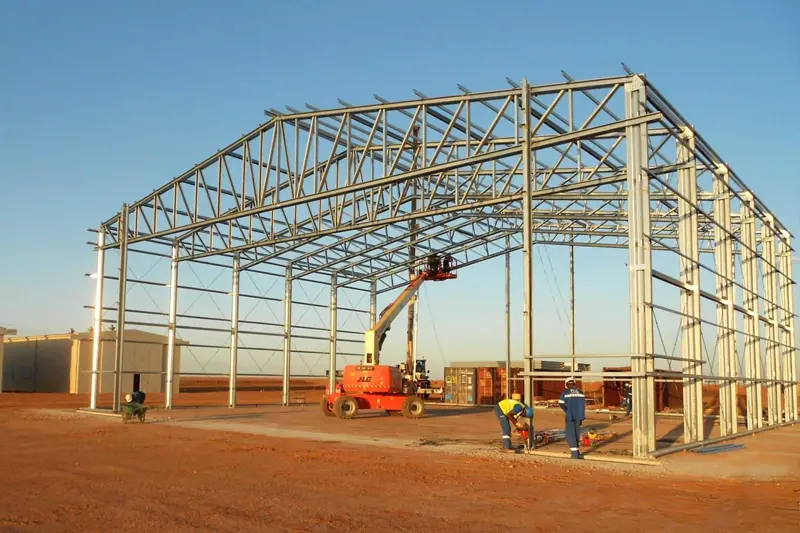
HAISHENG is a specialized domestic manufacturer and one-stop supplier of steel structures, offering services ranging from wholesale of stock items and custom fabrication to complete delivery packages. The Vertical Steel Column Bracing System serves as a vertical reinforcement component for steel structure factory columns. Fabricated from various profile types, it is designed to withstand wind loads, seismic forces, and horizontal forces generated by overhead cranes. Widely used across various types of steel-structured industrial facilities, it ensures the safety and integrity of the building's longitudinal structure.
Within the overall stability system of a steel-structured factory, the Vertical Steel Column Bracing System plays a critical role in the vertical transfer of loads to the foundation. Installed diagonally between rows of steel columns—extending from the foundation up to the column tops—it works in conjunction with roof horizontal bracing and rigid tie rods to form a complete spatial lateral-force-resisting structure.
The product line encompasses diverse structural forms, material specifications, and configuration options, making it suitable for everything from lightweight warehouses to heavy-duty crane facilities and high-seismic zones. These components are prefabricated in the factory and primarily assembled on-site using bolted connections, balancing structural strength, construction efficiency, and long-term operational stability. It is a highly practical, standard accessory widely utilized in steel structure engineering.
Product Definition and Functional Classification
1. Basic Concepts
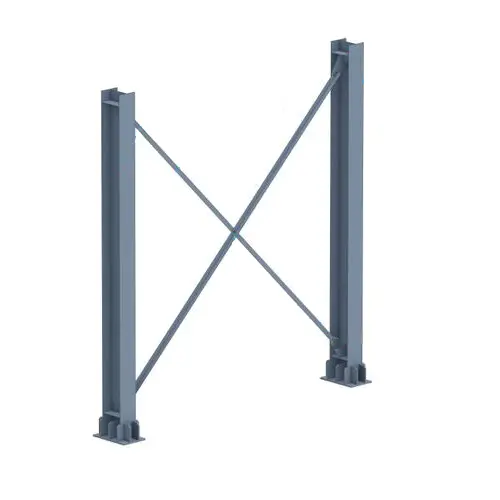
Designated in the industry as "ZC" (Column Bracing), this system is a core vertical lateral-force-resisting component. It is installed between adjacent steel columns, connecting the top of the foundation to the top of the column. Working in tandem with roof horizontal bracing, the Vertical Steel Column Bracing System forms the factory's complete lateral-force-resisting framework; its diagonal cross-bracing layout links the row of steel columns, facilitating load transfer and structural reinforcement.
2. Core Functions
1. Transmits external forces—including roof horizontal wind loads, longitudinal seismic loads, and longitudinal braking forces from crane operations—directly to the building's foundation.
2. Restrains out-of-plane deformation of steel columns and reduces their effective buckling length, thereby significantly enhancing the overall longitudinal stiffness of the steel frame.
3. Stabilizes the factory's longitudinal dimensions, preventing longitudinal displacement of the entire building and maintaining structural form and stability.
3. Classification by Structural Form
1. Cross-bracing: The mainstream style currently on the market; made from angle steel or round steel. It bears only tensile loads and is the standard configuration for ordinary industrial buildings.
2. Portal-style bracing: Also known as "A-frame" or inverted-V bracing; fabricated from round tubes or small structural steel sections. It can withstand both tension and compression and is commonly used in heavy-duty industrial buildings featuring large spans and high-capacity overhead cranes.
3. Tiered bracing: Designed specifically for crane-equipped facilities; divided into upper and lower sections. Lower-tier inter-column bracing is installed below the crane beam, while upper-tier bracing is installed above it, allowing loads at different elevations to be distributed across the respective zones.
4. Material Selection Standards
Standard industrial buildings utilize Q235B steel. For heavy-duty workshops, high-seismic zones, or facilities equipped with high-tonnage overhead cranes, Q355B steel is used to enhance overall load-bearing capacity.
Standard Factory-Supplied Configuration
1. Main Structural Profiles
1. Cross-bracing: Uses equal-leg angle steel (ranging from L50×5 to L90×8) and round steel bars (diameters from Φ16 to Φ25).
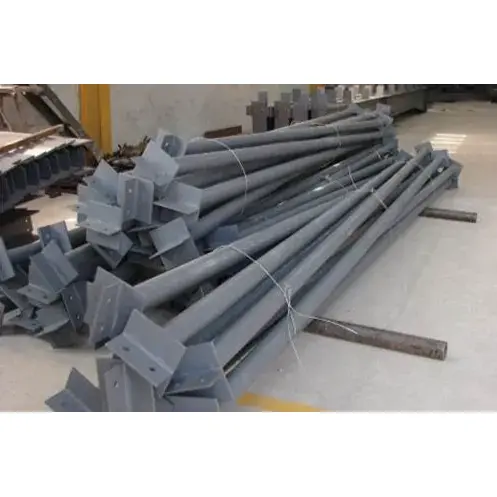
2. Portal-style bracing: Commonly uses round tubes (Φ114×3 or Φ140×4); small-section H-beams may also be used for fabrication.
2. Connection Accessories
1. End connection plates: Plate thickness ranges from 8mm to 16mm; factory-welded to both ends of the bracing members with pre-drilled standard bolt holes for bolting to steel column flanges.
2. Intermediate splice plates: Specialized fittings for the intersection point of cross-bracing; used to secure the two diagonal braces and ensure structural stability at the crossing.
3. Base anchor plates: Base plates for floor-mounted inter-column bracing, designed for secure anchoring to foundation-embedded bolts.
3. Fasteners
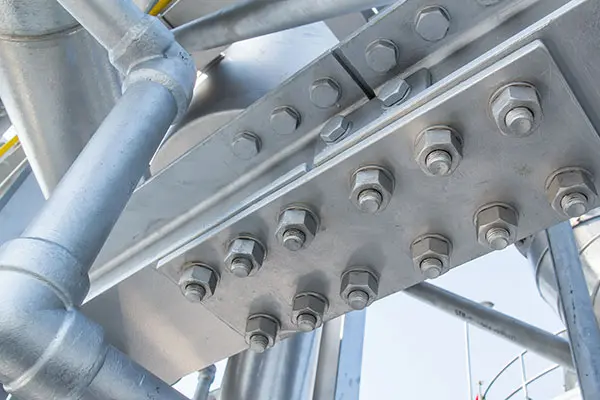
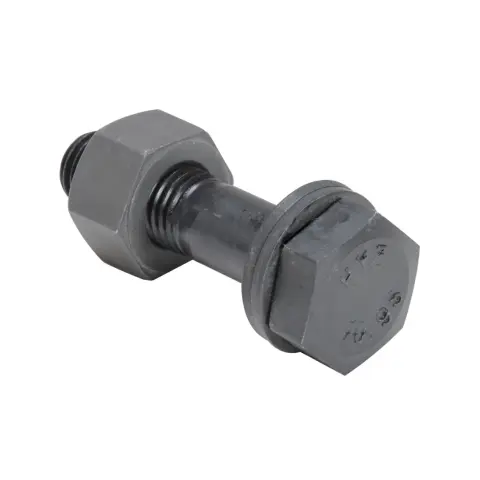
1. Ordinary industrial buildings: Uses Grade 4.8 M16 or M20 standard bolts, complete with flat washers and spring washers.
2. For facilities with overhead cranes or those located in seismic zones: Grade 8.8 high-strength bolts are used exclusively to enhance the strength of joint connections.
4. Anti-corrosion and Fireproofing Specifications
1. Standard conditions: The vertical steel column bracing system undergoes manual rust removal to the St3 standard, followed by the application of primer and topcoat, maintaining a total dry film thickness of 60μm to 100μm.
2. Chemical plant areas and highly corrosive coastal environments: Hot-dip galvanizing is applied to the entire assembly to enhance long-term corrosion resistance.
3. Components located within fire compartments: Coated with thin-film fire-retardant paint providing a 0.5-hour fire resistance rating.
The package includes angle steel main members, end connection plates, intermediate splice plates, a complete anti-corrosion coating system, and matching bolt assemblies; primarily used for lightweight steel structure workshops without overhead cranes.
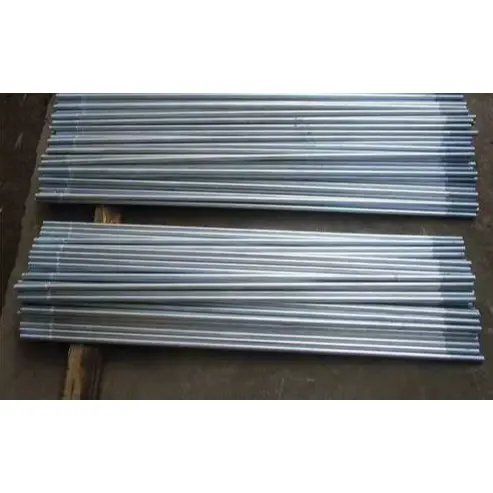
2. Flexible Round Steel Column Bracing
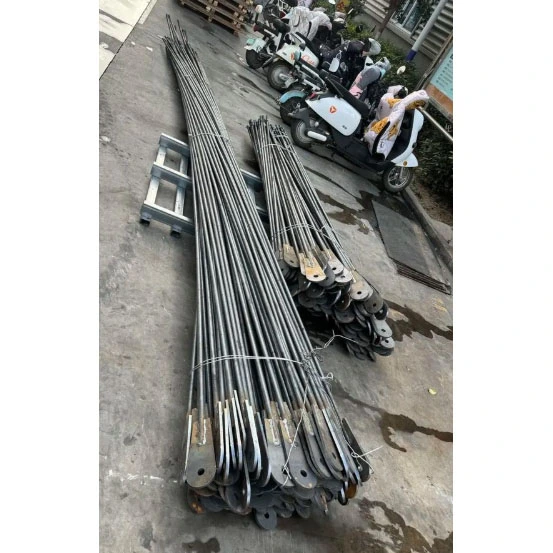
Features round steel as the main member, with threaded ends or welded lug plates, used in conjunction with nuts and washers; the structure is simple and typically used for small, basic warehouses.
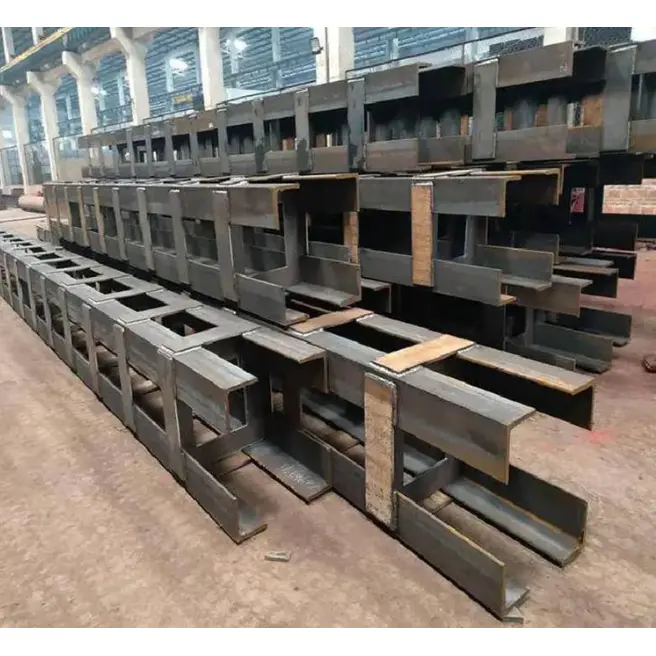
Utilizes round tubes as the main material, paired with thickened end plates, floor-anchored base plates, and high-strength bolts; offers superior load-bearing capacity, specifically designed for heavy steel structures and workshops with high-tonnage overhead cranes.
Overall Structural System Integration
The vertical steel column bracing system acts as a vertical, floor-anchored load-transfer component, working in tandem with roof horizontal bracing and rigid tie rods. The column bracing reinforces vertical and longitudinal load transfer; roof horizontal bracing handles transverse load transfer; and rigid tie rods ensure overall longitudinal structural tying. These three component types work together to form a complete spatial stability system for the facility—each is essential.
Key Advantages
1. Enhances the longitudinal structural stability of the building, offering excellent resistance to wind, seismic forces, and longitudinal thrust.
2. Precisely maintains the spacing between steel columns, effectively preventing issues such as column displacement, tilting, or swaying.
3. It stably transfers horizontal loads generated by crane beams, making it perfectly suited for industrial facilities equipped with overhead cranes.
4. The structural profile is robust and features comprehensive anti-corrosion and anti-rust treatments, ensuring resistance to deformation and rust during long-term outdoor use.
5. All components are prefabricated in the factory and supplied with a complete set of connectors; on-site installation is simple, significantly accelerating the construction schedule.
6. It optimizes the overall structural load-bearing system, enhancing the facility's safety rating at the structural level.
Comparative Analysis with Similar Components
1. Advantages in Load-Bearing System
1. Inter-column bracing is the only component in the system that transfers loads vertically to the ground, directly transmitting wind loads, seismic loads, and longitudinal crane braking forces to the foundation. Roof horizontal bracing transfers external forces only at the roof level, and rigid tie rods serve merely to limit longitudinal movement; neither can transfer loads to the foundation. Inter-column bracing is the critical load-bearing node for the facility's longitudinal lateral resistance.
2. Designed in a tiered configuration, the system features upper and lower bracing sections capable of independently withstanding the impact forces generated by crane operation; roof bracing and tie rods lack the capacity to handle such dynamic loads.
3. It effectively stabilizes steel columns, reduces their out-of-plane effective length, and minimizes material usage. In contrast, sag rods and knee braces only provide restraint for steel beams and purlins, offering no control over the stability of the steel columns themselves.
2. Advantages in Selection and Compatibility
The Vertical Steel Column Bracing System offers a wide range of structural configurations. Options include flexible round-bar bracing for simple warehouses, standard cross-bracing (using angle steel) for conventional factories, and portal-style round-tube bracing (capable of handling both tension and compression) for heavy-duty or high-seismic applications. Conversely, roof horizontal bracing is typically limited to angle steel or round bars, offering fewer structural variations. Furthermore, material specifications are clearly graded, allowing for flexible selection based on project loads to balance cost and performance.
3. Advantages in On-Site Installation
Floor-mounted inter-column bracing comes standard with base connection plates, allowing for direct anchoring to foundation bolts; in contrast, roof horizontal bracing and rigid tie rods connect only to beam and column members and do not require foundation anchoring. The products utilize a modular, prefabricated approach featuring standardized component processing and uniform end-plate hole patterns. Assembly relies primarily on bolting rather than on-site welding, significantly reducing construction complexity.
4. Functional Differentiation
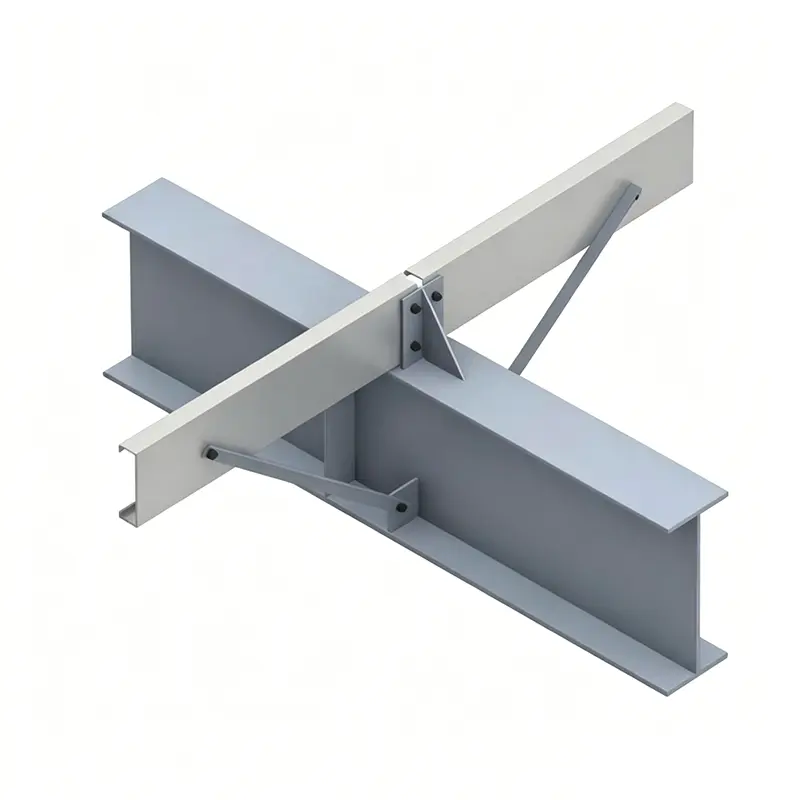
Inter-column bracing primarily handles vertical floor-to-foundation loads, provides longitudinal lateral resistance, and supports dynamic crane loads. Roof horizontal bracing manages transverse wind resistance and establishes the roof's rigid structure. Rigid tie rods provide longitudinal interconnection across the entire building. These components complement one another; without inter-column bracing, the facility would lack a longitudinal floor-anchored lateral resistance structure, compromising overall stability.
5. Suitability for Corrosion Protection
The primary materials consist of standard profiles such as angle steel and circular tubes, eliminating "dead zones" where dust or water might accumulate. This facilitates processes like rust removal, painting, and hot-dip galvanizing. Since base-level inter-column bracing is exposed to ground-level moisture, long-term corrosion resistance requirements can be met simply by applying a thicker paint coating or using hot-dip galvanizing.
6. Summary of Product Positioning
The vertical steel column bracing system serves as a primary longitudinal load-bearing and stabilizing component for the facility; roof horizontal bracing acts as a transverse stabilizing component; rigid tie rods function as longitudinal connecting elements; and round steel tie bars are classified merely as minor accessories for the roof enclosure system. These four component types have clearly defined roles and functions.
Manufacturing Process Flow
This process is based on the standard cruciform angle steel bracing configuration; the manufacturing steps for round steel or circular tube bracing can be executed by reference to this method.
1. Raw Material Inspection upon Arrival: Verify material quality assurance documents for equal-leg angle steel, round steel, and seamless steel pipes, confirming the material grade is Q235B or Q355B. Inspect members for bending, twisting, or corrosion; straighten materials with deformations exceeding standards prior to use. Simultaneously, check the visual quality of connection plates and base steel plates.
2. CNC Cutting: Angle steel and round tubes are cut to fixed lengths using sawing machines; round steel bars are cut to size, and all cut edges are deburred. Connection plates, intermediate splice plates, and base plates are cut and shaped using CNC equipment.
3. Assembly: Using positioning jigs, end connection plates are tack-welded to both ends of the structural members. Intermediate splice plates are pre-assembled onto X-type cross-braces, while base plates are attached to the lower ends of floor-mounted supports and tack-welded in position.
4. Gas-Shielded Welding: CO2 gas-shielded welding is used for the fillet welds joining members and connection plates; the weld quality meets Grade II standards. Standard projects undergo visual inspection only, while critical welds in heavy-duty steel structures or crane-equipped workshops undergo spot-check Ultrasonic Testing (UT) rather than 100% inspection.
5. CNC Drilling: Bolt holes (typically M16 or M20 specifications) are drilled into connection plates and base plates, with strict control over hole spacing accuracy.
6. Straightening and Grinding: Structural deformations caused by welding are corrected, and weld beads, spatter, and surface burrs are thoroughly ground off.
7. Anti-Corrosion Treatment: Standard projects undergo manual rust removal (St3 grade) followed by the application of primer and topcoat; structures in coastal or chemically corrosive areas undergo full hot-dip galvanizing.
8. Numbering, Packaging, and Warehousing: Components are numbered and grouped by architectural bay; accessories such as bolts and washers are sorted and boxed, then moved to storage pending shipment.
Brief Distinction of Processes for Different Support Types
1. Round Steel Inter-column Bracing: After cutting, the ends are threaded or fitted with welded lug plates, followed by anti-corrosion treatment; no intermediate splice plates are required.
2. Tubular Portal Bracing: After the steel tubes are cut, end plates are welded to both ends; CNC drilling is performed followed by anti-corrosion treatment. The overall process is similar to that of rigid tie-rods. Key Performance Parameters
1. Geometric Specifications
Angle Steel Cross-Bracing
Commonly used equal-leg angles: L50×5, L63×5, L70×6, L80×6, L90×8; thickness of end connection plates and intermediate splice plates: 8mm to 16mm; matching bolt specifications: M16, M20; individual member length: 3.0m to 9.0m; straightness tolerance of finished members: ≤L/1000; base plate thickness for ground-anchored supports: 12mm to 20mm.
Round Steel Flexible Bracing
Common diameters: Φ16, Φ18, Φ20, Φ22, Φ25; threaded length at both ends: 40mm to 60mm, or welded lug plates with thickness of 8mm to 12mm.
Circular Hollow Section (CHS) Portal Bracing
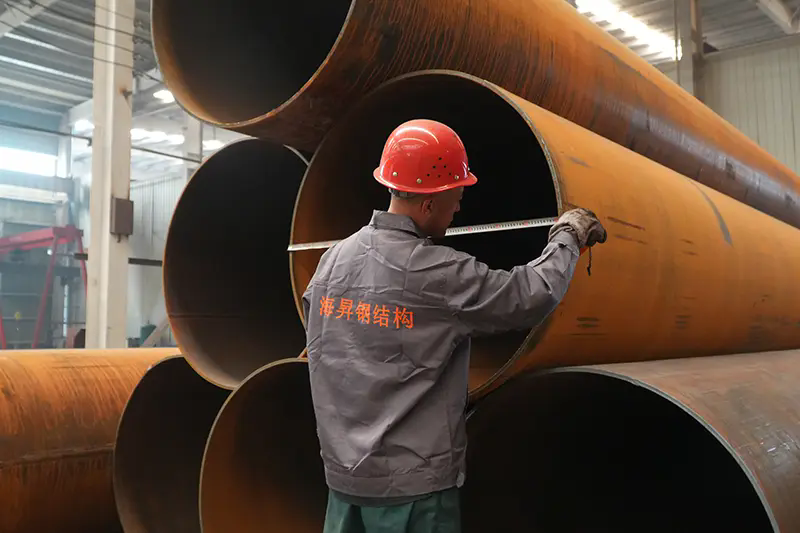
Common pipe specifications: Φ89×3.0, Φ114×3.0, Φ114×3.5, Φ140×4.0; matching end plate thickness: 10mm to 18mm.
2. Mechanical Properties of Base Material
Material Grade
Yield Strength
Tensile Strength
Application Scenarios
Q235B
≥235MPa
375~500MPa
Conventional workshops without cranes
Q355B
≥355MPa
470~630MPa
Crane workshops, large-span buildings and seismic areas
3. Structural Performance Description
1. Cross-bracing made of angle steel or round steel can only resist tension and cannot withstand compression. In the X-shaped configuration, the diagonal member on one side acts under load, primarily transferring longitudinal wind loads, seismic forces, and longitudinal crane braking forces.
2. Circular hollow section (CHS) portal bracing offers both tensile and compressive resistance and superior structural stability in both directions; it is suitable for heavy-duty steel industrial buildings, high-seismic-intensity zones, and workshops with high-tonnage cranes.
3. The overall function of the vertical steel column bracing system is to restrain the out-of-plane displacement of steel columns, reduce the effective buckling length of the columns, and transfer upper-level horizontal loads directly to the foundation. In crane-equipped workshops, the bracing is divided into upper and lower sections; the lower-level bracing primarily withstands dynamic loads generated by the reciprocating motion of the crane.
4. Weld Acceptance Standards
Fillet welds between members and connection plates are classified as Grade II welds. For standard projects, only visual inspection is conducted; for crane-equipped facilities and projects in seismic zones, ultrasonic testing (UT) is performed on a sample basis for critical welds, rather than requiring 100% inspection.
5. Anti-corrosion and Fireproofing Specifications
1. Standard treatment: St3-grade manual rust removal; primer plus topcoat system; dry film thickness of 60 μm to 100 μm.
2. Coastal or chemical corrosive environments: Hot-dip galvanizing process applied to the entire structure.
3. Fire compartmentalization: Application of thin-film intumescent fire-retardant coating; 0.5-hour fire resistance rating.
6. Connection Component Specifications
Standard factory buildings utilize Grade 4.8 ordinary bolts paired with flat washers and spring washers; crane-equipped facilities and structures in seismic zones exclusively use Grade 8.8 high-strength bolts.
7. Product Category Distinctions
1. Round steel bracing: Flexible component capable of resisting tension only; primarily used for lightweight, simple warehouses.
2. Angle steel cross-bracing: Standard primary structural component; resists tension in one direction; suitable for the vast majority of general factory buildings.
3. Tubular portal bracing: Rigid component capable of resisting both tension and compression; designed specifically for heavy-duty crane workshops.
FAQ
Q1 How do I select the appropriate inter-column bracing based on the factory building type?
For small, simple warehouses, flexible round-bar bracing is preferred. For standard steel-structure factories without overhead cranes, angle-steel cross-bracing is suitable. For large-span factories equipped with high-tonnage cranes or those located in high-seismic zones, portal-style bracing using circular hollow sections (CHS) is recommended.
Q2 Must the vertical steel column bracing system be installed in tiers?
Standard factories without overhead cranes do not require tiered bracing; a full-height continuous layout suffices. However, if overhead cranes are installed, the bracing must be divided into upper and lower tiers to handle dynamic loads at different heights and ensure structural safety.
Q3 How should the anti-corrosion scheme be selected?
For dry indoor environments, standard rust removal and painting are sufficient. For facilities located in coastal areas, chemical industrial parks, or high-humidity zones, hot-dip galvanizing of the entire structure is recommended to provide long-term resistance against corrosive agents.
Q4 Does on-site installation require extensive welding?
All our inter-column bracing components undergo welding, hole-drilling, and anti-corrosion treatment at the factory; on-site assembly relies on bolting. Field welding is required only for special modification scenarios, ensuring high overall construction efficiency.
Q5 How do I choose between Q235B and Q355B materials?
Q235B offers better cost-effectiveness and is suitable for low-load applications, buildings without cranes, and non-seismic zones. Q355B, which offers higher strength, is mandatory for heavy-duty workshops, factories with overhead cranes, and structures in seismic-resistant zones.
Why Choose HAISHENG?
We provide a complete, integrated package of components, including a full range of accessories such as roof horizontal bracing, rigid tie rods, and purlins. Unified manufacturing standards and connection dimensions prevent on-site alignment errors and minimize the need for rework.
We offer professional technical support for component selection. Before the sale, we provide free specifications, layout plans, and connection detail drawings based on factors such as building span, crane tonnage, seismic requirements, and the operating environment.
We provide bilingual documentation—including material quality certificates, weld inspection reports, and product conformity certificates—to meet requirements for overseas customs clearance, third-party supervision and acceptance, and project filing. We provide customized logistics protection, including reinforced packaging for long components and full waterproof wrapping to prevent deformation or paint damage during transit; packing lists and shipment tracking information are also provided.
Comprehensive remote technical support is available, featuring illustrated installation manuals and real-time guidance on key construction steps such as assembly and anchoring.
We offer robust after-sales service, including a 5-year quality warranty on main structural profiles and a 2-year warranty on anti-corrosion coatings; we ensure the long-term supply of accessory parts—supporting small-batch reorders—and provide free maintenance plans.
If you are looking for a high-quality manufacturer of vertical steel column bracing systems, please contact us!
Hot Tags: Vertical Steel Column Bracing System, Custom, Supplier
Contact HAISHENG China supplier of Structural Steel Components, Steel Structure Cladding Components and Structural Steel Fasteners. Our professional sales team will reply with detailed quotation, product parameters and delivery plan within 24 hours to meet your bulk procurement demand.
We use cookies to offer you a better browsing experience, analyze site traffic and personalize content. By using this site, you agree to our use of cookies.Privacy Policy