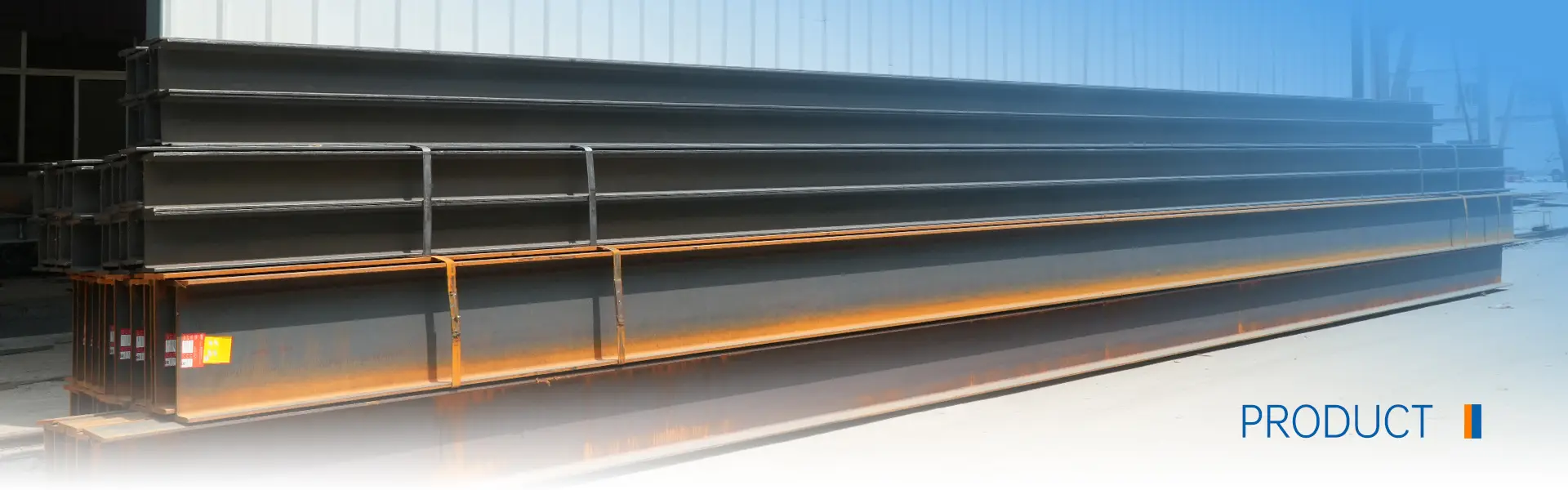
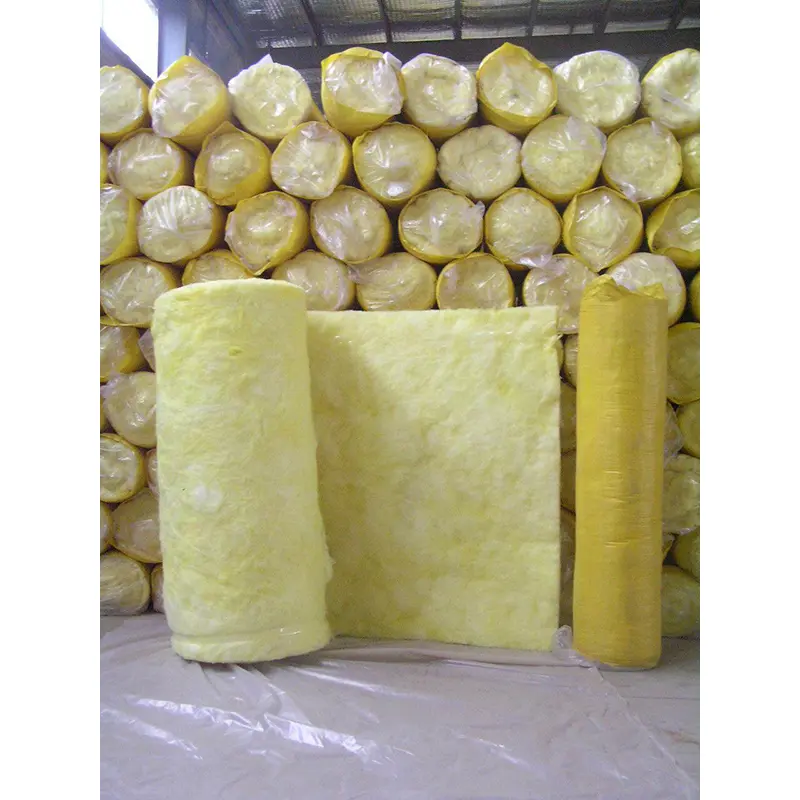
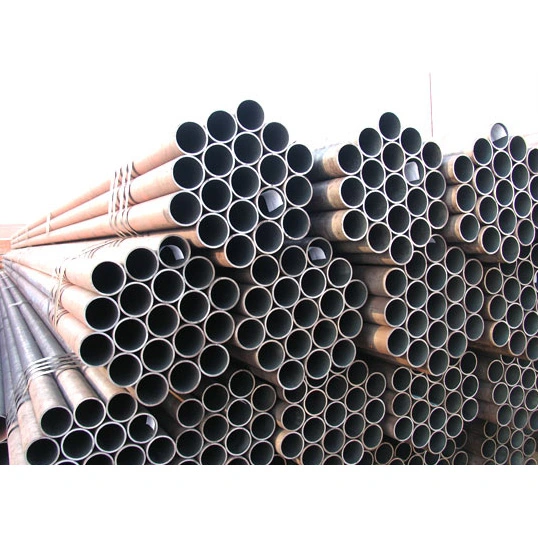
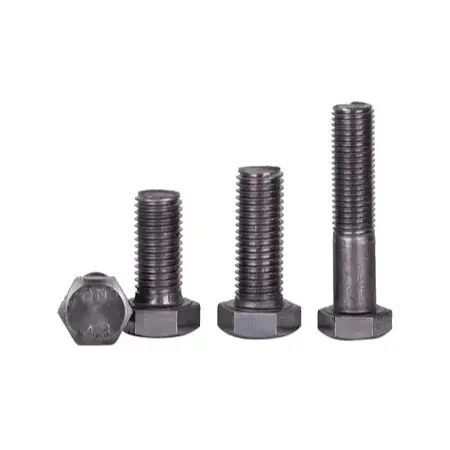
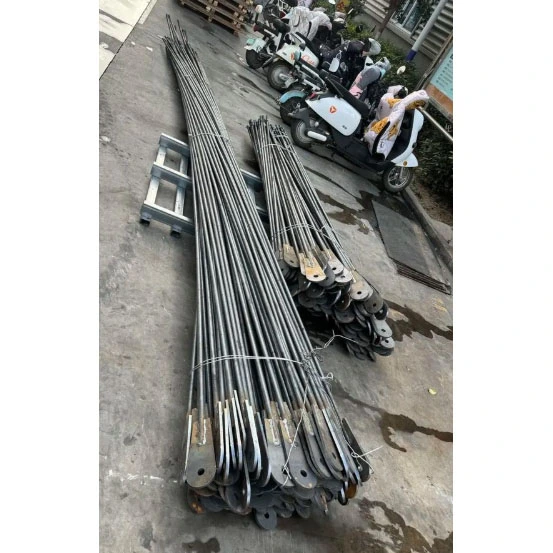
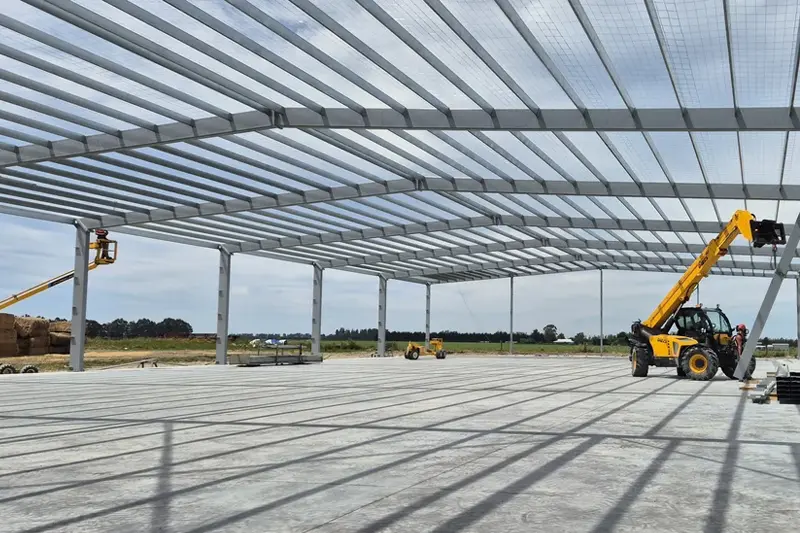
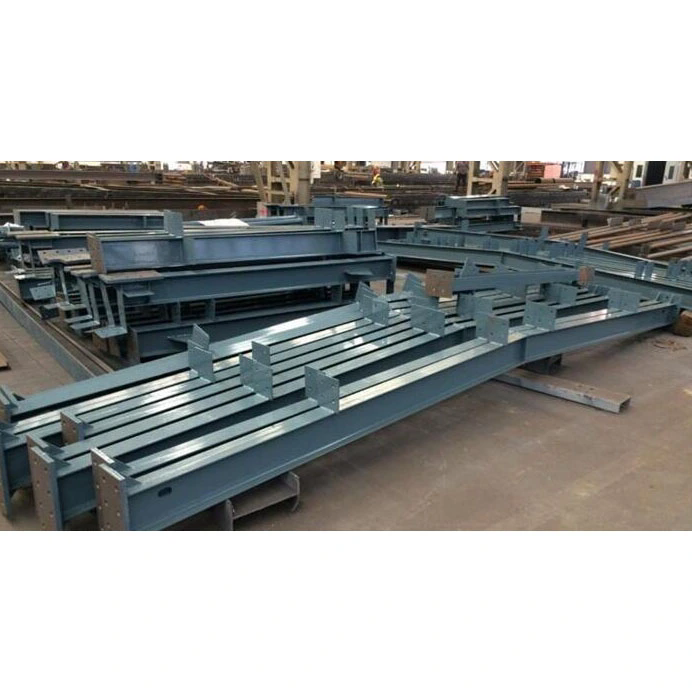
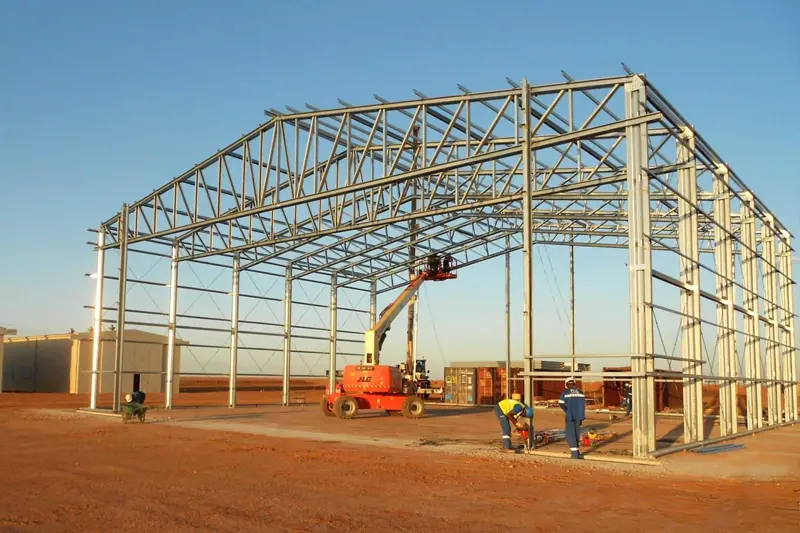
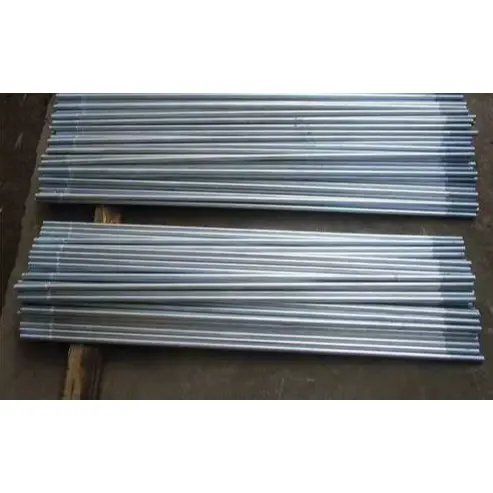
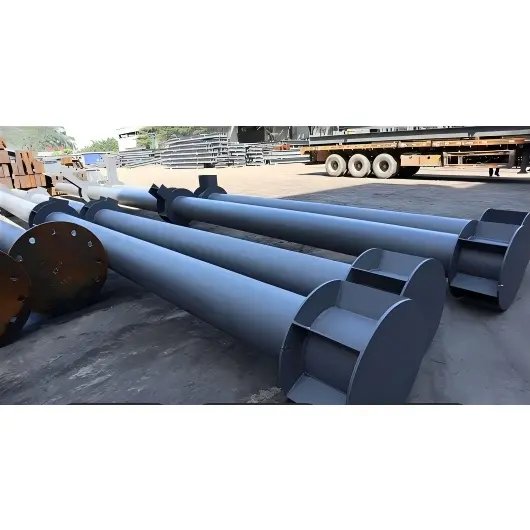
HAISHENG is a professional manufacturer and one-stop supplier of Structural Steel Tie Rod Members in China. It offers bulk purchasing, customized processing, and complete component delivery services. The products are suitable for various steel structure factories and portal frame buildings, providing reliable lateral connection and structural reinforcement guarantees for the building structure.
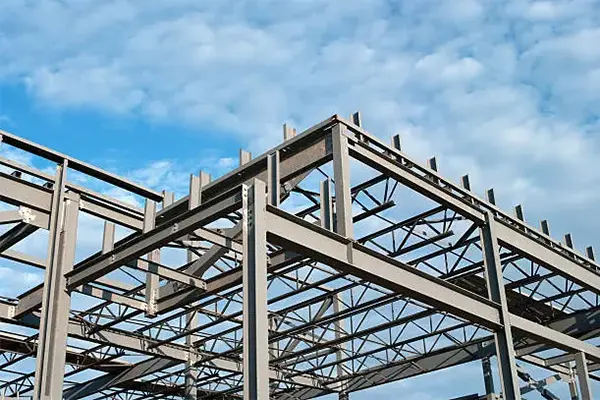
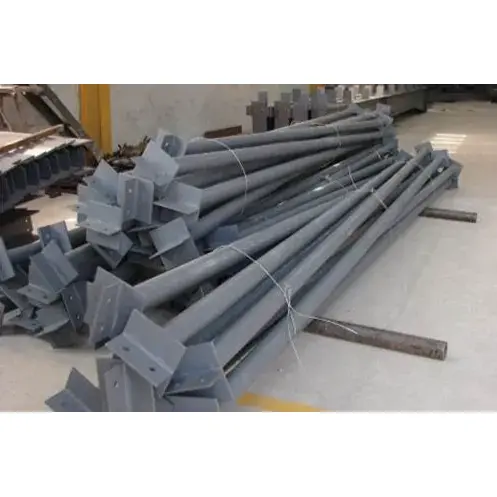
In the steel structure factory buildings and portal frame systems, the Structural Steel Tie Rod Member is an indispensable longitudinal stabilizing component. This product is manufactured from round tubes and steel sections and is laid along the entire length of the building. It connects multiple steel frame structures and is specifically designed to transfer horizontal forces and limit the displacement of components. When used in combination with various supporting components, it can significantly enhance the overall lateral resistance of the building. The product has a wide range of specifications and mature processing techniques, taking into account both construction efficiency and safety. It is a cost-effective standard component for steel structure projects.
Product Application Positioning
Basic Concepts of Components
1. The industry code for tie rods is XG. They belong to the longitudinal horizontal secondary components within the steel structure portal frame, factory buildings, and truss systems, and do not bear vertical loads.
2. Structural Steel Tie Rod Member mainly withstands axial tension and axial pressure. It is the core component for constructing the stable system of the building space.
Core Functional Uses
1. Transmit longitudinal horizontal forces, resist wind force, earthquake effects, and the longitudinal braking force generated by the operation of factory cranes.
2. Restrict the planar external displacement of steel beams and steel columns, effectively shortening the calculation length of the components.
3. Combined with various supporting components, it forms a complete lateral force resisting structure system to ensure the spatial stability of the entire building.
Product Category Division
1. Rigid Tie Rods: They can withstand both tension and pressure. They are the most widely used in the market and are mostly made of round steel pipes. They are typically arranged at the roof ridge, top of columns, and the corresponding height positions of crane beams.
2. Flexible Tie Rods: They can only withstand tension. They are made of round steel or single angle steel and are generally not used as standard main tie rods.
Distinction of Similar Components
1. Structural Steel Tie Rod Member is used to connect the main portal frame and steel beams. It is made of round steel pipes and is responsible for transmitting the overall longitudinal axial force.
2. Roof Truss Tie Bars are divided into ZLT and XLT types. They are only used to connect roof trusses and are made of fine round steel. They only play a local anchoring role.
Complete Factory Assembly Specifications
Main Material Specifications
1. The main materials used are hot-rolled straight seam steel pipes and seamless steel pipes. For routine projects, Q235B material is selected, while for large-span and heavy-load conditions, Q355B material is used.
2. The common pipe specifications are the outer diameter combined with the wall thickness, which are ∅89×3.0, ∅114×3.0, ∅114×3.5, ∅140×4.0, and ∅159×4.0.
3. The standard lengths of raw materials are divided into 6m, 9m, and 12m. The rods exceeding the standard length will be connected on-site.
Factory Prefabricated Supplementary Components
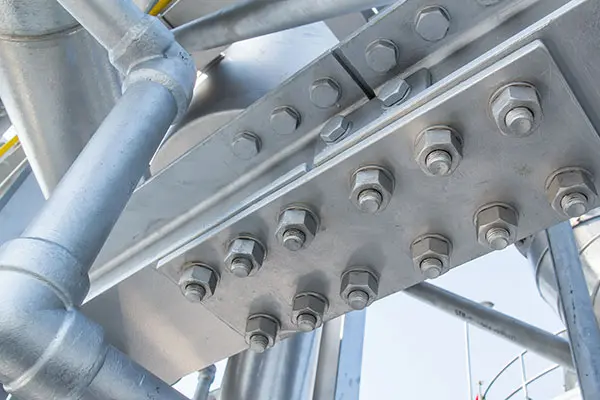
1. End Plates: The material is the same as the main pipe material, with thickness ranging from 8mm to 16mm. The bolt holes are processed in advance according to the drawings for bolt connection with steel beams and steel columns flanges.
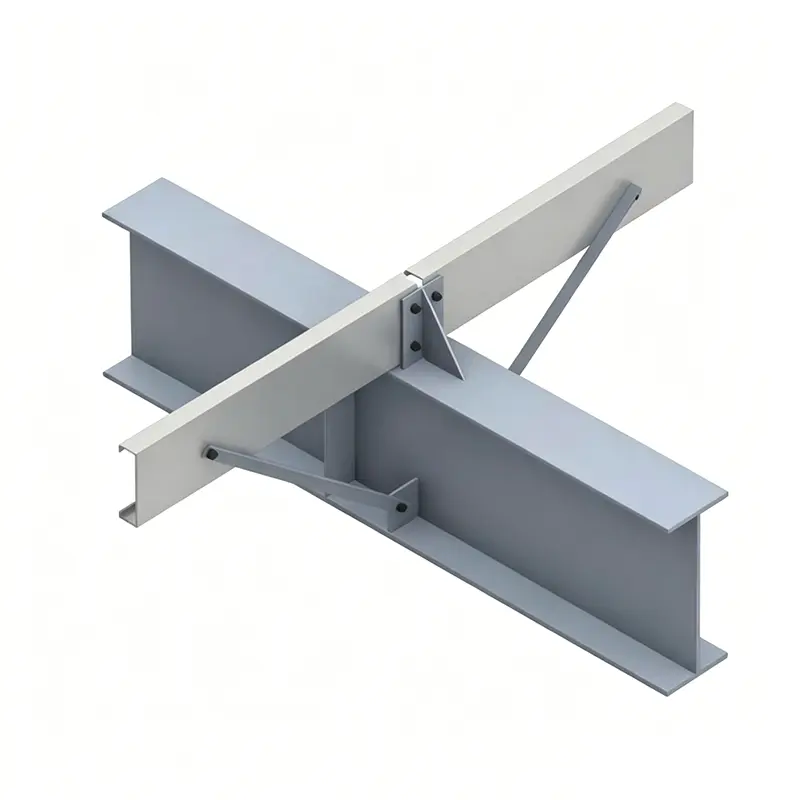
2. Reinforcement Rib Plates: Triangular stiffening plates are added at the stressed support positions to avoid local deformation of the end plates. This accessory can be omitted in medium-span buildings.
3.Reserved hole position: Factory uniformly processes bolt holes, corner brace connection holes, and support anchorage holes to ensure on-site assembly accuracy.
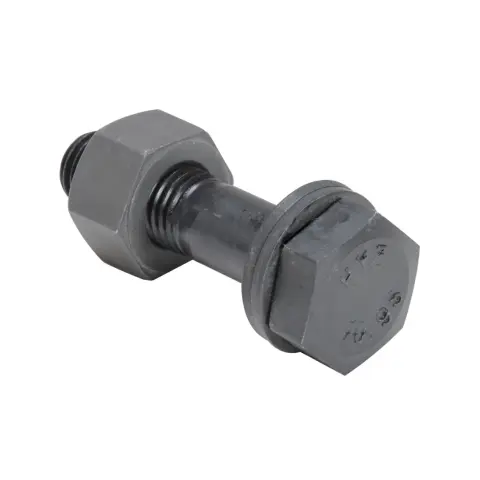
1. Connecting Bolts: In ordinary conditions, use M16 and M20 specifications of 4.8 grade ordinary bolts; for cranes, seismic defense areas, and heavy-load factories, use 8.8 grade high-strength bolts.
2. Auxiliary Accessories: Each tie rod is equipped with the same specification flat washers, spring washers, and thick nuts. All accessories are uniformly treated for anti-corrosion.
Anti-corrosion and Fire Protection Plan
1. Foundation Anti-corrosion Treatment: For ordinary projects, manual rust removal of St3 grade is adopted; for key projects, Sa2.5 grade shot blasting rust removal is implemented. The base coat and top coat are applied, with the dry film total thickness controlled within 60μm to 100μm.
2. High Anti-corrosion Configuration: For outdoor and high-humidity corrosive environments, the overall hot-dip galvanizing process is adopted. The double-sided galvanizing amount is not less than 275g/㎡.
3. Fire Protection Treatment: For the rods located in fire zones, apply thin type fireproof coatings with a fire resistance time of 0.5h to 1h.
Structural System Matching Requirements
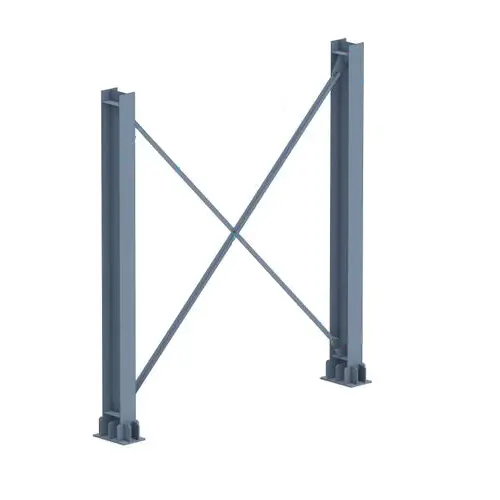
The Structural Steel Tie Rod Member cannot function independently and needs to be combined with other components. Horizontally, it is combined with roof horizontal supports and column cross supports, and vertically, it is combined with vertical supports and corner braces to form a closed and stable overall support system.
Standard layout position description:
1. At the top elevation of the building columns, install rigid tie rods along the entire length.
2. At the ridge of the factory roof, install rigid tie rods along the entire line.
3. For factories equipped with cranes, add tie rods at the upper and lower flanges of the crane beams.
4. At the ends of steel beams, in areas with variable cross-sections, and at various support nodes, increase the number of rods to enhance stability.
Finished product delivery contents:
1. Complete finished components, including the main body of the round pipe, both end plates, and the required stiffening plates as needed.
2. Component-specific serial numbers, factory qualification certificates, and material quality guarantee documents for raw materials.
3. Adequately matched installation accessories such as bolts, nuts, and washers according to the number of components.
4. Finished components that have undergone coating or hot-dip galvanizing treatment.
5. Detailed installation node drawings for construction purposes.
Core practical advantages:
1. Strong anchoring capacity, effectively resisting outdoor wind pressure and preventing overall steel frame from shaking or tilting.
2. Simple structural steel tie rod member, lightweight, easy for on-site installation, significantly improving the overall construction progress.
3. Precisely achieve positioning function, uniformly controlling the force state of the entire building, making the structural force more balanced.
4. Complete anti-corrosion process, even when used in outdoor environments for a long time, it is not prone to rust and damage.
5. Complete product specifications and categories, suitable for portal frame structures, various steel frame factories, and other building types.
6. Low investment cost, outstanding structural reinforcement effect, significantly improving the overall safety coefficient of steel structure buildings.
Type-specific comparison of similar components
Mechanical Structure Advantages
1. The circular pipe section exhibits excellent load-bearing performance. The Structural Steel Tie Rod Member can be both stretched and compressed, with uniform moment of inertia in all directions. It only bears axial force and does not generate additional bending moments. Angle steel supports and round steel struts can only be stretched, and when under compression, they are prone to buckling and deformation. Locations requiring pressure-bearing and positioning, such as the roof ridge and column top, can only use circular pipe tie rods.
2. The rods are uniformly laid along the building's longitudinal direction, continuously transmitting the force, connecting each independent rigid frame into an overall spatial structure. The cross supports are arranged discontinuously, and the tie rods only fix a single roof truss, unable to achieve full longitudinal constraint.
Material Selection and Cost Advantages
1. The pipes are market-standard ready-made materials, with simple cutting, welding, and hole-making processes, and a short production cycle. Compared to box-type components and H-shaped steel components, the customization cost is lower, and the supply speed is faster.
2. Under the premise of the same pressure-bearing capacity, the self-weight of the circular pipe tie rods is much less than that of H-shaped steel and I-beams. When used over a large area in a continuous manner, it can effectively control the overall project cost.
On-site Construction Advantages
1. The ends of the rods are pre-welded with end plates, and on-site, they are directly fixed to the flange of the beam or column using bolts. There is no need for on-site welding. The cross supports require on-site assembly and opening holes, making the assembly process more cumbersome.
2. The product has high versatility. The same specification rods can be used at multiple positions such as the roof ridge, column top, and crane beam. The matching accessories are unified, facilitating large-scale inventory preparation and overall construction planning.
System Compatibility Advantages
1. The building is supported laterally by cross supports and longitudinally by Structural Steel Tie Rod Members. These two types of components cooperate to form a geometrically stable structure. The tie rods and corner braces only provide local reinforcement for roof trusses and steel beams and do not participate in the longitudinal stability of the building structure.
2. They effectively restrain the lateral deformation of steel beams and steel columns, reducing the calculation length of the components and helping to optimize the cross-sectional dimensions of the beams and columns, thereby reducing the amount of main material steel used.
Environmental Adaptability Advantages
The outer surface of the circular pipe is smooth and regular, making the anti-corrosion operations such as rust removal, painting, and hot-dip galvanizing convenient. Compared to open-type angle steel and channel steel, in outdoor humid and corrosive environments, the anti-corrosion durability effect is better.
Product Function Classification
1. Tie Rods: Longitudinally laid in a continuous manner, capable of withstanding tension and compression, and belong to the main structural stable components.
2. Cross Supports: Discontinuously arranged in a cross pattern, only bearing tension, mainly responsible for lateral wind resistance and earthquake resistance.
3. Tie Rods: Made of fine round steel, only used for anchoring roof trusses, belonging to small-scale accessories for enclosure.
4. Secondary Beams: Bearing vertical loads, mainly transmitting floor loads, and the force-bearing direction and function are completely different from the tie rods.
Standardized processing procedure:
1. Inspection of raw materials upon entry: Verify the Q235B and Q355B steel material certificates, check the pipe diameter and wall thickness, identify any issues such as pipe bending, oval shape, or rust, and straighten deformed materials that exceed the tolerance limits. Also, inspect and accept the matching connection plates.
2. Numerical cutting for material removal: Cut the steel pipes according to the designed dimensions, leaving a reserved shrinkage allowance for welding, and polish the burrs at the pipe ends.
3. Cutting of accessories: Use numerical control equipment to cut the end plates and triangular stiffening plates, strictly following the dimensions on the drawings.
4. Assembly and spot welding: Use fixtures for positioning, place the end plates centered on both ends of the steel pipes and perform spot welding for fixation. Install triangular stiffening plates at the stressed nodes to complete the spot welding reinforcement.
5. Circumferential welding: Use carbon dioxide gas shielded welding to fully weld the connection points between the steel pipes and the end plates. The circumferential welds follow the second-level weld standard. For routine projects, only perform visual inspections; for key factory projects, conduct a small number of UT flaw detection tests.
6. Numerical control drilling: Use numerical control drilling machines to process the bolt holes in the end plates. The main hole diameters are adapted to M16 and M20 bolts, ensuring the accuracy of the hole positions.
7. Correction and grinding: Correct the skew at the pipe ends caused by welding, and grind away the weld spurs and welding debris.
8. Corrosion treatment: For ordinary Structural Steel Tie Rod Members, perform manual rust removal according to St3 standards, then apply primer and topcoat. For products with high corrosion requirements, perform overall hot-dip galvanizing treatment.
9. Numbering and storage: Spray the unique component number, count all the accessories, pack them, and store them for shipment.
Core performance parameters
Geometric specifications and machining tolerances
Common pipe specifications: ∅89×3.0, ∅114×3.0, ∅114×3.5, ∅140×4.0, ∅159×4.0
End plate thickness: 8mm to 16mm, standard hole size M16, M20
Custom length: 3m to 9m according to bay size, raw material standard length: 6m, 9m, 12m
Machining tolerance: Straightness of rod body ≤ L/1000, hole distance tolerance of end plate ±1.5mm
Material Mechanical Properties
Material Grade
Yield Strength
Tensile Strength
Application Scenarios
Q235B
≥235MPa
375~500MPa
Ridge and column top tie rods for conventional portal frames
Q355B
≥355MPa
470~630MPa
Large-span and heavy-duty workshops with cranes
Force Bearing Parameters
Force type: Bear axial tension and axial compression, no vertical bending moment. Round pipe section has uniform radius of gyration in all directions, better compression stability than flexible tie rods made of angle steel and round steel.
Functional performance: Restrict out-of-plane displacement of rigid frames, reduce calculation length of beams and columns, transfer longitudinal wind load and seismic load.
Structural feature: Arranged continuously along the building, form an overall stable system with column bracing and roof horizontal bracing.
Weld Quality Parameters
The circumferential weld between steel pipe and end plate belongs to secondary weld. Visual inspection is adopted for general projects. Partial UT inspection is carried out for key projects, and 100% inspection is not required.
Anti-corrosion and Fire Protection Parameters
Ordinary anti-corrosion: St3 manual rust removal, total dry film thickness of paint 60~90μm
Heavy anti-corrosion for coastal and humid areas: Hot-dip galvanizing, zinc layer thickness ≥70μm
Fire protection: Thin fireproof coating with fire resistance duration of 0.5h is used in fire compartments, no fire protection treatment for general areas
Connection Fitting Parameters
Bolt selection: Grade 4.8 bolts for ordinary workshops, Grade 8.8 high-strength bolts for crane workshops and seismic areas
Supporting accessories: Complete with flat washers and spring washers
Product Category Classification
Rigid tie rod (round pipe type): Resist tension and compression, main component for structural stability
Flexible tie rod (round steel / single angle steel): Only resist tension, used for auxiliary connection
Regarding HAISHENG
Comprehensive material supply and assembly: According to project requirements, we can provide a complete set of steel structure components including supports, corner braces, purlins, etc. at the same time. We follow unified processing standards and connection dimensions to avoid on-site assembly deviations and reduce rework issues.
Full-process technical support: Before sale, we will combine the building span, crane configuration, and seismic grade to provide selection and layout plans for tie rods, and free issue construction node drawings to optimize the arrangement of rods.
Professional logistics protection: Both ends of the Structural Steel Tie Rod Member are protected, and the entire member is wrapped with waterproof film. Long members are segmented and reinforced and packed to prevent deformation, paint damage, and pipe collision during transportation. At the same time, we provide packing lists and logistics tracking information.
On-site installation guidance: We provide a graphic installation manual and offer remote technical support in both Chinese and English. We answer questions in real time regarding construction details such as node connections and rod combinations to assist the construction team in completing the installation efficiently.
Long-term after-sales guarantee: The main pipes are provided with a 5-year quality guarantee, and the hot-dip galvanizing and paint anti-corrosion layers are provided with a 2-year guarantee. We supply a full range of supporting components continuously and support the replenishment of scattered small items. At the same time, we provide maintenance and repair plans for the later period for free.
Common Questions and Answers
Q1 How to quickly distinguish between rigid tie rods and flexible tie rods, and how to select the type?
Rigid tie rods made of round tubes can withstand both tension and pressure and are suitable for core load-bearing positions such as roof ridges, column tops, and crane beams. Steel tubes and single angle steels made of flexible tie rods can only withstand tension and can only be used as auxiliary tension-bearing components. For conventional steel structure factories, rigid tie rods are preferred.
Q2 Can tie rods be used alone without being combined with other supporting components?
No. Tie rods mainly function to transfer longitudinal forces and provide positioning. They must be combined with roof horizontal supports, column-to-column cross supports, and corner braces to form a complete system. Using them alone cannot achieve overall structural stability.
Q3 How to select bolts for ordinary factories and factories with cranes?
For ordinary factories without cranes and not in seismic zones, 4.8 grade ordinary bolts can meet the requirements. For buildings equipped with crane cranes and located in seismic defense zones, 8.8 grade high-strength bolts must be used to enhance the connection strength of the nodes.
Q4 What kind of anti-corrosion solution is recommended for outdoor damp and coastal areas?
In highly corrosive environments, it is not recommended to use simple paint coating alone. The overall hot-dip galvanizing process should be preferred. After the zinc layer thickness meets the standards, it can resist salt fog and moisture erosion for a long time, with a much longer service life than conventional spray painting treatment.
Q5 How to handle long-length tie rods that cannot be transported as a whole?
Standard Structural Steel Tie Rod Members have lengths of 6m, 9m, and 12m. For rods exceeding these lengths, we will prefabricate them in sections, leaving welding grooves at the ends, and transport them to the construction site for operations. At the same time, corresponding splicing construction plans will be provided.
Q6 Do all the end plates need to be equipped with triangular stiffening plates?
For positions with large load-bearing and concentrated nodes, stiffening plates must be installed to prevent the end plates from deforming. For conventional factories with smaller spans and lower loads, the stiffening plates can be omitted to control the overall project cost.
Hot Tags: Structural Steel Tie Rod Member, Manufacturer, Supplier, Custom
Contact HAISHENG China supplier of Structural Steel Components, Steel Structure Cladding Components and Structural Steel Fasteners. Our professional sales team will reply with detailed quotation, product parameters and delivery plan within 24 hours to meet your bulk procurement demand.
We use cookies to offer you a better browsing experience, analyze site traffic and personalize content. By using this site, you agree to our use of cookies.Privacy Policy