Tianjin Haisheng Steel Structure Co., Ltd.
Products
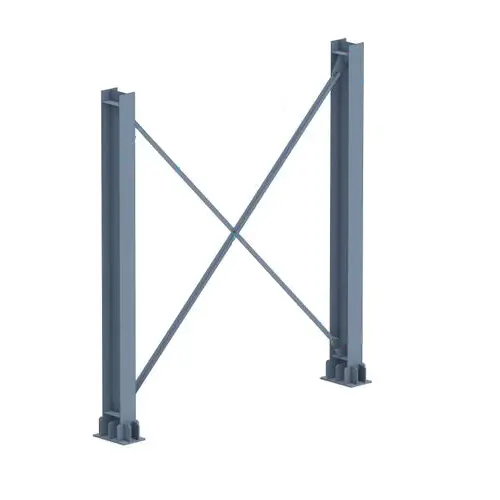
Steel Knee Bracing Support Member
  • Steel Knee Bracing Support MemberSteel Knee Bracing Support Member
  • Steel Knee Bracing Support MemberSteel Knee Bracing Support Member

Steel Knee Bracing Support Member

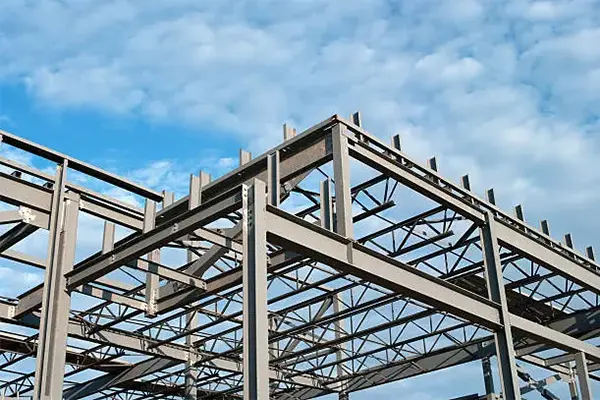
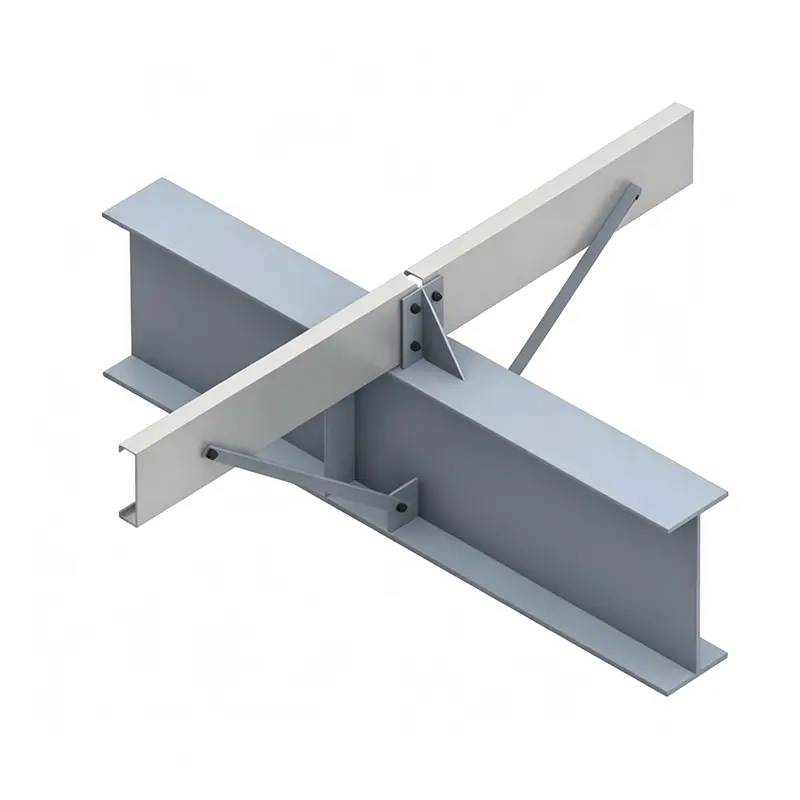
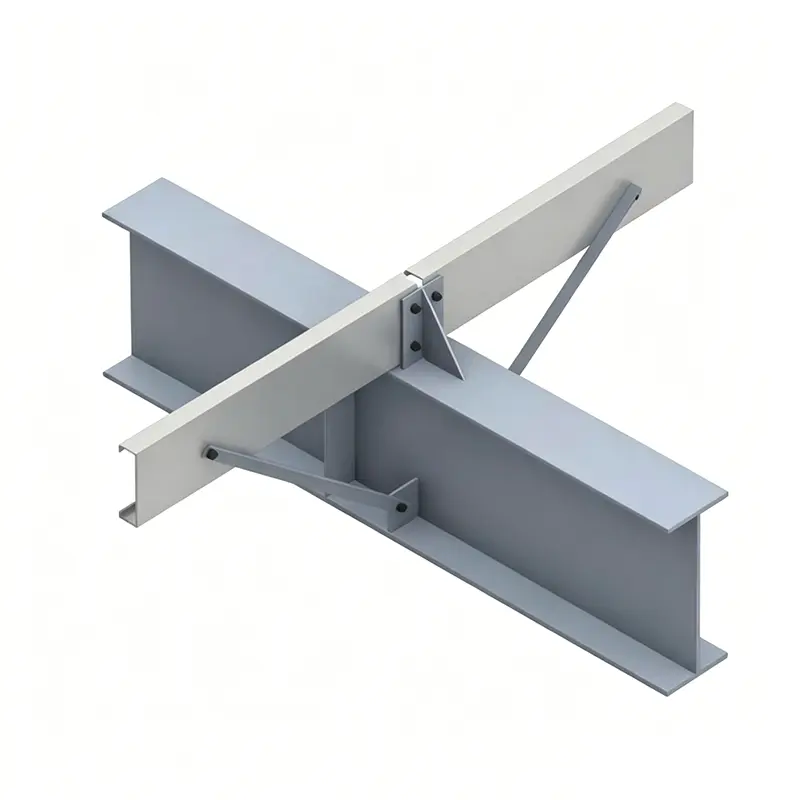
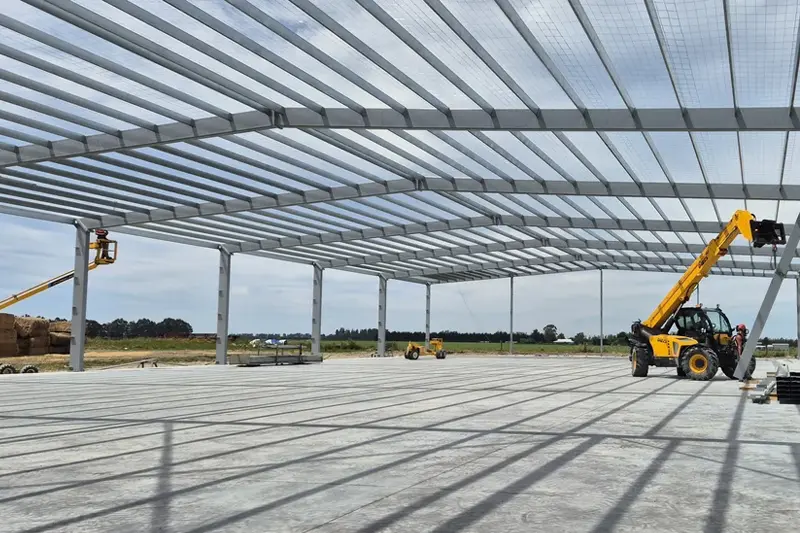
HAISHENG is a professional manufacturer and supplier of steel knee bracing support members in China. Knee braces are specialized lateral support components for steel structure roofing; typically made of angle steel, they connect the roof purlin diagonally to the bottom flange of the steel beam. They act as tension-compression struts to effectively restrain the lateral displacement of purlins, preventing buckling or lateral bending deformation under compression, while simultaneously enhancing the overall lateral rigidity of the roof system. They are essential small-scale reinforcement components for light steel industrial building roofs.

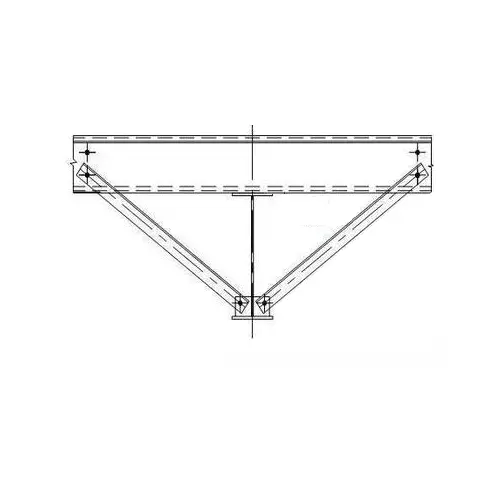
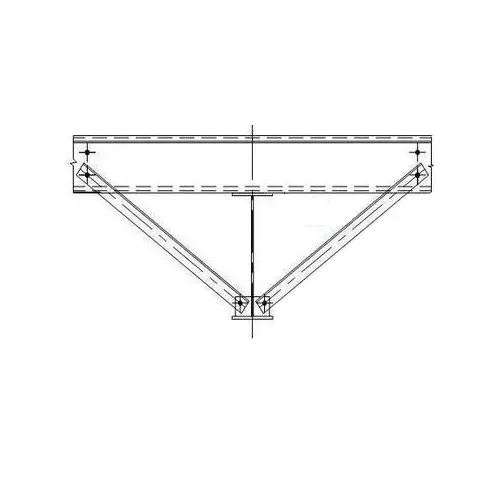
Knee braces (YC) are fabricated from short angle steel sections and installed diagonally (at a 45° angle) between the bottom flange of the roof steel beam and the purlin, serving as structural elements for local roof stability. Standard units utilize Q235B steel, while Q355B is selected for long-span, heavy-load roofs. The core functions of these steel knee bracing support members include:

1. Restraining the lateral outward bulging of the H-section steel beam's bottom flange to prevent out-of-plane buckling;

2. Transferring lateral forces from the beam's bottom flange to the roof purlin, utilizing the purlin as a lateral support point;

3. Working in conjunction with horizontal bracing and tie rods to ensure local roof stability.

Distinction: Tie rods and bracing systems control the stability of the overall structure, whereas knee braces control the local stability of individual steel beams.

Steel Knee Bracing Support MemberSteel Knee Bracing Support Member

Standard Factory-Supplied Configuration

1. Main Structural Member

Standard equal-leg angle steel; individual lengths range from 0.8m to 2.0m.

2. Connecting Components

1) Small connection plates at both ends or direct hole punching: one end connects to the steel beam's bottom flange, the other to the C- or Z-section steel purlin;

2) No intermediate stiffener plates or splice cover plates.

3. Fasteners

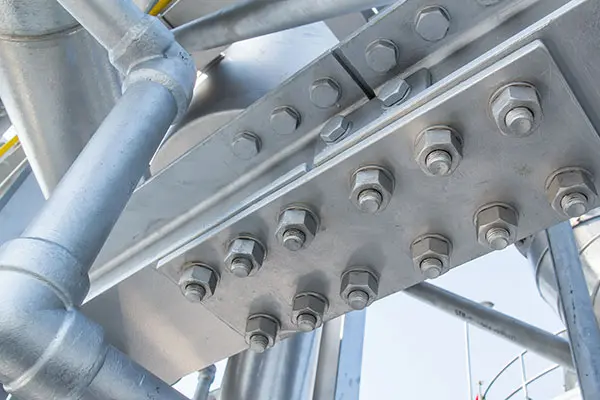
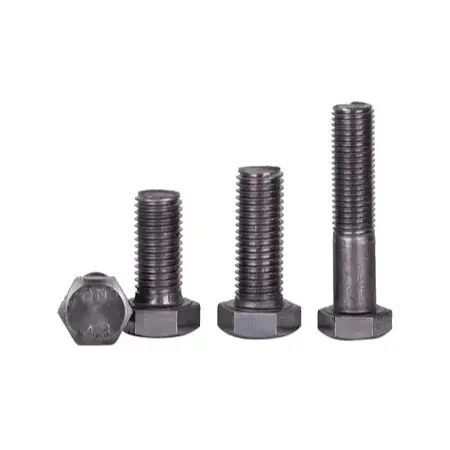
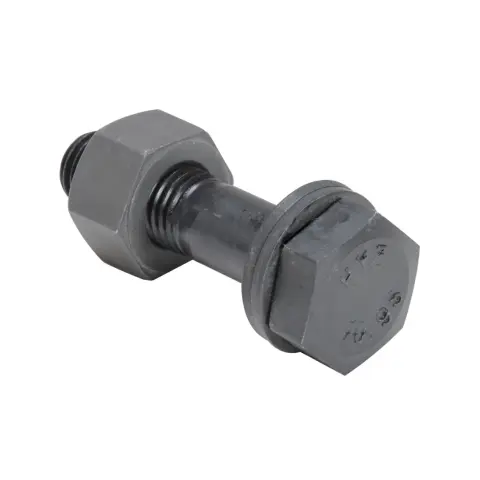
Standard M12, M14, or M16 ordinary bolts (Grade 4.8) with flat washers and spring washers; two sets of bolts supplied per knee brace.

4. Corrosion Protection

1) Standard: St3 manual rust removal; primer plus topcoat with a total dry film thickness of 60–80μm;

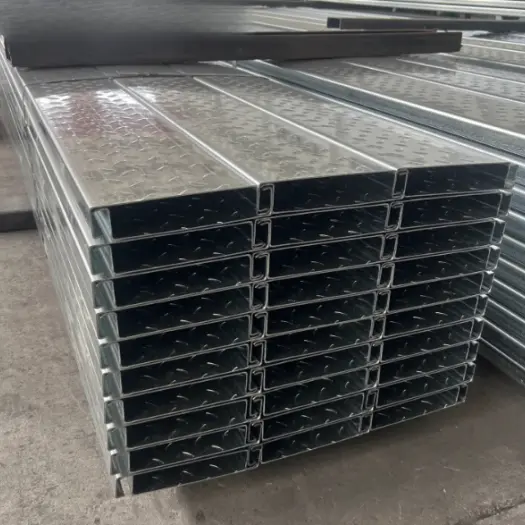
2) Coastal/Corrosive Environments: Hot-dip galvanizing of the entire component. 3). Generally, fire-retardant coatings are not applied.


Standard Configurations

1. Direct-hole angle brace: Holes are drilled directly into both ends of the angle steel; it is bolted on-site to the steel beam and purlin respectively (most common type).

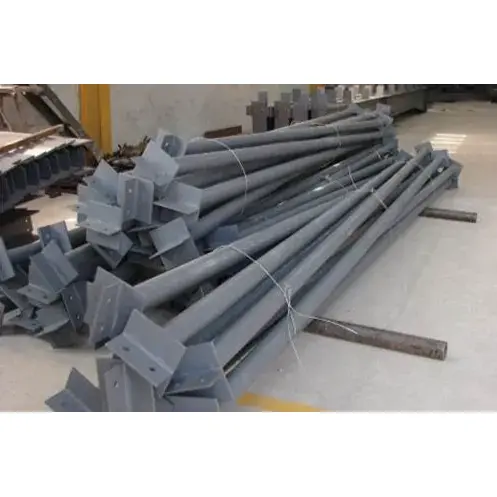
2. Welded lug plate brace: Small connection plates are welded to the ends and then drilled; suitable for situations where the steel beam cannot be drilled directly.

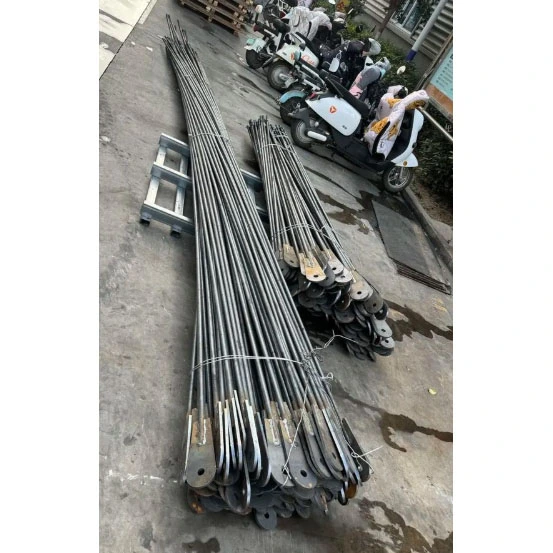
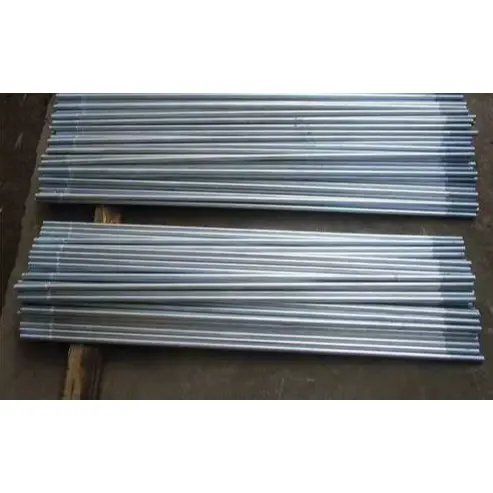
3. Lightweight round bar brace: Small-diameter round bars threaded at both ends; primarily used for simple, short-span roofing.

Layout Rules

Steel Knee Bracing Support Members are evenly spaced at locations such as steel beam section transitions, the roof ridge, points corresponding to structural bracing, and the mid-span of long-span beams.

Key Advantages

1. Compact size yet significant impact; effectively prevents lateral buckling and twisting of purlins.

2. Simple installation and flexible layout; significantly enhances the roof's resistance to wind pressure.

3. Low material usage and cost; improves the overall structural integrity of the roof system.

4. Secure fixation; reduces roof oscillation and enhances building stability.

5. Corrosion and rust-resistant; durable for long-term outdoor use.


Differentiating Highlights of Steel Knee Bracing Support Member

I. Unique Functional Advantages

1. Specialized protection for the steel beam's bottom flange: Prevents instability on the compression side. The brace connects the steel beam's bottom flange to the purlin, transferring lateral forces from the flange to the purlin; it is the only specialized component addressing the local stability of H-section roof beams. Standard structural bracing controls overall lateral stability, while tie rods and sag rods only secure purlins; none of these can restrain the lateral deformation of the steel beam flange.

2. Small component enabling major beam optimization: Shortens the out-of-plane effective length of the steel beam through multi-point lateral restraint. This allows for reduced steel usage and lower main beam costs, making it a cost-effective structural reinforcement.

II. Material and Cost Highlights

1. Short angle steel, minimal material consumption, and ample stock: Typically uses small-specification angle steel (e.g., L40×4, L50×5). The members are short and lightweight, with raw materials readily available in the market; processing and procurement costs are far lower than those for tie rods or other types of structural bracing. 

2. Flexible layout: Spacing is adjusted based on the steel beam span—denser for long spans and sparser for short spans. Materials are cut to exact requirements, eliminating waste.

III. Production and Processing Highlights

1. Simplified process and high efficiency: Most angle steel components require only direct drilling at both ends, eliminating the need for welded connection plates. Even components with lug plates require only minor spot welding. This significantly reduces processing time compared to the extensive circumferential welding and plate splicing required for standard braces and tie rods.

2. Standardized specifications: Uniform hole diameters (M12/M14/M16) and interchangeable accessories facilitate large-scale batch production.

IV. On-site Installation Highlights

1. Fast assembly: Fixed with just two bolts at a single point; no on-site welding required. One end attaches to the steel beam and the other to the purlin, anchoring to existing components without the need for additional embedded parts or vertical columns.

2. Concurrent installation: Installed alongside purlins and integrated with roof cladding work, avoiding interference with the main steel frame construction schedule.

V. System Differentiation

1. Braces + Tie Rods = Overall structural stability; Eave Braces + Sag Rods = Local roof stability.

Eave Braces: Stabilize steel beams;

Sag Rods: Stabilize purlins; the combination ensures the stability of secondary roof components but cannot replace primary structural bracing for load-bearing.

VI. Anti-corrosion Advantages

Components are short, compact, and uniform with no inaccessible areas, making rust removal, painting, and hot-dip galvanizing easy. Batch galvanizing of small parts offers excellent cost-effectiveness.

VII. Product Positioning Summary

· Eave Braces: Specialized local stability components for steel beams; short angle steel; small accessories.

· Sag Rods: Purlin restraint components.

· Tie Rods: Longitudinal rigid bracing for the entire structure.

· Horizontal/Inter-column Bracing: Primary load-bearing components for overall lateral stability.


Standard Processing Workflow

1. Incoming Raw Material Inspection

Main materials are equal-leg angle steels (L40×4, L45×4, L50×5; primarily Q235B, with Q355B for heavy-load applications). Components are inspected for twisting, bending, and deformation; any exceeding tolerance limits are straightened prior to processing. 

2. Sawing/Cutting to Length

Cut profiles to fixed lengths (0.8–2.0 m) and deburr the cut ends.

3. Hole Making (Two Methods)

1) Standard straight-hole type (Mainstream): CNC drill M12/M14/M16 holes directly into both ends of the angle steel; no lug plates required.

2) Lug plate type: Cut steel plates into small lugs → tack-weld lugs to angle steel ends → drill holes.

4. Welding (For lug plate products only)

Secure lug plates via CO₂ tack welding; visual inspection of fillet welds is sufficient (non-destructive testing generally not required).

5. Grinding and Finishing

Remove burrs around holes and weld spatter.

6. Anti-corrosion Treatment

Standard: St3 manual rust removal + primer and topcoat (dry film thickness: 60–80 μm).

Coastal/Chemical environments: Hot-dip galvanizing of the entire component.

7. Packaging and Labeling

Sort steel knee bracing support members by specification; pack into sets including Grade 4.8 bolts, flat washers, and spring washers.


Key Performance Parameters

I. Geometric Parameters

1. Standard profiles: Equal-leg angles L40×4, L45×4, L50×5; L56×5 or L63×5 for long-span, heavy-load applications.

2. Finished length: 800 mm – 2000 mm; typically installed at a 45° inclination.

3. Bolt holes: Standard diameters for M12, M14, and M16 bolts; direct holes drilled in the angle leg, or connection via gusset plates (6–10 mm thick).

4. Fabrication tolerances: Member straightness ≤ L/1000; hole spacing deviation ±1.0 mm.

II. Material Mechanical Properties

Material Grade

Yield Strength

Tensile Strength

Application Scenarios

Q235B

≥235MPa

375~500MPa

Conventional light steel workshops

Q355B

≥355MPa

470~630MPa

Large-span roofs and heavy-load workshops

III. Structural Performance

1. Loading mode: Diagonal axial tension/compression; transfers lateral forces from the steel beam's bottom flange to C/Z-purlins.

2. Primary function: Restrains out-of-plane displacement of the H-beam's bottom flange, reduces the beam's out-of-plane effective length, and prevents lateral-torsional buckling of the compression flange.

3. Load characteristics: Resists only local structural lateral loads; does not bear vertical loads or participate in the overall wind-load path to the foundation; classified as a structural stability component.

IV. Weld Standards (Gusset-plate type knee brace)

Fillet welds are Grade III; visual inspection only, no non-destructive testing (NDT) required.

V. Corrosion Protection Parameters

1. Standard: St3 manual rust removal; primer + topcoat (dry film thickness: 60–80 μm).

2. Coastal/corrosive environments: Full hot-dip galvanizing.

3. Fire-resistant coating: Generally not applied.

VI. Associated Fasteners

Standard Grade 4.8 bolts; each knee brace assembly includes 2 bolts, flat washers, and spring washers.


FAQ

Q1: What is the difference between a knee brace and a sag rod?

A: Knee braces connect the steel beam's bottom flange to the roof purlin to restrain lateral buckling of the beam. Sag rods connect purlins to each other to prevent purlin rotation and deflection. Knee braces stabilize the main beam; sag rods stabilize the purlins. They serve different functions and cannot replace each other.


Q2: Must knee braces be installed at a 45° angle?

A: 45° is the standard and most efficient angle, but angles between 30° and 60° are acceptable in practice. The key requirement is that the brace provides effective lateral restraint to the beam's bottom flange. The specific angle should be confirmed through structural calculation.


Q3: Where are knee braces required on a roof?

A: Knee braces are typically required at the following locations:

- Steel beam section transition points (tapered beam locations)

- At the roof ridge

- In bays corresponding to horizontal structural bracing

- At the mid-span of long-span beams (span > 12m)

Standard spacing is typically 3 to 6 meters, depending on the beam size and roof load.


Q4: Do knee brace welds require non-destructive testing (NDT)?

A: No. For lug-plate type knee braces, fillet welds are classified as Grade III welds and require visual inspection only. Non-destructive testing (UT or MT) is not required for these small accessory components. This differs significantly from primary beams, which require 100% UT for Grade I welds.


Q5: Can knee braces be used outdoors?

A: Yes. For outdoor or corrosive environments, hot-dip galvanizing is recommended instead of standard paint coating. Standard paint (60-80μm, St3 rust removal) lasts 3-5 years outdoors inland; hot-dip galvanizing (≥65μm) lasts 10-15 years in coastal or high-humidity areas.


Q6: What warranty does HAISHENG provide for knee braces?

A: HAISHENG provides a 5-year material warranty and a 2-year anti-corrosion coating warranty for steel knee bracing support members under normal operating conditions (no man-made overloading or chemical damage). Replacement parts of the same specifications are available for restocking.


Hot Tags: Steel Knee Bracing Support Member
Send Inquiry
Contact Info
Contact HAISHENG China supplier of Structural Steel Components, Steel Structure Cladding Components and Structural Steel Fasteners. Our professional sales team will reply with detailed quotation, product parameters and delivery plan within 24 hours to meet your bulk procurement demand.
X
We use cookies to offer you a better browsing experience, analyze site traffic and personalize content. By using this site, you agree to our use of cookies.Privacy Policy
RejectAccept