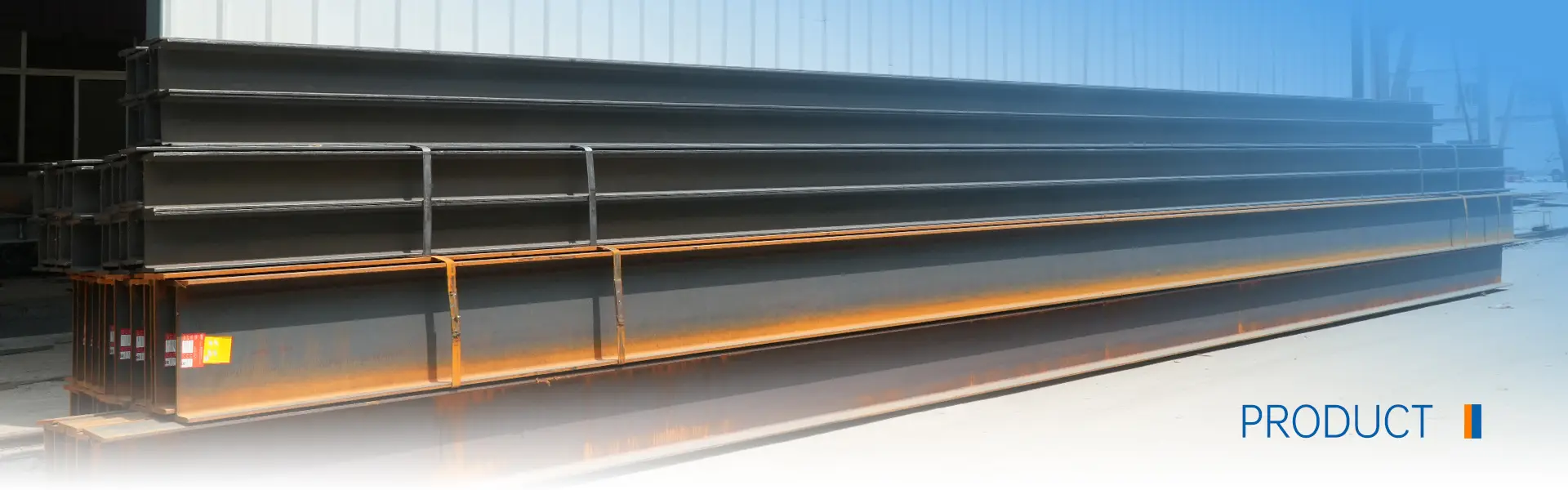
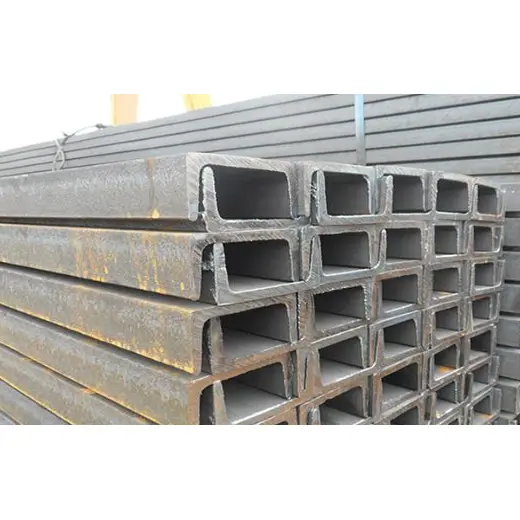
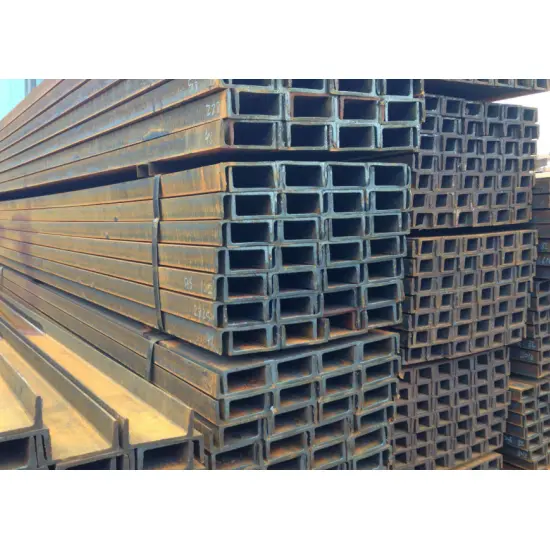
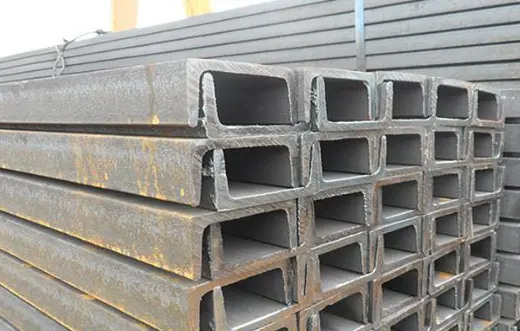
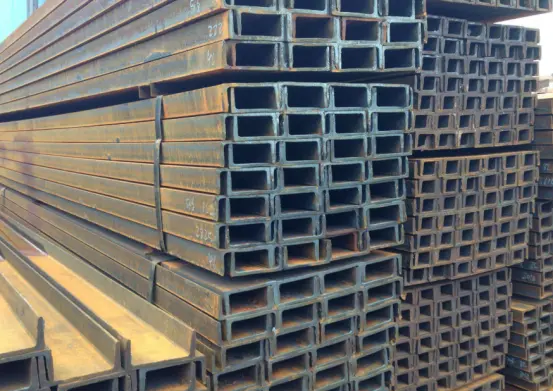
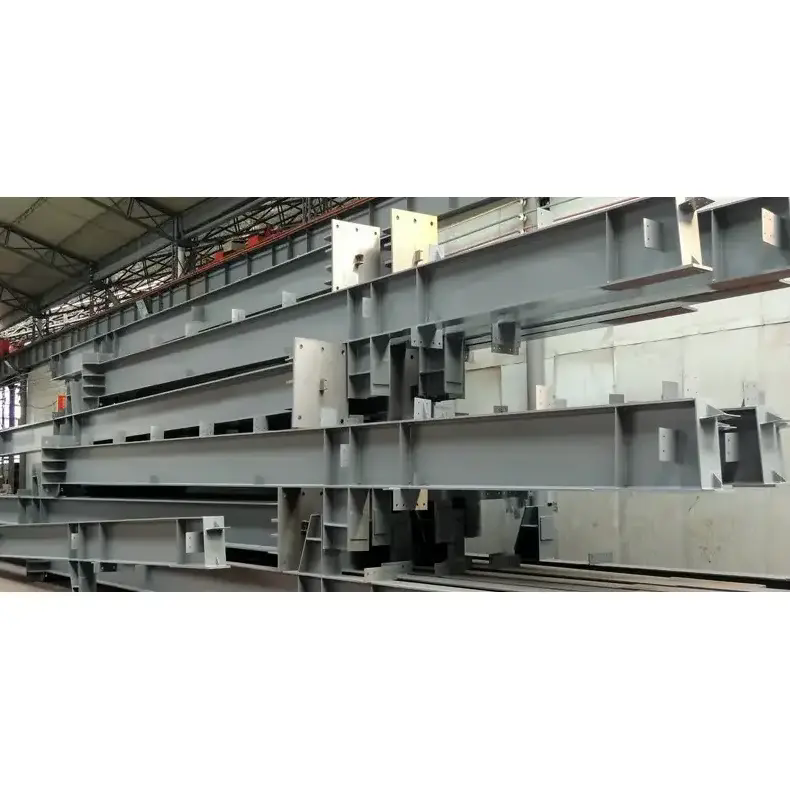
Hot Rolled Structural Steel Channel Sections comply with the national standard GB/T 706-2016 and are produced using an integrated hot-rolling process. They feature a C-shaped (single-sided opening) cross-section. Models are classified by section height, with further subdivisions (a, b, c) indicating increased thickness for the same height. The products are lightweight, easy to process, and cost-effective. While individual sections have limited lateral stiffness and torsional resistance—making them suitable primarily for secondary load-bearing components—combining two sections (back-to-back) with connecting plates significantly enhances overall mechanical performance.
HAISHENG offers a full range of mainstream hot-rolled channel section models, each accompanied by a comprehensive material test report. They are suitable for various auxiliary load-bearing applications, including industrial plants, municipal projects, MEP/HVAC systems, and temporary structures. We provide a complete range of anti-corrosion treatments—including rust removal, painting, and hot-dip galvanizing—to meet the bulk procurement needs of overseas projects.
Production, dimensional tolerances, and mechanical properties of the Hot Rolled Structural Steel Channel Sections comply with the national standard: GB/T 706-2016 "Hot-rolled structural steel sections."
Mechanical standards for base steel materials: GB/T 700 and GB/T 1591.
1. Features a single-sided open channel cross-section; individual members exhibit moderate lateral stiffness and relatively weak torsional resistance, making them unsuitable for use as standalone main columns in high-rise buildings or primary load-bearing beams for long spans.
2. Manufactured via an integrated hot-rolling process with no welded joints, resulting in low internal residual stress. The structure is stable and reliable, resisting cracking and deformation under long-term loading.
1. Ample stock of standard market models and stable procurement channels ensure low unit prices and controllable overall project costs.
2. Lighter self-weight for the same load-bearing capacity effectively reduces the total weight of the steel structure as well as transportation and hoisting costs.
1. Hot-rolled structural steel channel sections can be freely cut, drilled, welded, and bent; there are no process limitations for on-site secondary fabrication, allowing for flexible joint assembly.
2. Compact size and low self-weight allow handling and hoisting to be completed using manual labor and small-scale equipment, significantly shortening the on-site construction schedule.
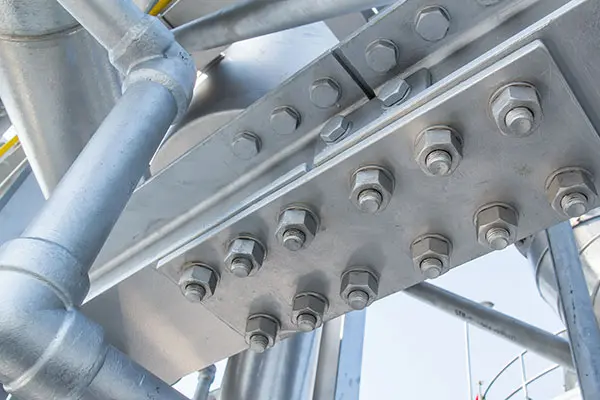
3. Compatible with both bolted and welded connections; can be paired with various steel plates and sections to complete joint assembly.
1. Supplied in a hot-rolled "black" state (with mill scale) and without a pre-applied anti-corrosion coating.
2. Anti-corrosion treatments—such as grinding/rust removal, anti-rust primer application, hot-dip galvanizing, or powder coating—can be applied as needed; suitable for use in dry indoor environments or outdoor environments with mild corrosivity.
1. Advantages of combined use: Joining two channel sections back-to-back with connecting plates significantly enhances lateral stiffness and torsional resistance, meeting moderate load-bearing requirements.
2. Limitations: Due to the open-section structure, they cannot be used for high-rise building main frames, ultra-long-span heavy-load main girders, or critical load-bearing joints subject to high wind pressure; they are suitable only for enclosure systems, bracing, and secondary load-bearing components.
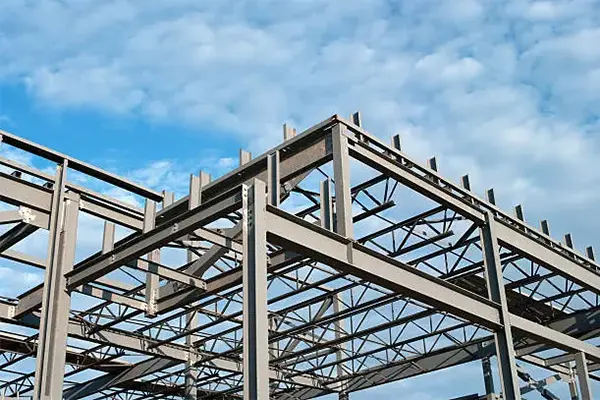
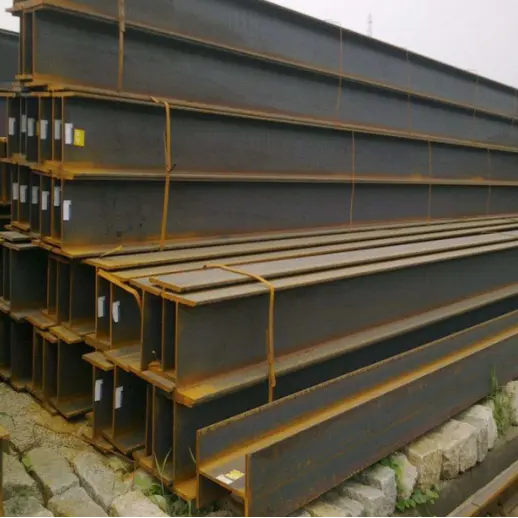
1. Factory wall and roof purlins: Paired with H-beam main girders to secure profiled steel cladding panels and transfer vertical loads from the roof and walls.
2. Supports for various equipment and piping: Used for pipe racks and hangers (including HVAC systems in buildings), equipment bases, and cable tray supports in chemical plants and power stations. 3. Lightweight framing components: Partition wall studs, door and window frames, site hoarding frameworks, and secondary load-bearing members.
4. Industrial platform and walkway accessories: Maintenance walkway beams, platform step supports, and guardrail posts/handrail bases.
5. Reinforcement and embedded components: Embedded steel plates, beam and column stiffeners, and auxiliary steel for foundation support.
6. Temporary construction facilities: Prefabricated building frameworks, scaffolding bases, and temporary excavation safety supports.
1. Industrial buildings: Enclosure and support systems for light industrial plants, warehouses, workshops, and raw material storage facilities.
2. Municipal infrastructure: Roadside safety barriers, outdoor billboard frameworks, small pedestrian walkways, and municipal utility line supports.
3. M&E and HVAC engineering: Ductwork and specialized equipment supports/hangers for chemical plants, power stations, and office buildings.
4. Simple civil structures: Carports, canopies, prefabricated cabins, and simple rural storage sheds.
5. Logistics and warehousing: Lightweight storage racking and cargo sorting platform frameworks.
6. Other accessories: Bases for construction machinery, agricultural machinery chassis, and small auxiliary steel structures for marine vessels.
Direct supply from the source manufacturer: In-house warehousing for Hot Rolled Structural Steel Channel Sections eliminates middleman markups, offering significant cost advantages for large-scale overseas project procurement.
Stable stock across all specifications: Ample year-round inventory of mainstream channel steel sizes (No. 5 to 25a); supports batch shipments and rapid response to urgent project orders.
Comprehensive quality inspection and traceability: Every batch of hot-rolled structural steel channel sections comes with original mill certificates and mechanical property test reports; supports third-party re-inspection to meet overseas project acceptance standards.
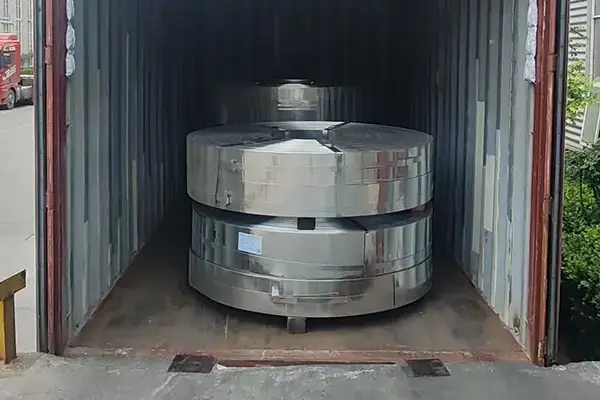
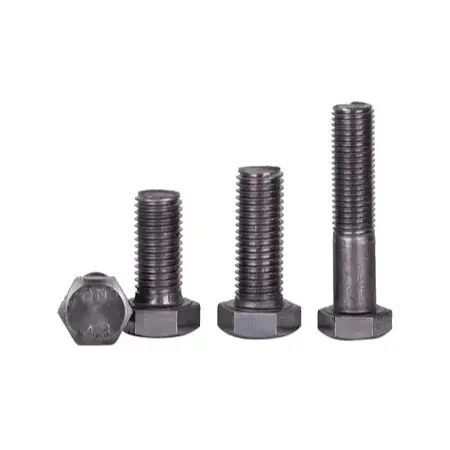
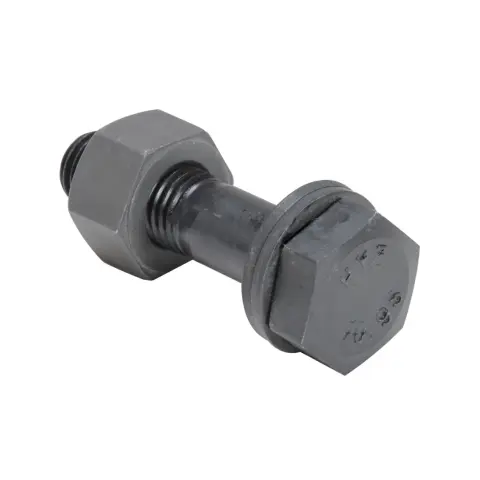
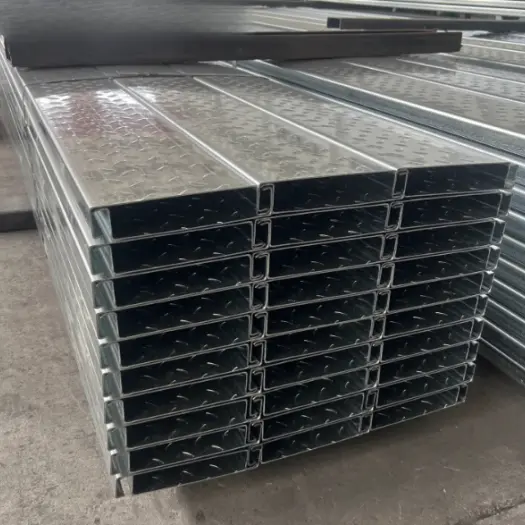
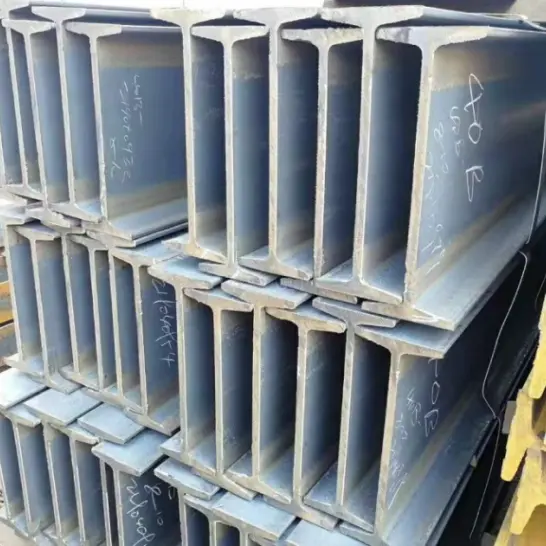
One-stop processing services: Supports fixed-length cutting, punching, bending, welded prefabrication, and custom hot-dip galvanizing; also offers bundled export of H-beams, I-beams, embedded plates, and high-strength bolts. Standardized export packaging: moisture-proof and rust-resistant wooden pallets or film wrapping; includes certificates of conformity and material certifications in both Chinese and English to ensure smooth customs clearance and on-site acceptance.
|
Material Grade |
Yield Strength ReL (MPa) |
Tensile Strength Rm (MPa) |
Elongation After Fracture (%) |
Application Scenarios |
|
Q235B |
≥235 |
375~500 |
≥26 |
Ordinary factories, supports, purlins, temporary buildings |
|
Q355B |
≥355 |
470~630 |
≥21 |
Heavy-load platforms, equipment bases, medium-span beams |
Supplementary mechanical indicators:
V-notch impact energy at normal temperature: Q235B ≥27J; Q355B ≥34J
Modulus of elasticity E ≈ 2.06×10⁵ MPa
Marking specification Symbol: [ Format: Height × Flange Width × Web Thickness, e.g. [10# = 100×48×5.3mm Models with identical height are divided into a/b/c grades, with wider flanges and thicker webs for higher bearing capacity.
|
Model |
Height h (mm) |
Flange Width b (mm) |
Web Thickness d (mm) |
Theoretical Weight (kg/m) |
|
[5# |
50 |
37 |
4.5 |
5.438 |
|
[6.3# |
63 |
40 |
4.8 |
6.634 |
|
[8# |
80 |
43 |
5.0 |
8.045 |
|
[10# |
100 |
48 |
5.3 |
10.007 |
|
[12# |
120 |
53 |
5.5 |
12.059 |
|
[14a# |
140 |
58 |
6.0 |
14.535 |
|
[16a# |
160 |
63 |
6.5 |
17.240 |
|
[20a# |
200 |
73 |
7.0 |
22.637 |
|
[25a# |
250 |
78 |
7.0 |
27.410 |
[10# Moment of inertia Ix ≈ 198 cm⁴ Section modulus Wx ≈ 39.7 cm³ Radius of gyration ix ≈ 3.95 cm
[20a# Moment of inertia Ix ≈ 1780 cm⁴ Section modulus Wx ≈ 178 cm³ Radius of gyration ix ≈ 7.86 cm Characteristic: Good bending resistance along strong X-axis, weak lateral stiffness & torsion resistance on weak Y-axis, not suitable for individual beam-column under bending & compression load.
Standard fixed lengths: 6m, 9m, 12m, custom cutting available
Height h tolerance: ±1.5~3.0mm (varies by model size)
Flange width b tolerance: ±1.5~2.0mm
Straightness: ≤2mm per meter, total straightness ≤0.2% of total length
Torsion: ≤1.5mm per meter
Delivery condition: Hot rolled black surface with oxide scale
Machinability: Easy cutting, drilling, welding and bending for on-site fabrication
Anti-corrosion options: Derusting + primer painting, hot-dip galvanizing, plastic spraying
Applicable temperature range: -20℃ ~ 80℃
Load characteristic: Open cross-section with low lateral stiffness and poor torsion resistance; suitable for simply supported uniaxial bending members, forbidden for high-rise main frames, long-span main beams and key wind-load bearing components
Connection method: Bolted or welded; double channel back-to-back assembly greatly improves overall rigidity
Q:Can channel steel be used alone as a load-bearing vertical column for high-rise frames?
A: Not recommended. Hot Rolled Structural Steel Channel Sections have an open cross-section on one side, resulting in poor lateral stiffness and torsional resistance; using them alone makes them prone to instability and deformation. HW wide-flange H-beams are the preferred choice for primary columns in high-rise structures.
Q: What is the best anti-corrosion treatment for channel steel in outdoor coastal projects?
A: Hot-dip galvanizing of the entire unit is recommended for long-term outdoor exposure or coastal environments with salt spray; for short-term indoor use in humid conditions, rust removal followed by two coats of anti-rust primer is sufficient.
Q: How do I choose between 'a', 'b', and 'c' type channel steels of the same height?
A: Type 'a' has the thinnest web and flanges, offering the lowest load-bearing capacity, while type 'c' has the greatest thickness. For heavy-load or long-span applications, the thicker 'b' or 'c' subtypes are preferred.
Q: What solutions exist if the stiffness of a single channel steel beam is insufficient?
A: Two channel steel beams can be joined back-to-back with connecting plates inserted between them to form a composite box-shaped section; this significantly enhances lateral stiffness and torsional resistance.
Q: Can channel steel be cut to specific lengths as required?
A: Yes. Standard stock lengths (6m, 9m, or 12m) can be cut to any length based on your drawings, and the cut ends can be ground smooth if required.
Unit:kg/m、mm
|
Specification |
Height |
Flange width |
Web thickness |
Cross-sectional area (cm²) |
Theoretical weight |
|
5# |
50 |
37 |
4.5 |
6.928 |
5.438 |
|
6.3# |
63 |
40 |
4.8 |
8.451 |
6.634 |
|
6.5# |
65 |
40 |
4.3 |
|
6.709 |
|
8# |
80 |
43 |
5.0 |
10.248 |
8.045 |
|
10# |
100 |
48 |
5.3 |
12.748 |
10.007 |
|
12# |
120 |
53 |
5.5 |
|
12.059 |
|
12.6 |
126 |
53 |
5.5 |
15.692 |
12.319 |
|
14#a |
140 |
58 |
6.0 |
18.516 |
14.535 |
|
14#b |
140 |
60 |
8 |
21.316 |
16.733 |
|
16#a |
160 |
63 |
6.5 |
21.962 |
17.24 |
|
16#b |
160 |
65 |
8.5 |
25.162 |
19.752 |
|
18#a |
180 |
68 |
7 |
25.699 |
20.174 |
|
18#b |
180 |
70 |
9 |
29.299 |
23 |
|
20#a |
200 |
73 |
7 |
28.837 |
22.637 |
|
20#b |
200 |
75 |
9 |
32.837 |
25.777 |
|
22#a |
220 |
77 |
7 |
31.846 |
24.999 |
|
22#b |
220 |
79 |
9 |
36.246 |
28.453 |
|
25#a |
250 |
78 |
7 |
34.917 |
27.41 |
|
25#b |
250 |
80 |
9 |
39.917 |
31.335 |
|
25#c |
250 |
82 |
11 |
44.917 |
35.26 |
|
28#a |
280 |
82 |
7.5 |
40.034 |
31.427 |
|
28#b |
280 |
84 |
9.5 |
45.634 |
35.832 |
|
28#c |
280 |
86 |
11.5 |
51.234 |
40.219 |
|
30#a |
300 |
85 |
7.5 |
|
34.463 |
|
30#b |
300 |
87 |
9.5 |
|
39.173 |
|
30#c |
300 |
89 |
11.5 |
|
43.883 |
|
32#a |
320 |
88 |
8 |
48.513 |
38.083 |
|
32#b |
320 |
90 |
10 |
54.913 |
43.107 |
|
32#c |
320 |
92 |
12 |
61.313 |
48.131 |
|
36#a |
360 |
96 |
9 |
60.910 |
47.814 |
|
36#b |
360 |
98 |
11 |
68.110 |
53.466 |
|
36#c |
360 |
100 |
13 |
75.310 |
59.118 |
|
40#a |
400 |
100 |
10.5 |
75.068 |
58.928 |
|
40#b |
400 |
102 |
12.5 |
83.068 |
65.208 |
|
40#c |
400 |
104 |
14.5 |
91.068 |
71.488 |
Address
Tianjin International Metal Logistics Park, Jinan Economic Development Zone (East Zone), Jinan District, Tianjin, China
Tel