Tianjin Haisheng Steel Structure Co., Ltd.
Products
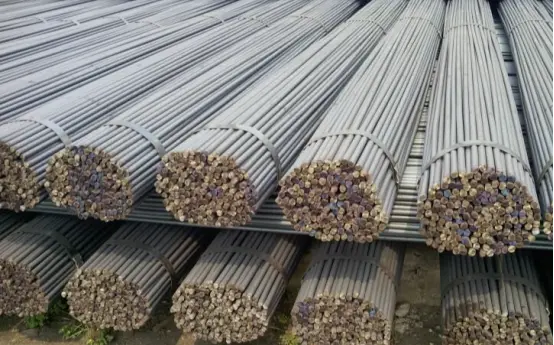
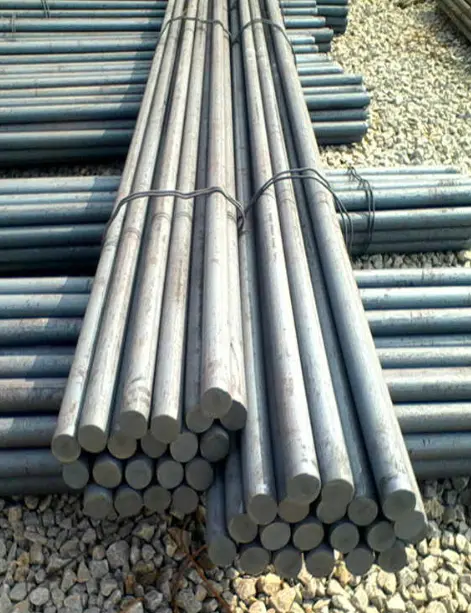
Hot Rolled Carbon Steel Round Bars
  • Hot Rolled Carbon Steel Round BarsHot Rolled Carbon Steel Round Bars
  • Hot Rolled Carbon Steel Round BarsHot Rolled Carbon Steel Round Bars

Hot Rolled Carbon Steel Round Bars

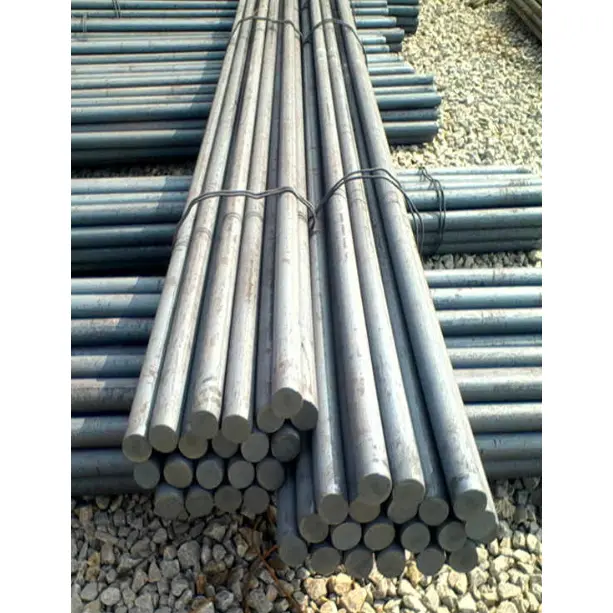
HAISHENG is a professional manufacturer and supplier of Hot Rolled Carbon Steel Round Bars in China. These products feature uniform texture, good toughness and ductility, and are easy to weld, bend, and machine. They are primarily used for embedded parts in steel structures, raw material for anchor bolts, tie rods, pins, small supports, and mechanical components.

These Hot Rolled Carbon Steel Round Bars are solid, round-section steel products manufactured according to the GB/T 702 standard. Common material grades include Q235B and Q355B, with specifications classified by diameter. They are widely used in construction, machinery, municipal engineering, and steel structure projects, serving frequently as connectors, small load-bearing members, and raw materials for further processing.

Hot Rolled Carbon Steel Round Bars

Key Product Features

I. Mechanical Properties

1. Solid round cross-section ensures uniform stress distribution and balanced tensile, compressive, and torsional performance; the material offers excellent overall toughness and ductility, making it resistant to brittle fracture.

2. Hot-rolled as a single piece, the bars feature a dense internal microstructure, stable strength, and good fatigue resistance, making them suitable for components subject to cyclic loading, such as pins and tie rods.

3. Flexural strength is relatively low; they are not suitable for use as primary load-bearing members subject to bending, such as main beams or columns.

II. Material and Processing Characteristics

1. High material purity ensures excellent performance in secondary processing operations—including cutting, turning, thread rolling, bending, welding, and forging—making them a common choice for machining.

2. Smooth, uniform surfaces and high dimensional accuracy facilitate threading and the manufacture of standard parts like bolts and embedded components.

III. Procurement and Economic Advantages

1. Comprehensive size range, ample stock, convenient procurement, and economical pricing result in low overall usage costs.

2. Efficient material usage for a given strength level; offers distinct advantages when used for small components and connectors.

IV. Construction and Application Features

1. Moderate self-weight facilitates easy handling, cutting, and on-site installation.

2. Compatible with various connection methods—including welding, sleeve connections, and threaded connections—allowing for flexible joint fabrication.

3. Supplied in hot-rolled smooth or "black" (mill-scale) finishes; can undergo treatments such as galvanizing, painting, or quenching and tempering to suit indoor, outdoor, and corrosive environments. V. Limitations on Use

Solid cross-sections consume a large amount of material; they are not cost-effective for applications involving long spans or heavy bending loads. They are primarily used for components such as tie rods, anchors, fasteners, and small-scale supports.

Hot Rolled Carbon Steel Round Bars

Uses and Scope of Application

I. Primary Uses

1. Fastener Raw Material: Hot Rolled Carbon Steel Round Bars can be processed into various standard connecting components, such as anchor bolts, standard bolts, threaded rods, studs, and rivets.

2. Load-bearing Members: Used as tie rods, struts, tension bars, and bracing rods in steel structures to withstand tensile forces and minor compressive loads.

3. Embedded Parts: Embedded anchor bars, lifting eyes, and anchoring connectors for construction and steel structure projects.

4. Mechanical Parts: Used to manufacture pins, shaft components, gear shafts, machine tool rods, and parts for agricultural and construction machinery.

5. Support and Protection: Small brackets, handrails, fences, fence posts, and frameworks for protective netting.

6. Processing Stock: Raw material for secondary processing into forgings, stamped parts, pipe fittings, etc.

7. Municipal and Civil Engineering Auxiliaries: Rebar tie strips, temporary supports, formwork tie rods, etc.

II. Scope of Application

1. Architectural Steel Structures: Tie rods, supports, embedded parts, and lifting eyes for factory buildings, warehouses, and steel frames.

2. Machinery Manufacturing: General machinery, construction machinery, agricultural machinery, hoisting equipment, and pressure vessel components.

3. Civil Engineering: Foundation embeds for buildings, formwork reinforcement, and concrete tension members.

4. Municipal Facilities: Road guardrails, municipal hoarding/barriers, outdoor railings, and street lamp foundation anchors.

5. Electromechanical and Utility Tunnels: Small pipe supports, equipment fasteners, and auxiliary rods for electromechanical installations.

6. Hardware and Standard Parts Industry: Specialized raw material for producing various screws, bolts, and fasteners.

7. Other Fields: Shipbuilding, metallurgy, warehouse shelving, and accessory components for prefabricated buildings.


Key Performance Parameters

Executive Standard: GB/T 702-2017

I. Common Materials and Mechanical Properties Table

Material Grade

Yield Strength ReL (MPa)

Tensile Strength Rm (MPa)

Elongation After Fracture (%)

Application Scenarios

Q235B

≥235

375~500

≥26

Ordinary tie rods, embedded parts, railings, common fasteners

Q355B

≥355

470~630

≥21

Heavy-duty tie rods, mechanical shafts, high-load anchor components

Supplementary Parameters:

· Modulus of Elasticity: 2.06 × 10⁵ MPa

· Room-temperature Impact Energy: ≥27 J; good toughness

II. Specification Designation and Standard Sizes

1. Designation Symbol: Φ; Format: Diameter (e.g., Φ12, Φ20)

2. Common Engineering Specifications (Diameter in mm)

· Small sizes (ribs, tie bars, small components): Φ8, Φ10, Φ12, Φ14, Φ16

· Medium sizes (embedded parts, tie rods, handrails): Φ18, Φ20, Φ22, Φ25, Φ28

· Large sizes (shafts, heavy-duty anchor bolts, forging billets): Φ30, Φ32, Φ40, Φ50, Φ60

III. Dimensional Tolerances and Standard Lengths

1. Standard Lengths: 6 m, 9 m, 12 m; can be cut to specific requirements

2. Diameter Deviation: Classified according to national standards; standard precision deviation is ±0.3–0.8 mm

3. Straightness: ≤2 mm per meter; total straightness deviation ≤0.2% of total length

4. Out-of-roundness: Within diameter tolerance range; ensures precision for assembly and threading

IV. Surface and Machining Properties

1. Delivery Condition: Hot-rolled black finish / Hot-rolled plain round bars with a surface oxide layer.

2. Processing properties: Excellent overall workability; suitable for cutting, turning, thread rolling, bending, welding, forging, and heat treatment. They serve as a primary raw material for standard parts and machined components.

3. Surface protection: Options include derusting, painting, hot-dip galvanizing, cold galvanizing, and black oxide treatment.

V. Load-bearing and usage characteristics

1. Solid circular cross-section ensures uniform load distribution in all directions, with balanced tensile, compressive, and torsional strength.

2. Low bending resistance; not suitable for use as primary load-bearing beams subject to bending or for long-span load-bearing components.

3. Strong adaptability to high and low temperatures; standard operating temperature range: [℃] to [℃].

VI. Connection methods

Hot Rolled Carbon Steel Round Bars can be joined via welding, threaded connections, sleeve connections, or riveting, making them suitable for various applications in construction embeds and mechanical assembly.

Formula for calculating the theoretical weight of round steel: Outer Diameter × Outer Diameter × 0.00617 = kg/m

Round steel diameter d (size)

Theoretical weight (kg/m)

Round steel diameter d (size)

Theoretical weight (kg/m)

5.5

0.186

13

1.04

6

0.222

14

1.21

6.5

0.26

15

1.39

7

0.302

16

1.58

8

0.395

17

1.78

9

0.499

18

2

10

0.617

19

2.23

11

0.746

20

2.47

12

0.888

21

2.72

22

2.98

63

24.5

23

3.26

65

26

24

3.55

68

28.5

25

3.85

70

30.2

26

4.17

75

34.7

27

4.49

80

39.5

28

4.83

85

44.5

29

5.18

90

49.9

30

5.55

95

55.6

31

5.92

100

61.7

32

6.31

105

68

33

6.71

110

74.6

34

7.13

115

81.5

35

7.55

120

88.8

36

7.99

125

96.3

38

8.9

130

104

40

9.86

140

121

42

10.9

150

139

45

12.5

160

158

48

14.2

170

178

50

15.4

180

200

53

17.3

190

223

55

18.6

200

247

56

19.3

220

298

58

20.7

250

385

60

22.2


FAQ

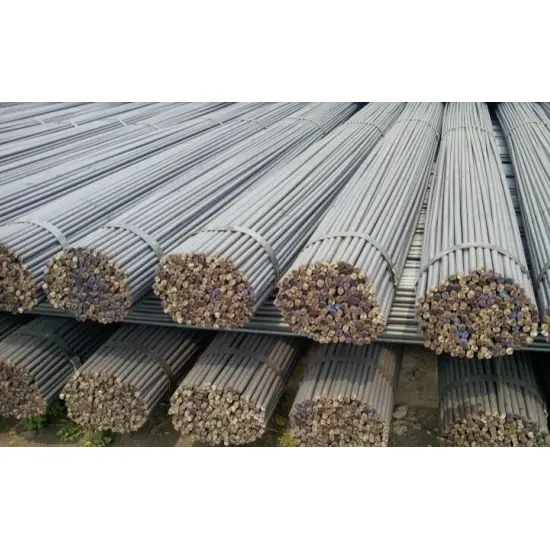
Q1: What is the difference between round bars and rebar (deformed bars)?

A: Round bars have a smooth surface and are primarily used for fasteners (bolts, anchor bolts), tie rods, pins, and embedded parts where precision machining (threading, turning) is required. Rebar (deformed bars) has ribbed surfaces for better bonding with concrete and is primarily used as concrete reinforcement. Round bars offer better dimensional accuracy for machining; rebar is not suitable for threading or precision parts.


Q2: How to calculate the weight of round bars?

A: Use the formula: Weight (kg/m) = Diameter (mm) × Diameter (mm) × 0.00617. Example: Φ20 round bar = 20 × 20 × 0.00617 = 2.47 kg/m. HAISHENG provides a complete weight table for diameters from Φ5.5 to Φ250.


Q3: What are the common diameters available for Hot Rolled Carbon Steel Round Bars?

A: Common diameters include Φ8, Φ10, Φ12, Φ14, Φ16 (small sizes for tie bars and small components), Φ18, Φ20, Φ22, Φ25, Φ28 (medium sizes for embedded parts and tie rods), and Φ30, Φ32, Φ40, Φ50, Φ60 (large sizes for shafts and heavy-duty anchor bolts). Custom diameters are also available upon request.


Q4: Can round bars be used for structural load-bearing members?

A: Round bars are suitable for members subjected to tension, compression, or torsion (tie rods, struts, pins, anchor bolts). They are NOT suitable for primary load-bearing members subjected to bending (main beams or columns) because the solid circular cross-section has low bending resistance. For bending applications, use H-beams or channels instead.


Q5: What surface treatments are available for round bars?

A: Round bars are delivered in hot-rolled "black" (mill scale) finish. Secondary treatments include: 

(1) Hot-dip galvanizing — for outdoor/coastal corrosion protection;

(2) Paint coating — for indoor or light outdoor use; 

(3) Black oxide — for dry indoor environments; 

(4) Cold galvanizing (electro-galvanizing) — for light corrosion protection with smooth finish. All treatments can be applied after machining (cutting, threading, drilling).


Hot Tags: Hot Rolled Carbon Steel Round Bars, Supplier, Manufacturer
Send Inquiry
Contact Info
Contact HAISHENG China supplier of Structural Steel Components, Steel Structure Cladding Components and Structural Steel Fasteners. Our professional sales team will reply with detailed quotation, product parameters and delivery plan within 24 hours to meet your bulk procurement demand.
X
We use cookies to offer you a better browsing experience, analyze site traffic and personalize content. By using this site, you agree to our use of cookies.Privacy Policy
RejectAccept