Tianjin Haisheng Steel Structure Co., Ltd.
Products
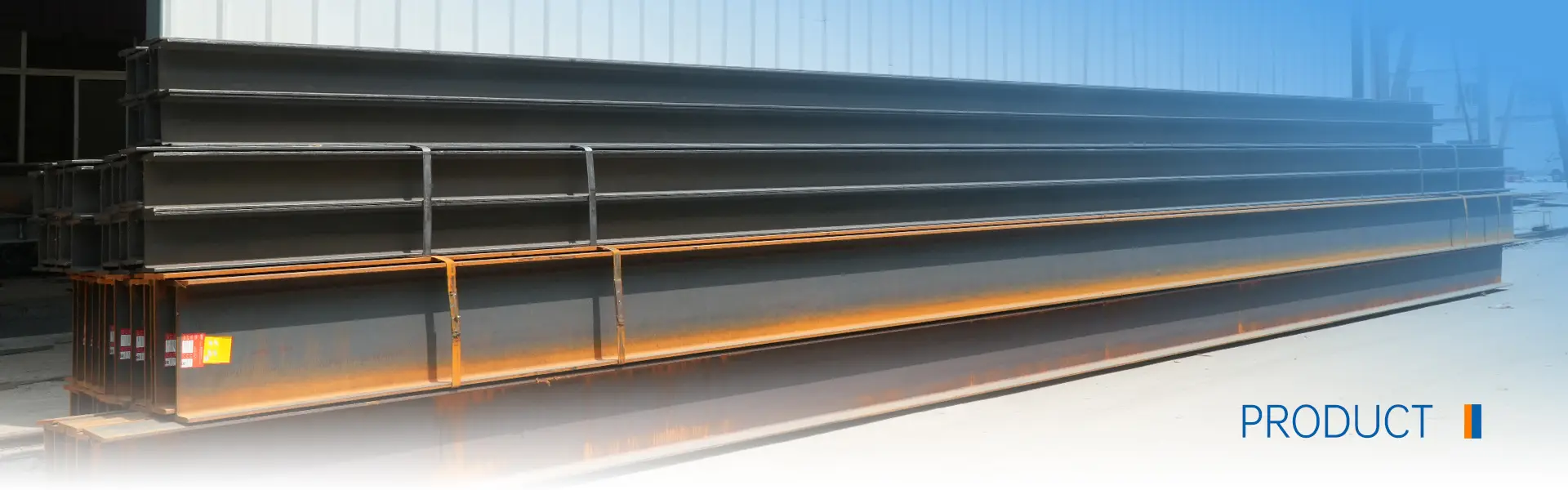
Heavy Duty H Section Steel Beam
  • Heavy Duty H Section Steel BeamHeavy Duty H Section Steel Beam

Heavy Duty H Section Steel Beam

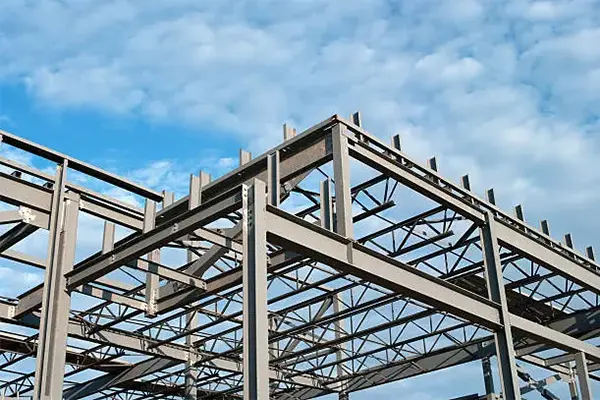
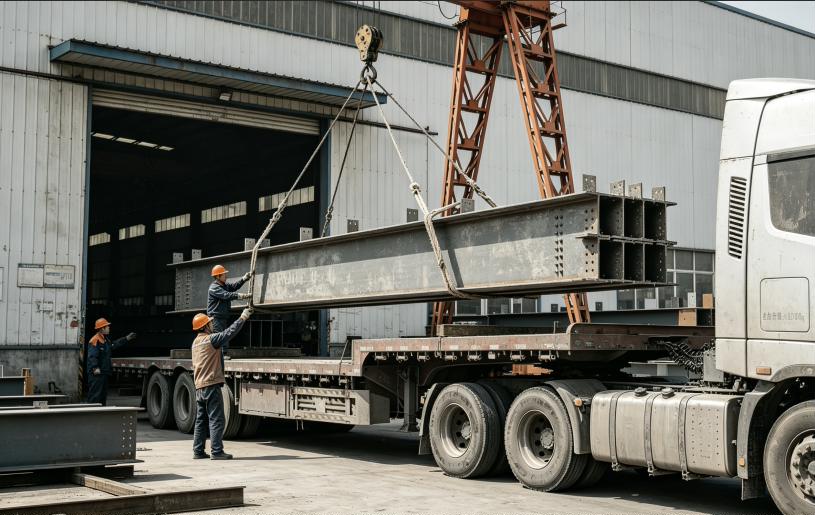
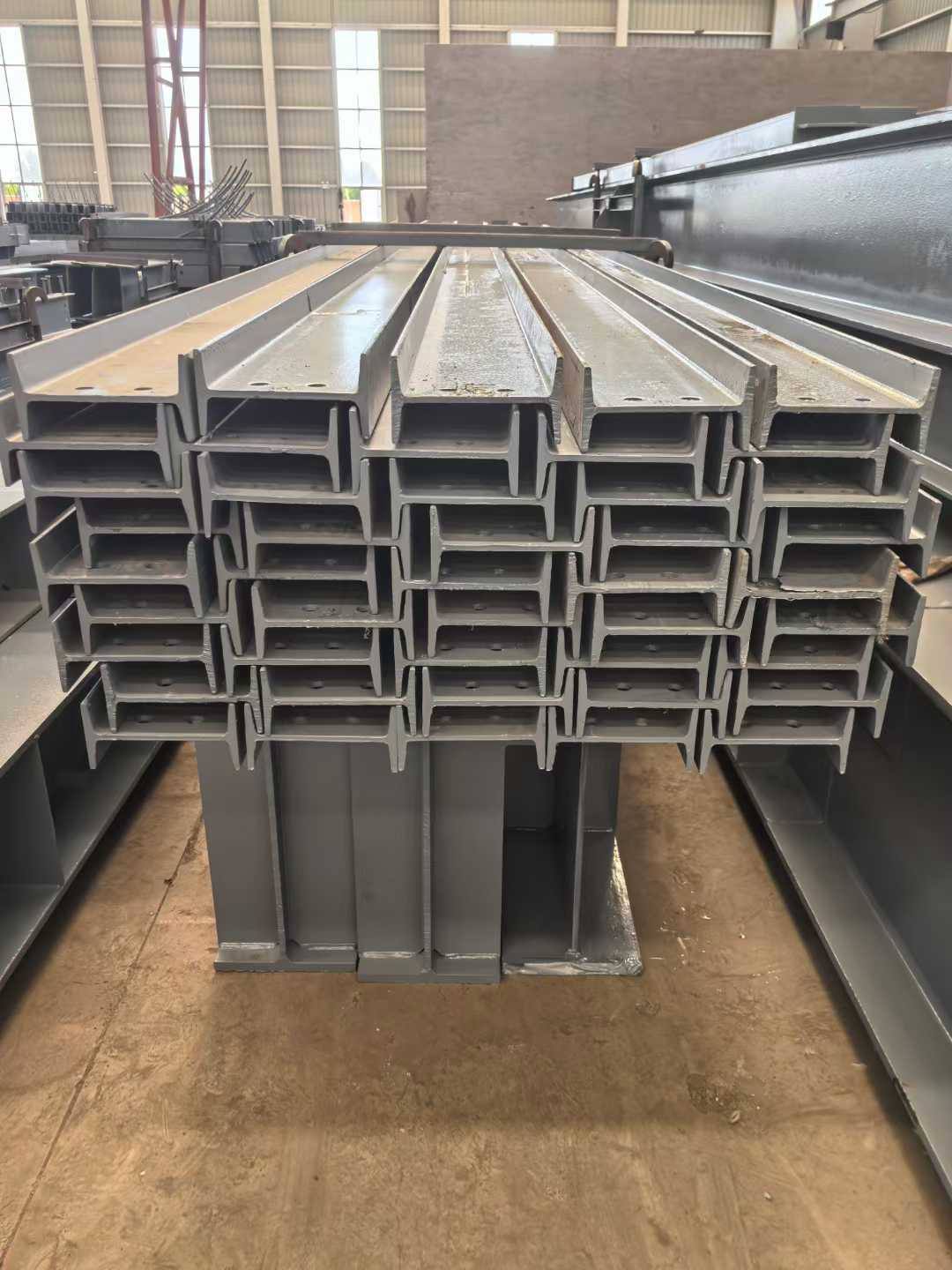
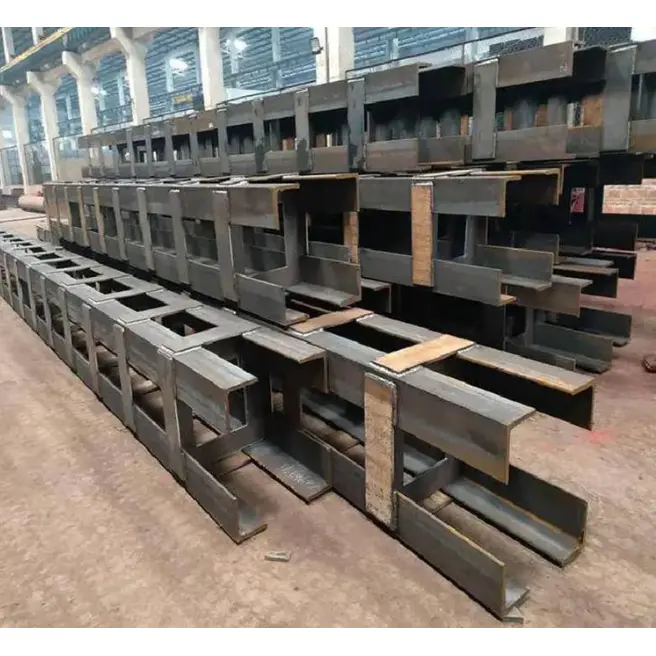
As a professional manufacturer of structural steel in China, HAISHENG handles all procurement needs—including custom processing, bulk orders, and on-time delivery—for Heavy Duty H Section Steel Beam. We supply Q235B/Q355B hot-rolled and welded H-beams, complete with end connections and anti-corrosion/fire-resistant treatments, suitable for multi-story industrial plants and large-span portal frame roof structures requiring horizontal load-bearing capacity.

Heavy Duty H Section Steel Beam are the most widely used horizontal load-bearing components in steel construction. Unlike I-beams, box beams, or circular hollow sections—which have inherent structural limitations—H-beams optimize load distribution through a distinct flange-and-web cross-sectional design.

HAISHENG utilizes a dual-production model combining hot-rolled mass production with welded plate fabrication, catering to everything from standard stock items to custom heavy-duty and variable-section beams. Our products arrive fully prefabricated—including end-plate welding, stiffener assembly, Sa2.5-grade shot blasting, and multi-layer coating—eliminating the need for on-site finishing. They are ready for immediate hoisting and connection, effectively addressing three major procurement challenges for overseas projects: on-site welder shortages, tight construction schedules, and difficulties with future structural modifications. They are the optimal choice for floor main beams and roof rigid frame beams.

Heavy Duty H Section Steel Beam

Product Classification and Cross-Section Overview

1. Classification and Application Scope

- Hot-Rolled H-Beams: Standard profiles formed via a single hot-rolling process at the steel mill, featuring fixed dimensions and tight tolerances. Advantages include rapid delivery, lower unit costs, and the absence of residual welding stress. However, they only allow for length-based cutting (cross-sectional dimensions cannot be modified) and are best suited for standard industrial plant secondary beams with spans ≤18m and conventional loads.

- Welded H-Beams: Fabricated by assembling separate web and flange plates using automatic submerged-arc welding; all parameters—such as section height, flange width, and plate thickness—are fully customizable. Capable of producing variable-section beams (tapered beams), they are the mainstream choice for non-standard projects involving spans >18m, heavy crane loads, and complex portal frame roof structures.

2. Standardized Industry Cross-Section Labeling

- Labeling Formula: H×B×tw×tf (universally understood in the industry without ambiguity; compatible with global drawing review standards)

- Parameter Definitions: H = Total beam height; B = Flange outer width; tw = Web thickness; tf = Flange thickness

- Example: H600×200×10×16 indicates a beam height of 600mm, flange width of 200mm, web thickness of 10mm, and flange thickness of 16mm.

3. Material Grading and Low-Temperature Suitability

- Standard Ambient Conditions: Q235B, Q355B (covers 90% of global indoor and temperate outdoor projects)

- Low-Temperature/Alpine Conditions: Q355NL mandatory (certified for impact toughness at -20°C to prevent brittle fracture; required for projects in Northern Europe, Russia, and Inner Mongolia)


Factory Delivery Checklist

1. Beam Body Classification

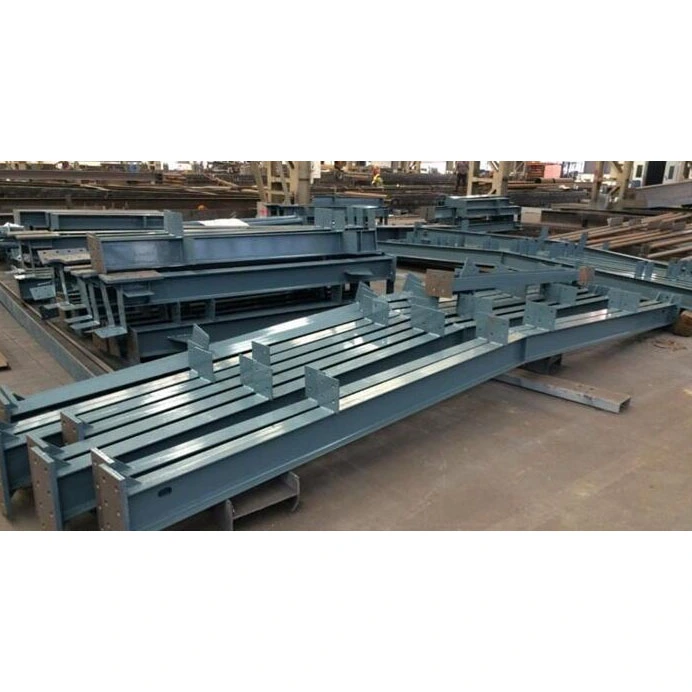
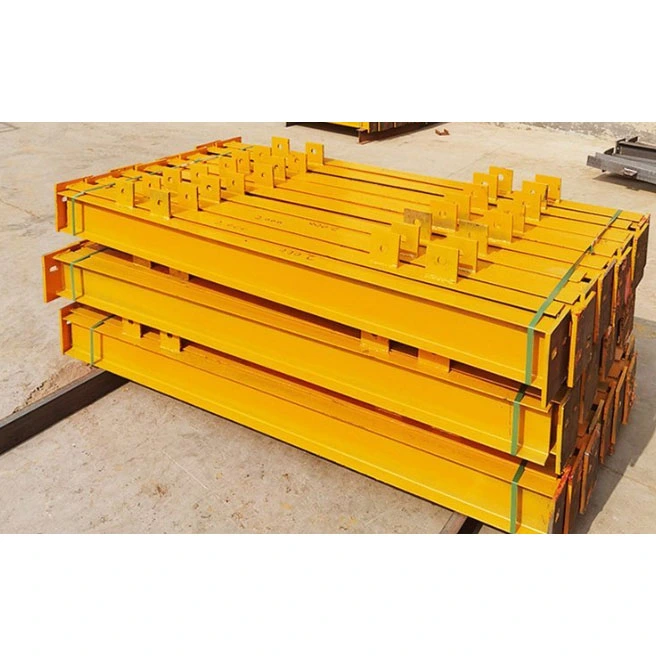
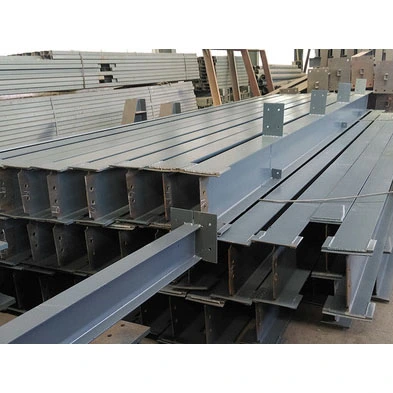
- Constant Cross-Section Straight Beams: Heavy Duty H Section Steel Beams with uniform dimensions throughout; used for primary and secondary beams in multi-story frames and equipment platforms.

- Variable Cross-Section Tapered Beams: Greater height at mid-span and tapered ends; specifically designed for portal rigid frame factory roofs to reduce support bending moments and save steel.

- Extra-Long Spliced Beams: Prefabricated in segments for lengths exceeding 12m; includes pre-prepared butt-weld bevels for on-site splicing with Grade I welds.

2. Standard End-Support Components

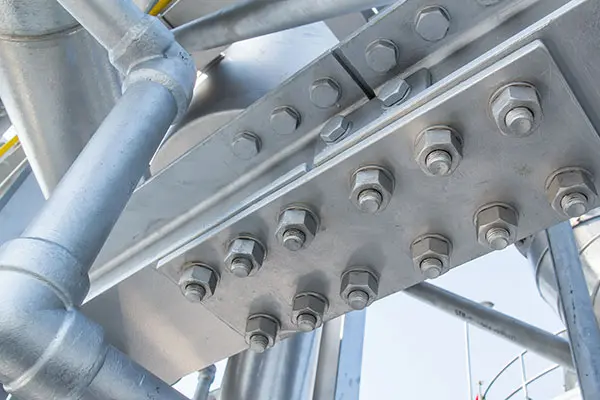
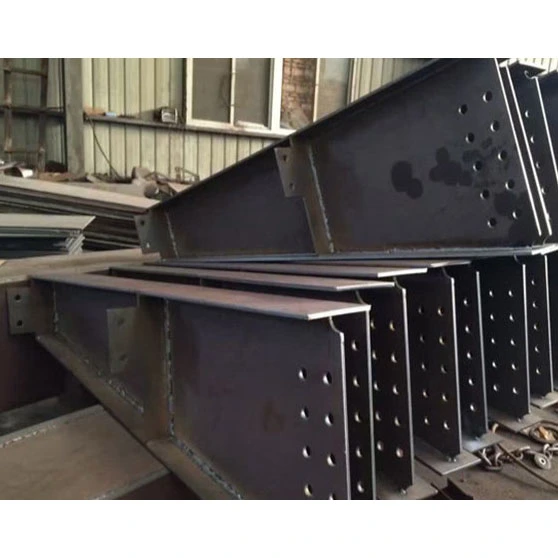
- Bolted End Plates: Thickness 16–40mm; selected based on support reaction forces; pre-drilled for high-strength bolts; the preferred choice for 90% of rigid beam-to-column connections (no hot work required on-site).

- Welded Bevel Ends: V-shaped bevels on both sides of flanges and webs; used for high-rise mega-frames requiring full-penetration welding on-site.

- Support Transverse Stiffeners: Standard feature in peak shear zones at beam supports; prevents local web buckling/collapse under bearing loads; mandatory under national structural standards.

3. Mid-Span Auxiliary Structures

- Mid-span transverse stiffeners: Positioned at points of concentrated equipment loads and vertical crane loads to suppress web shear buckling.

Secondary beam corbel connection plates: Prefabricated and welded to the main beam web for pinned connections with secondary beams, eliminating the need for on-site drilling or cutting.

Utility opening reinforcement plates: Annular reinforcement for web openings (plumbing, electrical, fire protection) to prevent structural capacity reduction caused by the cutouts.

4. Hoisting and temporary auxiliary components

Prefabricated lifting lugs: Pre-installed at the factory for long-span beams weighing over 3 tons; designed to meet hoisting structural calculations; on-site ad-hoc welding of lifting lugs is prohibited.

Temporary positioning cleats: Used for alignment during on-site assembly of multi-segment beams; ground off after completion to ensure surface smoothness.

5. Anti-corrosion and fire-resistant surface treatments

General indoor use: Sa2.5 shot-blasting + epoxy zinc-rich primer + micaceous iron oxide intermediate coat + polyurethane topcoat; dry film thickness: 80–120 μm.

Fire-rated zones: Additional application of thin-film or thick-film intumescent fire-resistant coatings to meet 1-hour, 2-hour, or 3-hour fire safety inspection requirements.

Coastal/chemical corrosive zones: Hot-dip galvanizing replaces the paint system; zinc coating thickness ≥85 μm; salt spray corrosion resistance >18 years.

6. Installation consumables and factory documentation included with shipment

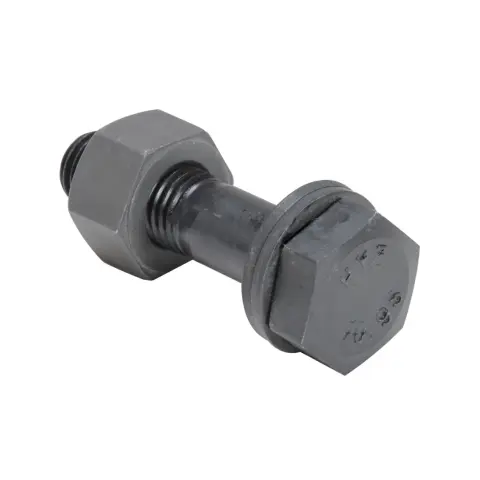
Consumables: Grade 8.8 and 10.9 high-strength bolts, flat washers, and beveled washers; sized to match end-plate holes, eliminating the need for secondary procurement.

Inspection documentation: Original material quality certificates, 100% ultrasonic testing (UT) reports for Grade 1 welds, 3D dimensional verification records, and component unique ID logs; all documentation is suitable for overseas customs clearance and owner internal audits.


Advantages of Heavy Duty H Section Steel Beams

1. Ample flexural redundancy; prevents future roof sagging and water leakage.

Flanges are concentrated at the top and bottom edges where bending stress is highest; the section modulus about the strong axis far exceeds that of an I-beam of the same weight. Load verification confirms that the long-term vertical deflection of standard 15m-span roof beams remains below the L/400 limit, preventing common post-construction issues such as roof purlin deformation, tearing of waterproofing membranes, and roof leakage.

2. Lightweight structure reduces foundation and civil engineering costs

Compared to box beams of equivalent load-bearing capacity, the self-weight is reduced by 22%–30%, thereby lowering the vertical load transmitted to steel columns and foundations. There is no need to enlarge isolated footing dimensions, directly reducing costs for reinforcement steel, concrete, and earthwork excavation; this makes the system highly suitable for the reinforcement and renovation of aging industrial facilities.

3. Dry on-site construction suits regions with labor shortages

95% of the fabrication for bolted H-beams is completed in the factory; on-site work is limited to hoisting and bolting, allowing for the installation of 8–12 beam-column bays per day. As certified high-pressure welders are not required, the system effectively addresses the issues of welder scarcity and high labor costs often encountered at overseas sites in Southeast Asia and Africa.

4. Fatigue, wind, and seismic resistance suitable for long-term cyclic loading

Residual welding stresses are fully eliminated through hydraulic straightening, enabling the structure to withstand the reciprocating movement of overhead cranes and cyclic lateral loads from strong winds. No additional lateral bracing is required in Seismic Intensity 8 zones, and the structural fatigue life meets the 50-year design service life requirement.

5. High compatibility for future modifications reduces renovation and expansion costs

The open-web design avoids enclosed cavities, allowing for the installation of equipment supports, new piping, or structural openings without compromising the internal anti-corrosion coating. This offers significant advantages over box beams (which lack internal access) and circular hollow sections (where cutting openings compromises anti-corrosion integrity), resulting in a reduction of over 60% in costs for future modifications and expansions.

6. Dual production pathways ensure flexible and controllable delivery schedules

Standard hot-rolled beams are available for shipment within 3 days, while custom welded variable-section beams are delivered within 12–18 working days. Production methods can be flexibly switched based on project urgency, helping to avoid penalties associated with schedule delays.


Horizontal Differentiation Analysis Across Product Categories

1. Structural Load-Bearing Differentiation

- vs. I-beams: I-beams feature inclined inner flange surfaces, resulting in wasted material at the edges and high susceptibility to lateral instability along the weak axis; in contrast, H-beams have parallel inner and outer flange surfaces, improving material utilization by 17% and allowing purlins to be laid directly on the flanges.

- vs. Box Beams: Box beams offer balanced bi-directional stiffness but suffer from excessive self-weight and inaccessible internal cavities for rust removal; H-beams feature distinct strong and weak axes, allowing for targeted reinforcement of stiffness on one side and reducing costs by 35%.

- vs. Circular Hollow Section (CHS) Beams: CHS beams provide uniform stiffness in all directions but cannot support flat floor decking on their top surfaces; while they offer low wind resistance, they are unsuitable as primary floor beams and are typically limited to use in cantilevered landscape structures.

2. Differentiation in Joint Construction

- Beam-to-column connections: Three exposed faces allow for the universal use of three connection types—bolted end-plates, groove-welded joints, and bracket (corbel) lap joints—offering the highest level of standardization in industry drawings.

- Secondary beam connections: The flat web of the main beam allows for vertical welding of connection plates with controllable perpendicularity; in contrast, connecting to curved surfaces (like round or square tubes) often leads to eccentric loading.

- Variable cross-section fabrication: Shaping is achieved simply by cutting the web; the fabrication cost per unit is only 40% that of variable-section box beams.

3. Differentiation in Corrosion Protection and Maintenance

- Corrosion protection: No enclosed cavities; shot blasting and painting provide full coverage with no blind spots, eliminating risks of internal water accumulation and rusting.

- Maintenance and inspection: Welds and rust conditions can be visually inspected from the outside without endoscopes, making maintenance extremely simple.

4. Final Selection Conclusions

- Heavy Duty H Section Steel Beams: Multi-story factory buildings, portal rigid frame roofs, and concrete composite floor systems.

- Box beams: Large-scale, heavy-load projects with spans >36m or crane capacities ≥50t.

- Round pipe beams: Architectural facade features and small cantilevered canopies.

- I-beams: Temporary simple supports and miscellaneous secondary roof beams.


Ten-Step Standardized Mass Production Process

1. Incoming raw material inspection

- Hot-rolled sections: Verify mill material certificates, re-measure web and flange thicknesses, and check for surface laminations or cracks.

- Raw steel plates: Flattening to eliminate rolling-induced warping and re-measuring flatness; non-compliant plates are immediately returned.

2. CNC precision cutting

- Hot-rolled beams: Cut using CNC sawing machines, with a 2mm allowance reserved for welding shrinkage.

- Welded Beams: Flame cutting machines are used to cut webs and flanges separately; for variable-section webs, curved transition bevels are cut.

3. Assembly on Jigs

Specialized fixed jigs provide positioning constraints, keeping web centering deviation within 2mm and ensuring simultaneous vertical alignment of both flanges; tack welding secures the assembly to prevent misalignment.

4. Double-sided Automatic Submerged Arc Welding (SAW)

Single-sided root pass welding → workpiece turnover and root gouging/cleaning → full welding on the reverse side to eliminate incomplete root penetration; critical main beam welds undergo 100% Ultrasonic Testing (UT) to Level I standards.

5. Hydraulic Correction of Welding Stresses

To address flange inward curling and beam lateral bending, dual correction methods using flange straighteners and beam straighteners are employed to eliminate internal welding stresses and prevent subsequent spring-back deformation.

6. Assembly and Welding of Ancillary Components

Precise layout marking based on drawings; sequential welding of bearing stiffeners, secondary beam corbels, purlin cleats, and end plates, with strict control over welding deformation.

7. Precision CNC Hole Making

High-strength bolt holes are formed in a single pass using 3D CNC drilling machines (hole diameter tolerance ±0.3mm); miscellaneous process holes are cut via plasma and then deburred.

8. Finished Product Surface Finishing

Grinding of weld beads, spatter, and cutting marks; marking of component numbers and axis elevations to facilitate on-site lifting and alignment.

9. Sa2.5 Grade Rust Removal and Multi-layer Coating

Full-surface rust removal via pass-through shot blasting machine, achieving a surface roughness of 40–75μm to ensure paint adhesion; layered application of primer, intermediate coat, and topcoat, with additional fire-resistant coating applied in designated fire-protection zones.

10. Final Inspection, Packaging, and Dispatch

Verification of straightness, cross-sectional dimensions, and paint film thickness; compilation of complete quality inspection records; packaging to cross-border standards using rainproof stretch wrap and wooden pallets.

Supplement: Special Process for Variable-section Beams

Cutting of irregular webs → assembly on sectional jigs → bevel butt welding → overall secondary straightening; all other processes are identical to those for standard beams.


Comprehensive Technical Performance Parameters

1. Finished Product Geometric Machining Tolerances

- - Longitudinal straightness of the beam body: ≤L/1000 (where L is the total beam length)

- Lateral verticality of the flange: ≤B/100 (where B is the flange width)

- Cross-sectional dimensional deviation (length/width): ±2–3 mm

2. Mechanical properties of the base material (Heavy Duty H Section Steel Beam)

Material Grade

Yield Strength (ReL)

Tensile Strength (Rm)

Application Scenarios

Q235B

≥235MPa

375~500MPa

Ordinary factory, secondary roof beam

Q355B

≥355MPa

470~630MPa

Heavy-duty workshop, multi-story main floor beam

Note: Q355NL with qualified low-temperature impact test shall be adopted for low-temperature construction areas.

3. Implicit structural parameters

- Strong-axis bending resistance: Industry-leading section modulus about the X-axis; minimizes steel consumption for a given load

- Shear force distribution: The web bears 100% of the vertical shear force; flanges do not contribute to shear resistance, resulting in clear load boundaries that simplify structural verification

- Wind resistance coefficient: 1.3–1.5 (lower than box girders but higher than circular hollow sections); offers a balanced fit for temperate coastal wind-load zones

- Lateral stability: The top flange is directly connected to floor slabs or purlins, eliminating the need for additional lateral bracing and simplifying structural drawings

4. Weld inspection and acceptance standards

- Grade I welds: Main beam splices and load-bearing welds at supports; 100% Ultrasonic Testing (UT) required; zero-defect standard

- Grade II welds: Secondary welds for stiffeners and connection plates; 20% random sampling inspection; weld strength must not be lower than that of the base material

5. Connection specifications

- High-strength bolts: Grade 10.9 preferred for rigid beam-to-column connections; Grade 8.8 used for secondary pinned connections

- Shear studs: Standard Φ16/Φ19 studs on the top flange for composite concrete floor slabs, ensuring synergistic load-bearing action between steel and concrete


Why Choose HAISHENG?

1. Reliable Capacity Across Multiple Bases & Stable Cross-Border Delivery

Production is distributed across four major steel structure fabrication bases (Tianjin, Fujian, Shandong, and Hubei) to enable localized logistics and shipping. We maintain ample stock of standard Heavy Duty H Section Steel Beams for dispatch within 48 hours. For non-standard welded beams, we operate 12 proprietary submerged-arc welding lines, allowing us to bypass peak-season capacity bottlenecks and ensure on-time shipment of full-container orders for overseas clients.

2. Comprehensive Third-Party Quality Inspection & Compliance with Overseas Factory Audit Standards

We maintain an independent internal quality inspection department and commission third-party agencies to verify every batch of main beams regarding flaw detection, paint film thickness, and material specifications. Original English inspection reports are provided, meeting the engineering tender and entry standards of countries across Africa, Southeast Asia, and Central Asia, eliminating the need for clients to conduct additional testing.

3. Free Detailed Design & Drawing Optimization to Prevent Errors and Material Waste

Our 12-person overseas steel structure detailing team optimizes connection details and verifies load calculations in accordance with local standards (BS, EN, GB). We proactively correct issues such as beam-column clashes and plate thickness mismatches found in original drawings, reducing on-site material waste by an average of 8%.

4. One-Stop Cross-Border Support Services

We provide export fumigation, moisture-proof and anti-rust packaging, multilingual installation guidance videos, and customs clearance documentation services. For overseas project sites, we can dispatch certified steel structure engineers to provide on-site installation guidance, overcoming communication barriers associated with remote construction.

5. Long-Term Warranty & Repair Support

Provided there is no man-made overloading, we offer a 3-year warranty on paintwork, a 15-year warranty on hot-dip galvanizing, and lifetime technical support for the main structure. Factory-assigned component numbers ensure traceability, and replacement parts of the same specifications remain available for up to 10 years.


FAQ

Q1: Must variable-section H-beams be used for portal frame roof beams?

A: For spans ≤15m with standard roof loads, constant-section H-beams can be used to lower costs. For spans >15m or where roof loads (rain/snow) are significant, variable-section beams are required; these can reduce steel consumption by 15%–20% while simultaneously lowering shear forces at the supports.


Q2: How do I quickly choose between welded H-beams and hot-rolled H-beams?

A: Choose hot-rolled beams for standard dimensions and tight schedules; choose welded beams for non-standard cross-sections, variable depths, extra-long spans, or special plate thicknesses. Hot-rolled beams are free from welding stresses and suitable for low-temperature regions, whereas welded beams offer greater customization flexibility.


Q3: Will cutting openings in the web of an H-beam affect structural safety?

A: Small openings reinforced with stiffener plates in the low-shear zone (mid-span) do not compromise safety; however, openings are strictly prohibited in the high-shear zone near supports, as they can easily trigger web shear failure. Our detailed design drawings clearly mark these prohibited zones.


Q4: What anti-corrosion solution is recommended for overseas regions with high salt-spray exposure?

A: Hot-dip galvanizing is mandatory for coastal areas within 5 km of the shore, as paint systems will inevitably peel and rust within 3–5 years; for inland coastal areas, high-build epoxy topcoats offer better overall cost-effectiveness.


Q5: How are beams handled if they are too long for standard vehicle transport?

A: Beams exceeding 12 meters are prefabricated in segments with precision-machined weld bevels. On-site splicing uses Grade I full-penetration butt welds; once ultrasonic testing confirms weld integrity, the spliced beam performs identically to a continuous one and meets structural acceptance standards.


Q6: How is end-plate thickness determined? Can a standard thickness be used across the board?

A: A universal standard cannot be applied; end-plate thickness is calculated based on the maximum support reaction force, typically ranging from 16 mm to 40 mm. Indiscriminate use of thin plates can lead to end-plate bending or bolt slippage; we provide free thickness calculations based on project-specific loads.


Hot Tags: Heavy Duty H Section Steel Beam, Manufacturer, Customized, Supplier
Send Inquiry
Contact Info
Contact HAISHENG China supplier of Structural Steel Components, Steel Structure Cladding Components and Structural Steel Fasteners. Our professional sales team will reply with detailed quotation, product parameters and delivery plan within 24 hours to meet your bulk procurement demand.
X
We use cookies to offer you a better browsing experience, analyze site traffic and personalize content. By using this site, you agree to our use of cookies.Privacy Policy
RejectAccept