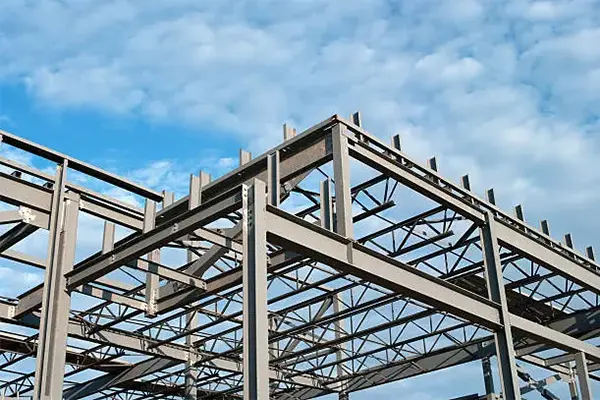
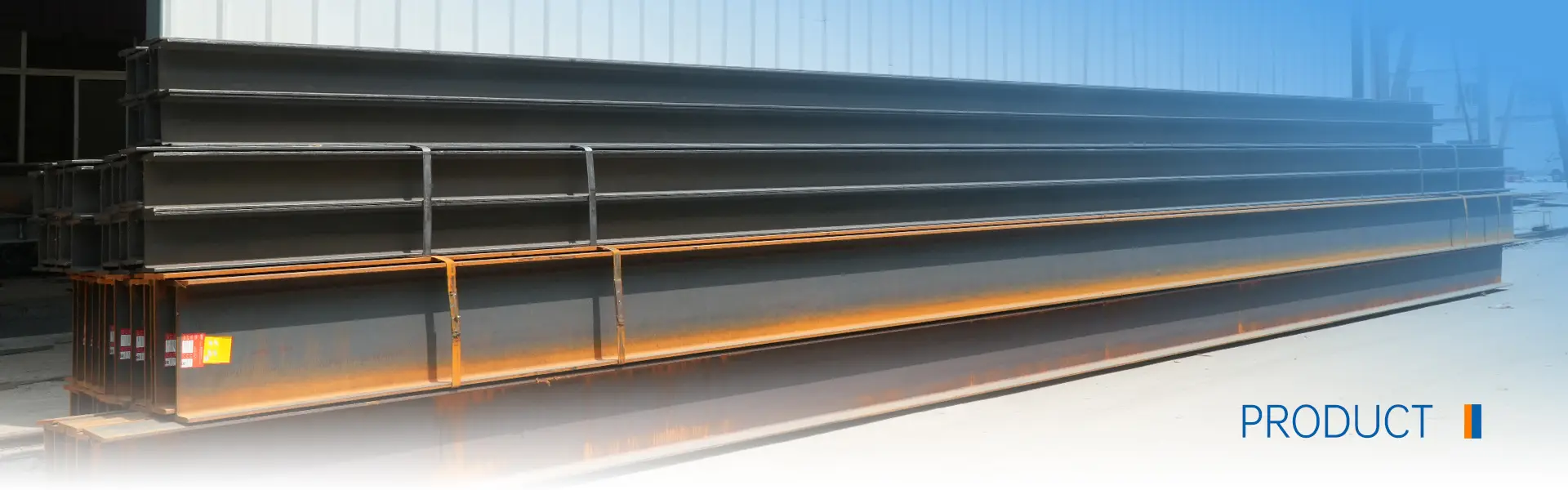
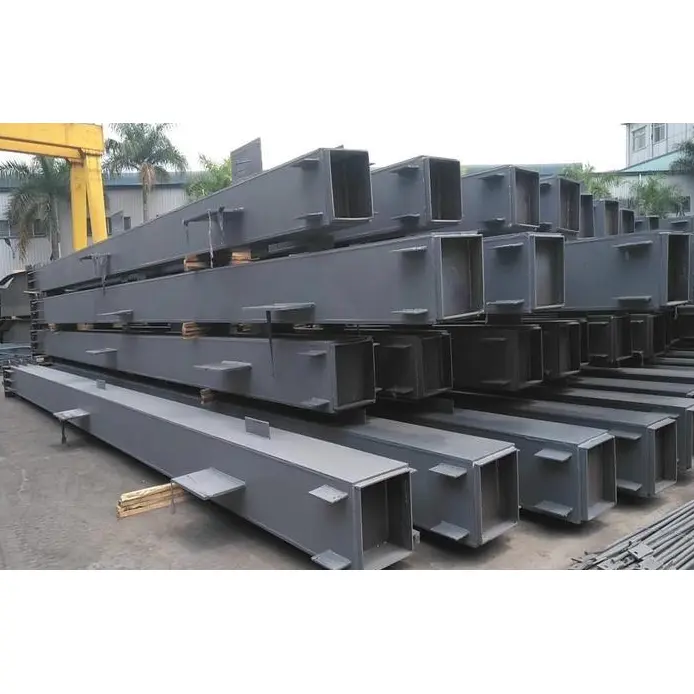
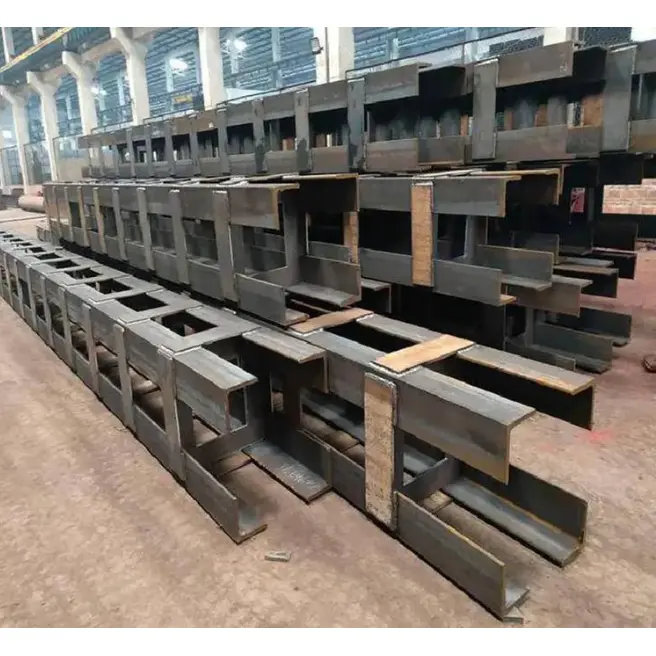
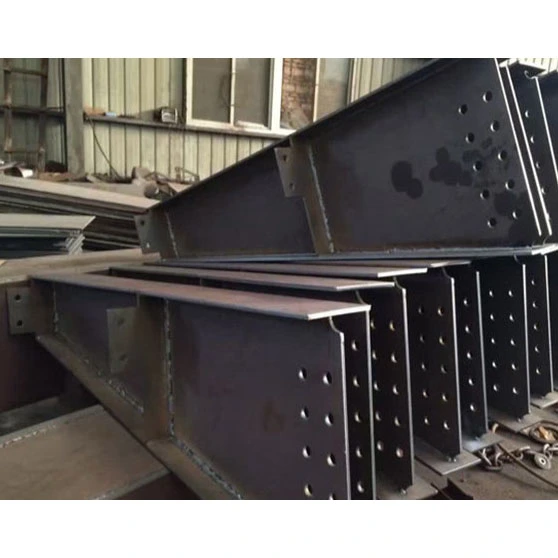
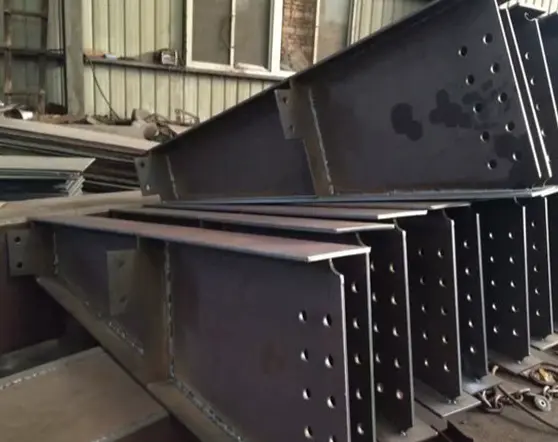
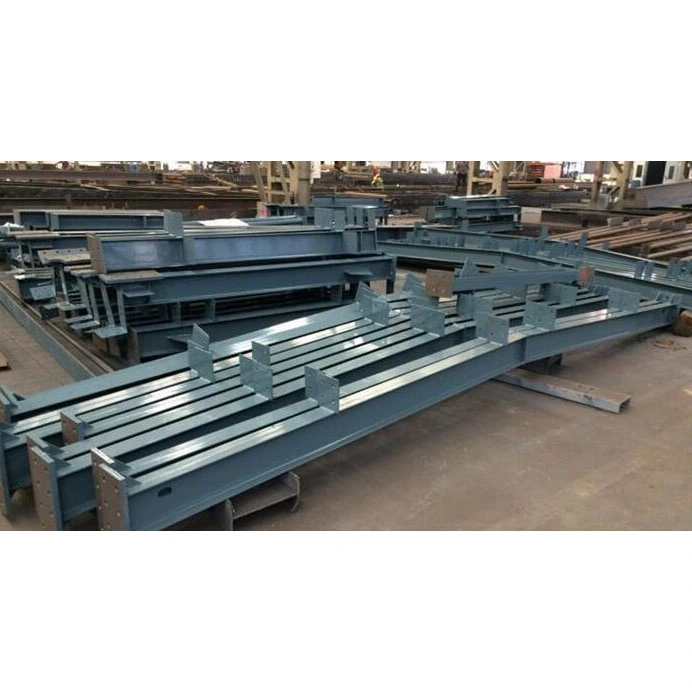
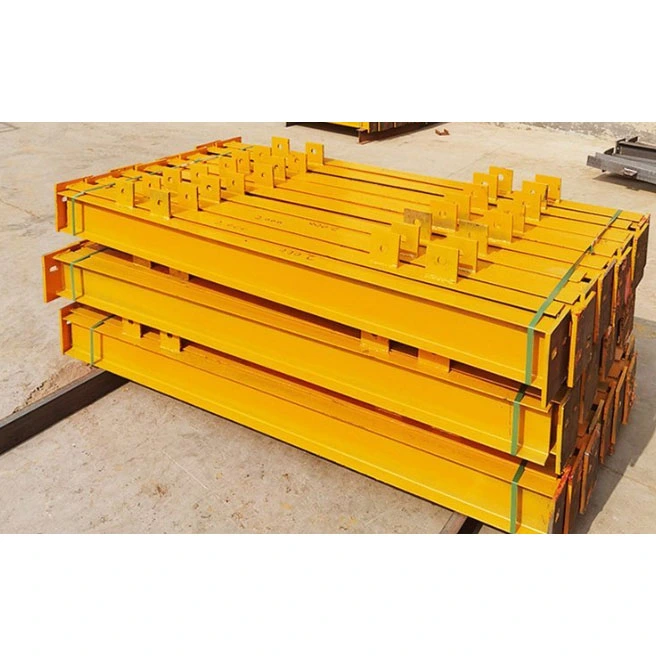
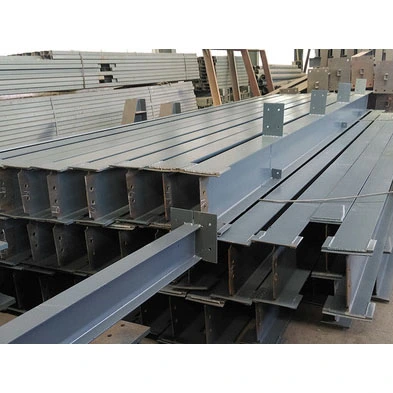
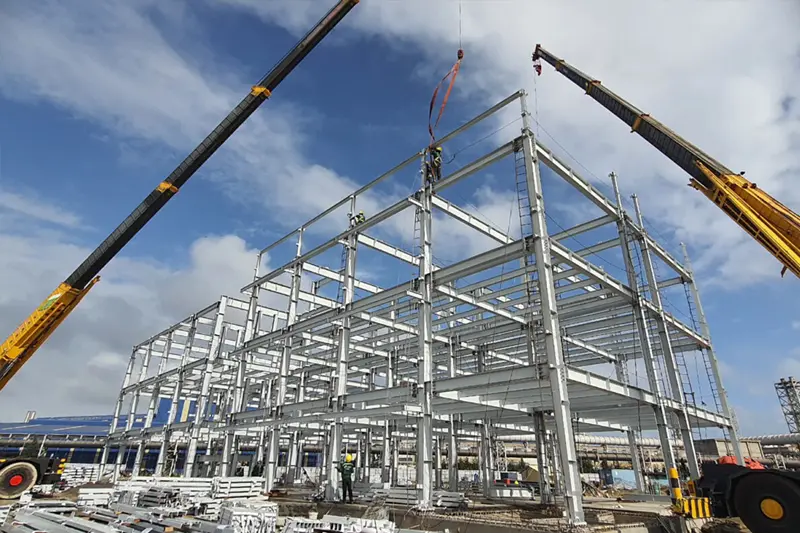
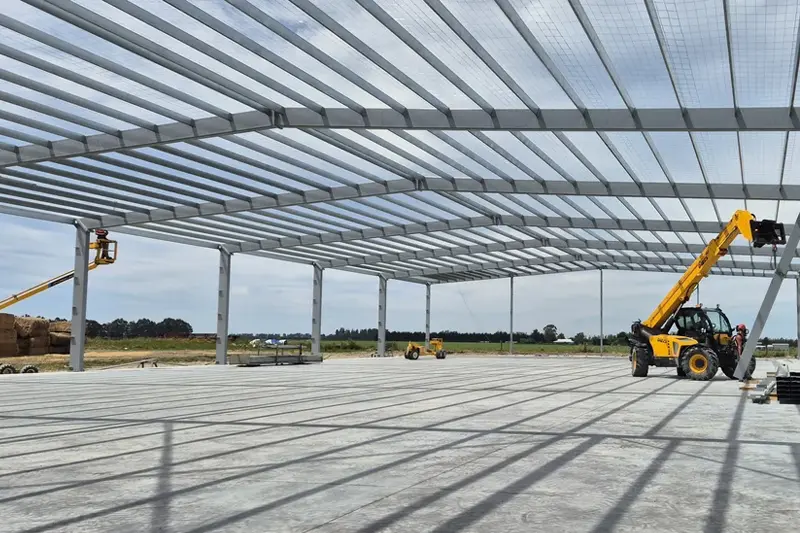
As a reliable manufacturer and one-stop supplier of steel structures, HAISHENG offers ready-stock Primary Load Bearing Steel Beams specifically designed for constructing steel mezzanines, interior intermediate floors, and elevated platforms. Fabricated from high-strength profiles—such as H-beams and I-beams—these beams undergo precision cutting, end treatment, hole drilling, splicing, reinforcement welding, and anti-corrosion painting. Serving as the core structural framework for the mezzanine, they bear the entire load of the upper floor and distribute it evenly to the vertical steel columns; as the most critical load-bearing components, they ensure the stability and safety of the platform.
These Primary Load Bearing Steel Beams are the central components responsible for transferring vertical loads within the steel framework. Unlike secondary beams (such as standard I-beams or channel steel) that handle localized or distributed loads, these primary beams support the concentrated loads from the floor decking, secondary beams, equipment, and roofing, transferring them stably to the vertical steel columns. The product line comprises three main categories—welded H-beams, variable-section H-beams, and box-section beams—all fabricated from steel plates using submerged-arc welding and subjected to comprehensive non-destructive testing (NDT) as well as multi-stage anti-corrosion and fire-resistant treatments.
Product Category Classification
1. Application Scope of Three Main Beam Categories
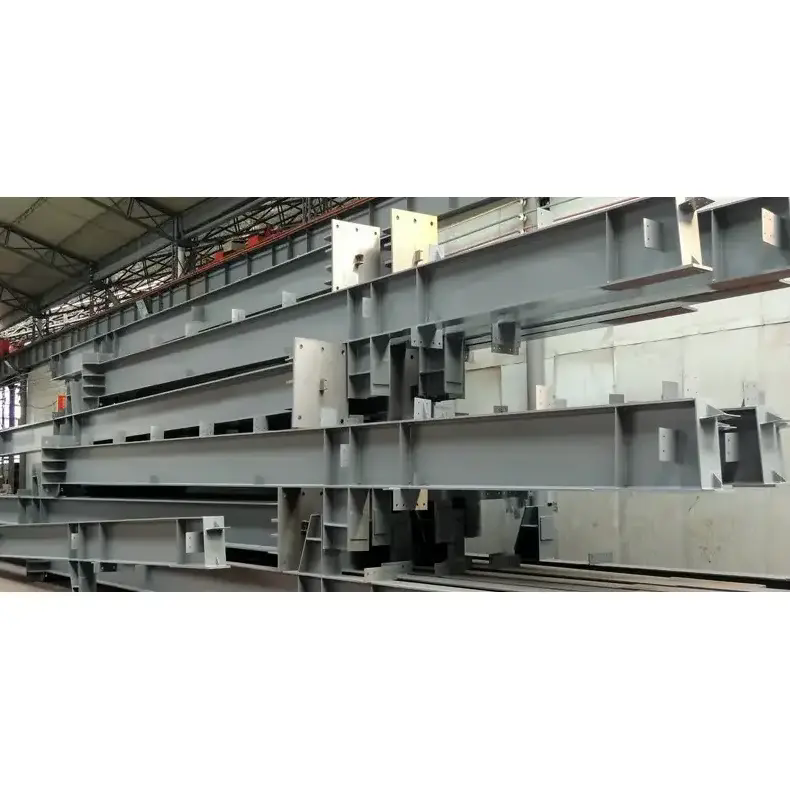
- Constant-section welded H-beams: The most widely used Primary Load Bearing Steel Beams on the market; uniform cross-section dimensions throughout; short fabrication cycles and moderate costs; suitable for standard floor spans of 6–24m and typical factory floor load requirements.
- Variable-section H-beams: Deeper sections at mid-span and tapered sections at supports; designed to align with roof bending moment distribution; specifically for portal rigid frame factory roofs to minimize inefficient steel usage.
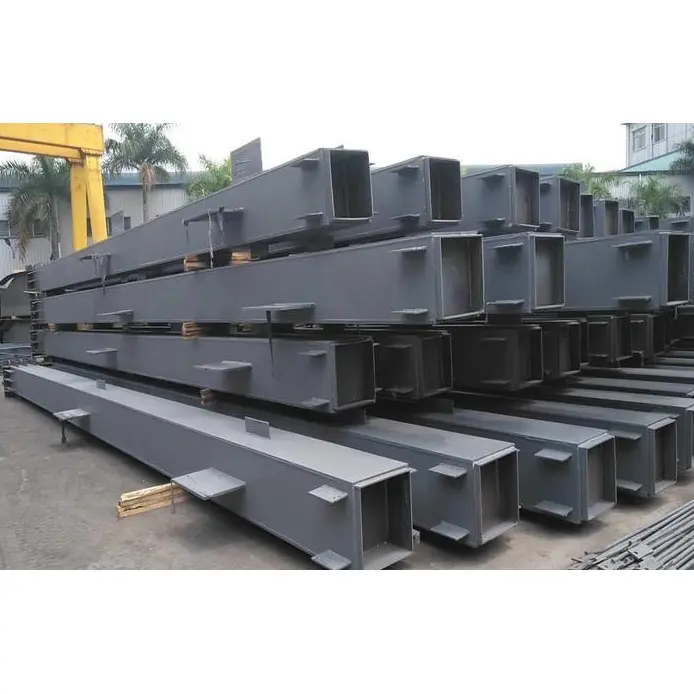
- Welded box beams: Closed four-sided box cross-section with balanced bi-directional torsional rigidity; suitable for extra-large spans (24–36m), eccentric crane loads, and high-rise mega-frames; addresses the weak-axis rigidity limitations of H-beams.
2. General Cross-section Specification Rules
- H-beam specification: H × B × tw × tf (representing beam depth, flange width, web thickness, and flange thickness, respectively); beam depth range: 300–2000mm.
- Box beam specification: B × H × t (representing section width, section depth, and box wall thickness, respectively); wall thickness range: 12–50mm.
- Factory-finished segment length: Standard lengths of 9m and 12m; lengths exceeding this are prefabricated in segments and spliced/assembled at height on-site.
3. Selection Criteria for Primary Materials
- Q355B: Mainstream industry material; yield strength far exceeds ordinary carbon steel; meets requirements for 90% of heavy-load factories and high-rise intermediate floors.
- Q235B: Limited to low-rise, light-load indoor intermediate floors (spans under 6m); low load redundancy; outdoor use not recommended.
- Q355NL: For frigid regions with temperatures of -20°C or lower; possesses certified low-temperature impact toughness to prevent brittle fracture in cold conditions.
Standardized Factory-Supplied Configuration
1. Main Beam Body Configuration
All main beams are fabricated via steel plate cutting, assembly, and welding; hot-rolled profiles are not used for modification. The extra-long main girder is cut into segments based on transport height limits, with weld bevels and butt-joint allowances pre-configured to avoid issues associated with oversized highway or marine transport; upon arrival at the site, high-altitude alignment and splicing can proceed immediately.
2. Rigid Connection Components for Beam-Column Ends
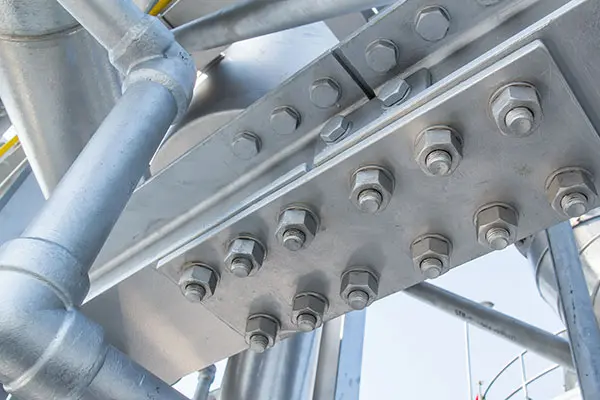
- Bolted End Plates: Plate thickness ranges from 18mm to 50mm (calculated based on maximum support reaction force); features pre-drilled holes for Grade 10.9 high-strength bolts. This is the most common connection method for primary floor beams, eliminating the need for on-site hot work (welding).
- Full-Penetration Groove Welds: Designed specifically for high-rise box-section primary beams; involves double-sided beveling of webs and flanges to achieve a butt joint with strength equal to the base metal, meeting seismic code requirements for high-rise structures.
- Support Stiffeners (Horizontal & Vertical): Mandatory structural components for primary beams; they prevent shear deformation of the web at the support and eliminate the risk of local crushing or collapse at the beam end, complying with national structural standards.
3. Lateral Structural Components for Beam Bodies
- Mid-span Transverse Stiffeners: Positioned at points of concentrated equipment loads or peak mid-span bending moments to suppress shear buckling deformation of the web.
- Secondary Beam Corbels/Brackets: Welded symmetrically on both sides of the primary beam to support secondary beams from various directions, accommodating cross-shaped, diagonal, and other connection configurations.
- Reinforcement Plates for Utility Openings: Annular reinforcement plates installed around web openings for MEP (mechanical, electrical, and plumbing) lines to ensure no reduction in cross-sectional load-bearing capacity.
- Shear Studs: Specifications include Φ16 and Φ19; used for primary beams in composite concrete floor systems to enable collaborative load-bearing between steel and concrete, thereby increasing the overall load-bearing capacity.
4. On-site Construction Accessories
- Prefabricated Lifting Lugs: Symmetrically pre-installed at both ends of primary beams weighing over 5 tons; verified through lifting mechanics calculations and designed for vertical lifting of the entire beam unit.
- Temporary Connection Plates: Used for temporary alignment of segmented primary beams; controls joint misalignment to less than 2mm; removed by grinding after completion.
5. Integrated Anti-corrosion and Fireproofing Treatment
- Rust Removal Process: Primary Load Bearing Steel Beams undergo standardized Sa2.5 grade shot-blasting to remove rolling scale and loose welding rust, ensuring optimal paint film adhesion.
- Multi-layer coating system: Epoxy zinc-rich primer + epoxy micaceous iron oxide intermediate coat + polyurethane topcoat; total dry film thickness of 100–160 μm.
- Fire protection treatment: Application of thin-film or thick-film intumescent fire-retardant coatings based on the building's fire resistance rating, covering full fire resistance durations of 1, 2, or 3 hours.
- Coastal environment option: Hot-dip galvanizing (entire component); zinc coating thickness ≥85 μm to withstand long-term marine salt spray corrosion.
6. Installation accessories and consumables
Standard supply includes Grade 10.9 high-strength bolts, nuts, flat washers, and tapered washers; all consumables comply with national standards for steel structure connections.
7. Three main types of primary beam assemblies
- Floor H-section primary beam: H-section body + thickened end plates at both ends + bearing stiffeners + secondary beam brackets + top flange shear studs + complete anti-corrosion and fire protection treatment.
- Heavy-duty box-section primary beam: Box-section body + full-penetration groove welds at ends + internal and external stiffening rings + side brackets + thickened end closure plates.
8. Factory delivery documentation
Original material quality certificates, 100% ultrasonic testing (UT) reports for Grade I welds, dimensional inspection reports, and component coating/ID lists.
What are the key advantages of using these Primary Load Bearing Steel Beams?
- High load-bearing capacity; resistant to sagging or plastic deformation under long-term stress in long-span applications.
- High overall frame rigidity with stable seismic and compressive performance; ensures ample safety margins for mezzanine levels.
- Fully prefabricated in the factory with controlled dimensional accuracy; requires only on-site bolting, resulting in a short construction cycle.
- Multi-layer anti-corrosion treatment combined with compliant fireproofing ensures a service life of over 50 years for both indoor and outdoor applications.
- Customizable span, section depth, and beam-column connection types; adaptable to irregular interior layouts.
Comparison of Profile Characteristics
1. Structural Load-Bearing Differences
- Main load-bearing steel beams: Customizable plate thickness; covers spans of 6–36m; adjustable bi-directional torsional resistance; supports concentrated loads across the entire floor.
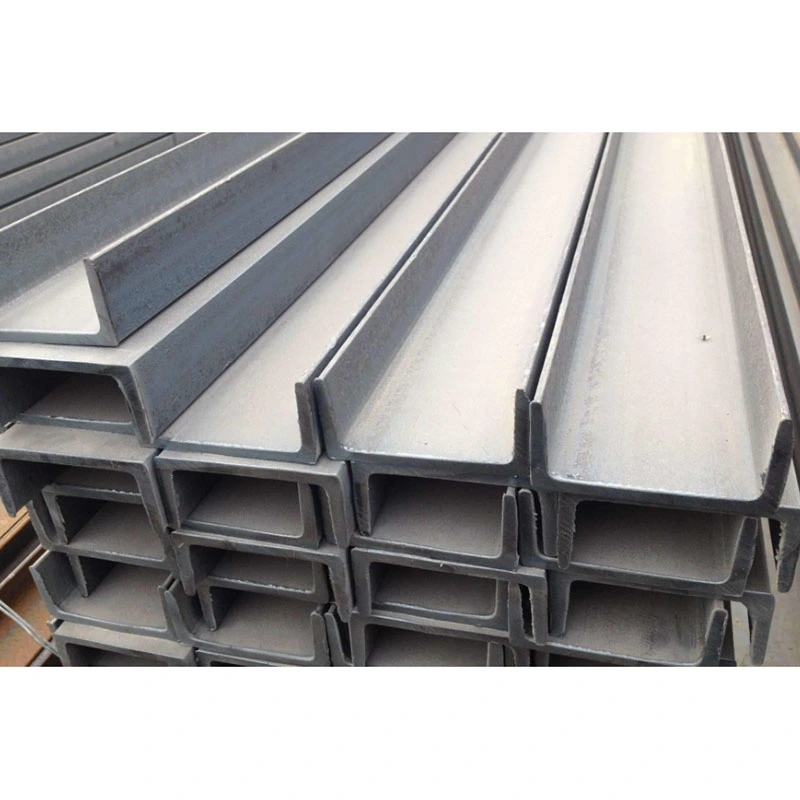
- I-beams and channel steel: Fixed hot-rolled sections cannot be modified; insufficient lateral rigidity along the weak axis; supports only isolated point loads; maximum span limited to 6m.
- C-sections and circular hollow sections: Thin-walled, closed profiles with weak concentrated load capacity; suitable only for bracing or secondary framing; prohibited for use as primary vertical load-bearing beams.
2. Connection Node Differences
- Main load-bearing steel beams: Supports dense welding of multiple brackets (stiffeners) on both sides; accommodates multi-angle secondary beam connections; suitable for complex beam-column joints.
- Hot-rolled sections: Flanges feature sloped surfaces, making extensive welding contact difficult; limits the density of secondary beam connection points.
3. Construction and Steel Usage Differences
- Main load-bearing steel beams: Variable-section designs allow plate thickness to decrease in line with bending moment reduction; precisely minimizes wasted steel and lowers overall costs.
- Hot-rolled structural steel: Fixed cross-sectional dimensions with a large load-bearing safety margin; efficient for short spans but extremely costly for long spans.
4. Summary of engineering application scope
Primary Load Bearing Steel Beams handle the main load transfer for entire floors, roofs, and equipment platforms; other structural steel components serve as secondary beams, supports, or enclosure framing—the two categories are not interchangeable.
Standardized end-to-end fabrication process
1. Raw material inspection
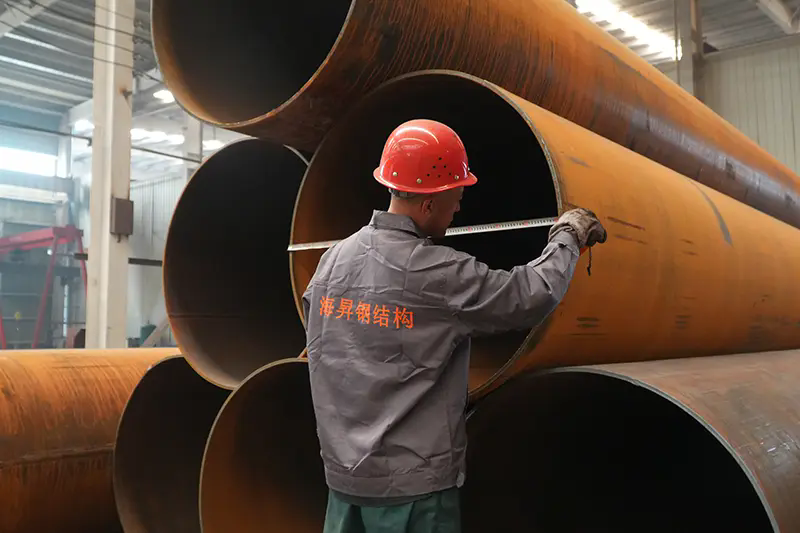
Verify original manufacturer material quality certificates; inspect for laminations or warping; flatten non-compliant plates using a plate leveling machine; simultaneously analyze drawings to generate cutting lists for flanges, webs, stiffeners, and connection plates.
2. CNC cutting
Cut plates using CNC flame or plasma equipment; apply uniform beveling at primary beam splice locations; perform profile cutting for variable-section beam webs, allowing a 2–3 mm margin for weld shrinkage.
3. Jig-based assembly
- H-shaped primary beams: Secure top and bottom flanges in assembly jigs; install webs vertically; use tack welding to position and align web centering and flange perpendicularity.
- Box-shaped primary beams: Enclose the four plates within an assembly jig; pre-install and tack-weld internal diaphragms; control plate misalignment (offset) at joints.
4. Automatic submerged arc welding (SAW) for main seams
- H-shaped primary beams: Perform single-sided SAW, then flip the beam and use air-arc gouging to clean the root; complete full-penetration SAW on the reverse side to eliminate internal weld defects.
- Box-shaped primary beams: Weld internal diaphragm fillet joints first, then simultaneously weld the four main longitudinal seams of the box section.
- Quality requirements: All main beam seams must meet Grade I weld standards; 100% Ultrasonic Testing (UT) is required upon completion.
5. Post-weld stress correction and straightening
Use a hydraulic straightening machine to correct flange curvature and beam sweep (lateral bending); relieve residual welding stress; ensure beam straightness meets tolerance requirements.
6. Assembly and welding of auxiliary components
Precisely mark locations according to drawings for stiffeners, corbels, and purlin cleats. Small components are welded to the beam using CO2 gas-shielded welding; finally, the end connection plates are assembled and fully welded.
7. Precision CNC Hole Drilling
CNC drilling machines are used for all end plates and bracket connection plates to ensure bolt hole coaxiality and eliminate the need for on-site reaming or rework.
8. Shear Stud Welding
For main beams supporting composite concrete floor slabs, specialized stud welding machines are used to weld Φ16 and Φ19 shear studs, with stud verticality deviation controlled within 1°.
9. Overall Finishing and Grinding
Weld beads and spatter burrs are ground off the entire beam; web opening reinforcement zones and localized surface defects are repaired.
10. Standardized Anti-corrosion and Fireproofing Application
Overall shot blasting to Sa2.5 grade; sequential application of primer, intermediate coat, and topcoat with dry film thickness verification; application of fire-resistant coatings based on required fire ratings for specific zones.
11. Identification, Final Inspection, and Warehousing
Component ID numbers and axis/elevation markings are applied; dimensional accuracy, flaw detection reports, and material documentation are verified; upon passing inspection, components are waterproof-packaged for shipment.
Core Performance Parameters
1. Geometric Fabrication Tolerances
- Beam straightness: ≤L/1000
- Flange verticality: ≤B/100
- Cross-sectional dimensional deviation: ±2 to 3 mm
- Standard finished segment lengths: 9m, 12m; extra-long components are prefabricated in segments.
2. Base Material Mechanical Properties
Material Grade
Yield Strength ReL
Tensile Strength Rm
Application Scenarios
Q355B
≥355MPa
470~630MPa
Main beam for factory and high-rise heavy load platform
Q235B
≥235MPa
375~500MPa
Low-rise light load main beam
Q355NL
≥355MPa
470~630MPa
Main beam used in severe cold areas
3. Cross-sectional Structural Parameters
- H-beam: Excellent flexural performance about the strong axis; lower lateral stiffness about the weak axis (relies on floor slabs and secondary beams for lateral restraint); load-bearing capacity increases by 35%–55% after steel-concrete composite retrofitting.
- Box beam: Balanced bidirectional flexural and torsional performance; suitable for eccentric loading and bridge crane main beam applications.
- Fully in-house processing: Proprietary production lines for steel plate cutting, submerged arc welding, and flaw detection; no outsourcing, ensuring controllable dimensions and weld quality.
- Compliant cross-border delivery: Simultaneous delivery of complete English inspection reports and customs clearance documentation to meet requirements for overseas engineering supervision and customs audits.
- Oversized transport solutions: Provision of complete construction drawings for sectional prefabrication and on-site splicing of extra-long main girders, overcoming cross-border transport limitations.
- Free technical verification: Pre-sales verification of main girder span, load, and connection selection to mitigate structural design risks.
FAQs
Q1: How do I choose between H-section and box-section main girders?
A: Use H-section girders for spans under 24m with unidirectional vertical loads; use box-section girders for spans exceeding 24m, bidirectional eccentric loads, or reciprocating crane loads.
Q2: Does cutting openings in the main girder web affect structural safety?
A: Openings made at locations other than peak bending moment points—when reinforced with annular stiffening plates—do not compromise load-bearing capacity; however, arbitrary openings are prohibited in high-bending-moment zones at mid-span.
Q3: Can the fire-resistant coating for primary load bearing steel beams be applied on-site at a later stage?
A: Application can be done either via factory pre-coating or on-site coating; factory coating ensures uniform film thickness and generally aligns better with the scheduling requirements of overseas projects.
Contact HAISHENG China supplier of Structural Steel Components, Steel Structure Cladding Components and Structural Steel Fasteners. Our professional sales team will reply with detailed quotation, product parameters and delivery plan within 24 hours to meet your bulk procurement demand.
We use cookies to offer you a better browsing experience, analyze site traffic and personalize content. By using this site, you agree to our use of cookies.Privacy Policy