Tianjin Haisheng Steel Structure Co., Ltd.
Products
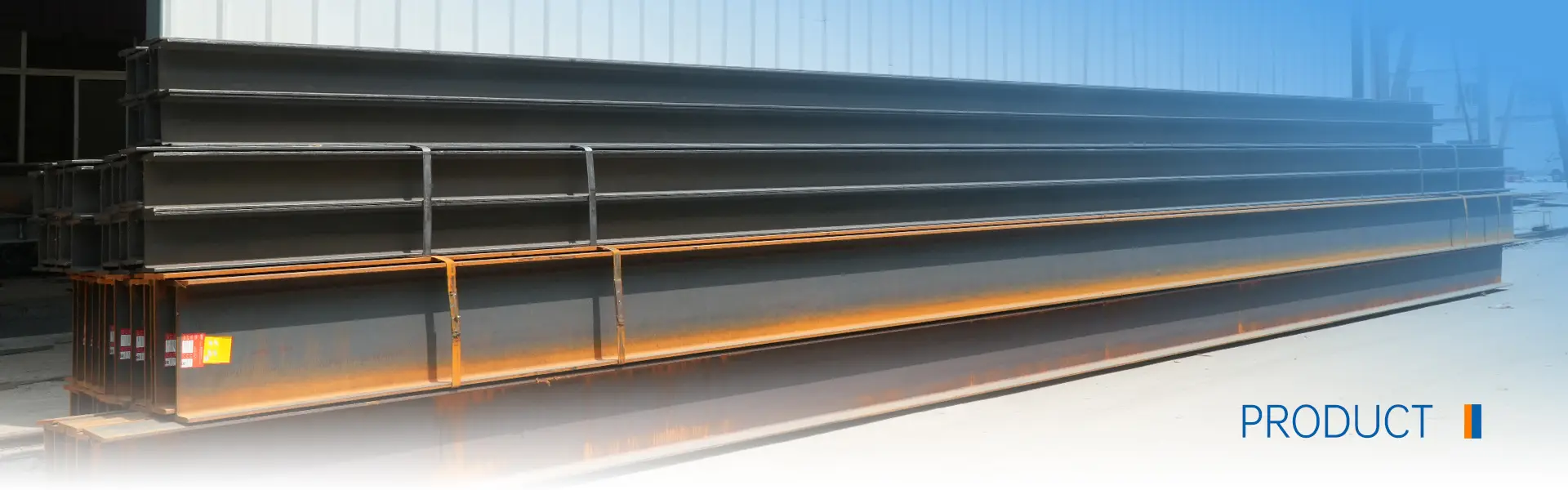
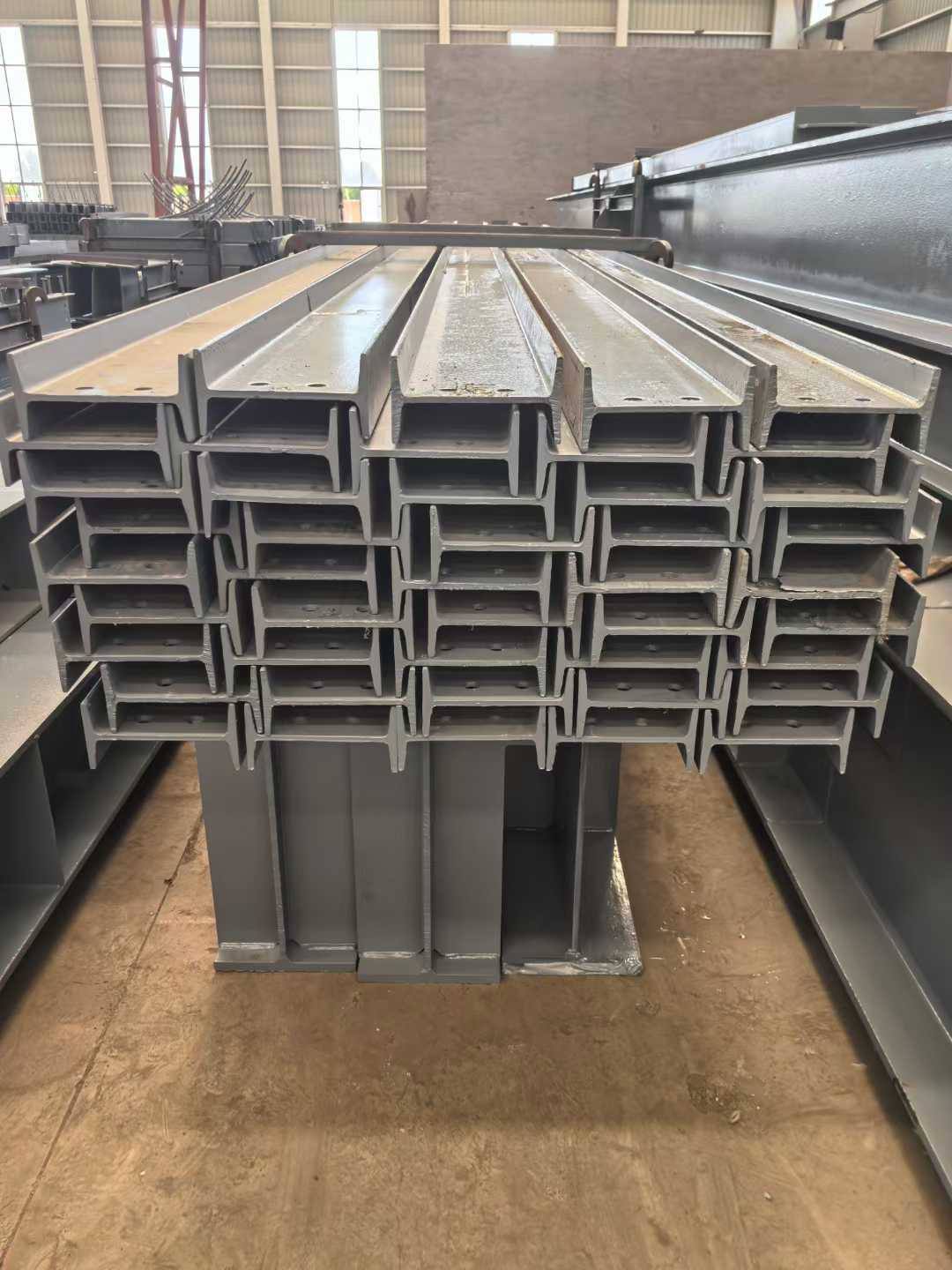
Structural I Beam Hot Rolled Steel I Section
  • Structural I Beam Hot Rolled Steel I SectionStructural I Beam Hot Rolled Steel I Section

Structural I Beam Hot Rolled Steel I Section

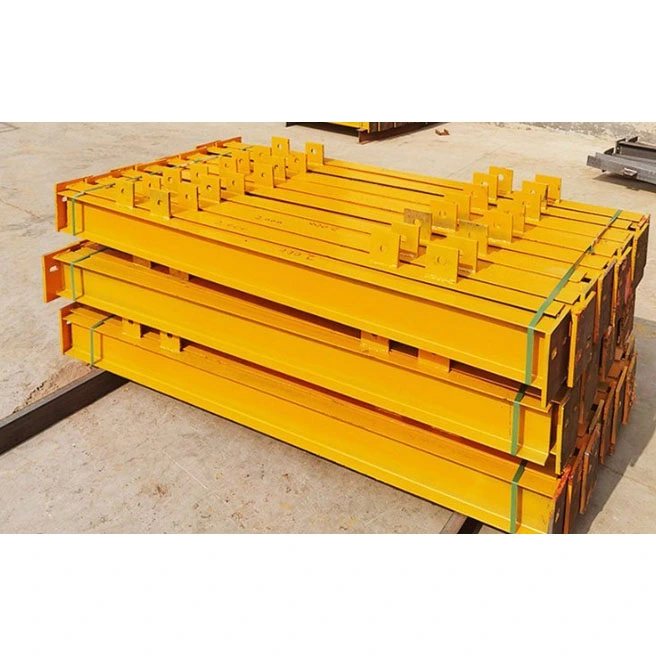
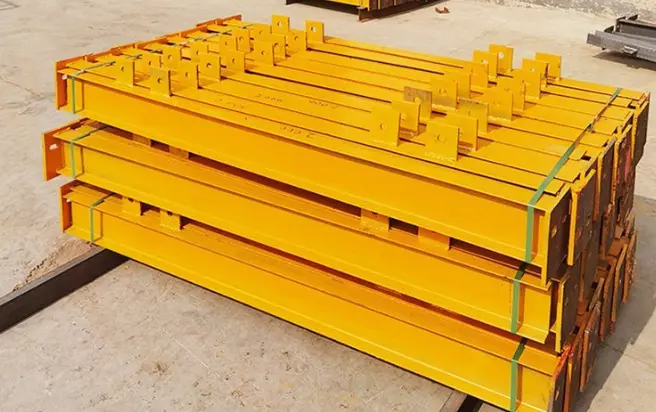
HAISHENG is a reliable China structural steel Manufacturer and one-stop Supplier, supplying in-stock Structural I Beam Hot Rolled Steel I Section. We support custom drilling, accessory welding and surface anti-corrosion treatment, providing cost-effective hot rolled I beam for small-span steel structure secondary beam and equipment support projects.

Structural I Beam Hot Rolled Steel I Sections are specialized horizontal load-bearing profiles designed for lightweight, short-span steel structures. Unlike H-beams or closed-section profiles—which are engineered for heavy-duty loads—these I-beams are produced via a single-pass hot-rolling process compliant with national standards; they require no custom section welding, and all dimensions adhere to standardized specifications.

Leveraging our existing raw material inventory, HAISHENG performs only secondary processing—such as cutting, drilling, accessory welding, and anti-corrosion coating—resulting in delivery times far shorter than those for custom-fabricated steel. These products are ideal for projects involving confined spaces, lighter loads, or on-site modifications. They offer a practical solution that avoids the material waste associated with H-beams and the installation complexities of square tubing, making them the most widely used, economical load-bearing beams for electromechanical support systems, auxiliary plant structures, and small cantilevered assemblies.

Structural I Beam Hot Rolled Steel I Section

Product Attribute Definition and Model Identification

1. Cross-sectional Structure and Structural Behavior

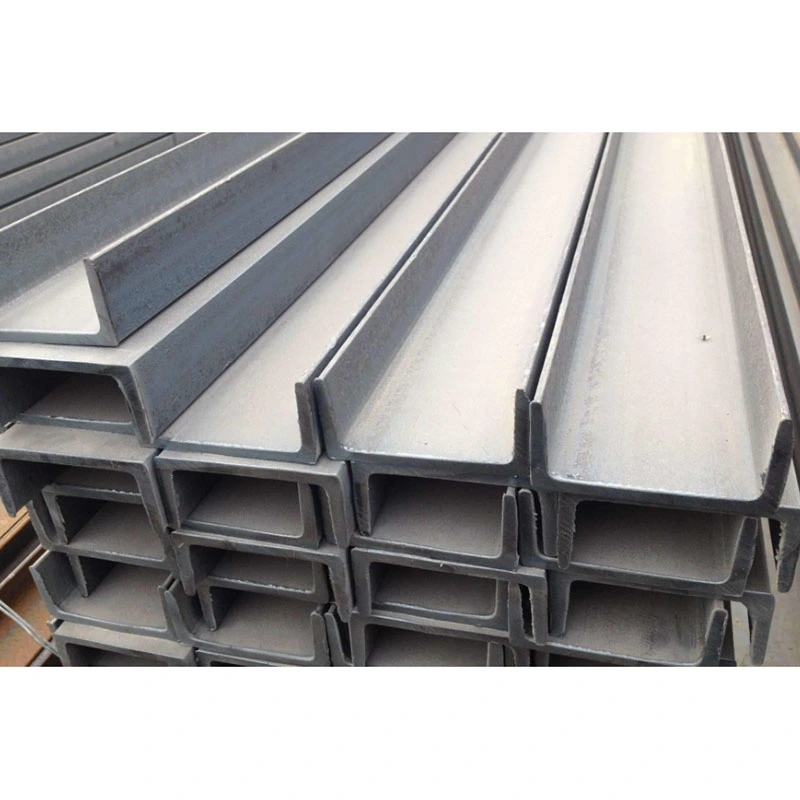
- Cross-sectional Structure: Features a standard "I" shape with a centered, vertical web. The inner faces of the top and bottom flanges have a 1:6 slope; the flanges vary in thickness from edge to center, and their inner and outer surfaces are non-parallel—these are the most distinct visual features distinguishing them from H-beams.

- Structural Behavior: Follows a load path where the top flange is in compression, the bottom flange is in tension, and the web resists shear in one direction. While bending resistance along the strong axis meets standards, there is an inherent weakness in lateral deformation resistance along the weak axis.

2. Model Designation and Specification Classification

- Standard Designation: Named using the letter "I" followed by a numeric suffix. Suffixes "a" and "b" indicate flange thickness differences for the same section height; "a" models have thinner flanges, while "b" models have thicker flanges and higher overall load-bearing capacity.

- Common Market Models: Ranges from I10, I12.6, I14, I16, I18, I20a, and I20b up to I45; the largest widely available model is I56. Sizes outside this range are not available as standard stock items.

- Raw Material Lengths: Standard factory lengths are 6m, 9m, and 12m. Factory-rolled variable cross-sections are not supported; members exceeding these lengths must be spliced on-site.

3. Material Selection Criteria

- Q235B: The mainstream market material; offers excellent ductility and cold-cutting performance. Suitable for indoor ambient-temperature environments and 95% of small-span auxiliary projects in dry, open-air settings.

- Q355B: A niche alternative material with 51% higher yield strength. Used primarily for heavy-load equipment supports, extra-long cantilevered steel beams, and projects in low-temperature, frost-free regions; stock availability is limited.


Factory-Delivered Components and Three Standardized Configurations

1. List of Standard Components

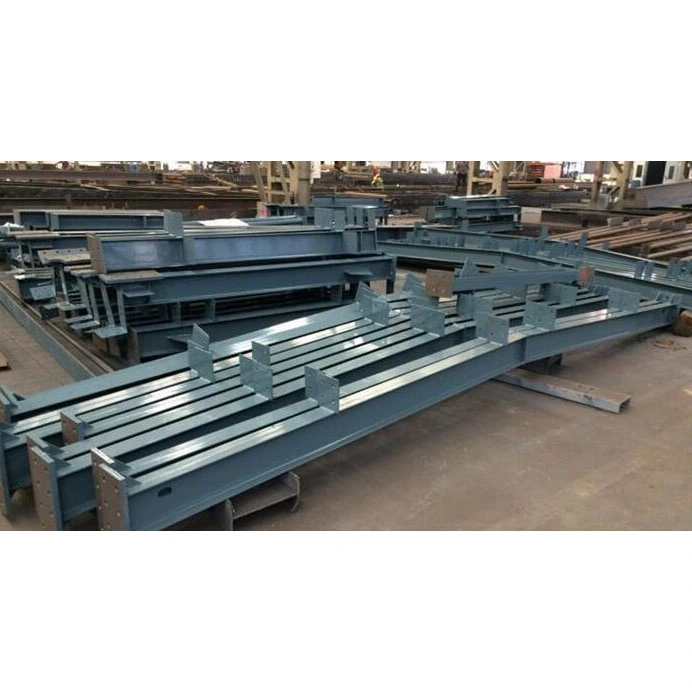
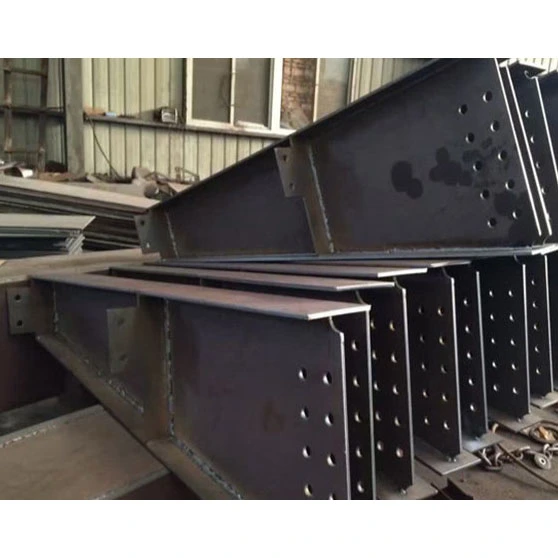
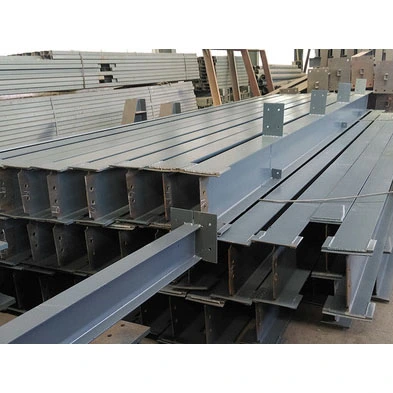
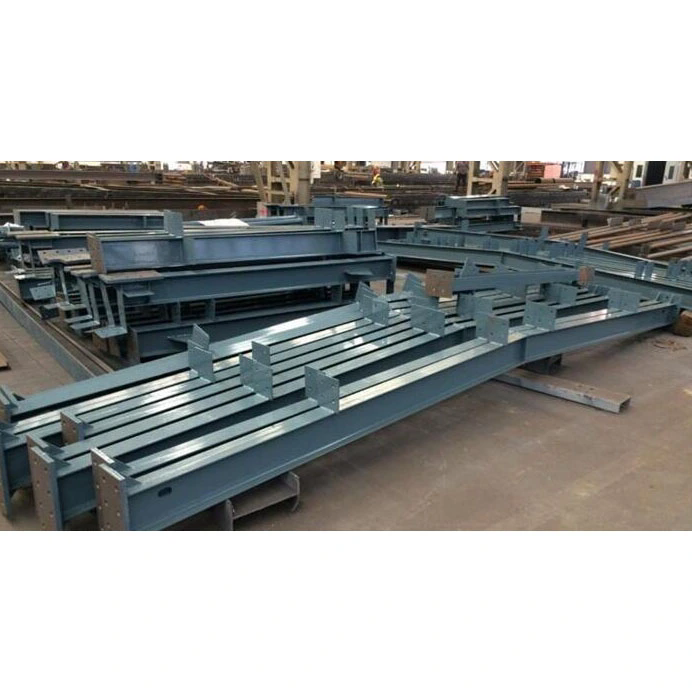
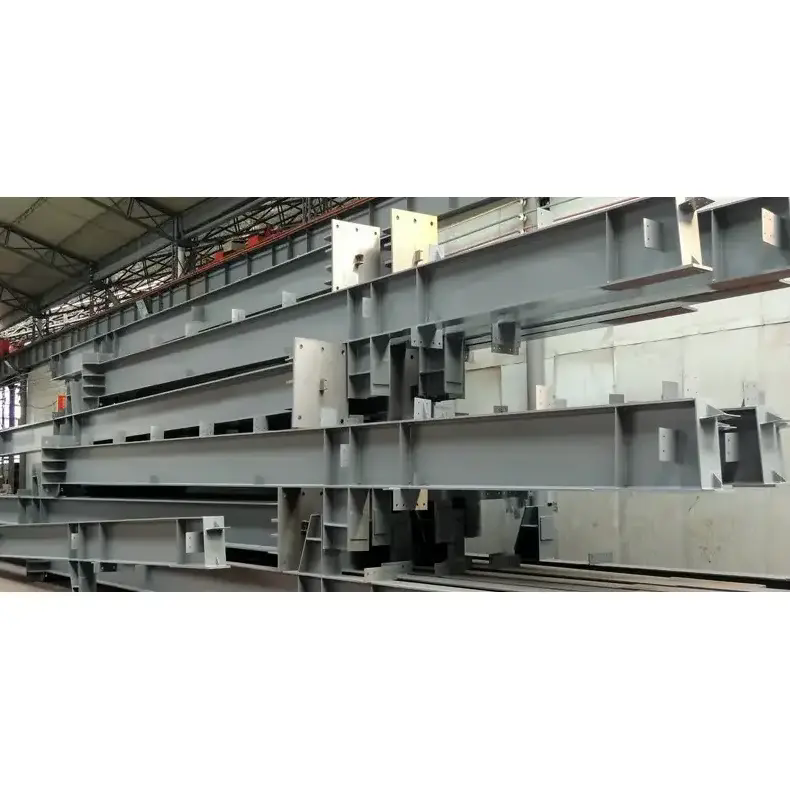
- Main Beam Body: Structural I Beam Hot Rolled Steel I Section (GB standard) cut to precise lengths via CNC; end faces are burr-free and meet perpendicularity standards.

- End connection accessories: Flat connection plates and vertical bearing stiffeners; stiffeners require corner clipping to fit the sloped flange profile, resulting in smaller overall dimensions compared to stiffeners for standard H-beams of the same height.

- Beam body accessories: Purlin support plates, secondary beam lugs, and reinforcement plates for utility openings; welded at designated locations as required.

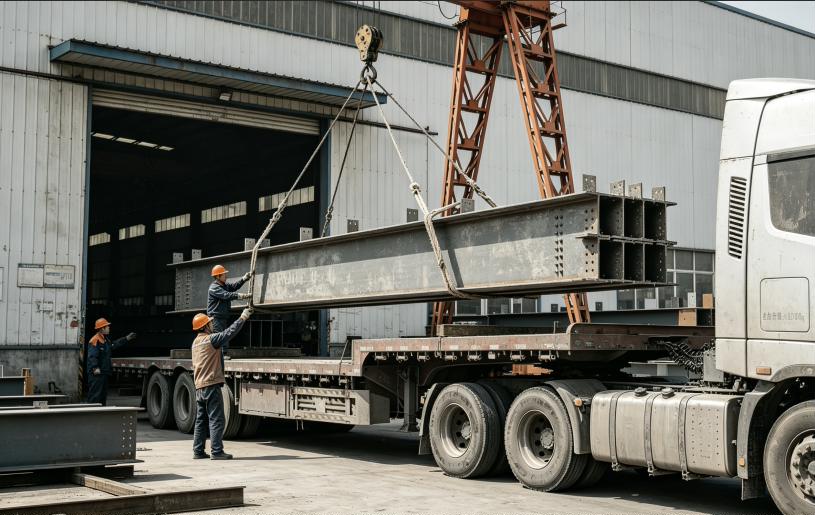
- Lifting accessories: Symmetrical lifting lugs pre-installed on the sides of large, long beams (I25 and above); smaller beams (I20 and below) do not require pre-installed lugs and are lifted directly via the flanges.

2. Surface anti-corrosion and fire protection scheme

- Rust removal grade: St3 manual cleaning for standard civil projects; Sa2.5 shot/sand blasting for high-standard municipal and export projects.

- Painting: Composite coating of two primer layers plus a topcoat; dry film thickness controlled at 60–100 μm, meeting indoor anti-rust requirements for a 5-year service life.

- Special condition treatment: Hot-dip galvanizing for high-humidity or rain-splash zones; thin-film intumescent fire-resistant coating for fire compartments, meeting the 1-hour fire resistance rating requirement.

3. Three categories of factory configurations

- Simply supported platform I-beam: Beam body + end plates at both ends + clipped bearing stiffeners + purlin support plates + full anti-corrosion coating; used for main beams in steel walkways and equipment platforms; connected via direct bolting on-site.

- Cantilever bracket I-beam: Beam body + thickened stiffener plates on both sides of the root + anchoring connection plate; used for curtain wall sub-frames and small outdoor cantilevered sunshade brackets.

- Simple roof secondary beam: Beam body + simple single-sided purlin support; no end connection plates; welded directly to the main beam flange on-site; used for minor beams at factory eaves.

4. Factory acceptance documentation included with shipment

Original steel mill material quality certificates, dimensional inspection records for components, and unique component identification sheets; documentation is suitable for direct submission and supervisor acceptance at overseas project sites.


Key On-Site Application Advantages

1. Rapid stock turnover; ideal for urgent, small-batch procurement

All models of hot-rolled I-beams are standard, mass-produced stock items, eliminating the need for scheduled rolling or fabrication (such as splicing or welding). Unlike welded H-beams or box girders—which require 10–20 days for delivery—standard specifications can be shipped within 48 hours. They are perfectly suited for sporadic procurement needs, such as replacing aging supports, adding electromechanical piping, or urgently replenishing cross-beams for site hoarding.

2. High impact resistance; low on-site wastage

The 1:6 slope on the inner flange creates a natural chamfered edge, preventing flange curling or web warping during hoisting, on-site transport, or accidental collisions involving other equipment. In contrast, H-beams with flat flanges are prone to edge damage, resulting in an on-site scrap rate more than 12% higher than that of I-beams.

3. Narrow profile fits tight, confined spaces

For the same vertical load-bearing capacity, the bottom flange of an I-beam is 22%–30% narrower than that of an equivalent H-beam. This allows for installation in confined areas—such as electromechanical utility corridors, narrow gaps between equipment cabinets, or enclosed curtain wall framing—without interfering with piping or conduit layouts.

4. Low barrier to modification; no specialized welders required

Length adjustments and localized openings can be achieved simply through sawing or plasma cutting, eliminating the need for heavy machinery like submerged-arc welders or hydraulic straighteners. General on-site technicians can handle tasks like welding additional brackets or fine-tuning hole positions; certified high-pressure welders are not required, significantly reducing labor costs for small-scale overseas modifications.

5. Low overall cost; excellent value for small projects

The unit price of raw materials is 15%–20% lower than that of welded H-beams with equivalent load-bearing capacity. Additionally, their lighter weight reduces transportation and hoisting costs. For secondary beams with spans under 6 meters and uniformly distributed loads below 12 kN/m, they provide the right performance without "over-engineering," thereby avoiding significant material waste.


Comprehensive, Multi-dimensional Product Differentiation Comparison

1. Comparison of Structural Load-bearing Characteristics

- vs. H-beams: H-beams possess balanced bi-directional lateral stiffness and parallel flanges suitable for fully supporting profiled steel decking, making them ideal for long-span floor girders; Structural I Beam Hot Rolled Steel I Section offer adequate flexural resistance only along the strong axis and are highly prone to lateral-torsional buckling along the weak axis, rendering them unsuitable for long-span structures lacking lateral bracing.

- vs. Square/Circular Hollow Section Beams: Closed tubular sections offer excellent torsional resistance but prevent internal rust removal and make post-installation anticorrosion repairs at cutouts difficult; I-beams feature open sections allowing full-surface inspection and lower costs for subsequent utility/piping modifications.

2. Comparison of Connection and Construction

- Ease of Seating/Assembly: Standard I-beams can be seated directly onto concrete corbels or channel-steel brackets and secured with simple tack welds, whereas H-beams require end-plate bolting, involving more complex construction steps.

- Connection Plate Welding Limitations: The tapered flange surfaces of I-beams do not allow for flush contact with flat connection plates over large areas, preventing multi-directional joint connections and limiting their use to simple, unidirectional, simply-supported load conditions.

3. Defined Application Scenarios and Limitations

- Scenarios of Unique Advantage: Walkway grating beams in industrial plants, MEP (mechanical, electrical, and plumbing) utility supports, equipment mounting bases, curtain wall sub-frames, and secondary cornice beams; using H-beams in these contexts results in significant performance over-specification.

- Prohibited Scenarios: Roof main girders exceeding 8 meters in span, large-area concrete composite floor slabs, and unsupported cantilever structures exposed to high wind loads (due to the risk of lateral instability and collapse).


Standardized Deep-Processing Workflow for Hot-Rolled I-Beams

This workflow covers the secondary processing of hot-rolled sections only (excluding built-up sections welded from plates) and reflects actual factory production steps:

1. Incoming Raw Material Visual Inspection

Verify original mill certificates, section profiles, and material grades; conduct batch sampling to check for lateral bowing, twisting, and flange deformation; mechanically straighten slightly twisted sections prior to processing; return non-compliant raw materials to the supplier to prevent substandard stock from entering production.

2. CNC Precision Cutting to Length

High-volume orders utilize CNC cold metal sawing, resulting in smooth cuts free of oxidation layers and a 2mm allowance for butt welding; small-batch rush orders utilize plasma cutting. Extra-long members undergo double-sided beveling on both webs and flanges to meet on-site full-penetration butt-weld requirements.

3. Positioning and Tack Welding of Irregular Accessories

Accessory locations are precisely marked based on construction drawings. For inclined flanges, stiffener corners are beveled at a 1:6 slope to ensure a perfect fit against the beam body; intermittent tack welding is used for fixation, keeping welding-induced deformation within 1.5mm.

4. Continuous Gas-Shielded Welding

Small components such as purlin cleats, connection plates, and stiffeners are welded using CO2 gas-shielded welding, ensuring uniform weld bead formation; on-site butt joints for extra-long beams utilize manual arc welding, with critical load-bearing butt welds undergoing random ultrasonic testing to Grade II standards.

5. Precision Mechanical Drilling

Connection points for heavy-duty high-strength bolts are drilled using integrated 3-axis CNC drilling machines, with hole diameter tolerances controlled to ±0.2mm; holes for miscellaneous on-site piping/conduits are drilled using handheld electric drills, with subsequent grinding to remove burrs.

6. Deformation Correction and Surface Finishing

Lateral bending and torsional deformations caused by welding are corrected using a combination of localized flame heating and mechanical jacks; weld spatter, slag, and cut-edge burrs are thoroughly ground down to eliminate potential scratching hazards during on-site installation.

7. Graded Rust Removal and Surface Coating

Rust removal is performed via manual cleaning (St3) or shot blasting (Sa2.5) according to project specifications to eliminate surface mill scale and loose rust; primer and topcoats are applied at ambient temperature, with thin-film fire-retardant coatings added in designated fire-resistant zones; components proceed to the next stage only after the coating has naturally cured to meet standards.

8. ID Marking, Verification, Packaging, and Dispatch

Permanent identification numbers are applied to the components. A comprehensive inspection is conducted to verify lengths, hole diameters, and external dimensions, and the full set of inspection documentation is compiled. The components are wrapped in waterproof stretch film and secured on wooden pallets—suitable for long-distance maritime transport with moisture protection.


Comprehensive Product Performance and Technical Specifications

1. Dimensional and Machining Tolerances

- Total beam length deviation: ±3mm

- Longitudinal lateral camber/deflection: ≤L/1000 (where L is the actual beam length)

- Flange flatness/twist: Complies with GB/T 706 national standards for hot-rolled structural steel

2. Base Material Mechanical Properties

Material Grade

Yield Strength

Tensile Strength

Application Scenarios

Q235B

≥235MPa

375~500MPa

Ordinary equipment support, steel walkway, small secondary beam

Q355B

≥355MPa

470~630MPa

Heavy-duty equipment bracket, cantilever beam

3. Structural Cross-Section Parameters

- Bi-directional stiffness: Excellent flexural modulus along the strong axis (X-axis); moment of inertia along the weak axis (Y-axis) is only 42% that of an H-beam of the same height, resulting in weak lateral overturning resistance

- Shear load-bearing characteristics: Shear force is borne entirely by the web; double-sided stiffeners must be installed at concentrated load points (supports) to prevent local web crushing or cracking

- Wind resistance coefficient: Fixed value of 1.45; wind resistance is higher than that of circular hollow section beams but lower than that of closed box-section beams; low-profile outdoor supports are minimally affected by wind

- Floor slab compatibility: Sloped flanges cannot sit flush against the underside of profiled steel decking; unsuitable for use as primary load-bearing beams in composite concrete floor systems

4. Weld Inspection Standards

- Primary butt welds: Grade II weld acceptance standards; random ultrasonic testing (UT) on 20% of critical load-bearing butt joints

- Auxiliary fillet welds: Welds for purlin cleats, connection plates, and stiffeners undergo visual inspection only; acceptance is based on the absence of porosity or incomplete fusion

5. Connection Technical Specifications

- Connection bolt selection: Grade 4.8 standard bolts for conventional simply-supported joints; Grade 8.8 high-strength bolts for heavy-load cantilever joints

- End connection plate thickness: Standardized range of 10mm–25mm; specific thickness selected based on support shear force requirements


HAISHENG Advantages

1. Comprehensive in-stock inventory to meet small-volume and urgent orders

HAISHENG maintains a year-round stock of the full range of Structural I Beam Hot Rolled Steel I Sections (sizes I10–I45) Unlike small processing shops that rely on sourcing stock from elsewhere, Section is equipped to handle everything from small, one-off purchases to large-volume export orders requiring full container loads. Standard specifications are available without waiting for raw material production scheduling, and rush orders can undergo deep processing and ship within 24 hours.

2. Extensive experience in customizing inclined attachments to prevent assembly errors

We utilize specialized corner-cutting processes and standardized molds for the inclined flanges of I-beams, eliminating the need for manual layout for each piece and keeping the fit-up tolerance for stiffeners and connection plates within 0.5mm. This solves common issues found in general processing shops, such as large gaps at attachment points and subsequent structural misalignment under load.

3. Lightweight export packaging to reduce cross-border logistics costs

Beam lengths are segmented to fit shipping container dimensions, utilizing anti-rust packaging for individual sections and gap-filling protective measures to prevent deformation caused by turbulence during ocean transport. We also provide a full set of English customs clearance documents and material traceability records, offering a one-stop solution for customs documentation.

4. Customized anti-corrosion treatments and strict control of coating tolerances

Anti-corrosion strategies are tailored to the destination region's climate: a standard double-layer paint system is used for temperate inland areas, while hot-dip galvanizing is applied for coastal regions exposed to salt spray. All paint film and zinc layer thicknesses undergo third-party testing with English reports issued, ensuring compliance with EU and Southeast Asian acceptance standards for steel structures.

5. Long-term technical support and after-sales service

We provide free advice on beam span and load-matching selection, as well as remote drawing-based guidance for on-site splicing and cantilever connections. Components are assigned unique identification numbers for lifetime traceability, and replacement parts of the same specifications are available for restocking.


FAQ

Q1: Can I-beams replace H-beams for the main floor beams of a factory building?

A: No. Standard Structural I Beam Hot Rolled Steel I Section lack sufficient lateral stiffness along their weak axis; during construction, lateral wind loads and temporary construction loads make them highly susceptible to lateral-torsional buckling. They should only be used for secondary floor beams with spans under 6 meters or for minor, non-load-bearing auxiliary beams.


Q2: Do inclined flanges affect the stability of bolted connections?

A: Yes, it has a direct impact. Flat washers cannot be used directly; tapered washers matching the flange slope are required. HAISHENG supplies the appropriate tapered washers with the shipment, so buyers do not need to purchase them separately.


Q3: What is the minimum rust-prevention lifespan for I-beams used outdoors?

A: A standard 60–100μm paint coating lasts 3–5 years outdoors inland; hot-dip galvanizing lasts 8–10 years inland and 5–7 years in coastal areas. Maintenance involving localized topcoat touch-ups is required beyond these periods.


Q4: Is 100% flaw detection required for on-site I-beam splicing?

A: No. Splice welds for standard walkways and supports require only visual inspection; butt welds for heavy-duty equipment main beams and cantilever beams require Ultrasonic Testing (UT) on 20% of the welds; other auxiliary welds do not require non-destructive testing.


Q5: How can I quickly choose between Type A and Type B I-beams?

A: Choose Type A for standard loads and typical spans; it is lighter and more cost-effective. Choose Type B for concentrated loads at supports, single-sided cantilevers, or supports for vibrating equipment; the thicker flanges prevent local flange crushing.


Hot Tags: Structural I Beam Hot Rolled Steel I Section, Manufacturer, Supplier, Custom, Manufacturer
Send Inquiry
Contact Info
Contact HAISHENG China supplier of Structural Steel Components, Steel Structure Cladding Components and Structural Steel Fasteners. Our professional sales team will reply with detailed quotation, product parameters and delivery plan within 24 hours to meet your bulk procurement demand.
X
We use cookies to offer you a better browsing experience, analyze site traffic and personalize content. By using this site, you agree to our use of cookies.Privacy Policy
RejectAccept