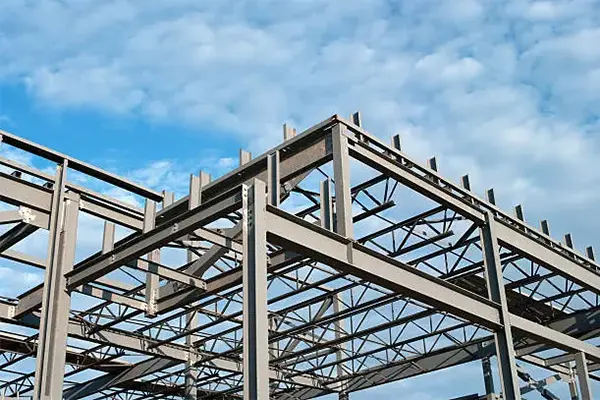
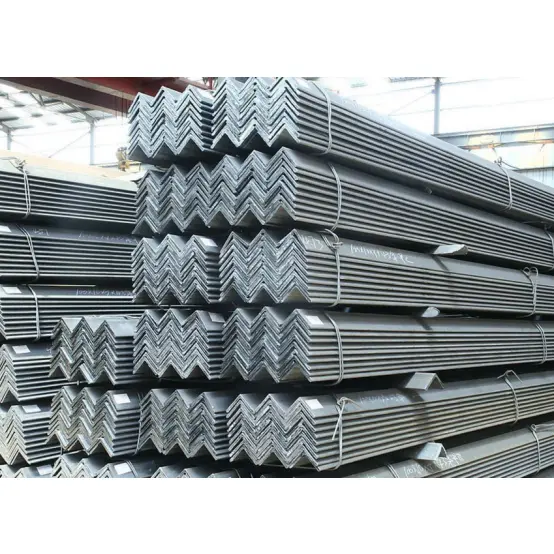
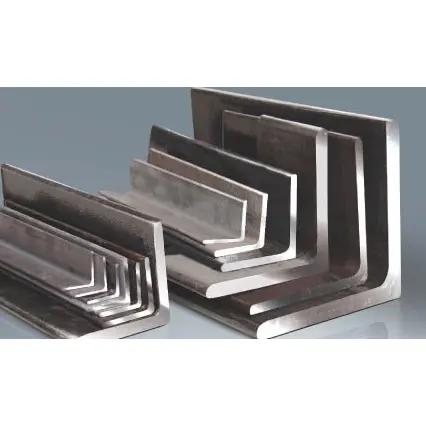
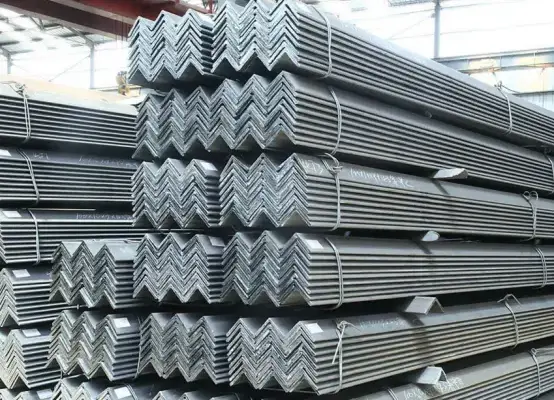
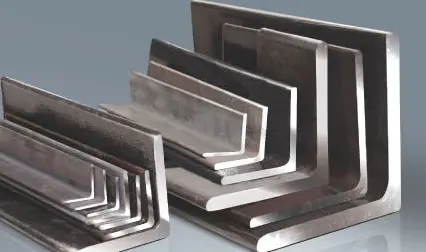
As a reliable Chinese manufacturer and one-stop supplier of steel structures, HAISHENG offers readily available stock of galvanized structural steel angle bars. Manufactured in accordance with the GB/T 706 standard, these hot-rolled L-shaped sections come in two types—equal-leg and unequal-leg angles—and are primarily made from Q235B or Q355B steel.
Galvanized structural steel angle bars are lightweight, cost-effective, and easy to process and install. With their compact and versatile cross-sections, they are frequently used for structural connections, bracing, purlin reinforcement, railings, supports, embedded parts, and various auxiliary components. Widely utilized in industrial facilities, municipal projects, electromechanical installations, and warehousing, they are a high-volume auxiliary material in steel construction.
Characteristics of Angle Bars
I. Mechanical and Cross-Sectional Characteristics
1. L-shaped cross-section; lightweight structure. They primarily withstand axial forces, shear forces, and local bending moments. Due to relatively low overall rigidity, they are not suitable for use as core load-bearing components such as main beams or columns.
2. Hot-rolled, single-piece construction results in low residual stress and uniform material properties, making them resistant to cracking or deformation under load.
3. Equal-leg angles offer symmetrical load distribution, while unequal-leg angles allow for flexible selection based on the direction of force, accommodating various installation joints.
II. Economic and Procurement Characteristics
1. Wide range of specifications and models; ample market stock and diverse procurement channels; low price and low overall cost.
2. Lightweight, significantly reducing the overall structural load and foundation costs.
III. Processing and Construction Characteristics
1. Cutting, punching, bending, welding, and splicing are straightforward, allowing for flexible on-site secondary processing.
2. Compact size makes handling and lifting easy; versatile assembly methods (welding or bolting) ensure high construction efficiency.
3. Flexible splicing and combination options; using multiple bars together can enhance overall load-bearing capacity and stability.
IV. Usage and Compatibility Characteristics
1. Delivered in a hot-rolled "black" (mill scale) state; compatible with anti-corrosion treatments such as rust removal, painting, and hot-dip galvanizing; suitable for use in standard indoor and outdoor environments. 2. Highly versatile; suitable for fabricating various auxiliary components such as connectors, supports, enclosure frameworks, railings, and embedded parts.
V. Limitations
Due to their cross-sectional shape, they have limited resistance to bending and lateral displacement. They serve primarily as auxiliary load-bearing, connecting, or reinforcing components and cannot support major loads in long-span or heavy-duty applications.
Uses and Scope of Application
I. Primary Uses
1. Joint connection and reinforcement: Galvanized structural steel angle bars serve as connection plates, stiffeners, and splice components between primary and secondary steel members (such as beams and columns), enhancing joint integrity.
2. Various supports and brackets: Fabrication of pipe supports, cable tray brackets, equipment bases, utility corridor supports, and roof supports.
3. Enclosures and frameworks: Wall/roof purlins for industrial plants, frameworks for color-steel cladding, partition wall framing, and door/window frames.
4. Railings, guardrails, and ladders: Factory perimeter fencing, stair handrails, walkway railings, platform enclosures, and main components for access ladders.
5. Embedded parts and anchors: Construction embedded parts, base plate connectors, and wall ties.
6. Lightweight frames and temporary facilities: Simple sheds, construction site hoarding, temporary supports, and scaffolding components.
7. Steel structure reinforcement: Providing strengthening, tying, and lateral support for H-beams, channel steel, I-beams, and other structural members.
II. Scope of Application
1. Industrial buildings: Support systems, enclosure structures, and auxiliary materials for equipment platforms in factories, warehouses, and workshops.
2. Municipal engineering: Road guardrails, site hoarding, billboard frameworks, municipal utility line supports, and small walkways.
3. M&E and HVAC: Specialized supports and hangers for air ducts, water pipes, and cables in power plants, chemical facilities, and commercial buildings.
4. Prefabricated and civil buildings: Auxiliary frameworks for multi-story steel structures, modular buildings, and simple housing units.
5. Warehousing and logistics: Lightweight shelving, storage partition racks, and protective structures for storage yards. 6. Other fields: Auxiliary structures for construction machinery, marine auxiliary materials, agricultural machinery frames, and auxiliary members for power transmission towers.
Key Performance Parameters
Standard: GB/T 706-2016 (Galvanized Structural Steel Angle Bars); categorized into equal-leg and unequal-leg angles.
Heavy-load supports, reinforcing members, joints with large load
Modulus of elasticity: 2.06 × 10⁵ MPa; room-temperature impact energy ≥ 27 J.
II. Classification, Designation, and Mainstream Specifications
1. Classification and Designation
· Equal-leg angle: Leg widths are equal; designation: leg width × leg thickness (e.g., ∠50×5).
· Unequal-leg angle: Leg widths differ; designation: long leg width × short leg width × leg thickness (e.g., ∠63×40×5).
2. Common Equal-leg Angles (Mainstay in engineering)
· ∠25×3, ∠30×3, ∠40×4
· ∠50×4, ∠50×5
· ∠63×5, ∠70×6
· ∠80×6, ∠90×8, ∠100×10
3. Common Unequal-leg Angles
∠56×36×4, ∠63×40×5, ∠70×45×5, ∠80×50×6
III. Dimensions and Length Parameters
1. Standard fixed lengths: 6m, 9m, 12m; custom cutting available; length tolerance ±5 mm.
2. Shape tolerances: Curvature ≤ 2mm per meter; total curvature ≤ 0.2% of total length; no significant twisting.
IV. Structural Characteristics
1. L-shaped open section; low torsional and flexural rigidity; suitable for resisting axial forces, shear forces, and local bending moments.
2. Equal-leg angles feature symmetrical loading and are often used for bidirectional bracing or symmetrical supports; unequal-leg angles are suitable for unidirectional loading joints.
3. Load-bearing capacity of a single member is limited; combining or grouping members can enhance overall rigidity.
V. Surface and Processing Characteristics
1. Delivery condition: Hot-rolled, black finish (with mill scale).
2. Workability: Easy to cut, drill, weld, and bend; convenient for on-site fabrication.
3. Surface protection: Compatible with rust removal and painting, hot-dip galvanizing, or powder coating; suitable for both indoor and outdoor environments.
VI. Operating Environment Parameters
1. Applicable temperature range: [Min]°C to [Max]°C
2. Corrosion resistance: The base material lacks inherent corrosion resistance; surface protection is mandatory for outdoor or corrosive environments.
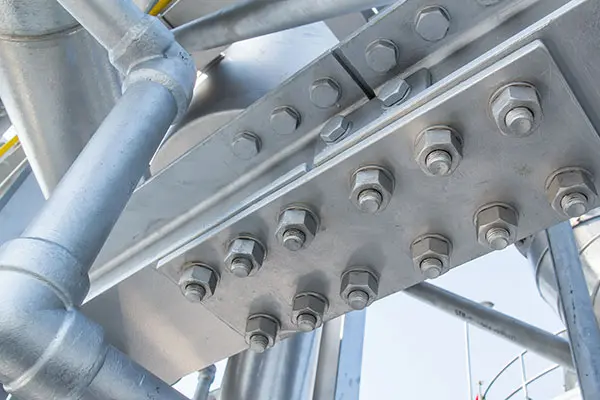
3. Connection methods: Compatible with welding, standard bolting, or galvanized bolting.
Specifications Table of Galvanized Structural Steel Angle Bars
Contact HAISHENG China supplier of Structural Steel Components, Steel Structure Cladding Components and Structural Steel Fasteners. Our professional sales team will reply with detailed quotation, product parameters and delivery plan within 24 hours to meet your bulk procurement demand.
We use cookies to offer you a better browsing experience, analyze site traffic and personalize content. By using this site, you agree to our use of cookies. Privacy Policy