Tianjin Haisheng Steel Structure Co., Ltd.
Products
Square Hollow Steel Tube Purlins
  • Square Hollow Steel Tube PurlinsSquare Hollow Steel Tube Purlins
  • Square Hollow Steel Tube PurlinsSquare Hollow Steel Tube Purlins

Square Hollow Steel Tube Purlins

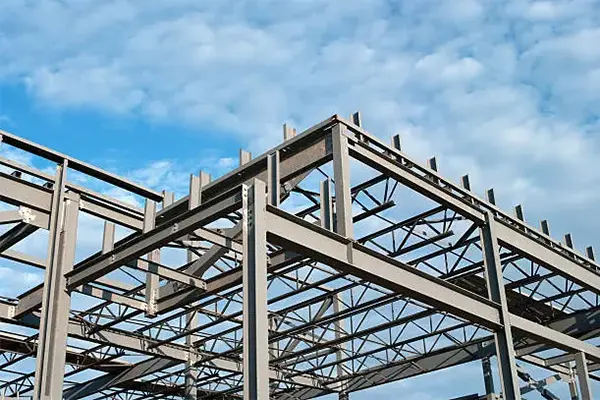
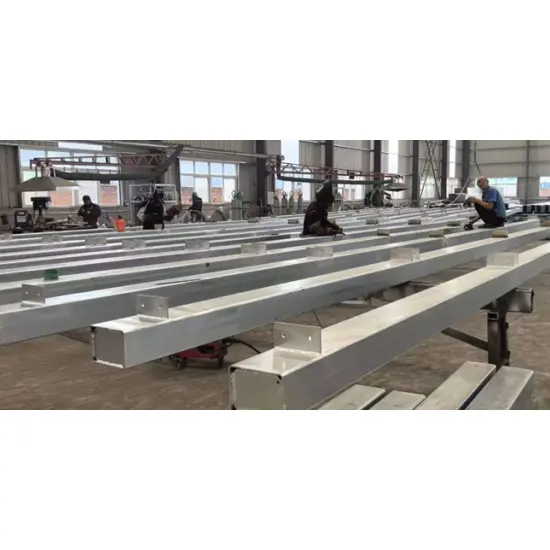
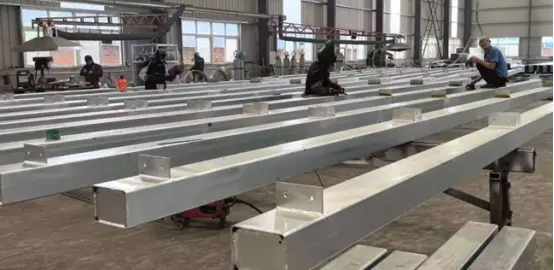
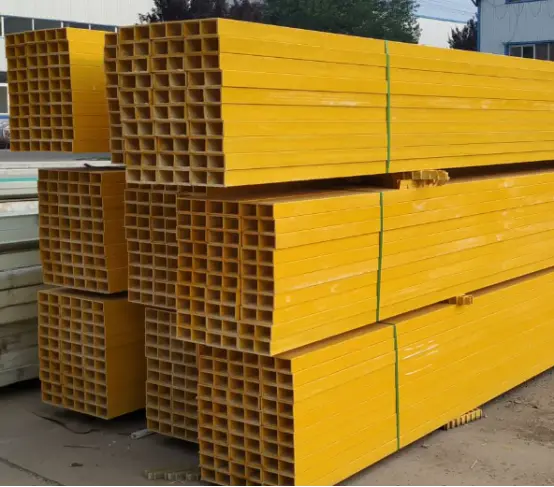
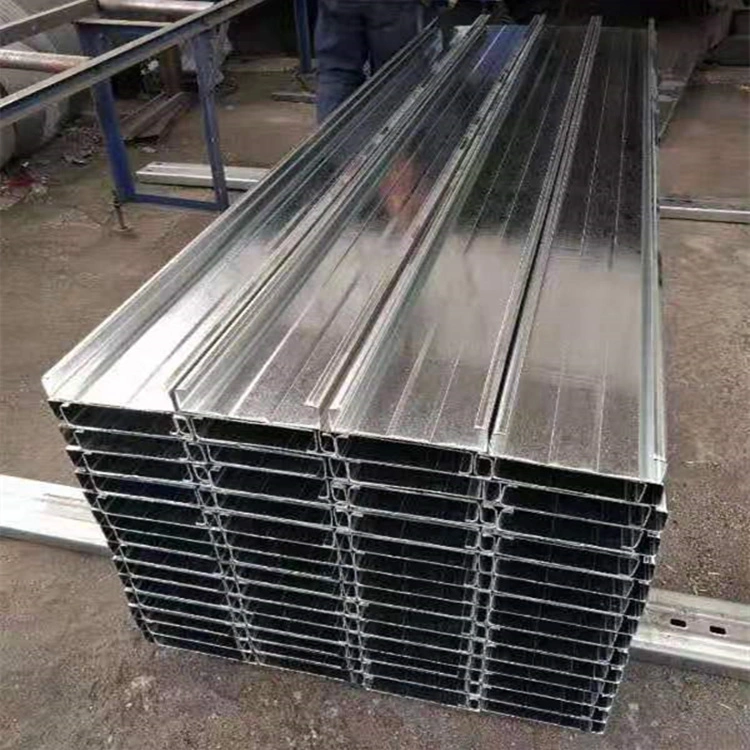
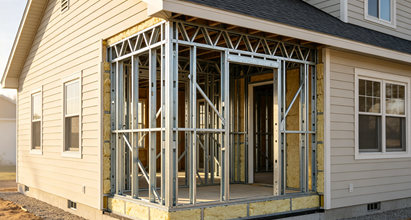
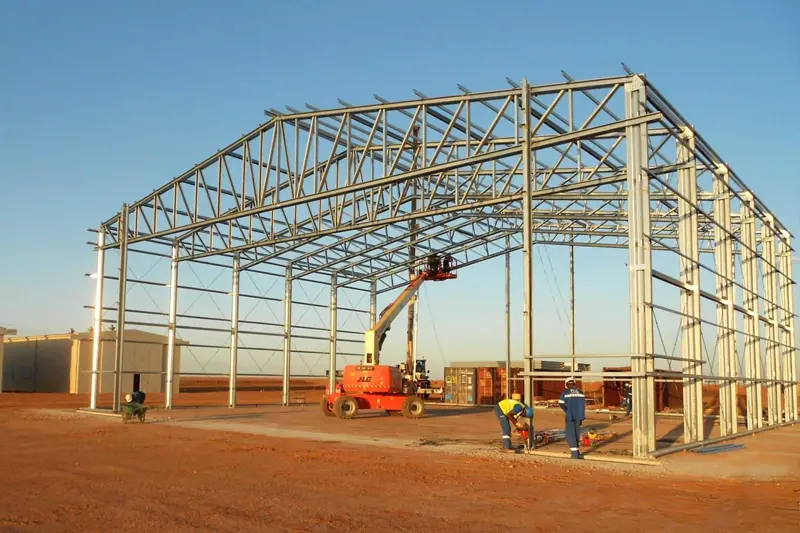
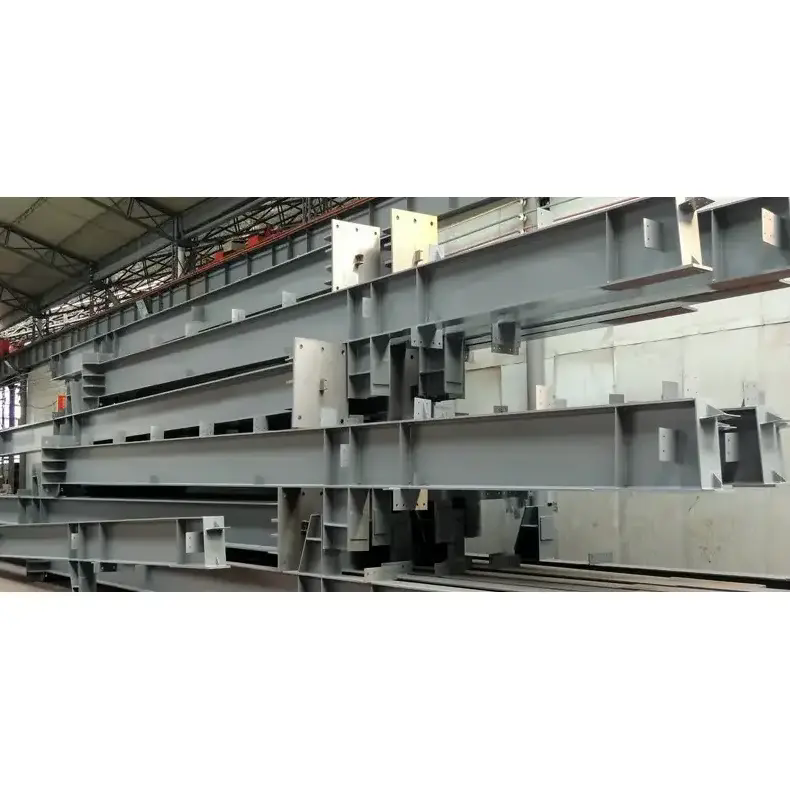
HAISHENG is a professional manufacturer and supplier of square hollow steel tube purlins. These load-bearing structural components are fabricated from square seamless or welded rectangular steel tubes through processes such as straightening, cutting to length, punching, and anti-corrosion treatment. Featuring a standard square cross-section, they offer balanced load distribution across all four sides, high rigidity, and superior stability. They are widely used in light steel building roofs, walls, and load-bearing frameworks that require high load-bearing capacity, handle complex stress conditions, or feature regular geometric designs.

Square hollow steel tube purlins serve as horizontal load-bearing members manufactured from cold-formed hollow square or rectangular tubes. Cut to length and punched according to specific roof or wall spacing requirements and treated for corrosion resistance, they are installed atop main steel beams or rigid frames. They secure profiled steel sheeting and insulation layers while transferring roof loads to the main structure, functioning as solid-web rigid purlins.

Square Hollow Steel Tube Purlins

Standard Product Specifications

I. Basic Definitions

1. Applicable Standards

·Profile Standard: GB/T 6728-2017 (Cold-formed hollow structural steel sections)

·Design Codes: GB 50017, GB 50018 (Steel structures / Cold-formed thin-walled steel structures)

·Anti-corrosion Standard: Hot-dip galvanizing per GB/T 13912

2. Common Materials and Application Scenarios

·Common Materials: Q235B (standard industrial plants); Q355B (heavy-load, long-span, or high wind/snow load areas)

·Cross-section Types: Square tubes and rectangular tubes (rectangular tubes are commonly used for roofs; square tubes are commonly used for walls)

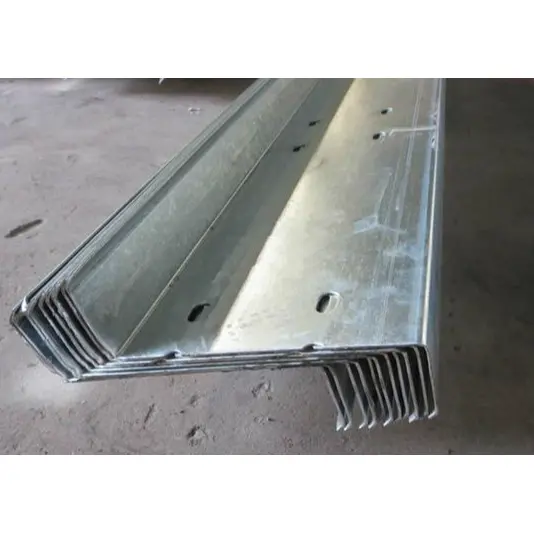
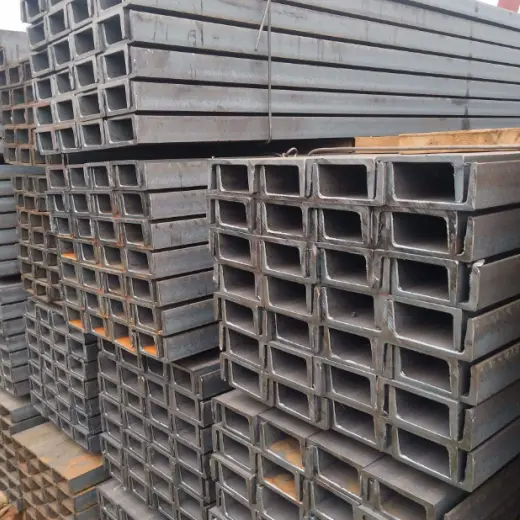
·Typical Applications: Heavy-load industrial plants, warehouses, stadiums, canopies, curtain wall framing, photovoltaic mounting systems, and coastal industrial sites with high corrosion risks. Compared to C-section, Z-section, or channel steel purlins, they offer superior rigidity, torsional resistance, and overall structural stability.

3. Cross-section and Wall Thickness Requirements (Specific to Purlins)

·Standard cross-sections: 60×60, 80×40, 80×80, 100×50, 100×100, 120×60 mm

·Purlin wall thickness: Primary load-bearing ≥ 2.0 mm; standard 2.0–3.0 mm; heavy-duty 2.5–4.0 mm (wall thickness < 1.5 mm not suitable for primary purlins)

·Fixed lengths: Standard 6 m/9 m/12 m; custom lengths available based on span.

II. Complete System Configuration

Square Hollow Steel Tube Purlin System = Main purlin body + Support connection system + Lateral stability system + Overlap/sealing accessories + Roofing fixation ancillaries + Anti-corrosion system; all components are factory-prefabricated and assembled on-site.

(I) Part One: Square Tube Purlin Body (Core Material)

1.Profile: Cold-formed square/rectangular tube (Q235B/Q355B)

2.Processing details:

Cut to specified length per drawings; ends must be smooth and deburred;

Bolt holes for end supports (web-mounted, avoiding high-stress zones);

Holes for intermediate tie rods/diagonal braces (for roof lateral bracing);

Optional end sealing plates (to prevent water accumulation and debris entry).

3.Appearance requirements: No twisting, lateral bowing, cracking, or dents; straightness ≤ 1.5 mm/m.

(II) Part Two: Support Connection Accessories (Fixing purlins to main beams)

Ensures supports do not twist or overturn; a mandatory component.

1. Purlin Support Plate (L-shaped / Flat plate type)

o Material: Q235B steel plate; thickness: 3.0–5.0 mm

o Function: Welded to the main steel beam to support the ends of the square tube purlins.

2. Connection Bolts

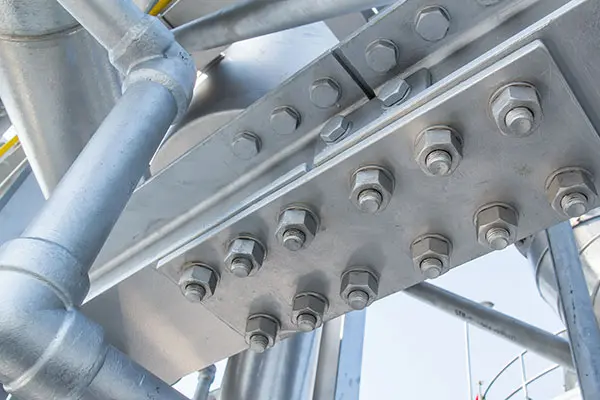
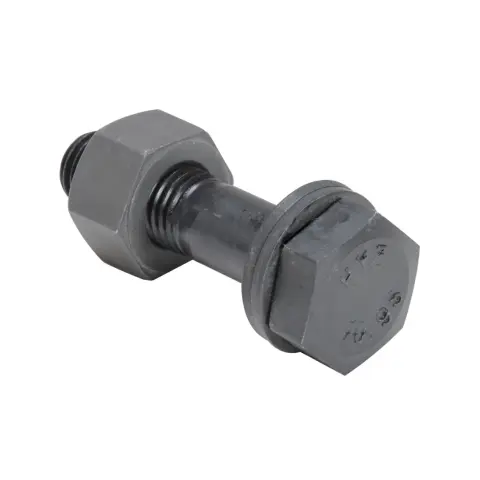
o Specifications: M12, M14, or M16 high-strength galvanized bolts

o Quantity: ≥2 bolts per end (arranged along the height of the purlin)

o Accessories: Flat washers, spring washers, and nuts (all fully galvanized).

3. End Sealing Plate (Optional / Mandatory for coastal areas)

o Thin steel plate to seal the ends of the square tubes; welded shut to prevent rainwater ingress and corrosion.

(III) Part 3: Lateral Stability System (Core component for preventing overall roof instability)

Required for long-span square tube purlins to prevent lateral bending and overturning.

1. Straight Tie Rod

o Material: Q235 round steel bar; specifications: Φ12, Φ14

o Layout: Horizontal tie connection running the full length of the purlin, passing through pre-drilled holes in the square tube.

2. Diagonal Tie Rod + Strut (Diagonal stability)

o Diagonal tie rod: Same round steel bar as the straight tie rod;

o Strut: Φ32×2.0 welded pipe or small-section square tube; provides vertical or diagonal bracing support.

3. Eave Brace / Knee Brace (Roof-specific; critical safety component)

o Material: Equal-leg angle steel (L40×4, L50×5)

o Function: Connects the bottom flange of the purlin to the main beam to restrict lateral twisting of the purlin; mandatory in high-wind or heavy-snow regions.

(IV) Part 4: Purlin Lap-Joint Accessories (For long-span continuous purlins)

Used when a single purlin length is insufficient and multiple purlins must be joined:

1. Internal and external lap connection plates (steel plate)

2. Lap bolts (same specifications as support bolts)

3. Lap requirements: Lap length ≥ 2 times the section height; connection made on both top and bottom sides. (V) Part 5: Roof Panel Fixing Accessories (Purlins + Complete Roof System)

1. Self-tapping screws: ST5.5 / ST6.3 galvanized self-drilling screws with waterproof EPDM washers.

2. Roof brackets (corrugated sheet brackets): Specialized galvanized brackets for high-profile corrugated steel sheets.

3. Sealant and waterproof washers: Accessories for roof waterproofing.

(VI) Part 6: Anti-corrosion System (Standard complete set; two main processes)

Option 1: Hot-dip galvanizing (Outdoor / Factory / Coastal / High-corrosion areas; preferred choice)

· Process: Pickling → Water rinsing → Fluxing → Hot-dip galvanizing → Passivation.

· Zinc coating thickness: Inland ≥80μm; Coastal/Chemical zones ≥120μm.

· Requirements: No missed coating, peeling, sagging, or color variation.

Option 2: Anti-corrosion painting (Indoor / Dry environments; black steel purlins)

· Process: Shot blasting / Sandblasting for rust removal (Sa2.5 grade) → Primer → Topcoat.

· Total paint film thickness: ≥80μm.

· Common specification: Epoxy primer + Weather-resistant topcoat.

III. Standard Complete Set List

Category

Accessories Name

Common Specifications

Function

Main Material

Square & Rectangular Tube Purlin

60×60~120×60, Wall Thickness 2.0~3.0mm

Main load-bearing for roof

Support Bracket

L-shaped Purlin Bracket Plate

3.0~5.0mm Steel Plate

Support the end of purlins

Connection Fitting

Galvanized Bolt + Nut + Washer

M12/M14/M16

Fix purlins to purlin brackets

Tie Rod

Straight Tie Rod

Φ12/Φ14 Round Steel

Lateral horizontal stability

Tie Rod

Diagonal Tie Rod + Support Tube

Φ12 Round Steel + Φ32×2.0 Welded Pipe

Overall diagonal stability

Anti-torsion Fitting

Angle Bracing

L40×4 / L50×5

Prevent purlin torsion & overturning

Sealing Fitting

End Sealing Plate

Thin Steel Plate

Pipe end sealing & waterproofing

Fastener For Panel

Self-drilling Screw + Waterproof Washer

ST5.5/ST6.3

Fix profiled steel sheets

Anti-corrosion Treatment

Hot-dip Galvanized / Paint Coating

Zinc Layer 80~120μm / Paint Film ≥80μm

Rust prevention & long service life

IV. Key Differences: Square Hollow Steel Tube Purlins vs. C/Z/Channel Steel Purlins

1. Cross-section: Closed hollow section; torsional resistance, rigidity, and overall stability are far superior to open C/Z/channel sections.

2. Loading: Suitable for heavy loads, long spans, strong winds, snow accumulation, and coastal corrosive environments.

3. Self-weight: Lighter than channel steel; slightly heavier than C/Z sections.

4. Cost: Medium-to-high; long service life and low maintenance costs.

5. Installation: Uniform tube ends; convenient for tie-rod perforation; high structural integrity. V. Typical Selection Recommendations

·Standard light-gauge steel factory buildings and dry rooms: 80×40×2.0 rectangular tubing + complete set of galvanized accessories

·Heavy-duty applications and regions with high wind/snow loads: 100×50×2.5–3.0 Q355B rectangular tubing

·Coastal or chemically corrosive areas: Fully hot-dip galvanized system (zinc coating ≥120μm) + end sealing plates

·Wall purlins: Typically 60×60 or 80×80 square tubing.

Square Hollow Steel Tube Purlins

Core Product Advantages

1. Enclosed square cross-section ensures uniform load distribution on all four sides, offering excellent resistance to bending, torsion, and lateral pressure.

2. High overall structural rigidity; resistant to bending or deformation, ensuring stable and reliable load-bearing capacity.

3. Smooth, square-edged profile facilitates easy splicing and joining, ensuring strong structural integrity during horizontal and vertical assembly.

4. Substantial wall thickness provides resistance to wind, snow, and heavy loads, making it suitable for high-load applications.

5. Highly adaptable for cutting and drilling; flexible processing allows for compatibility with diverse architectural designs.


Key Differentiators

1. Closed hollow section offering superior combined torsional and flexural performance

C-sections, Z-sections, and channel steels are open profiles prone to lateral buckling and twisting under load. Square hollow steel tube purlins feature a closed cross-section with torsional rigidity far exceeding the other three types; they remain stable under strong winds and negative suction pressures, offering distinct advantages for long spans and regions with heavy wind or snow loads. They exhibit less deflection under the same load.

2. High overall rigidity allows for simplified tie-rod and sag-rod configurations

C/Z purlins with spans exceeding 4 meters require closely spaced tie-rods and sag-rods. Square tubes possess inherent stability, allowing for reduced tie-rod usage in small-to-medium spans, thereby saving on auxiliary materials and installation labor. There is no need to increase thickness or use oversized sections for heavy-load roofs.

3. Flat surfaces on all four sides ensure uniform load distribution for wall and roof panel fastening

With flat top and bottom flanges, self-tapping screws experience no eccentric loading, preventing the unilateral compression or indentation common with open-profile purlins. They offer far superior adaptability for use as wall purlins, curtain wall framing, or canopy supports compared to C/Z sections.

4. Impact and foot-traffic resistant; resists deformation during on-site construction

Thin-walled C/Z sections are easily dented or structurally compromised during hoisting or by workers walking on them. The hollow structure of square tubes resists impact, preventing deformation during roof maintenance or temporary equipment storage, and allows for high reusability during facility renovations.

5. Utilities can be routed through the hollow interior for a clean, organized appearance

Electrical wires and conduits can be routed inside the square tube, eliminating the need for external mounting; this ensures a neat appearance and protects lines from UV degradation. C/Z and channel sections require external strapping or fastening for utilities.

6. Sealed design options enhance corrosion resistance and durability in coastal environments

Sealing the ends creates a closed internal cavity, preventing moisture ingress and internal rusting—issues common in open-profile purlins where dust and water accumulate. When hot-dip galvanized, the overall corrosion resistance and service life surpass those of standard C/Z sections. VII. Drawbacks

1. Uses more material than C/Z-sections of the same specification; higher unit material cost.

2. Cannot be lapped in a staggered pattern to form continuous beams like Z-sections; long spans usually require butt-joint splicing.

3. Less economical than C-sections for standard indoor warehouses where low cost is the priority.

Summary

1. C/Z-sections: High cost-performance ratio; the top choice for standard industrial plants.

2. Channel steel: Excessive self-weight, high cost, and cumbersome to handle.

3. Square tube purlins: Preferred choice for high wind/snow loads, coastal corrosive environments, heavy loads, curtain walls, and canopies.


Standard Production Process

Applicable Standards: GB/T 6728-2017 (Cold-formed hollow structural steel sections), GB 50018, GB/T 13912 (Hot-dip galvanizing). The process comprises six core stages: Raw material acceptance → Square tube base pipe production → Custom purlin fabrication → Anti-corrosion treatment → Finished product inspection → Packaging and shipment. Operations are fully CNC-controlled and streamlined.

I. Stage 1: Incoming Raw Material Inspection

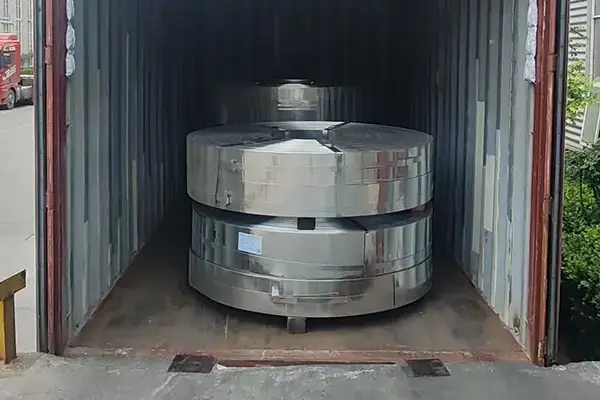
1. Main materials: Hot-rolled steel strip/coil (Q235B, Q355B); wall thickness 2.0–4.0 mm.

2. Auxiliary materials: Plates, bolts, welding electrodes, galvanizing materials, paint, etc.

3. Inspection items:

1. Material quality certificates, heat/batch numbers, mechanical properties (yield strength, tensile strength).

2. Steel strip thickness, width, and surface flatness; absence of cracks, laminations, or severe rust.

3. Non-conforming raw materials are strictly prohibited from entering production.

II. Stage 2: Production of Cold-Formed Square/Rectangular Base Tubes

Mainstream process: Strip uncoiling → Leveling → Continuous cold-roll forming → High-frequency welding → Sizing and straightening → Non-destructive testing (NDT) → Cut-to-length.

1. Uncoiling and leveling: Uncoiling the steel coil and multi-roll leveling to eliminate strip warping and wavy deformation. 2. Continuous Cold Roll Forming: Progressive bending using multiple sets of precision rollers to gradually form a closed square or rectangular cross-section; angular tolerance ≤±0.5°.

3. High-Frequency Welding: Fusion of the tube seam via high-frequency induction welding; weld strength ≥95% of the base material; internal and external weld beads are scarfed to remove burrs and prevent stress concentration.

4. Sizing and Precision Straightening: Roller sizing units control cross-sectional dimensions (tolerance ≤±0.1mm); overall tube straightness ≤1mm/m.

5. Online Non-Destructive Testing (NDT): Eddy current or ultrasonic testing to detect hidden weld cracks or slag inclusions; defective tubes are automatically rejected.

6. Flying Cut-to-Length: Precise cutting to design lengths (6m/9m/12m or custom); end faces are smooth and free of tearing.

III. Stage 3: Specialized Custom Processing for Purlins

Square base tube → Finished purlin component; a specialized deep-processing stage for steel structures.

1. End Facing and Deburring: Tube ends are ground smooth to eliminate cutting slag and sharp corners.

2. CNC Hole Punching/Drilling (Critical Process)

1. Ends: Support bolt holes (M12/M14/M16); hole position deviation ≤±1mm.

2. Tube Body: Holes for tie rods and diagonal tie rods (for lateral stability systems).

3. Hole Requirements: Avoid stress concentration zones; holes must be perfectly round and free of tearing.

3. End Sealing Plate Welding (Mandatory for coastal/outdoor use): Sealing plates are fully welded to both ends of the square tube to prevent water ingress, dust accumulation, and internal corrosion.

4. Purlin Bracket/Stiffener Plate Welding (As required): L-shaped purlin brackets and local stiffener plates are welded at support locations; welds must be full and sound, free of cold shuts or slag inclusions.

5. Eave Brace Connection Plate Welding (Standard for roof purlins): Angle-steel eave brace connection points are welded according to drawings.

6. Overall Secondary Straightening: Correction of lateral bowing and twisting after welding and hole processing to ensure straightness during installation. 

IV. Stage 4: Surface Anti-Corrosion Treatment

Process A: Hot-dip Galvanizing (Preferred for outdoor, factory, coastal, or highly corrosive areas)

Standard: GB/T 13912

1. Pre-treatment: Alkaline degreasing → Water rinsing → Acid pickling (rust removal) → Water rinsing → Fluxing → Drying

2. Hot-dip Galvanizing: Immersion in molten zinc at approx. 450°C for uniform coating

3. Passivation & Cooling: Enhances zinc layer adhesion and resistance to white rust

4. Quality Standards: Inland zinc layer ≥80μm; Coastal/Chemical zones ≥120μm; no uncoated spots, peeling, or sagging.

Process B: Paint Coating (For indoor/dry environments)

1. Shot/Sand blasting to Sa2.5 grade for rust removal

2. Primer (Epoxy primer) → Topcoat (Weather-resistant topcoat)

3. Total film thickness ≥80μm; no missed spots, sagging, or bubbles.

V. Stage 5: Comprehensive Factory Inspection of Finished Products

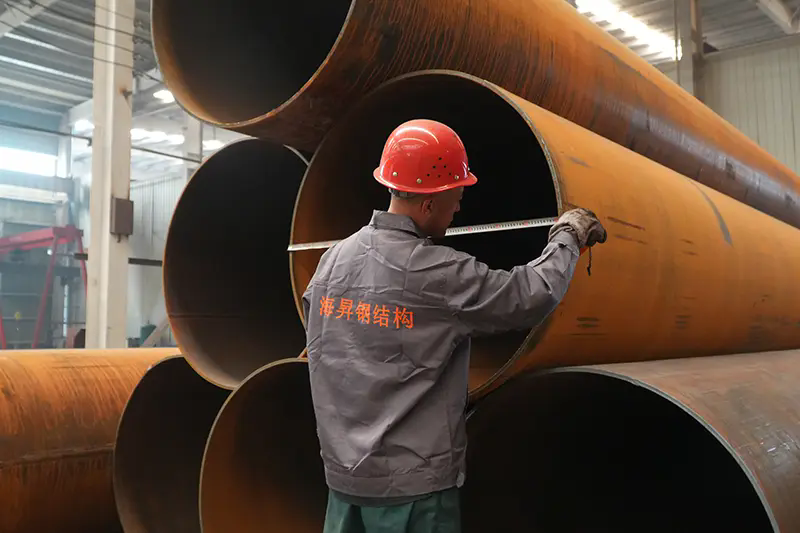
1. Dimensional Inspection: Cross-section specifications, length, hole diameter, hole spacing, straightness, and end-face perpendicularity.

2. Visual Inspection: No deformation, dents, cracks, or welding slag; uniform galvanizing/paint coating.

3. Anti-corrosion Testing: Spot checks on zinc layer thickness, paint film thickness, and adhesion.

4. Mechanical Testing: Batch sampling for bending and tensile tests to ensure load-bearing performance.

5. Documentation: Issuance of product certificates, material specifications, galvanizing reports, and inspection records.

VI. Stage 6: Packaging, Labeling, Warehousing, and Shipment

1. Bundling by specification and length; secured with steel strapping to prevent deformation from impact during transport.

2. Bundle Labeling: Specification, material, length, quantity, production date, and batch number.

3. Loading & Transport: Rain protection during loading; strictly no throwing or heavy crushing during lifting and transport. Critical Process Control Points

1. The closed cross-section of the square tube must be free of openings or weld cracks.

2. Re-straightening is mandatory after hole cutting and welding to control overall twisting.

3. For outdoor applications, end sealing plates must be installed to seal the internal cavity and prevent corrosion.

4. Hot-dip galvanizing must be free of uncoated areas, thick edges, and zinc nodules.

5. Hole position accuracy directly affects on-site installation; the tolerance must be strictly controlled to ≤1mm. Simplified Process Flowchart

Raw Material Acceptance → Uncoiling & Leveling → Cold Roll Forming → High-Frequency Welding → Sizing & Straightening → Flaw Detection → Cut-to-Length → CNC Hole Punching → End Plate/Accessory Welding → Secondary Straightening → Hot-Dip Galvanizing / Anti-Corrosion Painting → Finished Product Inspection → Packaging & Labeling → Warehousing & Shipment


Core Performance Parameters

I. Base Material Mechanical Properties

1. Material Grade: Q235B, Q355B

Q235B: Yield Strength ≥235 MPa, Tensile Strength 375–500 MPa

Q355B: Yield Strength ≥355 MPa, Tensile Strength 470–630 MPa

2. Coefficient of Linear Expansion: 1.2 × 10⁻⁵/°C

II. Common Cross-Sections (mm) + Theoretical Weight

Size

Wall Thickness (mm)

Theoretical Weight (kg/m)

60×60

2.0

3.55

80×40

2.0

3.55

80×80

2.0

4.83

100×50

2.0

4.17

100×100

2.5

7.46

120×60

2.5

6.28

Standard Purlin Wall Thickness: 2.0/2.5/3.0 mm; Heavy-Duty/Thickened: 3.0–4.0 mm

III. Anti-Corrosion Specifications

1. Hot-Dip Galvanizing: Inland Zinc Layer ≥80 μm; Coastal/Chemical Plant Areas ≥120 μm

2. Anti-Corrosion Painting: Total Film Thickness (Epoxy Primer + Topcoat) ≥80 μm

IV. Accessory Specifications

1. Tie Rods: φ12, φ14 (Q235 Round Steel; Hot-Dip Galvanized with Thread-Rolled Ends)

2. Sag Rods: Φ32 × 2.0 Welded Pipe

3. Eave Braces: L40×4, L50×5 Angle Steel

4. Connections: Purlin Cleats (3.0–5.0 mm Steel Plate), Bolts (M12/M14/M16)

V. Selection & Application

1. Standard Walls / Small Canopies: 60×60×2.0, 80×40×2.0

2. Standard Factory Roofs: 80×80, 100×50×2.0–2.5

3. Coastal High-Wind Areas / Heavy-duty roof framing: 100×100 mm or 120×60×2.5–3.0 mm sections (Q355B steel with heavy-duty galvanizing).

VI. Structural Characteristics

Square hollow steel tube purlins feature a closed hollow cross-section, offering torsional resistance far superior to that of C-sections, Z-sections, or channel steel; for small to medium spans, this allows for a reduction in the number of sag rods and knee braces required.


Hot Tags: Square Hollow Steel Tube Purlins, Supplier, Customized
Send Inquiry
Contact Info
Contact HAISHENG China supplier of Structural Steel Components, Steel Structure Cladding Components and Structural Steel Fasteners. Our professional sales team will reply with detailed quotation, product parameters and delivery plan within 24 hours to meet your bulk procurement demand.
X
We use cookies to offer you a better browsing experience, analyze site traffic and personalize content. By using this site, you agree to our use of cookies.Privacy Policy
RejectAccept