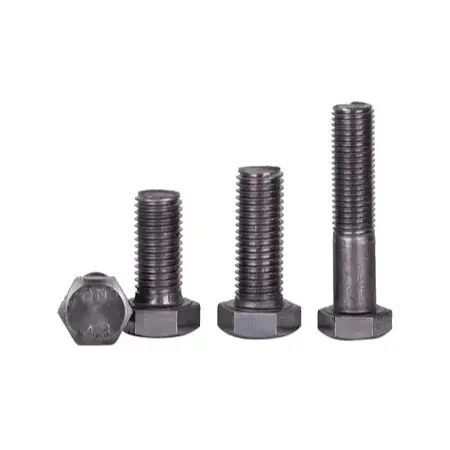
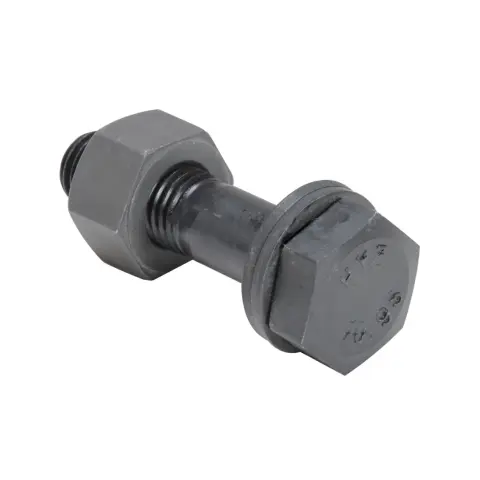
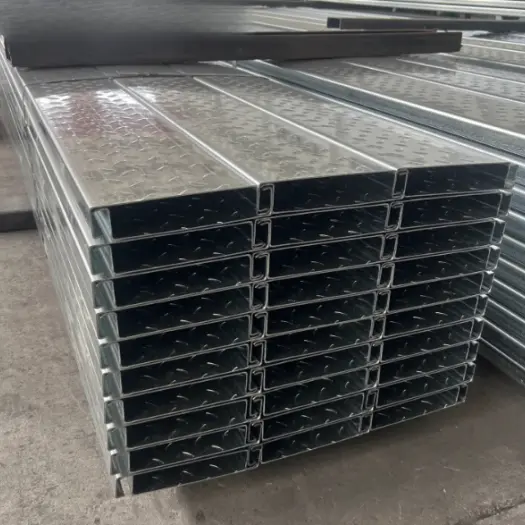
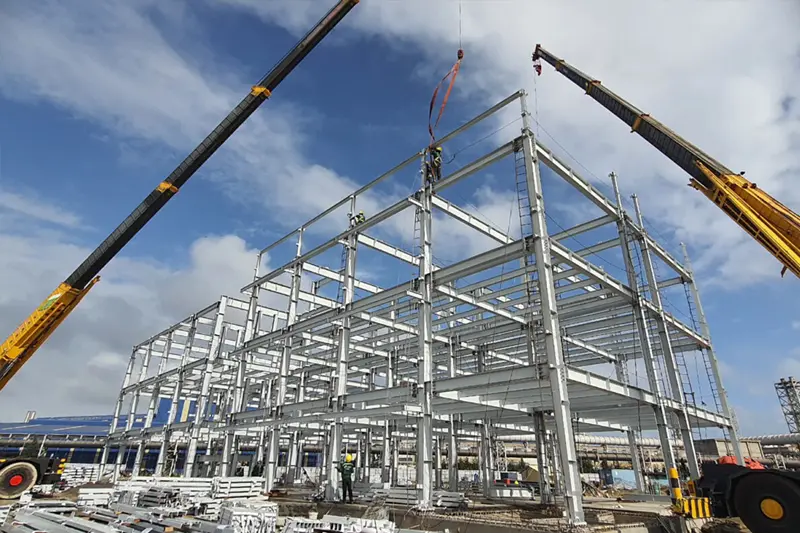
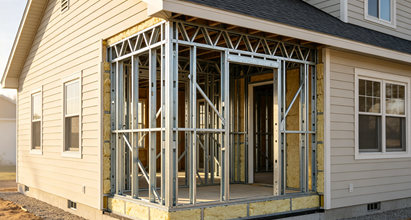
Heavy Duty Anchor Bolts for Steel Structures are critical load-bearing embedded components used to anchor steel columns or steel structural bases to concrete foundations. One end is deeply embedded and securely anchored within the foundation concrete, while the threaded other end protrudes to connect with the steel column base plate via nuts; these bolts transfer vertical tension, horizontal shear, and bending moments, thereby preventing structural sliding or overturning.
· Anchoring: "Locks" the superstructure's steelwork to the foundation.
· Load Transfer: Resists tensile, shear, and bending forces caused by wind, earthquakes, cranes, etc.
· Leveling: Works with leveling plates to allow for fine adjustments to the steel column's elevation and verticality.
· Positioning: Ensures precise pre-installation positioning to guarantee the accuracy of steel column installation.
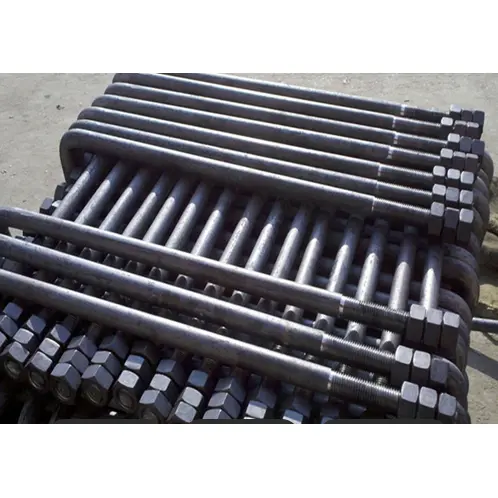
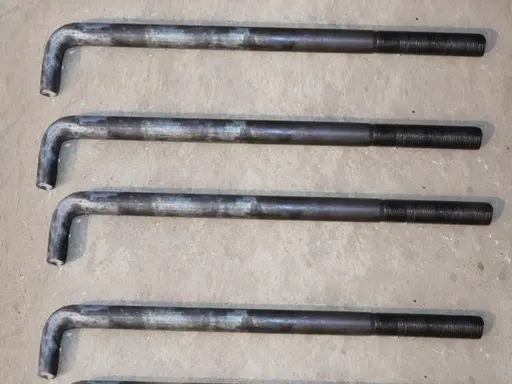
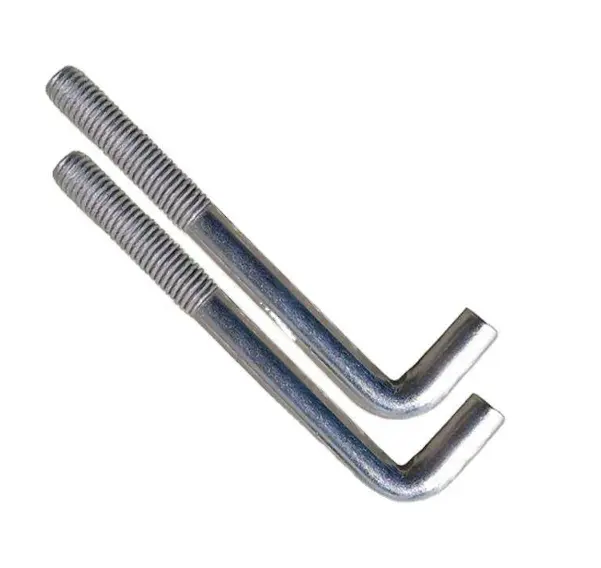
· L-Type (J-Type): Features a 90° hook at the end; commonly made of Q235B steel and used for small-to-medium steel structures; embedment depth is approximately 25d (where d = diameter).
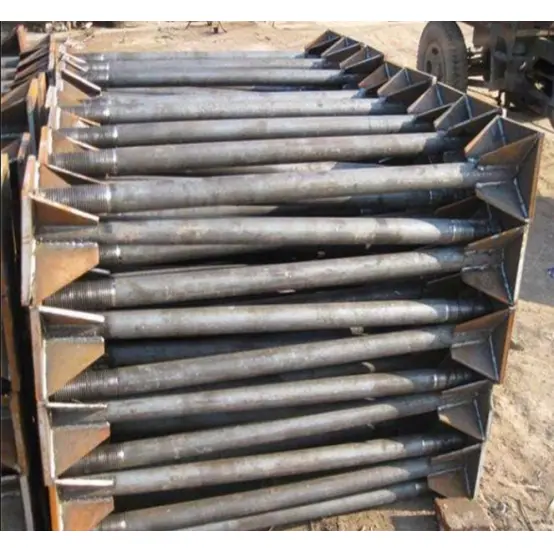
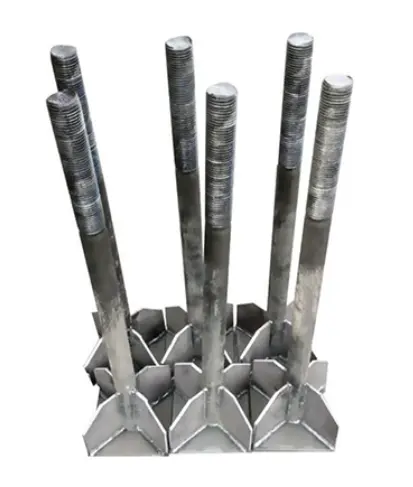
· Anchor Plate Type (Welded Plate Type): Features a square or circular steel plate welded to the tail end; offers high pull-out resistance; used for heavy-duty industrial buildings, long-span structures, and crane columns; embedment depth is 20d–25d.
· J-type (hook-shaped): Features a longer hook for more reliable anchorage; used for vibrating equipment and heavy-duty foundations.
· Straight-rod type (double-ended threading): No hooked ends; utilizes pre-drilled holes and secondary grouting; allows for easy adjustment; used for renovation or reinforcement.
· Materials: Q235B (common), Q355B (high-strength), 45#/40Cr (Grade 8.8/10.9).
· Standards: GB/T 799-2020, 20G112-2, DL/T 1236.
A complete assembly of heavy-duty anchor bolts for steel structures comprises: anchor bolt + nut set + flat washers + spring washer + anchor plate/positioning component + protective sleeve.
· Anchor bolt: 1 unit; specifications M16–M64, length 500–3000mm; exposed thread length ≥ 3d.
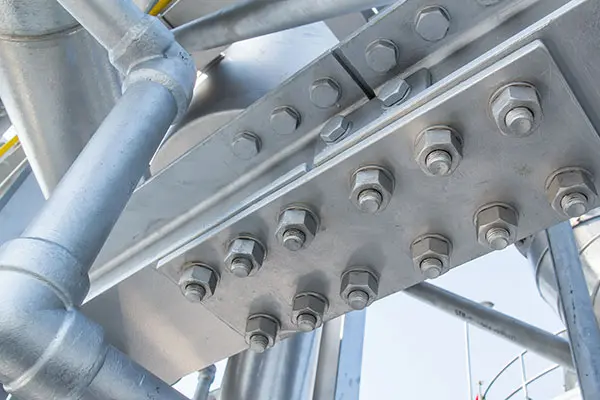
· Hex nuts: 2–3 units; Grade 8 or 10 (matching bolt strength); top nut for fastening, bottom nut for leveling, and uppermost nut for locking/anti-loosening.
· Flat washers: 2 units; thickened (3–5mm) to distribute pressure and prevent crushing of the base plate.
· Spring washer / Anti-loosening device: 1 unit; mandatory for vibration-prone environments (alternatively, double nuts or locking nuts may be used).
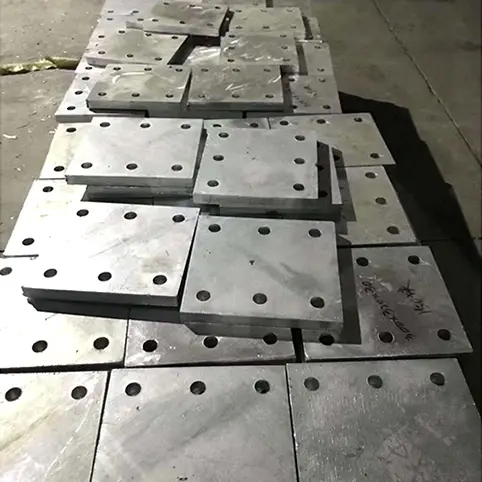
· Anchor plate (specific to anchor plate types): 1 unit; Q235B steel, 10–20mm thick, dimensions ≥ 5d × 5d.
· Positioning bracket / Template: 1 set; for fixing bolt spacing and verticality during embedment.
· Thread protective sleeve: 1 unit; protects exposed threads from concrete contamination and impact damage.
· Lower section: Leveling nut + lower washer (positioned above the foundation surface to adjust elevation).
· Middle section: Steel column base plate (fitted over the anchor bolt; used to adjust verticality).
· Upper section: Upper washer + fastening nut + locking nut (tightened to secure the assembly and prevent loosening due to vibration).
· Light-duty (no overhead crane): M24 × 800mm; includes 2 nuts, 2 flat washers, and 1 spring washer.
· Medium-duty (5–10t overhead crane): M30 × 1000mm; includes 3 nuts, thickened washers, and an anchor plate. · Heavy-duty (long-span / heavy-duty crane): M36–M42 × 1200–1500 mm, Grade 8.8; equipped with double nuts, anchor plates, and positioning frames.
Quick Reference: Key Parameters
· Diameter: M16–M64 (common sizes: M20/M24/M30/M36).
· Effective embedment depth: Q235B ≥ 25d; Q355B ≥ 30d.
· Exposed length: Base plate thickness + washer thickness + nut thickness + 2–3 thread pitches of allowance.
· Spacing deviation: ≤ ±2 mm; Verticality: ≤ 1/500.
1. Heavy Duty Anchor Bolts for Steel Structures feature robust embedment and stable performance regarding tensile strength, pull-out resistance, and overturning resistance.
2. Precise positioning and easy installation; effectively controls the verticality and spacing of steel columns.
3. High material hardness; resistant to tensile stress and deformation; high safety factor for load-bearing.
4. Comprehensive accessory set with ample adjustment allowance; facilitates on-site alignment and leveling.
5. Effective anti-rust treatment; resistant to corrosion during long-term use when embedded in concrete.
1. High comprehensive load-bearing capacity (tension, shear, and bending): Featuring a solid rod body combined with a tail hook or anchor plate configuration, these heavy-duty anchor bolts for steel structures offer significantly higher load-bearing capacity than expansion or chemical anchors. They can withstand vertical compression, horizontal shear, wind loads, and seismic bending moments transmitted by steel columns. In contrast, expansion and chemical anchors primarily resist tension and have weak shear and overturning resistance; they are strictly prohibited for use in anchoring load-bearing primary steel columns.
2. Uniform load distribution and absence of stress concentration: Fully embedded in concrete, the load is transferred evenly along the rod body to the foundation. Expansion anchors rely on sleeve expansion against the concrete wall, while chemical anchors rely on adhesive bonding; both are prone to loosening or bond failure under long-term vibration, making them unsuitable for steel structure workshops with overhead cranes or vibrating equipment.
3. Full coverage of large specifications: Available in large diameters (M16–M64) and extra-long rod lengths to meet the load-bearing requirements of heavy-duty steel columns, long-span portal frames, and high-rise steel structures. Conventional chemical and expansion anchors are typically limited to smaller sizes and cannot accommodate heavy-load steel structures.
1. Monolithic cast-in-place anchorage integrated with foundation concrete: Embedded during the initial foundation pour, the concrete fully encapsulates the rod body and anchoring end, ensuring an anchorage lifespan equal to that of the foundation structure itself. Post-installed chemical anchors carry risks of adhesive aging, cracking, and failure due to water exposure, while expansion anchors are prone to loosening from vibration.
2. Secure pull-out resistance: L-hooks, J-hooks, and tail anchor plates create a mechanical interlock, ensuring the anchoring end does not pull out of the concrete even under load. Post-installed anchors rely on bonding or expansion forces and are prone to complete pull-out failure under ultimate loads.
3. Resilience against temperature extremes and moisture: An all-metal structure ensures stable performance in high temperatures, low temperatures, damp underground environments, and open-air factory sites. Chemical anchors suffer from poor heat and water resistance, leading to high failure rates in outdoor or underground foundation applications.
1. Multi-level leveling system with controllable precision: Equipped with a combination of multiple nuts and thickened washers, allowing for step-by-step adjustment of steel column elevation, levelness, and verticality. It offers a wide adjustment range and convenient fine-tuning; in contrast, post-installed anchors offer virtually no room for secondary leveling, making it impossible to correct positioning errors once installed.
2. Positioning brackets ensure high pre-embedding accuracy: Used with specialized positioning templates or brackets, bolt spacing and verticality errors during batch pre-embedding are kept within standard tolerances, ensuring axial alignment across rows of steel columns; post-installed anchors rely on on-site drilling, leading to significant positional deviations and difficulty in achieving straight alignment for multiple columns.
3. Standardized exposed threads: The exposed sections are uniformly machined with full threading to fit steel column base plate holes, offering high versatility and eliminating the need for on-site re-threading or hole modification.
1. Selection based on specific needs:
1). L/J-type hook bolts: Suitable for standard light- and medium-duty steel structures; cost-effective.
2). Anchor plate type: Suitable for heavy-duty loads, crane runway columns, and columns subject to high bending moments; offers enhanced pull-out resistance.
3). Straight double-ended threaded rods: Designed for pre-formed holes with secondary grouting; suitable for renovation, reinforcement, and expansion of existing factory buildings. A single product type covers scenarios ranging from new construction and renovation to light/heavy-duty structures and foundations for vibrating equipment, whereas standard construction anchors typically offer limited variety.
2. Flexible material strength grading: Options include Q235B (standard grade), Q355B (high-strength grade), and Grade 8.8/10.9 quenched and tempered high-strength bolts, catering to everything from standard workshops to heavy industrial buildings.
1. Low comprehensive cost for new projects: Pre-embedding occurs simultaneously with the foundation stage, integrating workflows and reducing labor allocation; conversely, post-installed chemical or expansion anchors have high unit costs and involve multiple labor-intensive steps—drilling, hole cleaning, adhesive injection, and curing—resulting in higher labor and schedule-related costs.
2. Maintenance-free: After hot-dip galvanizing or black oxide anti-corrosion treatment, long-term use requires no inspection, re-grouting, or re-tightening; in contrast, post-installed anchors require periodic checks of the adhesive and tightness, resulting in high O&M costs.
3. High construction tolerance: Only the threads need protection after embedment, making the component resistant to total damage during concrete pouring; conversely, post-installation drilling risks severing existing reinforcement bars within the foundation, creating structural hazards.
1. Proven anti-corrosion solutions: Processes such as hot-dip galvanizing, thermal diffusion galvanizing, and black oxide coating provide strong rust resistance in outdoor plant areas and environments exposed to rain, snow, and dust; chemical anchors, however, often have only localized anti-corrosion treatment on the metal rod, making the drilled hole area prone to rusting.
2. Excellent fatigue resistance: Under repeated dynamic loads (such as crane start-stop cycles or wind-induced vibration), the metal rod is resistant to fatigue failure, making it the preferred choice for the long-term service of steel structures.
1. Must be embedded during the early stages; suitable only for new construction projects. They cannot be used on completed concrete foundations, where chemical anchors or expansion bolts must be used instead.
2. High requirements for initial drawings and positioning accuracy; rectification is difficult if the embedment is misaligned.
3. Long individual lengths and large volumes; transportation and storage require more space compared to small post-installed anchors.
Standards: GB/T 799-2020, GB/T 3098. Covers mainstream types such as L-shaped, J-shaped, and anchor-plate styles. The complete workflow comprises eight major processes: raw material inspection, cutting, bending/plate welding, threading, surface treatment, assembly/kitting, quality inspection, and packaging.
1. Material verification: Main materials are Q235B or Q355B round steel; high-strength versions utilize quenched and tempered 45# or 40Cr round steel. Material quality certificates and heat/batch numbers are verified, and random sampling is conducted for mechanical property and metallographic re-testing; non-compliant raw materials are isolated and returned.
2. Appearance and dimensional spot checks: Inspect round steel surfaces for cracks, folds, scabs, or corrosion; measure diameter and roundness to ensure tolerances meet national standards.
3. Zoned storage: Stack materials according to grade and diameter; elevate off the ground for moisture protection; strictly prohibit mixing different specifications.
1. Use a fully automatic bar cutting machine to cut to the total length specified in the drawings (including embedded section + exposed threaded section); length tolerance: ±3mm.
2. Ensure cuts are smooth, free of "horseshoe" shapes or burrs; apply a simple chamfer to the ends of large-diameter rods to prevent thread damage during subsequent processing.
3. Cut identical specifications in batches, label accordingly, and transfer to the next process.
1. L-type / J-type Hook Anchor Bolts (Standard Type)
Cold-form using a dedicated hydraulic bending machine; hook angles: 90° for L-type, large-radius curve for J-type; ensure a smooth arc transition at the bend—sharp angles and cracks are prohibited.
Strictly adhere to design specifications for the straight section length of the hook (standard: ≥10d, where d is the bolt diameter); overall dimensional deviation ≤±5mm.
Straighten the rod body after bending; ensure the overall rod curvature is ≤1‰.
2. Anchor Plate Type Anchor Bolts (Heavy-Duty Type)
Anchor plate: CNC cut and punch steel plate of the same material; hole diameter should be 1–2mm larger than the bolt rod diameter.
Assembly and welding: Center and position the Heavy Duty Anchor Bolts for Steel Structures rod within the anchor plate hole; use continuous fillet welding around the joint; weld leg size ≥6mm; ensure full weld penetration without slag inclusions, porosity, or cold shuts.
3. Post-welding: Remove slag, correct any deformation, and perform preliminary grinding on the welded area.
Apply full threading only to the exposed section; the effective thread length must comply with drawings (standard minimum: 3 times the bolt diameter).
Form threads via fully automatic thread rolling machines (preferred method; ensures continuous metal grain flow and high strength); precision thread cutting machines may be used for large-diameter rods.
Thread accuracy: Standard coarse threads (Class 6g); threads must be complete with no broken teeth, damaged threads, or burrs; must pass "Go" gauge and fail "No-Go" gauge tests; individual thread gauge inspection required.
4. Provide temporary protection for the threaded section to prevent impact damage or scratches.
Select the anti-corrosion method based on the operating environment; process the entire batch uniformly:
1. Blackening/Bluing (for dry indoor environments): Degreasing → Pickling → Blackening → Anti-rust oil immersion; enhances short-term rust resistance and thread lubrication.
2. Hot-dip Galvanizing (for outdoor/humid/coastal environments; mainstream method): Degreasing → Acid pickling/derusting → Fluxing → Hot-dip galvanizing → Cooling → Finishing; zinc coating thickness: standard ≥65μm, heavy-duty corrosion protection ≥85μm.
3. Thermal Zinc Diffusion (for high corrosion resistance and vibration conditions): Uniform zinc diffusion layer; wear-resistant and fatigue-resistant; suitable for facilities with overhead cranes.
Key step: Clean threads after galvanizing to ensure smooth nut engagement.
1. Assemble the complete set of accessories: hex nuts, flat washers, spring washers, positioning brackets, and thread protectors.
2. Trial assembly inspection: Nuts must screw smoothly onto the full length of the thread by hand without binding or stripping; washer inner diameters must match the rod body.
3. For anchor plate types: Re-inspect anchor plate welds and positional accuracy; for hook types: Verify hook dimensions and angles.
4. Install temporary supports for long rods and large-sized components to prevent deformation during transport.
1. Dimensional Re-inspection
Individual checks for total length, thread length, hook dimensions, anchor plate position, and rod straightness; items exceeding tolerance limits are sent for rework.
2. Thread Inspection
100% inspection using thread GO/NO-GO gauges; non-conforming parts are rejected.
3. Visual Inspection
Rod body must be free of cracks, deformation, or severe impact damage; galvanized coating must be free of bare spots, runs/drips, or peeling; weld appearance must meet standards.
4. Mechanical Testing (Sampling)
Random sampling per batch for tensile load-bearing tests and weld shear tests; inspection records are issued.
5. Anti-corrosion Spot Checks
Zinc coating thickness measured via thickness gauge; salt spray testing conducted on a batch-sampling basis (as required).
1. Categorized Marking: Each piece/bundle marked with specifications (Md×L), material, anti-corrosion type, production date, and project name.
2. Packaging and Protection
1). Threaded sections fitted with plastic protective sleeves to prevent abrasion and dust accumulation during transport.
2). Rods stacked in layers and sorted by length; large-diameter or long rods secured with strapping and wooden frames to prevent bending or deformation.
3). Storage: Stored in a dry indoor warehouse on raised platforms to prevent moisture; layered padding used during loading, with support brackets provided for extra-long items.
Standards: GB/T 799-2020, GB/T 3098.1, GB/T 13912; covers seven key areas: material mechanics, threads, dimensions, anchorage, anti-corrosion, welding, and tolerances; applicable to the full product range including L-type, J-type, and anchor-plate types.
1. Common Materials and Specifications
|
Material Grade |
Tensile Strength Rm |
Yield Strength ReL |
Elongation After Fracture |
Application Scenarios |
|
Q235B |
370~500MPa |
≥235MPa |
≥26% |
Light steel structures, crane-free factories, ordinary beams and columns |
|
Q355B |
470~630MPa |
≥355MPa |
≥21% |
Medium-sized factories, columns for 5~10t cranes, large-span rigid frames |
|
45# (Grade 8.8) |
≥800MPa |
≥640MPa |
≥12% |
Heavy-load columns, high bending moment foundations, equipment platforms |
|
40Cr (Grade 10.9) |
≥1040MPa |
≥900MPa |
≥9% |
Heavy industry, high load, strong vibration working conditions |
2. Base Material Requirements
Round steel surface must be free of cracks, scabs, folds, or delamination; surface corrosion depth must not exceed half of the diameter tolerance.
1. Nominal diameter: Standard sizes include M16, M20, M24, M30, M36, M42, M48, M56, and M64.
2. Effective length: Customizable range of 500–3000 mm; determined by foundation thickness plus exposed length.
3. Thread parameters
1). Thread type: Coarse-pitch standard thread; tolerance class 6g.
2). Effective thread length: Exposed section ≥ 3d (where d is the nominal bolt diameter).
3). Thread profile: Complete, free of broken threads, damaged threads, or burrs; passes "Go/No-Go" gauge inspection.
4. Anchorage end dimensions
1). L-type / J-type hook: Bending angle of 90°; straight section length of hook ≥ 10d.
2). Anchor plate type: Plate side length ≥ 5d; plate thickness 10–20 mm; hole diameter 1–2 mm larger than rod diameter.
Effective embedment depth
1. Q235B: ≥ 25d
2. Q355B / High-strength grade: ≥ 30d
Exposed length: Base plate thickness + total washer thickness + nut thickness + 2–3 thread pitches (allowance).
Installation precision tolerances
1. Center-to-center spacing within a bolt group: ±2 mm
2. Rod verticality: ≤ 1/500
3. Top surface elevation deviation: ±3 mm
4. Rod straightness: ≤ 1‰
1. Tensile load capacity: Calculated based on material, diameter, and embedment depth; for the same diameter, Q355B offers approximately 35% higher capacity than Q235B; anchor plate types offer 20%–40% higher capacity than hook types.
2. Shear load capacity: Combined shear strength is not lower than the design value for a rod of the same material; capable of withstanding horizontal shear forces from steel structures, wind loads, and seismic actions.
3. Fatigue resistance: An all-metal component designed to withstand cyclic loads—such as crane start-stop operations and equipment vibration—without issues related to bond degradation or aging-induced failure.
1. Welding method: Circumferential fillet weld between the rod and the anchor plate
2. Weld leg length: ≥6 mm
3. Weld quality requirements: Free from porosity, slag inclusions, incomplete fusion, and undercut; shear strength of any single weld section ≥ load-bearing capacity of the rod itself
4. Post-welding correction: After correcting welding deformation, rod straightness must remain within the limit of ≤1‰
1. Common anti-corrosion processes and zinc coating thickness
Blackening/Bluing: For dry indoor environments; forms an oxide film supplemented by anti-rust oil; provides short-term rust protection
Hot-dip galvanizing (Standard practice)
o Standard environments: Average zinc coating thickness ≥65 μm
o Coastal/humid/corrosive environments: Average zinc coating thickness ≥85 μm
Thermal diffusion galvanizing (Sherardizing): Coating thickness 50–80 μm; wear-resistant and fatigue-resistant; suitable for vibration conditions
Additional requirements
o Threads must be cleaned after galvanizing to ensure smooth nut engagement
o Salt spray test: Standard galvanizing ≥240 hours without red rust; heavy-duty galvanizing ≥480 hours without red rust
2. Design service life: Once corrosion protection standards are met, embedded anchor Heavy Duty Anchor Bolts for Steel Structures share the same service life as the main structure (≥50 years)
1. Nuts: Hex nuts of matching strength grade; standard configuration includes 2–3 nuts (for leveling, tightening, and locking)
2. Flat washers: Heavy-duty type, 3–5 mm thick, to distribute contact pressure
3. Spring washers: Standard for vibration conditions; prevents thread loosening
4. Thread protectors: Plastic material; protects exposed threads from concrete contamination and impact damage
· Total rod length: ±3 mm
· Hook/anchor plate position: ±5 mm
· Threads: 6g tolerance class; must pass "Go" gauge and fail "No-Go" gauge
· Zinc coating thickness: Single-point deviation must not exceed design value by more than ±10 μm
Address
Tianjin International Metal Logistics Park, Jinan Economic Development Zone (East Zone), Jinan District, Tianjin, China
Tel