Embedded Steel Base Plates for Structural Installation
HAISHENG, a one-stop manufacturer of steel structures, offers ready-to-ship embedded steel base plates for structural installation. These products support customization for irregular hole patterns, hot-dip galvanizing for corrosion protection, and selectable anchor bar specifications. Designed for embedded anchoring at steel-concrete junctions—such as those for crane beams, curtain walls, and equipment supports—they effectively resolve issues associated with post-installed anchors, such as loosening and structural damage.
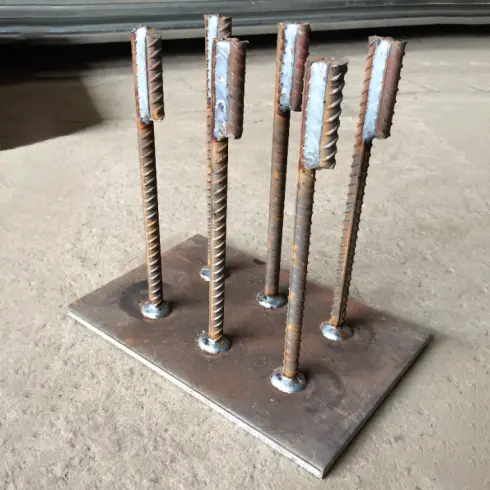
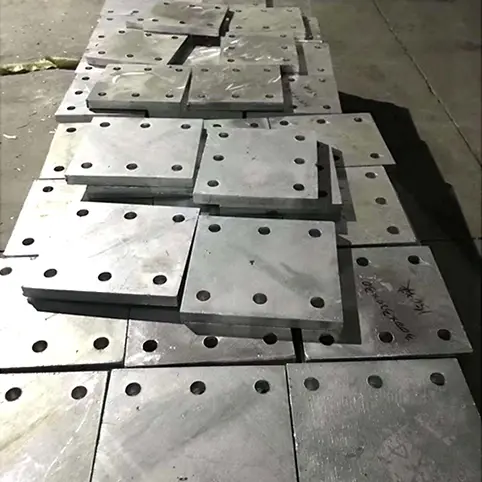
Commonly known as embedded plates or embedded steel components, Embedded Steel Base Plates for Structural Installation are essential prefabricated anchoring connectors for new steel-concrete construction. Factory-fabricated by welding anchor bars to a hot-rolled steel plate, they are embedded within beams, columns, walls, or foundations prior to concrete pouring, leaving the plate surface exposed to serve as a base for subsequent welding. Unlike post-installed chemical or expansion anchors, these embedded plates rely on the concrete encasing the anchor bars to achieve mechanical interlocking and load transfer. They offer superior fatigue resistance, high load-bearing capacity, and ensure zero structural damage, meeting connection requirements across a full range of scenarios—from standard structural applications to heavy-duty/dynamic loading and coastal environments prone to corrosion.
Product Definition and Functions
I. Product Definition
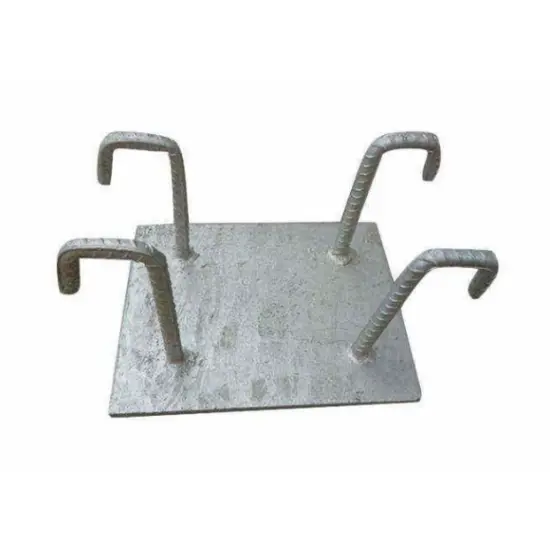
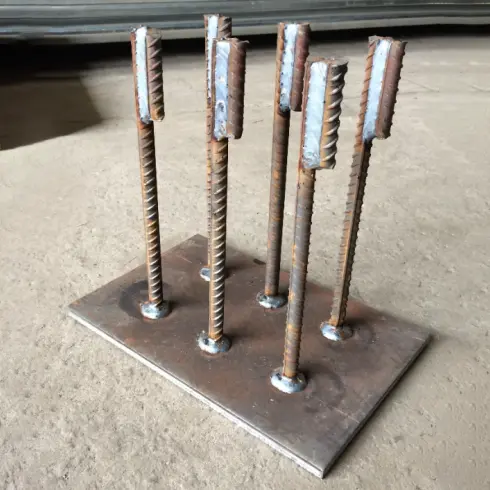
The complete embedded steel base plate assembly consists of a face plate and welded rear anchor bars, comprising three functional sections: the main flat plate, the load-bearing anchor system, and auxiliary positioning elements. Once embedded, the anchor bars are fully encased in concrete, while the exposed plate surface is welded on-site to steel corbels, steel beams, curtain wall framing, or pipe supports. This creates a rigid connection between the concrete and steel structure, facilitating the transfer of all internal forces at the joint. II. On-site Functional Capabilities
1. Multi-directional Load Transfer: Simultaneously withstands vertical compression, horizontal shear, and eccentric bending moments; accommodates cyclic loads such as crane start/stop operations and equipment vibration.
2. Node Connection: Replaces cast-in-place concrete corbels; simplifies steel-concrete joint construction and standardizes connection interfaces.
3. Precision Positioning: Locks in installation axes and elevations for steel structures, preventing subsequent displacement or misalignment of steel components.
4. Temporary Support: Serves as temporary shims or lifting supports for steel components during construction, reducing the need for temporary scaffolding.
Product Classification and Selection
I. Classification by Load-Bearing Application
1. Primary Structural Embedded Plates: Thick Q235B/Q355B plates used for critical load-bearing nodes such as steel column base plates, primary/secondary beam connections, and crane beam supports; requires pull-out testing of welds.
2. Structural/Secondary Embedded Plates: Standard 8–12mm thin plates used for secondary load-bearing nodes such as railings, suspended ceilings, utility supports, and exterior wall framing; does not require load-bearing capacity testing.
3. Heavy-Duty Thickened Embedded Plates: 16–30mm thickened main plates with stiffening ribs; used for heavy equipment platforms and foundation supports subject to high bending moments.
II. Classification by Rear Anchor Bar Structure
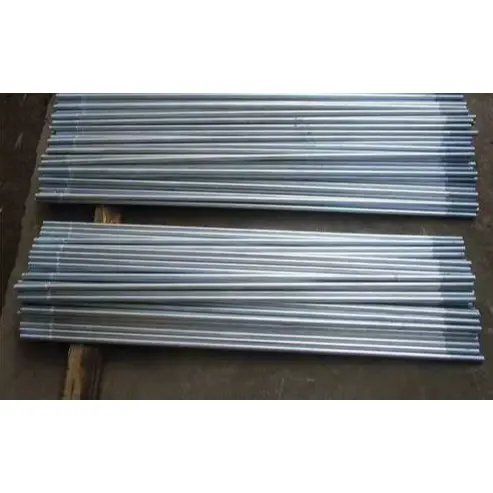
1. Straight Anchor Bar Type: Industry-standard type with multiple round steel bars welded vertically to the plate surface; suitable for standard static-load nodes; lowest manufacturing cost.
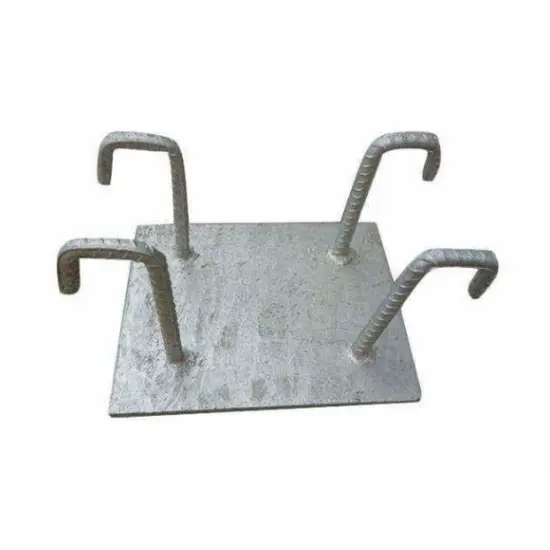
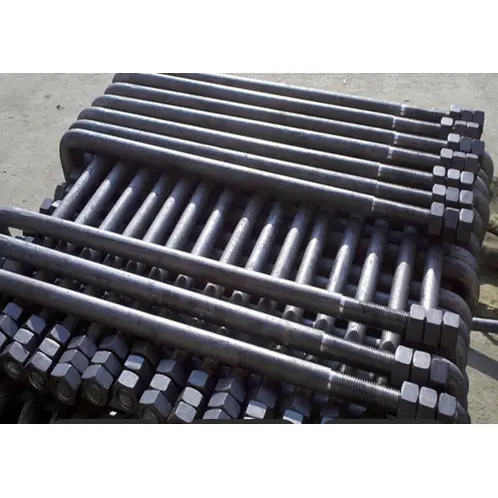
2. L-Shaped Hook Anchor Bar Type: Anchor bars feature a 90° cold bend with compliant straight-section lengths; pull-out resistance increased by 25%–40%; used for high-tension cantilever nodes.
3. Composite Reinforced Type: Features additional flat-steel stiffening ribs on the back and small anchor plates at the ends of the anchor bars; pull-out capacity increased by over 20%; suitable for heavy-duty applications involving intense vibration.
III. Classification by Base Material
1. Standard Type: Q235B main plate and HPB300 anchor bars; suitable for general indoor, dry environments such as standard factories and office buildings.
2. Heavy-duty type: Q355B base plate, HRB400E anchor bars; designed for long-span, high-load, and crane-equipped industrial facilities.
Detailed List of Standardized Component Kits
I. Factory-prefabricated integrated main assemblies
Fully welded, ground, and pre-drilled at the factory; ready for direct embedment on-site without further welding or processing.
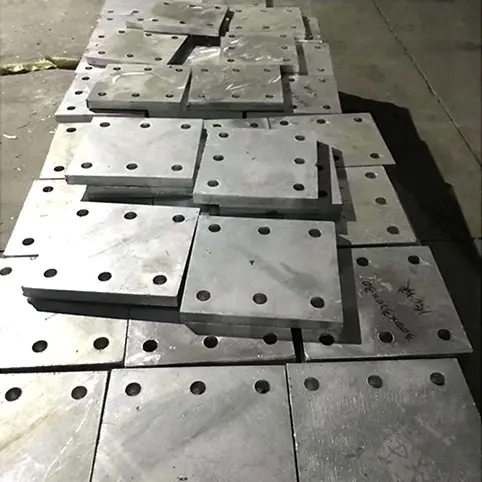
1. Embedded base plates: Thicknesses of 8/10/12/14/16/20/25/30mm; supports square, rectangular, circular, and custom shapes; pre-drilled bolt holes and weld bevels available.
2. Anchor bars: Common diameters of Φ12/14/16/18/20mm; arranged in sets of 4, 6, or 8 in a uniform grid pattern; effective embedment depth ≥15d for straight bars; straight section of hooked bars ≥10d.
3. Reinforcement components: Flat-bar stiffeners and end-anchorage plates (same material as base plate); included only with heavy-duty orders.
II. On-site installation accessories
1. Positioning bars: Short rebar segments spot-welded to the plate edge to control horizontal displacement and embedment elevation during concrete pouring.
2. Concrete spacers: Plastic or cement blocks ensuring a 15–30mm concrete cover beneath the plate to prevent corrosion of the plate surface.
3. Protective consumables: Anti-rust stickers and PE protective film for the plate surface to prevent cement slurry adhesion and surface flash rust.
4. Matching welding consumables: E43 electrodes for Q235B; E50 electrodes for Q355B; specifically for on-site steel component connections.
III. Examples of standard project configurations
1. Railings and utility supports: 10mm Q235B base plate + 4 x Φ14 HPB300 straight anchor bars + positioning bars + plastic spacers.
2. Standard steel beam connections: 12–14mm Q235B base plate + 6 x Φ16 HRB400E anchor bars (straight or hooked options).
3. Crane Girders and Equipment Supports: 16–20mm Q355B main plate + eight Φ18 hooked anchor bars + full-length stiffening ribs on the back.
Mandatory Structural Requirements for Embedded Installation
1. Concrete Cover Control: The concrete cover at the bottom of the embedded part must strictly be maintained between 15mm and 30mm; insufficient cover leads to corrosion, while excessive cover reduces anchorage load-bearing capacity.
2. Anchor Bar Spacing: Center-to-center spacing between adjacent anchor bars must be ≥3d (bar diameter) and no less than 40mm; distance from anchor bars to the plate edge must be ≥1.5d to prevent edge tearing.
3. Welding Specifications: Double-sided continuous fillet welding is preferred; for single-sided welding, the effective weld length must be ≥5d, and the weld leg size ≥0.6 times the anchor bar diameter.
4. Installation Flatness: The plate surface must be flush with the finished concrete surface; elevation deviation must be ≤±3mm; tilting or voids/gaps beneath the plate are prohibited.
Comparative Advantages vs. Post-Installed Anchors & Limitations
Benchmarks: Plates fixed with chemical anchors, plates fixed with expansion bolts, and cast-in-place concrete corbels; comparison based on practical engineering pain points.
I. Differences in Structural Performance
1. Fatigue Stability: Embedded Steel Base Plates for Structural Installation feature anchor bars fully encased in concrete, transferring loads via mechanical interlock; they are free from issues like adhesive aging or bolt loosening and can withstand long-term cyclic vibrations from equipment and cranes. In contrast, chemical anchor adhesives are prone to cracking after 5–8 years due to moisture exposure, and expansion bolts easily loosen under long-term vibration.
2. Load-Bearing Capacity: For the same cross-sectional specifications, embedded plates offer >35% higher pull-out and shear resistance than post-installed anchors; post-installed components cannot meet the load requirements for crane girder supports exceeding 10 tons.
3. Plate Deformation Control: The solid steel plate transfers loads uniformly, preventing local indentation or warping under pressure; post-installed plates rely on discrete anchor points, leading to concentrated loads that easily cause plate bending.
II. Differences in Construction Schedule and Structural Damage
1. Construction Efficiency: Pre-embedded installation proceeds synchronously with civil concrete pouring, avoiding interference with the subsequent steel structure erection schedule; conversely, post-installed plates require drilling, hole cleaning, adhesive injection, and curing—a process taking three times longer per unit, including a mandatory 72-hour adhesive curing period.
Structural Integrity: Pre-embedding does not compromise existing concrete reinforcement; post-installation drilling carries a high risk of severing primary load-bearing rebar, creating permanent structural hazards that cannot be rectified later.
III. Differences in Installation Precision and Durability
Assembly Precision: Pre-embedded plates are positioned via formwork constraints, ensuring straight axial alignment and elevation deviations consistently within 3mm; post-installed plates rely on manual alignment, often resulting in deviations exceeding 8mm and requiring shims for leveling.
Corrosion Resistance & Durability: Only the exposed plate surface requires anti-corrosion treatment, as rear anchor bars are permanently sealed against moisture; post-installed anchors and drill holes are prone to water accumulation and rusting, with inaccessible "blind spots" that cannot be treated.
Service Life: Compliant pre-embedded plates match the building's lifespan (≥50 years) and require no routine inspections; post-installed components require re-inspection of bolts and adhesive every two years, entailing high O&M costs.
IV. Inherent Limitations
Application Constraints: Suitable only for new construction; pre-embedding is impossible for completed renovations or retrofitted supports, necessitating post-installation methods.
Low Early-Stage Error Tolerance: Rectifying positioning errors for pre-embedded plates is extremely difficult, requiring extensive concrete demolition and incurring high rework costs.
Logistics & Storage Disadvantages: Finished products are bulky, occupying significantly more storage and transport space compared to small anchors.
V. Quick Selection Guide
New steel-concrete structures, heavy/dynamic loads, or batch curtain wall installations: Prioritize pre-embedded steel plates.
Existing building renovations or sporadic, light-load retrofits: Select post-installed chemical anchor plates.
Standardized Mass Production Process
1 Raw Material Verification and Pre-treatment
Verify original manufacturer quality certificates and heat/batch numbers for steel plates and rebar; conduct sampling and testing for mechanical properties; reject plates with laminations, cracks, or deep corrosion. Use angle grinders and sandblasting to remove mill scale and oil from welding zones, preventing slag inclusions and cold welds. Stack primary materials on raised supports in designated areas, categorized by specification, to prevent rust caused by ground moisture.
2 CNC Steel Plate Cutting and Beveling
Use CNC plasma cutters and shears for material cutting; form irregular plates in a single pass. Internal dimensional tolerances: length and width ±2mm; diagonal deviation ≤3mm. Manually grind off burrs from all cut edges; pre-machine welding bevels for on-site butt-welding of plates, ensuring bevel angles strictly comply with drawing specifications.
3 Anchor Bar Cutting and Cold Bending
Cut bars to fixed lengths using rebar cutters; length tolerance ±3mm. Form all L-shaped hooks via cold bending at ambient temperature (90° bend angle); flame heating is strictly prohibited to prevent bending cracks. Ensure the straight section of the hook is at least 10 times the bar diameter (10d); chamfer and deburr after bending.
4 Prefabrication of Heavy-Duty Reinforcement Components
Cut stiffening ribs and small end anchor plates from the same batch and grade of steel as the main plates to ensure consistent thermal expansion coefficients and prevent deformation from welding stress. Maintain a uniform dimensional tolerance of ±2mm and pre-match/categorize components with the main plates.
5 Jig Positioning and Standardized Welding
Use specialized positioning jigs to secure anchor bars, ensuring deviations in edge distance and spacing are ≤3mm. Strictly match welding consumables to the base metal (e.g., Q235 with E43 electrodes; Q355 with E50 electrodes). Prioritize double-sided fillet welding and thoroughly remove slag afterward; apply full-length welding for stiffening ribs and small anchor plates on heavy-duty components.
6 Post-Weld Cold Correction and Finishing Grinding
Correct welding-induced deformation using mechanical jacks (cold correction); flame-based heat correction is prohibited. Ensure plate flatness remains within 3mm over a 2m span after correction. Grind all welds and sharp corners to eliminate sharp edges, preventing damage to on-site protective films or injury to construction personnel.
7 Graded Anti-Corrosion Surface Treatment
1). Indoor dry conditions: Abrasive blast cleaning to Sa2.5 grade; application of two coats of epoxy anti-corrosion primer; total dry film thickness ≥60μm.
2). Outdoor/humid conditions: Full hot-dip galvanizing; zinc coating thickness ≥65μm for standard environments.
3). Coastal/highly corrosive conditions: Heavy-duty hot-dip galvanizing; zinc coating thickness ≥85μm; post-process grinding to remove surface zinc drips or runs.
8 Comprehensive Quality Inspection, Labeling, Packaging, and Shipping
Includes dimensional re-verification, visual inspection, and batch-based pull-out testing of welds (acceptance criteria: no weld separation and no tearing of the steel rebar base material). Each unit is marked with: material type, plate thickness, anchor rebar specifications, and anti-corrosion treatment type. Rubber corner protectors are placed between plates for rain and moisture protection; supports are installed on extra-long or irregularly shaped components to prevent deformation during transport; material certificates and factory inspection reports are included with the shipment.
Summary of Core Advantages
1. Stable Load-Bearing: Balanced multi-directional load distribution; resistant to vibration and fatigue; suitable for heavy-duty cyclic loading.
2. Efficient Construction: Synchronized embedment during civil works; reduces subsequent steel structure installation time by over 30%.
4. Structural Safety: No damage from concrete drilling; eliminates hidden structural risks.
5. Lifecycle Cost Savings: Low maintenance and high durability; total cost for new projects is more than 18% lower than post-installed anchoring methods.
Factory Performance Parameter Table for All Product Categories
8.1 Mechanical Parameters for Base Plates
Material Grade
Tensile Strength
Yield Strength
Application Scenarios
Q235B
370~500MPa
≥235MPa
General structures, railings, pipelines, conventional steel joints
Q355B
470~630MPa
≥355MPa
Crane beams, heavy-load supports, long-span high bending moment joints
8.2 Mechanical Parameters for Anchor Rebars
Rebar Grade
Tensile Strength
Yield Strength
Elongation After Fracture
HPB300
≥420MPa
≥300MPa
≥25%
HRB400E
≥540MPa
≥400MPa
≥16%
8.3 Summary Table of On-site Installation Tolerances
Inspection Item
Allowable Deviation
Steel plate length & width
±2mm
Steel plate diagonal
≤3mm
Anchoring rebar length
±3mm
Anchoring rebar spacing & edge distance
±3mm
2m range plate flatness
≤3mm
Embedded top surface elevation
±3mm
List of Compliance Standards
Standard for Design of Steel Structures: GB 50017
Technical Specification for Welding of Steel Structures: JGJ 81
Code for Design of Concrete Structures: GB 50010
Technical Specification for Post-Installed Anchors in Concrete Structures: JGJ 181
Standard Design Atlas for Steel-Concrete Connection Details: 22G522
FAQ
1. Q1: How should surface rust appearing on the embedded plate later be handled?
A: For indoor surfaces with slight surface rust, simply grind the area and apply a cold-spray zinc primer; for outdoor galvanized sheets with localized zinc loss, apply a zinc-rich repair coating (dry film thickness ≥ 60μm)—there is no need to return the entire component to the factory for re-galvanizing.
2. Q2: How should one choose between straight anchor bars and hooked anchor bars?
A: Use straight anchor bars for vertical static loads and tensile forces under 80kN; for cantilevered balconies, exterior curtain walls, and crane beam applications involving lateral tensile forces, use 90° hooked anchor bars exclusively to prevent pull-out failure.
3. Q3: How can a tilted embedded plate be corrected after concrete pouring?
A: If the deviation is less than 5mm, it can be leveled and welded using a shim plate; if the deviation exceeds 5mm and involves tilting, forced realignment is strictly prohibited—instead, install a lateral reinforcement anchor plate to distribute the load and prevent joint cracking.
4. Q4: Does welding hot-dip galvanized embedded plates damage the anti-corrosion coating?
A: Yes, the zinc layer at the weld points will be damaged. After on-site welding, the weld points and heat-affected zones must undergo sandblasting followed by the application of a zinc-rich coating; otherwise, the weld points will be the first to rust, likely within three years.
5. Q5: Can embedded steel base plates for structural installation be connected to the edge forms of composite floor decking?
A: Yes. Standard 12mm embedded plates can be directly welded on-site to the flange of the steel edge form without additional adapters, perfectly matching the joint details specified in the 22G522 standard design atlas.
6. Q6: Why is post-installed anchoring not recommended for heavy-load projects?
A: Under heavy or dynamic loads, there is a risk of adhesive creep failure. Major domestic design institutes explicitly prohibit post-installed anchoring for crane beams and equipment platforms; embedded plates are the only compliant choice specified in the design drawings.
Hot Tags: Embedded Steel Base Plates for Structural Installation, Manufacturer, Supplier, Custom
Contact HAISHENG China supplier of Structural Steel Components, Steel Structure Cladding Components and Structural Steel Fasteners. Our professional sales team will reply with detailed quotation, product parameters and delivery plan within 24 hours to meet your bulk procurement demand.
We use cookies to offer you a better browsing experience, analyze site traffic and personalize content. By using this site, you agree to our use of cookies.Privacy Policy