Tianjin Haisheng Steel Structure Co., Ltd.
Products
Long Span Steel Lattice Shell Structure
  • Long Span Steel Lattice Shell StructureLong Span Steel Lattice Shell Structure

Long Span Steel Lattice Shell Structure

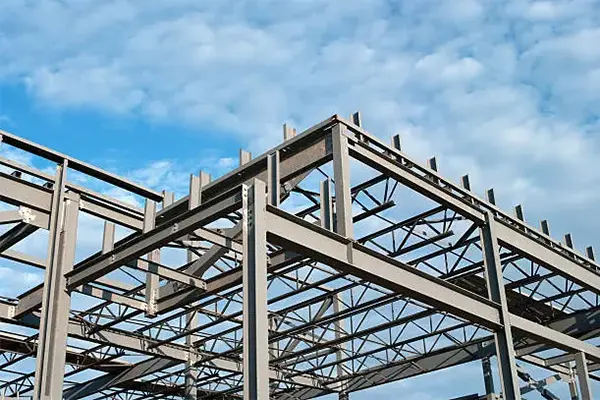
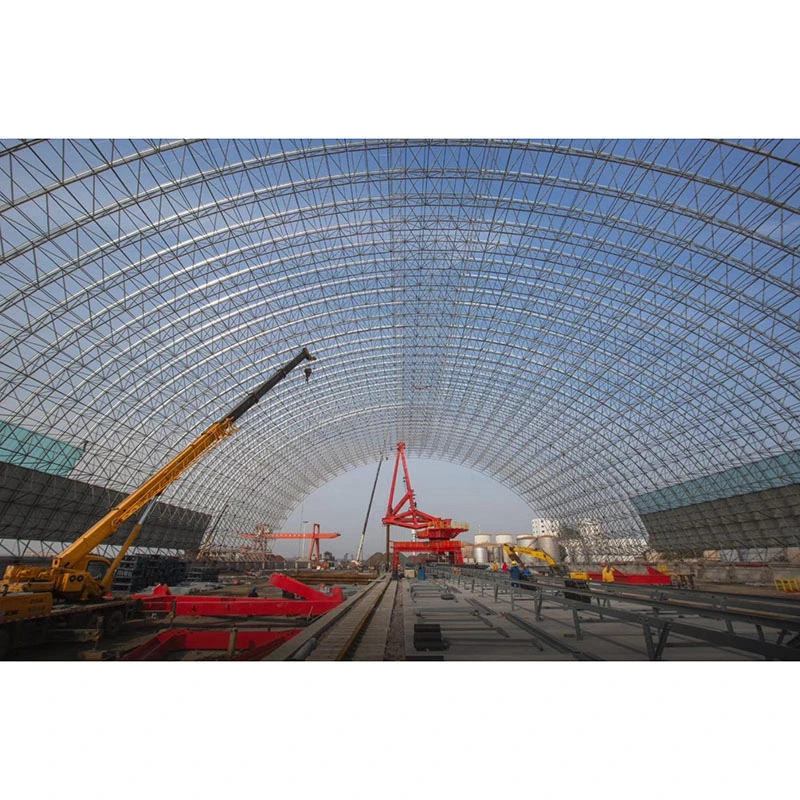
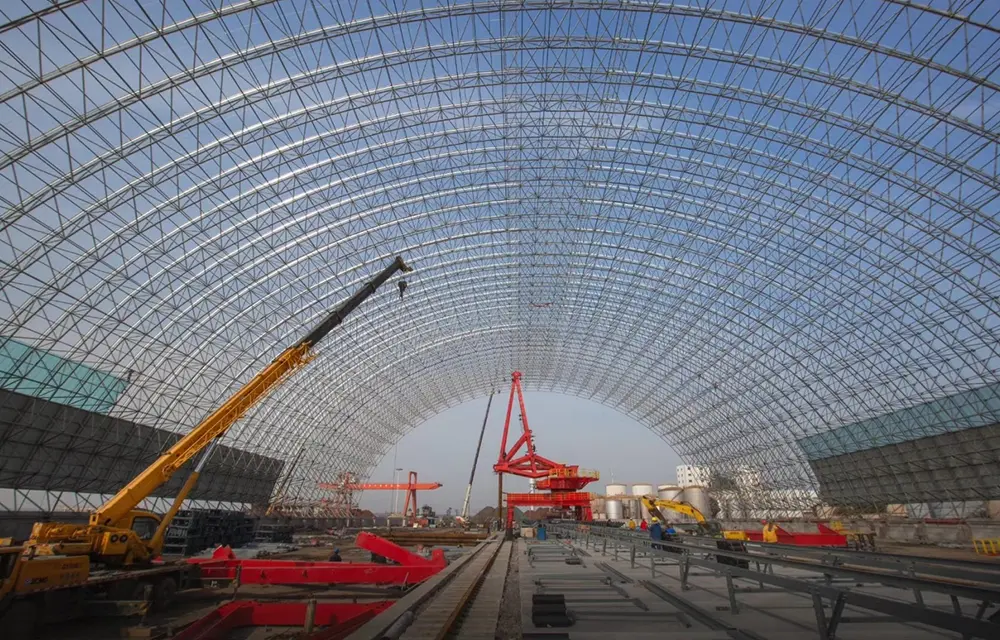
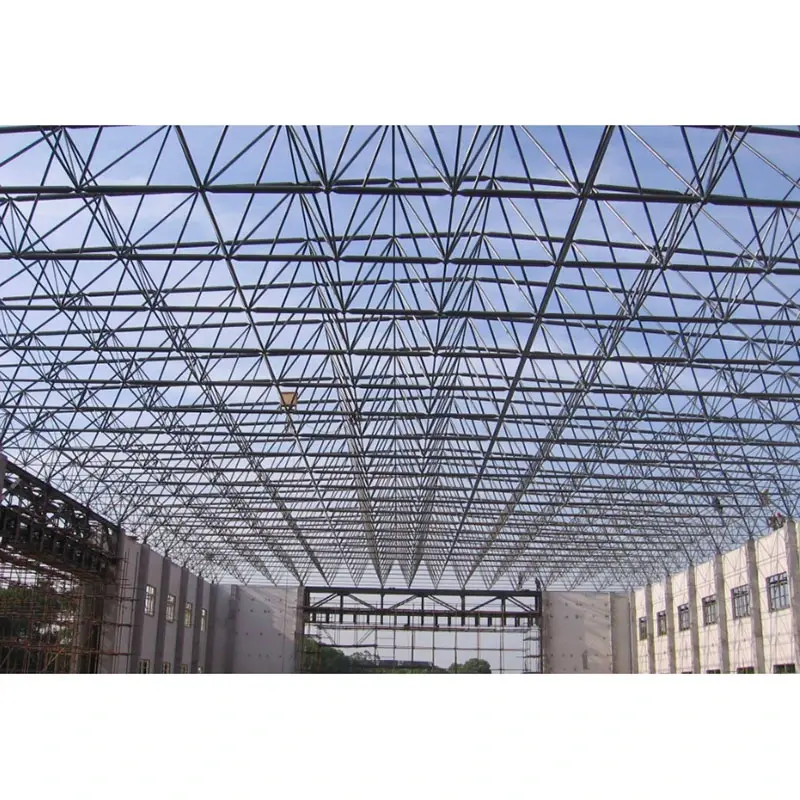
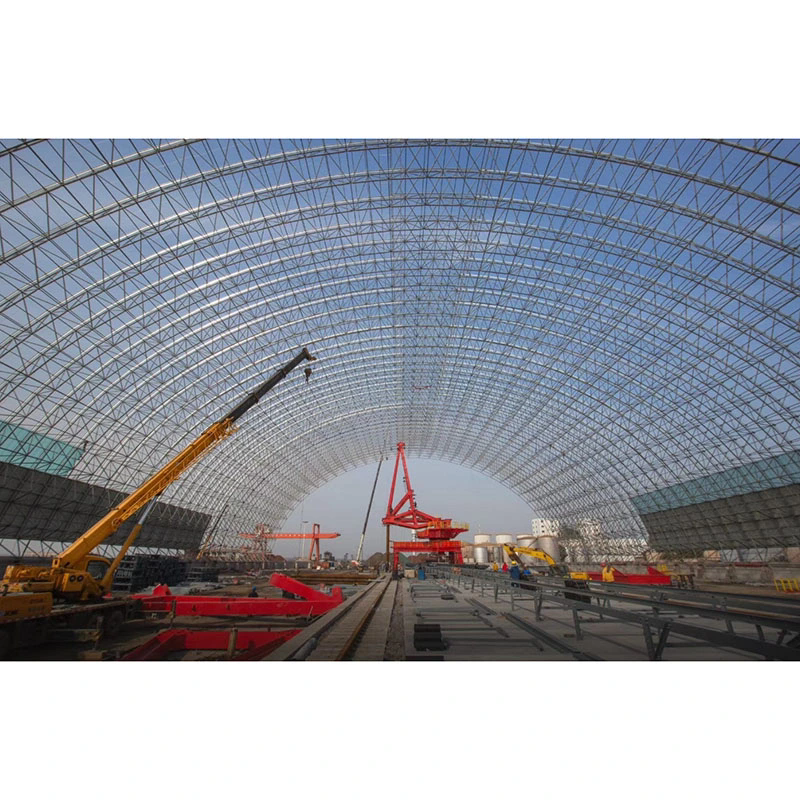
HAISHENG is a leading domestic manufacturer of high-quality steel structures, specializing in the on-demand customization and modular prefabrication of Long Span Steel Lattice Shell Structures. These structures are ideal for applications such as coal storage sheds, stadiums, and large-span curved roofs (including glazed domes). Leveraging the structural principles of arch-shell mechanics to optimize steel usage, the system includes comprehensive support and envelope components designed to withstand rigorous conditions, including high wind and snow loads and seismic activity.

Unlike conventional flat space frames or portal rigid frames, the Long Span Steel Lattice Shell Structure utilizes a curved spatial grid load-bearing system. While flat structures primarily rely on bending action, this system achieves load-bearing capacity through a combination of shell-arch thrust and the axial action of the spatial members.

This system is not merely an assembly of individual members but a complete, integrated solution comprising structural nodes, sliding bearings, thrust-resistant foundation elements, roofing envelopes, and lightning/corrosion protection. It is specifically engineered to address structural challenges associated with column-free roofs exceeding 60 meters in span, complex curved geometries, and sites subject to heavy wind and snow loads. Balancing architectural aesthetics with long-term operational safety, it has become a mainstream choice for roofing ultra-large-span industrial facilities and public venues.

Long Span Steel Lattice Shell Structure

Selection Criteria and Distinctions

1.1 Industry Definition

The Long Span Steel Lattice Shell Structure—often referred to simply as a "steel lattice shell"—is a type of curved, highly statically indeterminate spatial grid structure. It is essentially a flat space frame that has been arched to form a continuous curved surface, encompassing spherical, ellipsoidal, cylindrical, and hyperbolic paraboloid geometries. The defining characteristic is the generation of outward horizontal arch thrust, necessitating supports, ring beams, or thrust-resistant foundations to counteract internal forces. In contrast, flat space frames bear loads primarily in the vertical direction and generate no horizontal arch thrust; the fundamental mechanical principles governing the two systems are entirely different. 

1.2 Visual Characteristics of Structural Behavior

- Member Loading: Primarily axial tension and compression; absence of local bending stresses ensures uniform stress distribution.

- Load Transfer: Vertical roof loads are resolved along the tangential direction of the curved surface into axial forces within the shell; the load path is short, resulting in minimal energy loss.

- Operational Suitability: A highly statically indeterminate redundant structure; localized member failure does not trigger global collapse, offering superior resilience against sudden wind, snow, and seismic events.

1.3 Classification by Span and 3D Node Configuration

- Single-layer Steel Lattice Shell: Single-layer member arrangement with very low self-weight; suitable for small-to-medium span (15–60m) glazed domes and small landscape pavilions; applicable only in regions with low wind and snow loads; predominantly utilizes cast steel hub nodes.

- Double-layer Bolted-ball Lattice Shell: Double-layer grid configuration comprising top and bottom chords with connecting web members; offers high stiffness; suitable for standard large-span (30–100m) coal sheds and cylindrical storage shells; the preferred choice for inland sites with standard wind and snow conditions.

- Double-layer Welded-ball Lattice Shell: Features full-penetration welding at the spherical nodes, providing exceptional resistance to deformation; suitable for ultra-large spans (60–200m) and heavy-load storage facilities in coastal regions subject to strong winds and heavy snow.

Primary Material Selection Criteria: Q235B steel is selected for spans ≤60m and roof loads ≤0.9 kN/m²; Q355B steel is used for spans >60m, heavy-load coal sheds, and coastal regions.


Comprehensive System Components of Long Span Steel Lattice Shell Structures

2.1 Primary Grid Structural Units

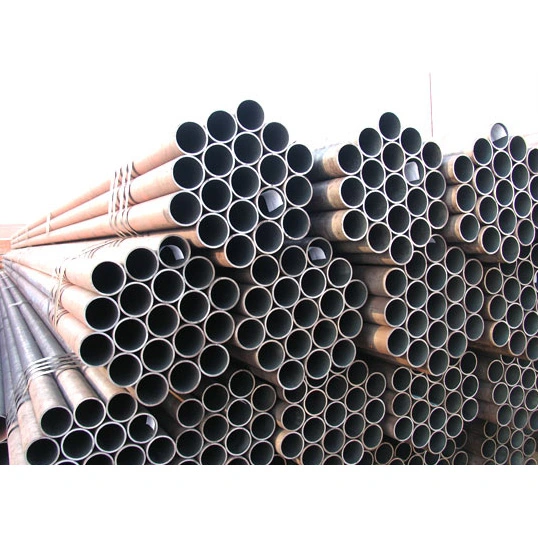
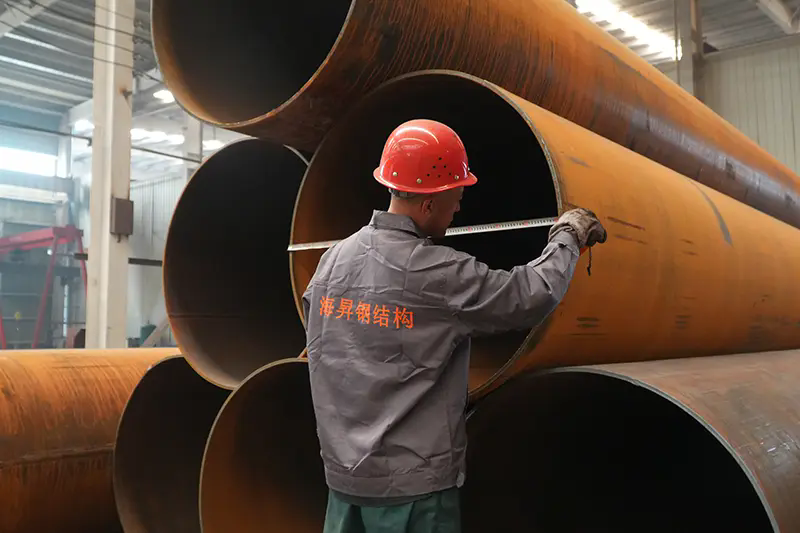
Comprises custom-cut circular hollow section (CHS) members and three types of specialized nodes; all members are cut to specific lengths based on the surface curvature rather than using standardized lengths. Base materials include seamless steel pipes and high-frequency welded steel pipes, with specifications ranging from φ60×3.5 to φ219×10. Differentiated application scenarios for node types:

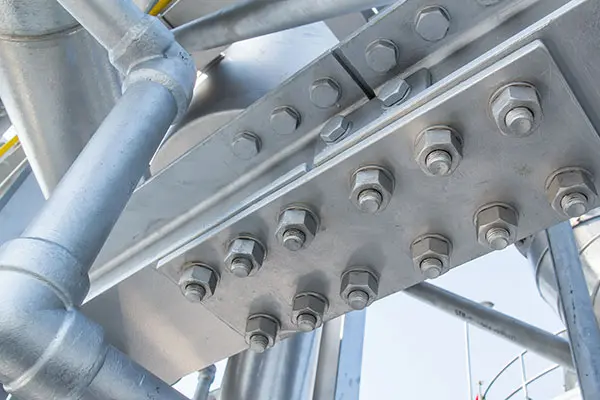
- Bolted hollow spheres: Low-curvature cylindrical shells and double-layer conventional reticulated shells; assembled on-site using bolts, requiring zero on-site welding.

- Welded hollow spheres: Large-span, heavy-load, and thick-shell structures; feature internal annular stiffening ribs to resist local crushing deformation.

- Cast steel hub nodes: Specifically for single-layer curved domes; utilize plug-in connections and offer the highest level of component standardization.

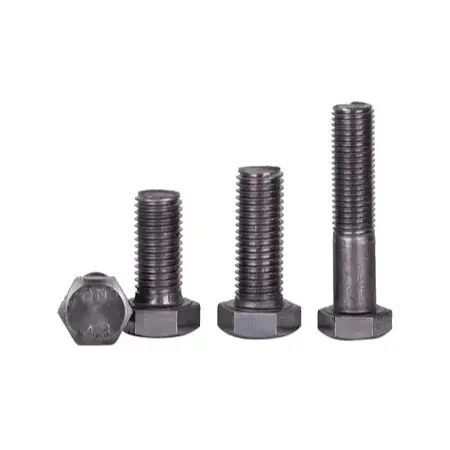
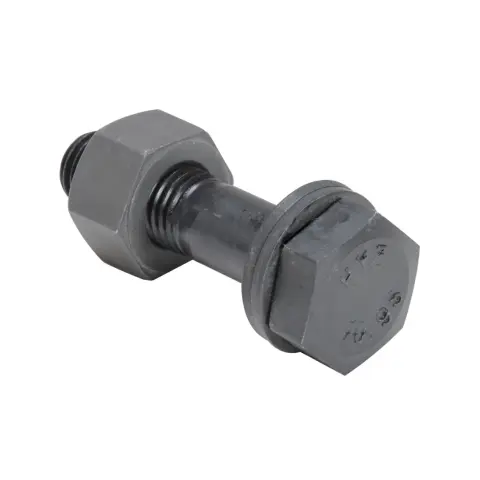
Associated fasteners: Bolted sphere systems use standard Grade 10.9 high-strength bolts, conical heads, sealing plates, and sleeves; welded sphere systems lack standard fasteners, relying entirely on full-penetration butt welds with beveled edges.

2.2 Differentiated support systems

The horizontal arch thrust of a reticulated shell is 3–5 times that of a space frame; incorrect support selection can directly lead to roof collapse. Four types of supports and their application scenarios:

- Fixed hinged supports: Located at the building corners; restrain vertical and bidirectional horizontal displacement, bear over 60% of the shell's arch thrust, and allow for minor rotation to relieve stress.

- Unidirectional sliding supports: Slide along the circumferential or radial direction; specifically designed to release thermal thrust caused by seasonal temperature differences, preventing cracking due to thermal expansion and contraction.

- Tensile hinged supports: Used in coastal or open, exposed sites; resist negative wind suction forces and prevent the reticulated shell from being uplifted or torn off by wind.

- Elastic supports: Used for sites with uneven foundation settlement or for irregular doubly-curved reticulated shells; adapt to foundation deformation to adjust load distribution.

Support accessories: 18–30 mm thick base plates, 12–20 mm lateral stiffening ribs, Q355B embedded anchor bolts, and leveling/anti-slip shims. 

2.3 Supporting Measures for Substructure and Thrust Resistance

Standard isolated pile caps cannot counteract the outward thrust generated by the reticulated shell; therefore, targeted reinforcement is required. Foundations utilize C30–C35 reinforced concrete isolated pile caps, strip foundations, or pile caps. Anti-uplift ground beams and concrete counterweight piers are installed on the exterior of the foundations to restrain outward displacement. The flatness tolerance for embedded steel bearing plates is set at ≤2 mm to ensure smooth sliding of the bearings.

2.4 Supporting Measures for Roof Enclosure and Lateral Stability

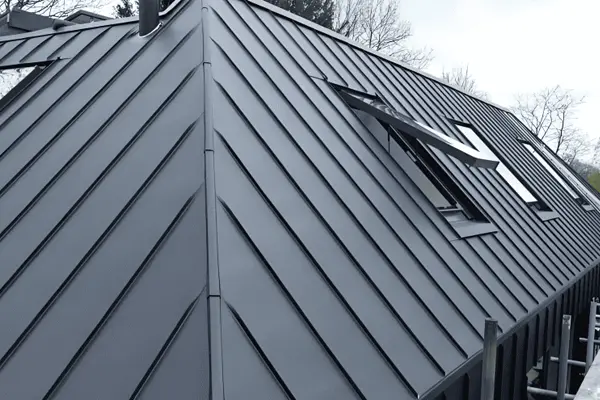
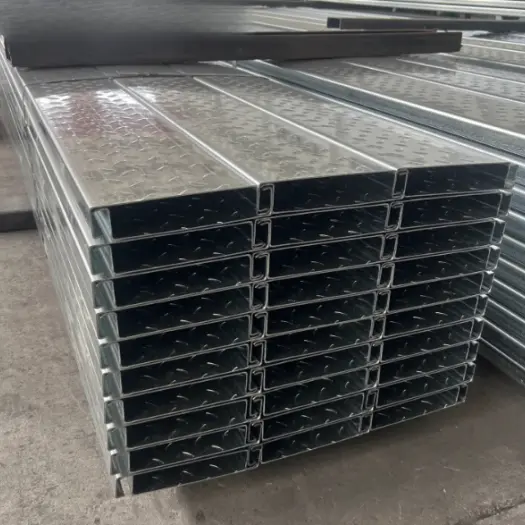
The roof enclosure system comprises three types: aluminum-magnesium-manganese standing-seam panels for curved barrel shells, tempered insulating glass for daylighting domes, and profiled color-coated steel sheets for enclosed coal sheds. Secondary structural members consist entirely of hot-dip galvanized C- and Z-section purlins, supplemented by roof tie rods and eave struts. Lateral stability is ensured by an outer reinforced concrete ring beam that contains the overall arch thrust, along with additional steel bracing at the gable ends and between columns to prevent lateral displacement at the ends. 

2.5 Integrated Anti-corrosion, Fire-resistant, and Lightning Protection Systems

- Anti-corrosion: Hot-dip galvanized coating thickness ≥85μm for standard inland sites and ≥120μm for coastal sites exposed to salt spray; on-site repair of damaged galvanizing involves Sa2.5 abrasive blasting followed by a three-layer epoxy zinc-rich coating system.

- Fire resistance: Public venues are coated with thin-film intumescent fire-resistant coatings (rated for 0.5h–2.0h fire resistance); enclosed industrial coal sheds do not require standard fire-resistant coatings.

- Lightning protection: Top-chord members serve as a natural lightning-capturing mesh, connected to the foundation's main reinforcement bars via bearing anchor bolts to form a complete grounding circuit; no additional lightning protection strips are required.


Ready-to-Implement Solutions

1. Double-layer bolted-ball reticulated shell: 

Steel tube members + bolted balls + unidirectional sliding hinged supports + strip thrust-resistant foundations + color-coated steel cladding; ideal for enclosed dry coal sheds and aggregate silos; lowest cost and shortest construction period.

2. Double-layer welded-ball spherical reticulated shell: 

Thick-walled welded tubes + stiffened welded hollow spheres + fixed tension-resistant supports + pile cap foundations + aluminum-magnesium-manganese roofing; suitable for large-span domes in stadiums and airport terminals; offers the highest redundancy against wind and snow loads.

3. Single-layer hub-node steel reticulated shell: 

Standardized curved circular tubes + cast steel hub nodes + lightweight hinged supports + glass skylight roofing; suitable for landscape atriums and small exhibition halls; offers superior aesthetic appeal.


Key Practical Advantages

1. Structural efficiency and cost-effectiveness: 

For a 100m span, steel consumption is 18%–25% lower than that of double-layer flat space frames; the shell's arch effect naturally distributes loads, eliminating the need for future structural reinforcement.

2. Versatile curved geometry: 

Capable of forming spherical or complex doubly-curved roof shapes; exceeds the 36m economic span limit of portal rigid frames and meets approval requirements for unique architectural forms.

3. Natural drainage and reduced leakage risk: 

Curved geometry provides inherent slope for drainage, eliminating the need for additional fill layers to create a slope and reducing maintenance risks associated with roof leaks and water ponding.

4. High stability under extreme conditions: 

As a highly statically indeterminate structure, it outperforms all planar steel structures in resisting Beaufort scale 12 winds, blizzards, and regional seismic activity.

5. Modular construction reduces high-altitude risks: 

Supports integrated ground assembly followed by hydraulic lifting; reduces high-altitude work by 70%, thereby lowering the rate of on-site safety accidents.

6. Low lifecycle O&M costs: 

Uniform circular hollow sections facilitate rust removal and inspection; the curved roof allows rainwater and dust to slide off naturally, cutting cleaning frequency in half.


Comparative Analysis with Competing Products

5.1 Structural behavior differences

Portal rigid frames experience only planar, unidirectional bending; costs spike when spans exceed 36m, and they cannot form curved shapes. Flat space frames rely purely on spatial tension and compression without horizontal arch thrust; adapting them to curved surfaces requires numerous non-standard components, increasing costs by over 40%. Long Span Steel Lattice Shell Structures utilize bidirectional spatial arch action, making them naturally suited for curved surfaces and offering significant cost advantages for ultra-large spans.

5.2 Construction and enclosure differences

Space frames generally require piece-by-piece assembly at height, limiting site flexibility; steel lattice shells allow for a choice of four construction methods, including rotational sliding techniques suitable for confined spaces. Regarding the enclosure, the curvature of the steel lattice shell aligns perfectly with aluminum-magnesium-manganese panels and curved glass, eliminating torsional stress on roof panels and reducing the risk of future cracking.

5.3 Anti-corrosion treatment differences

Structural members consist entirely of seamless circular tubes, eliminating the dirt-trapping "dead zones" found with angle or channel steel; this ensures complete coverage during hot-dip galvanizing and coating applications, extending the anti-corrosion lifespan in coastal environments by 8–12 years compared to planar space frames. Standardized Processing Workflow by Category

6.1 Mainstream Processing Workflow for Double-Layer Bolted-Ball Space Frames

1. Bolted-ball precision machining: Round steel forging blank → Lathe finishing of spherical surface → Multi-station drilling and tapping at specific angles/curvatures → Magnetic particle inspection (MPI) for internal cracks → Hot-dip galvanizing.

2. Member precision machining: CNC cutting of steel tubes to length → Machining of conical heads → Full-penetration CO2 circumferential welding at both ends → Ultrasonic testing (UT, Grade II) on 20% of critical members → Shot blasting (Sa 2.5) for rust removal → Hot-dip galvanizing.

3. Accessory processing: Quenching, tempering, and inspection of Grade 10.9 bolts; simultaneous galvanizing of sleeves and set screws to ensure thread fit tolerances.

4. Factory pre-assembly: Erection of 1:1 scale curved assembly jig → Trial assembly of fan-shaped units → Verification of spherical rise and bolt insertion depth → Adjustment of non-standard members.

5. Zonal packaging: Categorized packing based on circumferential and radial numbering → Marking of on-site assembly sequence.

6. On-site installation: Support leveling → Assembly of bottom chord grid → Installation of web members and top chord closure → Final tightening of high-strength bolts → Galvanizing touch-up and fireproof coating.

6.2 Specialized Workflow for Double-Layer Welded-Ball Space Frames

Stamping of steel plate hemispheres → Beveling → Assembly of internal annular stiffening ribs → Submerged arc welding (SAW) for sphere closure → 100% UT (Grade II) weld inspection → Grinding and galvanizing of spheres; on-site full-penetration bevel welding of members to spheres, with inspection and acceptance of each weld.

6.3 Specialized Workflow for Single-Layer Hub-Node Space Frames

Precision casting of cast-steel nodes → Machining of multi-directional connection slots → Milling of curved tube ends → Factory unit trial assembly → Overall galvanizing; on-site assembly via insertion and bolt locking—no hot work or welding required on-site.

6.4 Standardized Processing Workflow for Supports

CNC cutting of base plates and stiffener plates → Beveling, assembly, and welding → Precision milling of sliding surfaces → Weld inspection → Galvanizing of anchor bolts and complete set packaging.


Comprehensive English Performance Parameters

7.1 Geometric Parameters of Members and Joints

Common steel pipe specification: φ60×3.5, φ76×4, φ89×4, φ114×4, φ140×6, φ159×8, φ180×10, φ219×10

Conventional grid spacing: 1.5m ~ 3.5m for spherical and cylindrical lattice shells

Member machining tolerance: Total length deviation ±1.0mm, linearity ≤ L/1000

Bolted spherical node: Diameter φ120~φ400mm, wall thickness 12~20mm, screw hole angle tolerance ±15′

Welded hollow spherical node: Diameter φ200~φ500mm, wall thickness 14~22mm with internal stiffening ring

Support base plate: 18~30mm thickness, stiffener plate 12~20mm, anchor bolt material Q355B

7.2 Material Mechanical Property Table

Material Grade

Yield Strength

Tensile Strength

Application Scope

Q235B

≥235MPa

375~500MPa

Small-span single-layer lattice shell, light-load daylighting dome

Q355B

≥355MPa

470~630MPa

Double-layer lattice shell over 60m, coal shed, venues with heavy wind and snow load

7.3 Span and Load Bearing Parameters

Single-layer lattice shell economical span: 15m~60m

Double-layer bolted spherical lattice shell economical span: 30m~100m

Double-layer welded spherical lattice shell maximum span: 60m~200m

Roof load index: Dead load 0.35~0.90kN/㎡, live load 0.5~1.2kN/㎡; closed coal shed live load up to 2.5kN/㎡

Temperature deformation control: Ultra-long cylindrical shells must adopt one-way sliding supports to release temperature arch thrust

7.4 Weld Inspection Standards

Bolted spherical pipe circumferential weld: Grade 2 weld, 20% UT ultrasonic inspection for key members, 100% inspection for national key projects

Welded spherical butt weld: Full penetration grade 2 weld, 100% UT inspection for heavy-load lattice shells

7.5 Anti-corrosion & Fireproof Technical Index

Factory hot-dip galvanizing: ≥85μm for inland areas, ≥120μm for coastal salt fog areas

On-site repair standard: Sa2.5 sand blasting, total dry film thickness ≥120μm for three-layer paint system

Fire resistance duration: 0.5h/1.0h/1.5h/2.0h for public building thin-layer fireproof coating

7.6 On-site Installation Precision Control

Ring beam and support axis deviation ≤±5mm, support elevation deviation ≤±3mm

Height deviation of adjacent supports ≤2mm, overall shell rise deviation ≤1/1000 of design height

7.7 Project Steel Consumption Reference (Projection Area)

Single-layer daylighting dome: 10~20kg/㎡

Double-layer conventional venue cylindrical shell: 20~33kg/㎡

Double-layer closed coal shed lattice shell: 33~55kg/㎡


On-Site Installation Methods Matched to Project Conditions

Installation schemes for Long Span Steel Lattice Shell Structures are selected based on site conditions to address challenges such as limited space and crane access constraints:

1. High-altitude bulk assembly: Suitable for small-span scattered sites, no large lifting equipment required

2. Block assembly: Divide the shell into fan-shaped blocks, assemble on the ground and lift separately

3. Overall hydraulic lifting: Preferred for large-span indoor venues, minimize high-altitude operation risks

4. Rotational sliding installation: Suitable for narrow coastal sites with limited crane turning radius


FAQ

Q1 How do I quickly choose between single-layer and double-layer Long Span Steel Lattice Shell Structures?

For spans ≤60m in non-coastal areas with no snow accumulation and high natural lighting requirements, a single-layer hub-node lattice shell is preferred (30% lower cost). For spans >60m, or in coastal, heavy-snow, or heavy-load (material storage) scenarios, a double-layer lattice shell is mandatory to prevent local buckling instability associated with single-layer structures.

Q2 Can sliding supports be omitted for lattice shells?

No. For barrel shells exceeding 45m in length or domes exceeding 50m in diameter, thermal deformation generates internal thrust forces far exceeding the steel's load-bearing capacity; omitting sliding supports would directly cause member bending or fracture.

Q3 Can secondary cutting or drilling be performed on-site after hot-dip galvanizing?

Secondary cutting or drilling is prohibited. All hole locations and member lengths are prefabricated in the factory, with only bolted assembly performed on-site; cutting damages the galvanized coating—which cannot be fully repaired—significantly reducing the structure's corrosion-resistant lifespan.

Q4 What is the difference in long-term O&M costs between steel lattice shells and space frames?

For the same span, the curved surface of a lattice shell offers superior self-cleaning capabilities, reducing annual roof cleaning costs by 45%. Additionally, axial-load members do not suffer from fatigue-induced bending, eliminating the need for structural reinforcement within 30 years; thus, O&M performance is far superior to that of flat space frames.


HAISHENG Service Advantages

1. Upfront Structural Selection & Design: Pre-sales services include the provision of complimentary, specialized drawings for bearing layouts and ring beam reinforcement—based on local wind/snow parameters, seismic intensity, and geological conditions—to prevent design errors regarding foundation lateral thrust resistance.

2. Comprehensive Bilingual Documentation: Provision of full documentation in both English and Chinese—including material reports, ultrasonic testing (UT) reports for welds, galvanization certificates, and installation structural calculations—to directly meet the requirements of overseas supervisors and customs clearance.

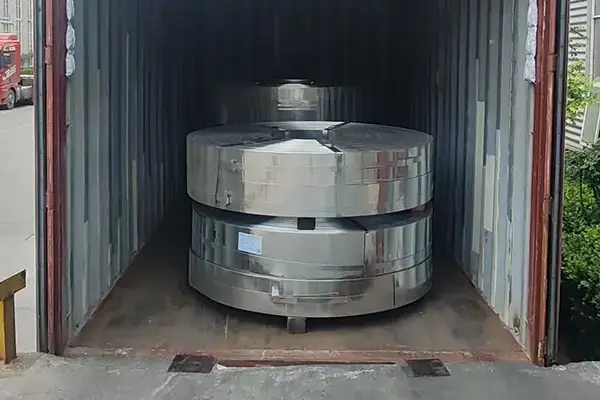
3. Protective Packaging for Cross-Border Transport: Spherical nodes are individually wrapped in bubble wrap; slender members are bundled on steel racks with protective corner guards; and all items feature sealed, salt-spray-resistant packaging suitable for ocean freight.

4. 24/7 Bilingual Remote Technical Guidance: Real-time video support covering the leveling of sliding bearings, staged bolt tightening, and ring beam splicing.

5. Comprehensive Warranty Coverage: A 5-year structural warranty on main members; anti-corrosion warranties for the hot-dip galvanized coating (15 years for inland areas, 8 years for coastal areas); and lifetime spare parts availability for connecting nodes.


Hot Tags: Long Span Steel Lattice Shell Structure, Manufacturer, Supplier, Custom
Send Inquiry
Contact Info
Contact HAISHENG China supplier of Structural Steel Components, Steel Structure Cladding Components and Structural Steel Fasteners. Our professional sales team will reply with detailed quotation, product parameters and delivery plan within 24 hours to meet your bulk procurement demand.
X
We use cookies to offer you a better browsing experience, analyze site traffic and personalize content. By using this site, you agree to our use of cookies.Privacy Policy
RejectAccept