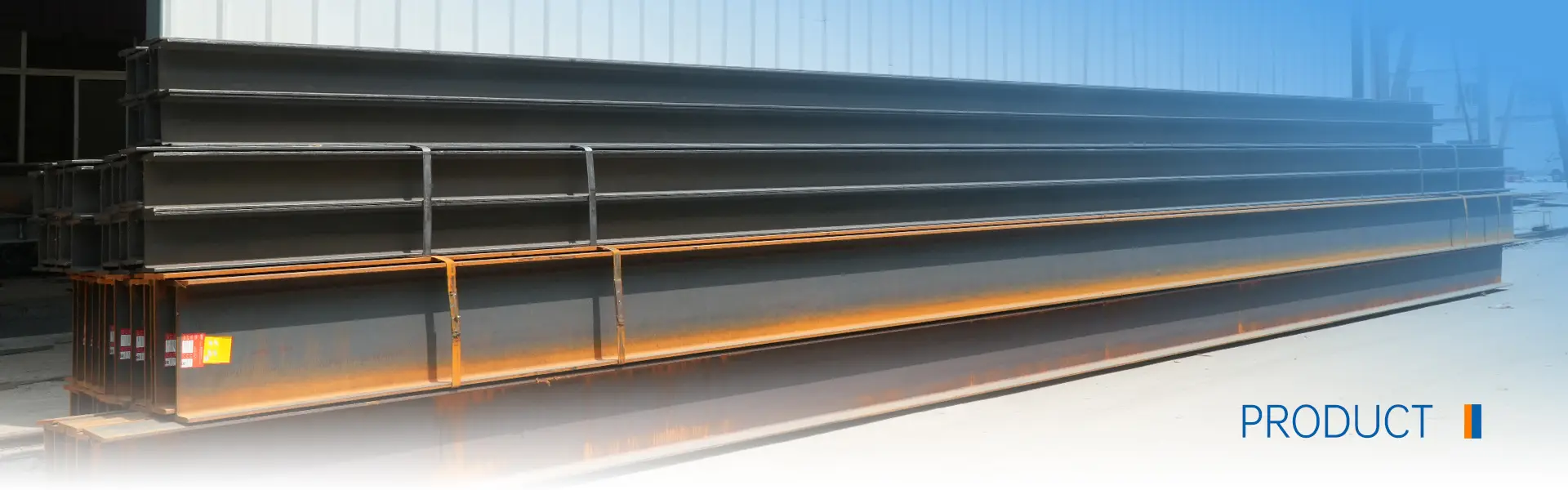
Tianjin Haisheng Steel Structure Co., Ltd.
Products
Large Span Steel Space Frame Structure
  • Large Span Steel Space Frame StructureLarge Span Steel Space Frame Structure

Large Span Steel Space Frame Structure

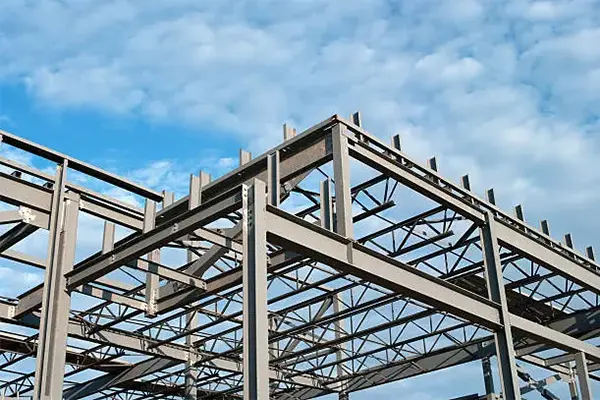
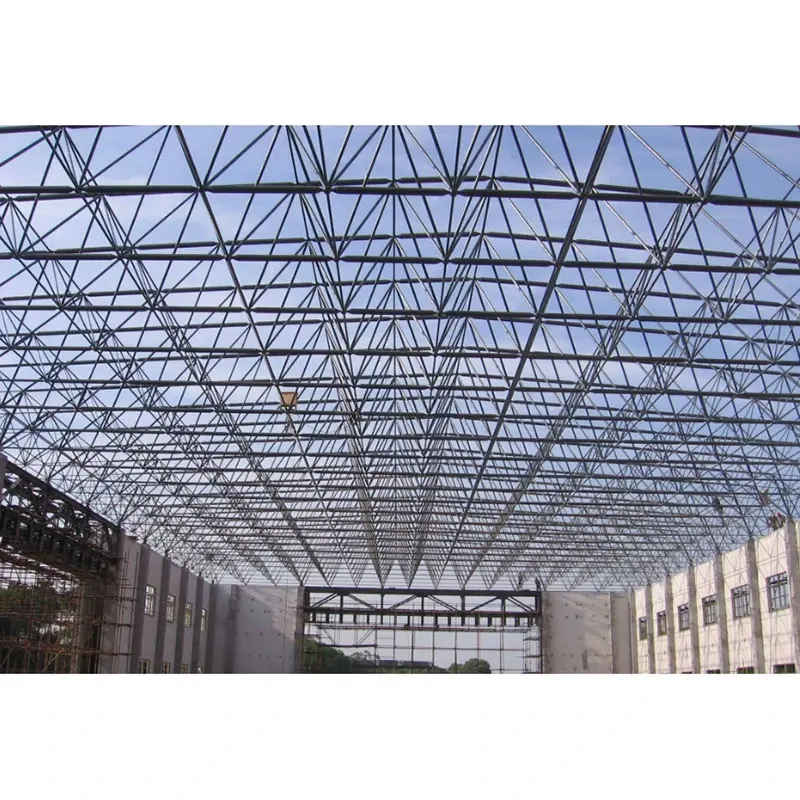
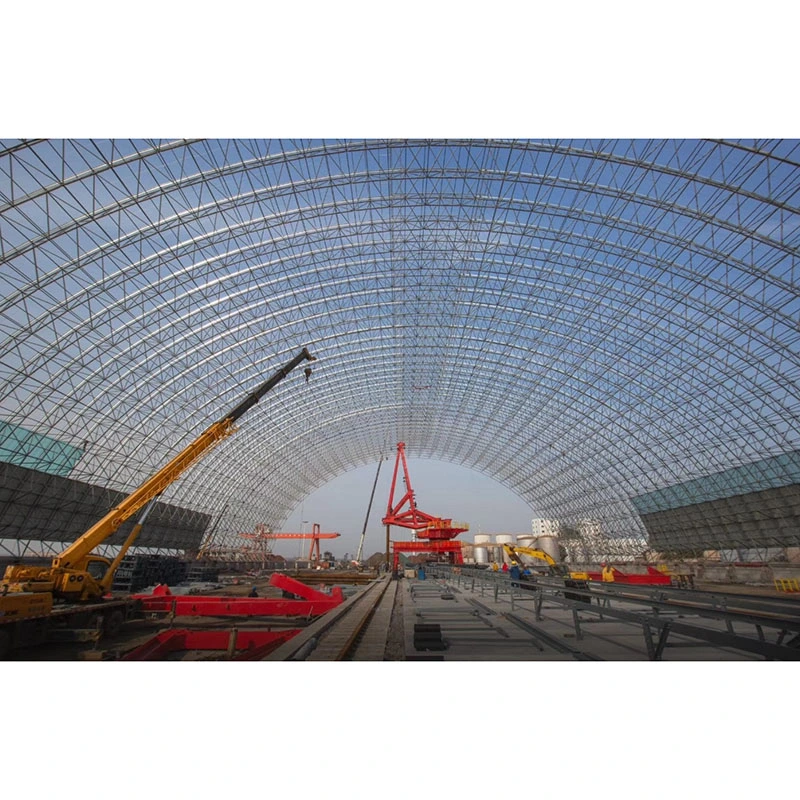
HAISHENG is a professional manufacturer and one-stop supplier of steel structures in China. Our Large Span Steel Space Frame Structures—available from stock—are integral load-bearing systems assembled from multiple steel members arranged in a specific grid pattern and connected via welding or bolted spherical joints. Functioning as spatial trusses, they distribute loads uniformly across the entire structure. Characterized by long spans and high structural integrity, they are widely used for the roof and ceiling load-bearing systems of column-free, open-plan buildings.

Basic Product Definitions

1. General Definition

In accordance with the Standard for Design of Steel Structures (GB 50017), spatial grid roof structures with a span of 60 meters or greater are classified as Large Span Steel Space Frame Structures. They are assembled from steel tubular members and spherical joints into geometric systems such as quadrangular or triangular pyramids. These are highly statically indeterminate spatial systems where loads are distributed globally, and members primarily undergo axial tension or compression. They offer high overall rigidity and create column-free, open spaces, making them ideal for stadiums, exhibition centers, high-speed railway stations, coal storage sheds, airport terminals, and more.

2. Specific Definition: Space Frame Foundation (Support Foundation)

The space frame foundation is the substructure—typically concrete or pile-based—that supports the space frame bearings and transfers all loads from the superstructure (axial forces, shear forces, bending moments, horizontal forces, and seismic forces) to the ground; it serves as the structural base for the space frame.

· Structural Characteristics: Subjected to vertical pressure, horizontal thrust, uplift forces, and torque; requires extremely high precision regarding settlement, elevation, and the placement of embedded parts.

· Key Control Points: Differential settlement can directly cause cracking at space frame joints and member instability, making it a critical factor in the success or failure of large-span space frames.

3. Distinction of Common Space Frame Terminology

· Space Frame Body: The upper spatial grid structure (members + spherical joints);

· Space Frame Bearing: The load-transferring component connecting the space frame to the foundation;

· Space Frame Foundation: The reinforced concrete structure, pile cap, or isolated footing located beneath the bearing.

Large Span Steel Space Frame Structure

Complete System Configuration

Part 1: Upper Space Frame Main System (Primary Load-Bearing Structure)

1. Structural System (Mainstream Options)

· Orthogonal Square Pyramid Space Frame: Most widely used; offers uniform stiffness and convenient roof installation; preferred choice for rectangular footprints.

· Diagonal Square Pyramid Space Frame: Superior structural performance and slightly lower steel consumption; suitable for medium-to-large spans.

· Triangular Pyramid Space Frame: High spatial stability; suitable for circular or polygonal footprints.

· Welded-Ball Space Frame: Suitable for heavy loads, ultra-large spans (over 80m), heavy roofing systems, and high-load conditions.

· Bolted-Ball Space Frame: Suitable for lighter loads and standard large spans; features factory prefabrication, on-site assembly, and rapid construction.

2. Main Material Configuration (Standard Specifications)

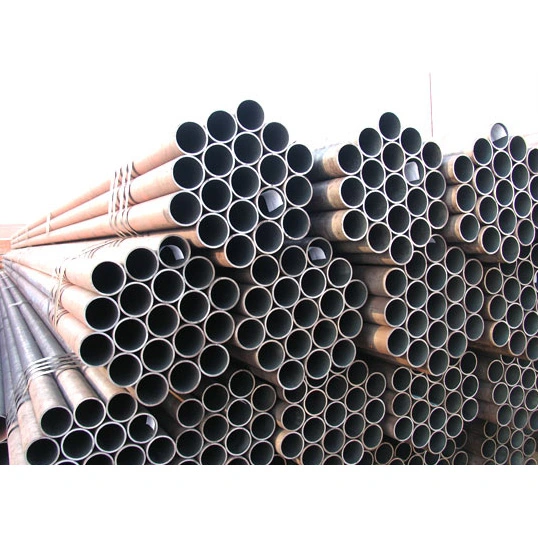
· Members: Seamless steel pipes or straight-seam welded pipes; Material: Q355B (mainstream for large spans); Common specifications: Φ114×4, Φ140×6, Φ159×8, Φ219×10; Q235B may be used for smaller spans.

· Joint Balls:

o Bolted Balls: Φ200–Φ400; wall thickness ≥12mm; Material: Q355B.

o Welded Balls: Φ250–Φ500; wall thickness ≥14mm; includes internal stiffening ribs.

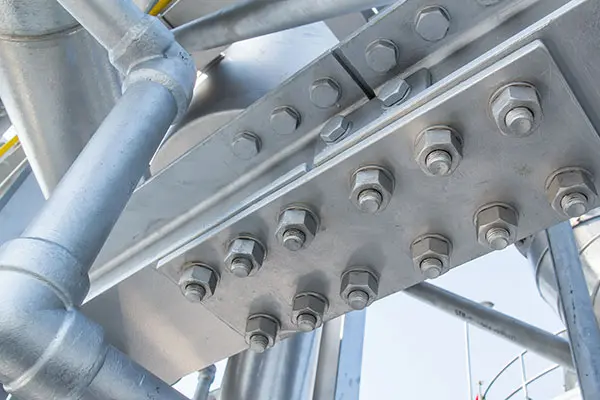
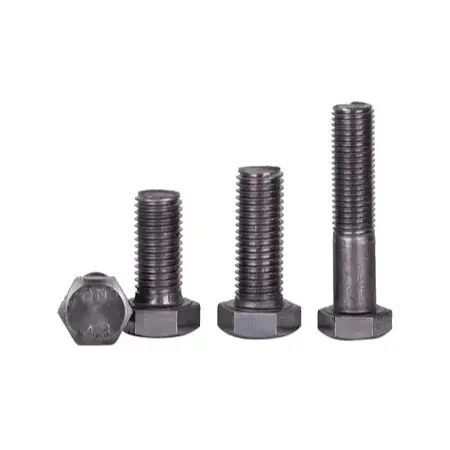
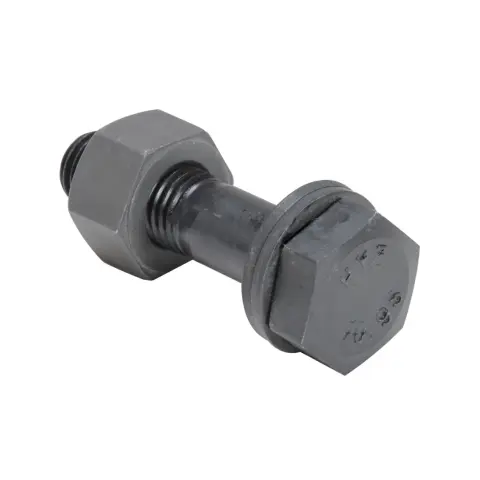
· Connectors: Grade 10.9 high-strength bolts (specialized for space frames); includes matching conical heads, end plates, sleeves, and fastening screws.

3. Roofing and Enclosure Components (Complete Roofing System)

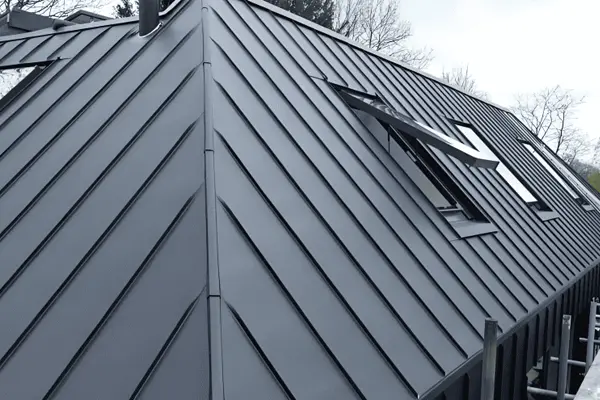
· Roof Panels: Standing-seam aluminum-magnesium-manganese panels, profiled color steel sheets, and daylighting panels (localized).

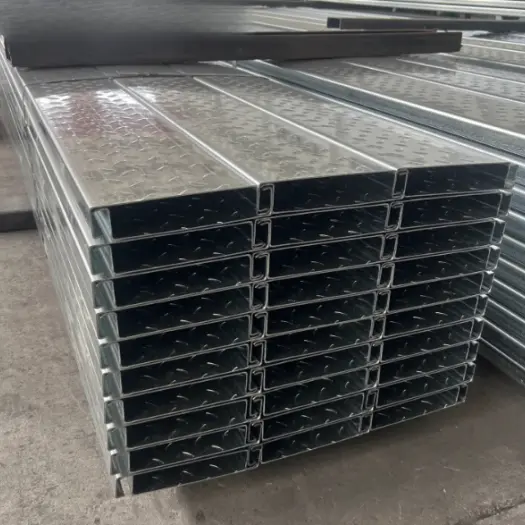
· Secondary Roof Structure: C/Z-section steel purlins (Q355B hot-dip galvanized, coating thickness ≥80μm), roof tie rods, and struts.

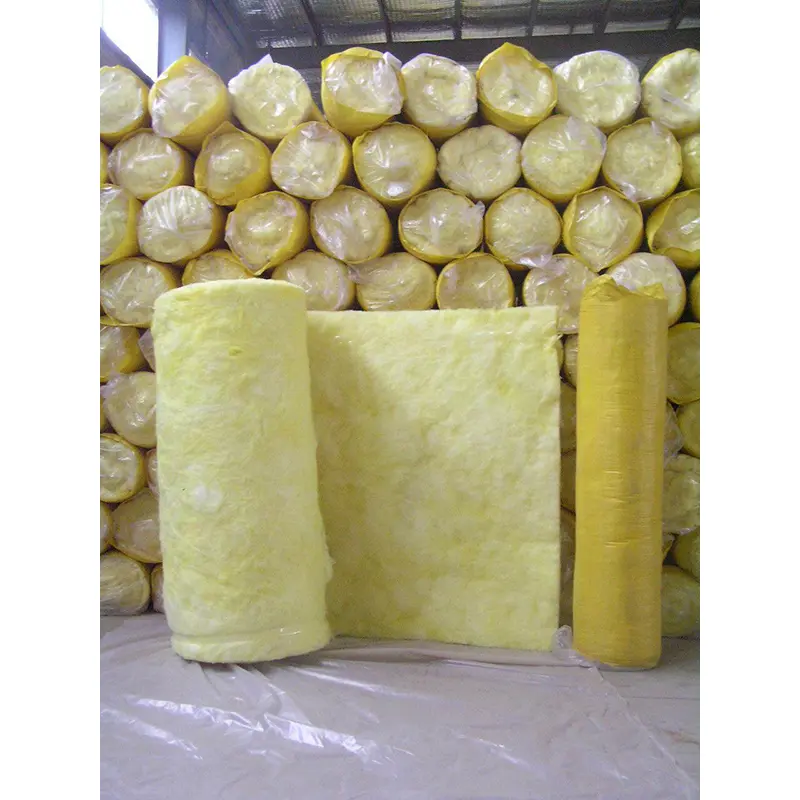
· Waterproofing & Insulation: Rock wool or glass wool insulation layer, waterproof breathable membrane, gutters, downpipes, and ridge caps.

Part II: Space Frame Bearing System (Core for Load Transfer between Upper and Lower Structures)

Bearings serve as the sole load-transfer nodes between the space frame and the concrete foundation; selection for long-span structures must be based on specific load requirements:

1. Flat-plate compression bearings: Bear only vertical compression; used for edge supports and areas with low horizontal forces.

2. Unidirectional/bidirectional sliding bearings: Relieve thermal stress and accommodate thermal expansion/contraction; essential for long-span space frames.

3. Hinged bearings (spherical hinged bearings): Allow rotation and multi-directional force transmission; used at corners, in areas with high horizontal forces, and in zones with strict seismic requirements.

4. Tensile bearings (uplift-resistant bearings): Used at eaves, cantilevers, and areas subject to significant wind suction to prevent the space frame from lifting.

Bearing accessories: Base plates, stiffening ribs, anchor bolts, and adjustment shims (for leveling and elevation adjustment).

Part III: Lower Foundation System

Selection is based on geological conditions, span, and load classification; the prevailing choice for long-span structures is the pile-plus-pile-cap combination:

I. Common Foundation Types

1. Reinforced concrete isolated footings: Spans of 60–80m, favorable geological conditions, moderate loads.

2. Strip foundations (continuous footings): Elongated space frames, continuous supports, high horizontal force resistance requirements.

3. Pile foundations with pile caps (preferred for long spans): Spans exceeding 80m, soft soil foundations, heavy loads, high seismic intensity zones.

o Pile types: Bored cast-in-place piles, precast pipe piles.

o Pile caps: Square/rectangular reinforced concrete pile caps (C30/C35 concrete).

4. Raft foundations: Projects with extremely large surface areas, complex geological conditions, and strict requirements for controlling differential settlement.

II. Core Foundation Structure and Embedded Parts

1. Concrete Strength: Pile caps/foundation main body C30–C35; blinding concrete C15;

2. Foundation Embedded Parts:

o Embedded steel plates for supports: Thickness 16–20 mm, welded to pile cap reinforcement;

o Embedded anchor bolts: To secure space frame supports; Q355 steel bolts, complete with nuts and bearing plates;

3. Precision Control (Mandatory standards for large-span structures):

o Axis deviation ≤ ±5 mm;

o Top surface elevation deviation ≤ ±3 mm;

o Height difference between supports within the same span ≤ 2 mm.

Part IV: Bracing and Stability Systems

Large Span Steel Space Frame Structures involve significant heights and substantial horizontal forces (wind, seismic); a comprehensive stability system is mandatory:

1. Internal space frame bracing members: Vertical/diagonal web members between the top and bottom chords (integral to the space frame);

2. Inter-column bracing: Cross-bracing (angle steel or steel pipe) between concrete columns to resist longitudinal horizontal forces;

3. Roof horizontal bracing: Horizontal tie rods and diagonal braces within the plane of the top chord, forming a rigid roof diaphragm;

4. Eave-edge and gable-end space frames: Close off ends, enhance overall rigidity, and resist wind loads;

5. Knee braces/tie rods: Lateral stability components for purlins (following the same logic as light-gauge steel roofing).

Part V: Anti-corrosion, Fire Protection, and Lightning Protection Systems

1. Anti-corrosion

· Factory-made components: Hot-dip galvanized overall (zinc coating thickness ≥85 μm); increased thickness for coastal or chemical industrial zones;

· Site welds and repair-welded areas: Abrasive blasting for rust removal + epoxy zinc-rich primer + topcoat;

· Spherical nodes and bolts: Factory-galvanized; on-site cutting that damages the coating is prohibited.

2. Fire Protection

· Application of specialized fire-retardant coatings (ultra-thin or thin-film types) based on the building's fire rating; fire resistance rating of 1.0 h to 2.0 h;

· Special attention to coating supports, embedded parts, and bolts. 3. Lightning Protection

·Top chord of the space frame acts as the air-termination system;

·Down-conductors formed via supports, anchor bolts, and foundation reinforcement;

·Grounding electrodes installed within the foundation and connected to the building's main lightning protection network.

Part 6: Installation and Construction Support

1.Installation methods: High-altitude piece-by-piece assembly, modular hoisting, integral lifting, cumulative sliding (mainstream for large spans);

2.Core equipment: Total station, level, torque wrench, hydraulic lifting/sliding system, large cranes, gantry cranes;

3.Auxiliary materials: Specialized lubricant for high-strength bolts, sealant, shims, temporary support frames, guy wires.


Complete Component List

1.Upper space frame: Steel tube members + bolted spheres/welded spheres + high-strength bolts + conical heads/end plates;

2.Roofing system: Roof panels + C/Z-purlins + insulation & waterproofing + gutters & downpipes;

3.Load-bearing supports: Fixed/sliding/spherical/uplift-resistant supports + anchor bolts + embedded steel plates;

4.Substructure/Foundation: Isolated footings/strip foundations/pile caps (rebar + concrete + embedded parts);

5.Stability bracing: Inter-column bracing, roof horizontal bracing, gable-end space frames;

6.Protection systems: Hot-dip galvanizing (anti-corrosion), fire-resistant coatings, lightning protection & grounding;

7.Installation auxiliaries: Temporary supports, hoisting equipment, surveying instruments, fastening hardware.


Standard Light Steel Roof vs. Large Span Steel Space Frame Structure

·Standard light steel roof: Primarily portal rigid frames; span < 60m; lacks a spatial grid system;

·Large Span Steel Space Frame Structure: Span ≥ 60m; spatial grid structure; relies on integral spatial load-bearing action; requirements for foundations, supports, and precision are significantly higher than those for light steel structures.


Core Advantages

1. Extra-large span capability allows for column-free designs, maximizing interior space utilization.

2. Three-dimensional structural behavior ensures balanced load distribution and excellent resistance to seismic forces and wind pressure.

3. Lightweight yet rigid; the structure resists overall deformation and sagging.

4. Factory-prefabricated components allow for rapid on-site assembly.

5. Flexible geometry supports various shapes, including flat, curved, spherical, and irregular domes.

6. Stable and durable structure; long service life when treated for corrosion resistance.


Differentiating Highlights

I. Structural Performance Advantages

1. Three-dimensional load distribution: Unlike portal frames or solid-web beams (which are subject to bending and shear), the members in a space frame primarily experience axial tension and compression. This ensures efficient material utilization and reduced self-weight. Loads from extra-large spans are evenly distributed across supports, minimizing point loads and reducing foundation costs.

2. Highly statically indeterminate structure: Offers significant safety redundancy; the failure of a single member will not cause total collapse. It outperforms planar trusses and portal frames in resisting earthquakes, wind, snow, and uneven settlement, making it ideal for major public buildings such as stadiums, coal storage sheds, and airport terminals.

3. Column-free large spaces: Easily achieves clear spans of 60–150 meters. In contrast, portal frames typically have an economical span limit of ≤36 meters, and large-span steel trusses often lack cost-effectiveness; space frames provide vast, unobstructed, column-free interiors.

II. Material and Cost Highlights

1. Reduced steel consumption for equivalent spans

For large-span applications, the steel consumption per unit of projected area is lower than that of steel trusses or solid-web roof beams. Bolted-ball space frames benefit from standardized factory mass production and low costs through the bulk procurement of primary materials (steel tubes and steel balls).

2. Broad load adaptability

Suitable for a wide range of applications, from lightweight glazed roofs to heavy-duty dry coal sheds and equipment-bearing roofs. Material selection can be flexibly adjusted to control costs—using Q235 steel for lighter loads and Q355 for heavier loads.

III. Production and Processing Highlights

1. Standardized Factory-Prefabricated Bolted-Ball Space Frames: Steel tube members are cut to length, cone heads and end plates are pre-assembled, and steel balls are tapped—all within the workshop—before being sorted and packaged. On-site work is limited to assembly and tightening high-strength bolts, with minimal welding required. In contrast, trusses and rigid frames often require extensive on-site splicing and welding.

2. High Component Versatility: A single space frame utilizes a limited range of ball, bolt, and steel tube specifications, ensuring high interchangeability of parts. This facilitates mass production, inventory management, and future maintenance or replacement.

IV. Construction and Installation Differences

1. Flexible and Diverse Installation Methods: Various techniques—such as piece-by-piece assembly at height, block lifting, integral hydraulic lifting, and cumulative sliding—allow for construction in large-span, ultra-high, or confined spaces. Conversely, portal rigid frames and trusses are significantly constrained by crane operating radii.

2. Controllable Construction Speed: Simultaneous factory fabrication and on-site assembly shorten the overall project schedule. The absence of extensive on-site welding reduces the need for flaw detection and anti-corrosion rework.

V. Advantages in Roofing and Architectural Form

1. High Formability: Rectangular, circular, elliptical, spherical, and doubly curved shapes are all achievable. Rigid frames and planar trusses struggle to create large-span curved roofs, making space frames ideal for uniquely shaped structures like exhibition centers and sports stadiums.

2. Convenient Roof Layout: The uniform, regular arrangement of upper-chord nodes facilitates the orderly placement of purlins, roof panels, and skylight strips. This simplifies roof enclosure construction and offers greater flexibility in designing drainage systems and skylight layouts.

VI. Advantages in Durability: Anti-Corrosion and Fire Protection

1. Slender, Uniform Members and Mature Hot-Dip Galvanizing: Steel tubes and balls can be fully hot-dip galvanized in the factory without the "dead zones" found in structural sections, resulting in superior anti-corrosion quality compared to H-section rigid frames. This offers a distinct service life advantage in coastal or chemically corrosive environments.

2. Easy Application of Fire-Retardant Coatings: With discrete members and manageable surface areas, the application of thin-film fire-retardant coatings is more material-efficient and faster than coating large solid-web beams and columns.

VII. Highlights of Post-Construction O&M

1. Lightweight with low roof maintenance loads; simple layout for maintenance walkways;

2. Clear structural behavior; individual damaged members can be replaced at specific points without extensive roof dismantling or modification, resulting in low maintenance costs.

VIII. Brief Comparison with Competing Systems

1. Portal Rigid Frames: Suitable for small-to-medium spans; planar structural behavior; relies on flexural members; low cost; cost-effectiveness drops sharply for spans exceeding 36m;

2. Steel Trusses: Planar structural behavior; weak lateral stiffness; high self-weight for large spans; requires significant on-site welding;

3. Steel Space Frames: Spatial structural behavior; preferred choice for ultra-large spans; high stiffness; flexible geometry; high safety margin.


Standard Fabrication Process

I. Steel Ball Fabrication Process

1. Cutting and Forging: Sawing round steel bar stock → Medium-frequency heating and forging into rough steel ball blanks;

2. Machining: Lathe turning of the spherical surface → Multi-angle drilling of bolt holes and tapping using an indexing drilling machine according to drawings;

3. Inspection and NDT: Thread inspection; magnetic particle testing (MPT) to detect cracks;

4. Anti-corrosion: Overall hot-dip galvanizing.

Welded Balls: Stamping steel plate into two hemispheres → Beveling → Assembly of internal ring stiffeners → Submerged arc welding to join hemispheres → NDT → Grinding → Galvanizing.

II. Space Frame Member Fabrication Process

1. Steel Pipe Cutting: Fixed-length cutting of seamless or welded pipes using CNC saws; allowance for welding shrinkage included; flat end faces;

2. Cone Head and End Plate Fabrication: Turning of forgings to shape;

3. Assembly and Welding: Pre-assembly of cone heads/end plates at pipe ends; positioning via tooling; full-penetration CO₂ circumferential welding;

4. Weld NDT: Ultrasonic testing (UT) for critical large-span members; spot checks for Grade II welds;

5. Straightening and Rust Removal: Straightening members; shot blasting to Sa2.5 grade;

6. Anti-corrosion: Overall hot-dip galvanizing.

III. Processing of High-Strength Bolt Assemblies

1. Round steel cutting → Quenching and tempering → External turning → Thread rolling;

2. Hardness testing, flaw detection, and hot-dip galvanizing; simultaneous processing and galvanizing of matching sleeves and set screws.

IV. Factory Pre-assembly

1. Select 1–2 standard units for trial assembly on a jig;

2. Verify ball-hole alignment, bolt insertion depth, and total member length;

3. Adjust dimensions of non-standard parts to ensure smooth on-site assembly.

V. Packaging and Classification

Number components by zone and specification; pack members, steel balls, and bolts separately; mark with axis numbers.

VI. On-site Assembly Procedures

1. Surveying and layout; leveling and positioning of supports;

2. Execution based on the construction plan: piece-by-piece assembly at height / block lifting / integral lifting;

3. Assemble bottom chord balls and members first → install web members → assemble top chord; tighten Grade 10.9 high-strength bolts to design torque using a torque wrench;

4. Sub-item inspection, touch-up of anti-corrosion coating on welds, and application of fire-resistant coating.

Note: Differences for Welded-Ball Space Frames

Full-penetration welding of joints on-site; flaw detection for every weld pass; no high-strength bolt tightening process.


Key Performance Parameters

I. Geometric Specifications of Main Components

1. Space Frame Steel Tubular Members (Q235B/Q355B; Q355B preferred for large spans)

Common pipe diameters × wall thicknesses: φ60×3.5, φ76×4, φ89×4, φ114×4, φ140×6, φ159×8, φ180×10, φ219×10

Finished member length: 1.0m–3.5m (standard grid size: 1.5m–3.0m);

Manufacturing straightness tolerance: ≤L/1000; end-face perpendicularity deviation: ≤0.5mm.

2. Bolted Spheres

Sphere diameter: φ100, φ120, φ140, φ160, φ180, φ200–φ400;

Wall thickness: 12–20mm; angular tolerance for threaded holes on the sphere surface: ±15′.

3. Associated Fasteners

Grade 10.9 high-strength bolts: M12, M14, M16, M20, M22, M24, M27, M30; accessories: sleeves, conical heads, end plates, locking set screws.

4. Support Plates

Base plate thickness: 16–30mm; stiffener plate thickness: 12–20mm; embedded anchor bolts: Q355.

II. Material Mechanical Properties

Material Grade

Yield Strength

Tensile Strength

Application Position

Q235B

≥235MPa

375~500MPa

Small-span grid members with light roof load

Q355B

≥355MPa

470~630MPa

Large-span grid over 60m, heavy-load coal sheds and factory building grids

III. Structural Load-Bearing Performance

1. Load-bearing characteristics: All members in the Large Span Steel Space Frame Structure are subject to axial tension or compression; there are no flexural members; it is a highly statically indeterminate structure; failure of individual members does not trigger overall collapse.

2. Typical Applicable Spans

1. Bolted-sphere space frames: 12m–80m;

2. Welded-sphere space frames: 50m–180m (for ultra-large spans and heavy loads). 3. Typical roof load values: Dead load 0.30–0.80 kN/m²; live load 0.5–1.0 kN/m²; heavy-duty structures (e.g., dry coal sheds) may exceed 2.0 kN/m².

4. Thermal deformation: Sliding supports must be installed for spans exceeding 60 m in a single direction to relieve thermal expansion/contraction stresses.

IV. Weld and Flaw Detection Standards

1. Circumferential welds between members and cone heads: Grade II welds; 100% Ultrasonic Testing (UT) for critical long-span members; 20% random sampling for standard members.

2. Butt welds for welded spheres: Grade II welds; 100% flaw detection for critical projects.

V. Anti-corrosion Parameters

1. Factory-finished products: Hot-dip galvanizing; zinc coating thickness ≥85 μm (≥120 μm for coastal corrosive zones).

2. On-site repair of damaged areas: Sandblasting to Sa2.5 grade → epoxy zinc-rich primer + intermediate coat + topcoat; total dry film thickness ≥120 μm.

VI. Fire Protection Parameters

For public buildings and industrial plants, apply thin-film or ultra-thin-film intumescent fire-retardant coatings based on the required fire rating (fire resistance limits of 0.5h, 1.0h, 1.5h, or 2.0h); coating thickness must comply with relevant standards.

VII. Installation Control Parameters

1. Support axis deviation ≤±5 mm; support top surface elevation ≤±3 mm; elevation difference between adjacent supports ≤2 mm.

2. High-strength bolt final tightening torque must strictly adhere to specified values; thread engagement depth must comply with design drawings.

VIII. Reference Steel Consumption (per projected area)

Lightweight daylighting roofs: 12–22 kg/m²

Standard industrial plants and venues: 22–35 kg/m²

Heavy-duty dry coal sheds and roofs supporting heavy equipment: 35–60 kg/m²


Hot Tags: Large Span Steel Space Frame Structure
Send Inquiry
Contact Info
Contact HAISHENG China supplier of Structural Steel Components, Steel Structure Cladding Components and Structural Steel Fasteners. Our professional sales team will reply with detailed quotation, product parameters and delivery plan within 24 hours to meet your bulk procurement demand.
X
We use cookies to offer you a better browsing experience, analyze site traffic and personalize content. By using this site, you agree to our use of cookies.Privacy Policy
RejectAccept